
Manchola
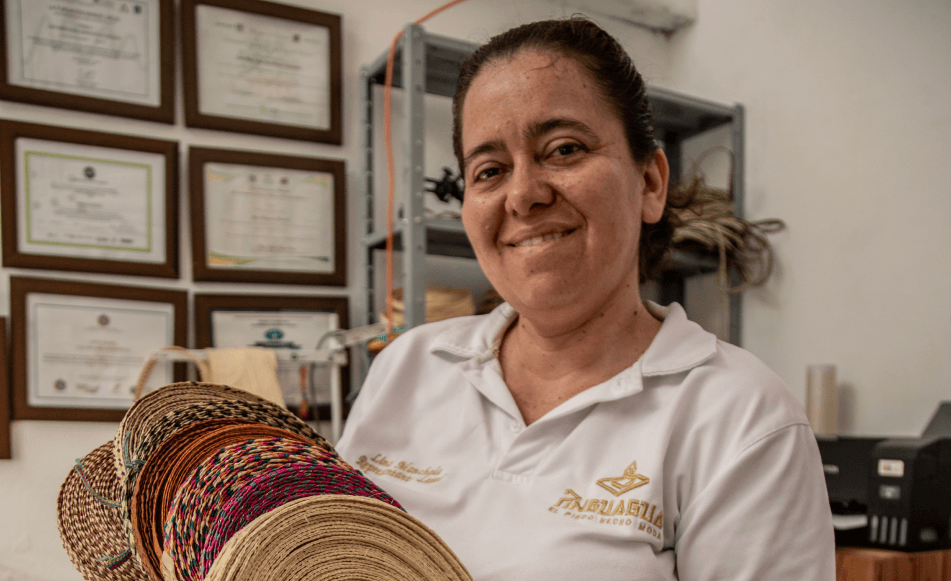
Workshop: Artesanias Pinguagua, El Pingo Ecomoda
Craft: Weaving
Trail: Huila Route
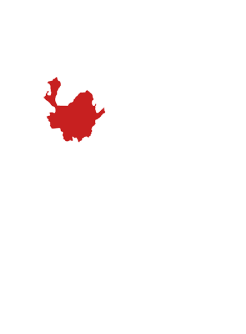
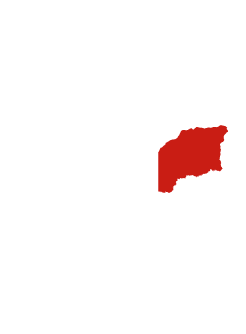
Location: Palermo, Huila
SCHEDULE YOUR VISIT
Calle 10 #11-29 Barrio Los Comuneros, Palermo
3143959199
pinguaguahuila@gmail.com
@artesanias_pinguaguasas
@pinguaguahuila
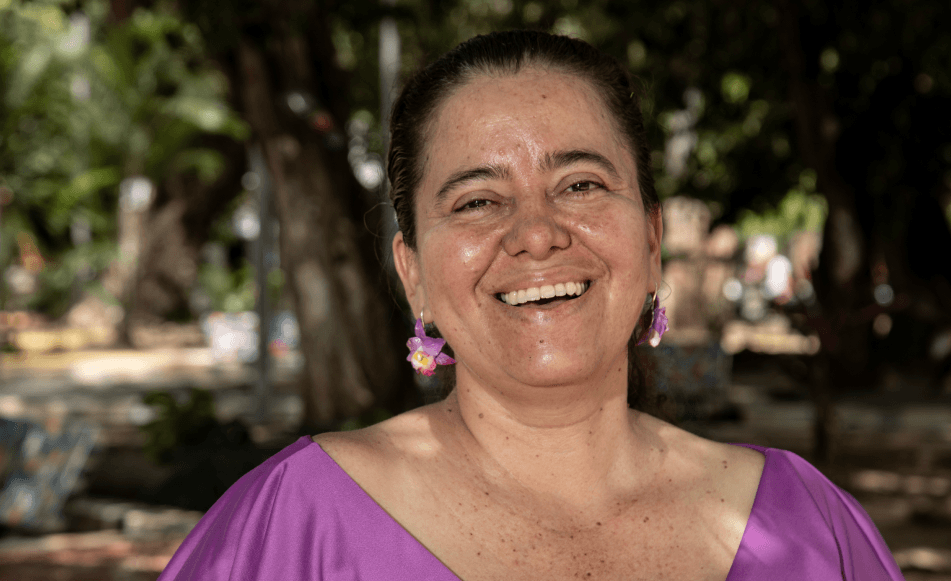
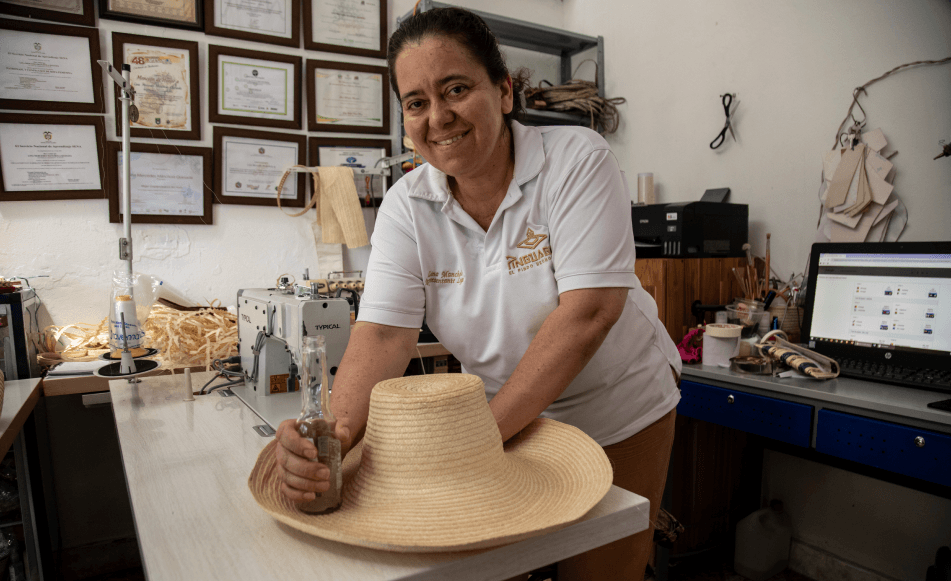
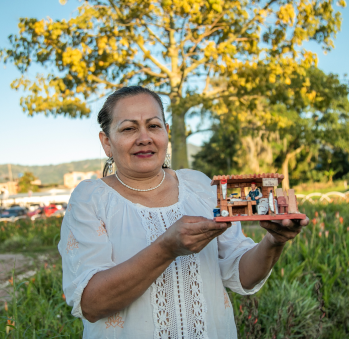
Lina Mercedes Manchola encountered the pindo palm fiber like a saint appearing just when help is needed. She had just returned to Palermo, her family’s hometown, after being forced to flee southern Huila, overwhelmed by fear and with all hope shattered. She was afraid of anyone who came near her because she felt they would hurt her or her son, just as they had hurt her husband, who had been murdered after receiving repeated threats. She was twenty-four years old, and her son was just four months old. It was only natural that her response was to shut herself away to protect what remained of her family. It was an incredibly difficult time that left a permanent mark on her heart.
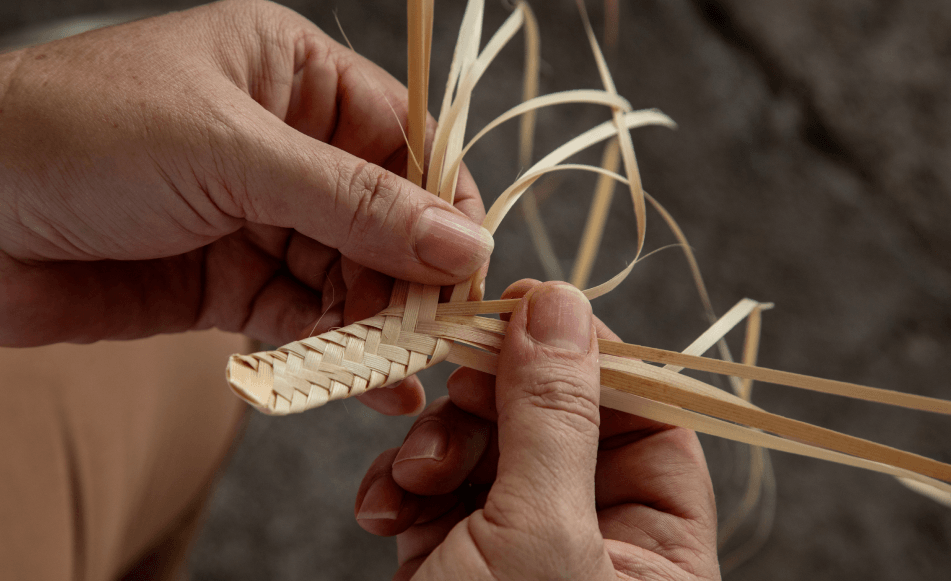
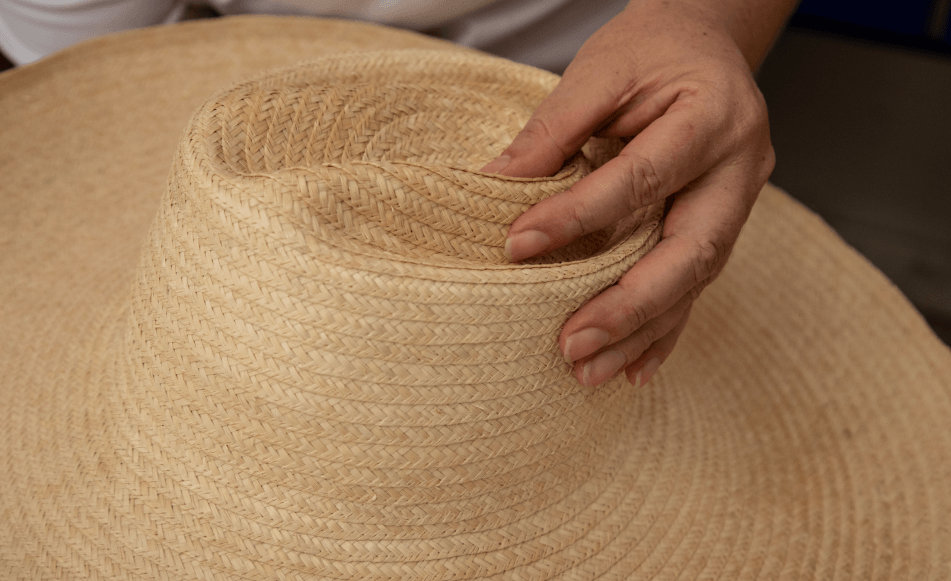
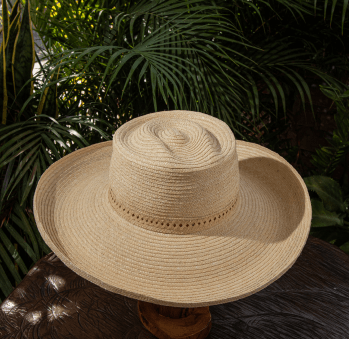
Not even a year had passed since the tragedy when her mother learned that a foundation had arrived in town to support victims of the armed conflict and other vulnerable communities through craft projects funded by USAID, FUPAD, and Acción Social. Lina listened to her and began attending, not because she dreamed of becoming an artisan, but as a form of therapy, a chance to meet new people and slowly learn to trust again. As soon as she began learning to weave pindo hats under the guidance of her teacher, Belén Perdomo, who trained her, she realized that despite being from Palermo, she knew very little about this tradition. She could barely remember one occasion when, as a little girl, her father had taken the family to the town photographer, where among the studio props there had been hats much like the ones Mrs. Belén was now teaching her to weave. Later, her father told her that her grandmother had practiced the very same craft, saying to her as he watched her weave, “When I look at you, I remember your grandmother, Lucrecia.” From that moment on, Lina began noticing hats and women weavers everywhere because her focus had shifted. She could finally pay attention to something other than fear.
Indeed, the foundation gave her confidence—not only in them, but in herself. They helped her realize that she was capable of developing a project that would make Palermo known through its pindo weaving tradition. They also gave her the necessary tools, teaching her the craft under Belén Perdomo’s guidance while training her in administration and sales. Then they took her to a Vital Voices event in Buenos Aires, where she listened to women from around the world speak with remarkable strength about their own projects. There, a decision took root within her: she wanted to dedicate herself to craftsmanship, not only to transform her own life, but also the lives of others. And that is exactly what she did. Although she nearly gave up after five years because success was still slow to arrive, she persevered.
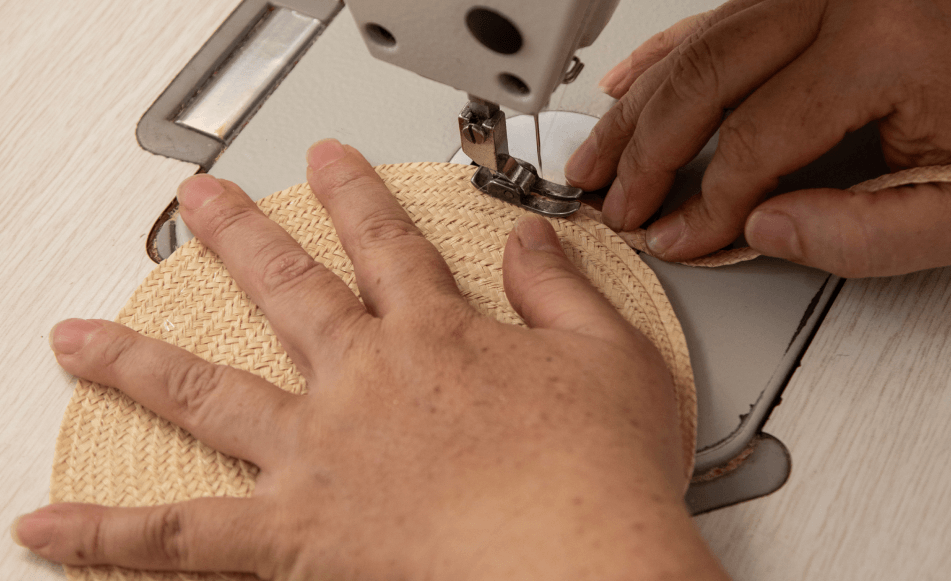
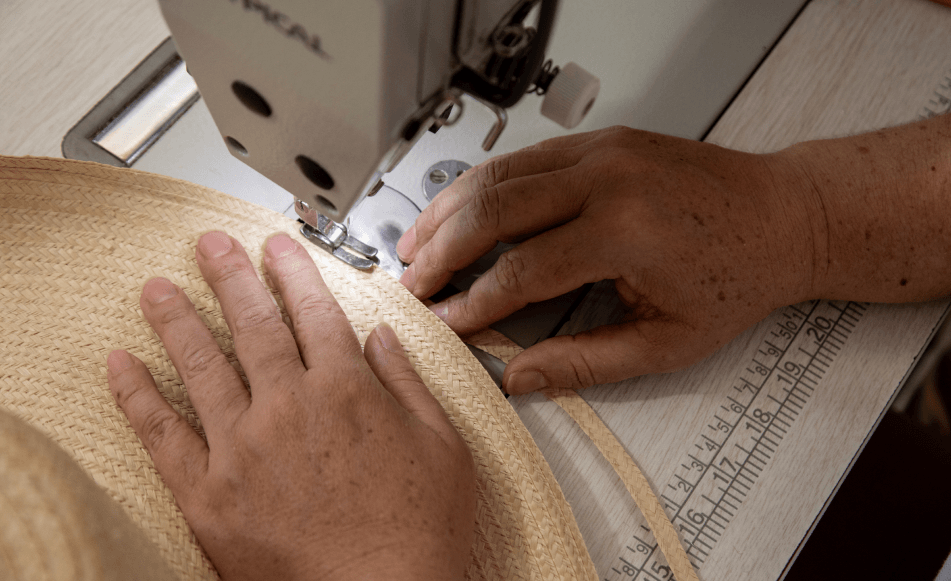
That is why, as soon as she set out on her own, it felt only natural to do something to improve the economic conditions of the women who weave the braids that are later sewn together into hats. Nineteen years ago, a braid section—equal to ten arm spans, whose exact length depended on each weaver’s reach but usually measured between thirteen and fifteen meters of woven fiber—sold for 3,500 pesos. It was common for weavers to spend the entire year making braids to sell before the San Pedro festivities, often with their production already committed to buyers. Since Lina was new to the trade and almost nobody knew her, they would not sell to her. So she began offering 4,000 pesos per braid section to attract the weavers. Soon afterward, the other buyers matched her price, so she raised it again, first to 4,500 pesos and then to 5,000. She did it because she understood that without the weavers she was nobody, and because she knew just how much work went into producing so many arm spans of braid, but also because she wanted to earn their trust. Today, the least expensive braid sells for 20,000 pesos, while the finest can reach 60,000, depending on its design. She also worked to standardize the measurements, convincing the weavers to measure each arm span with a tape measure rather than their own arms, which naturally varied from person to person. In the end, the standard length became one meter and forty centimeters. It took years to standardize the measurements and improve the prices they received, but those efforts earned her the trust of the weaving community.
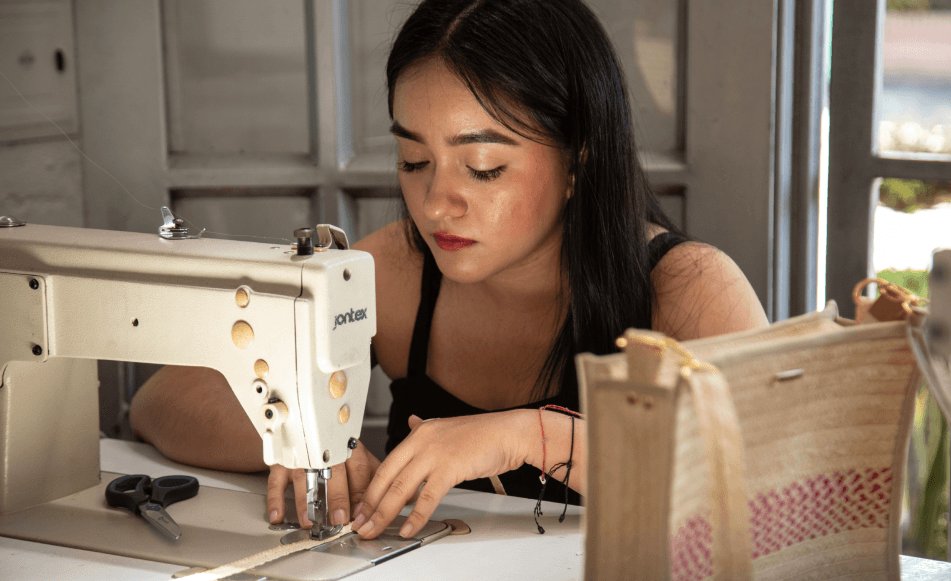
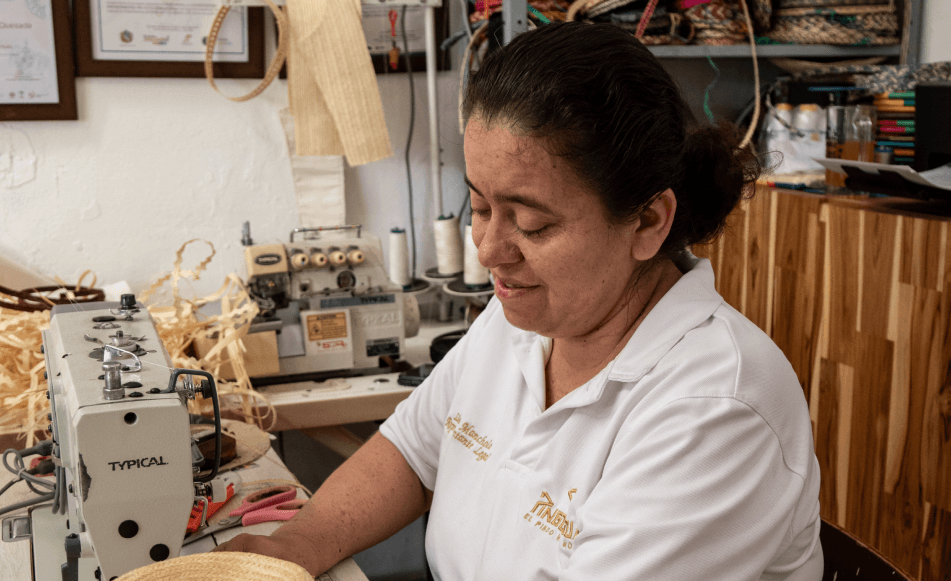
During those first five years, she continued finding new markets for their products, building a team of twenty people who harvest the fiber, weave the braids, and sew the hats together, while also persuading local schools to invite them to teach workshops for teenagers, showing through her own example that this craft can provide a sustainable livelihood. She says that if God gave her the opportunity to discover this art, it was so she could spread the blessings she had received, always treating her people with kindness because that is what an artisan is: a sensitive person who never forgets that there are always others behind every achievement. She wants to plant that way of thinking, to prove that it truly is possible. And how could anyone doubt her when she offers her own life as proof—the story of a woman who, little by little, learned to believe in life and in other people again, and whose path became one of helping other women.
Workshop and process
Craft
Artisans along the way


Artisans along the way



No puede copiar contenido de esta página