
Aminah Koradi
Workshop: Aminah Koradi
Craft: Ceramics
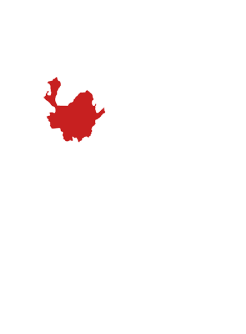
Trail: Quindío Route
Location: La Tebaida, Quindío
SCHEDULE YOUR VISIT
SLOW ART STUDIO AMINAH KORADI Km 4 Vía La Tebaida, Casa B15 - Quindío
3116501753
jimevalencia@outlook.com
@aminahkoradi_dossier
@artstudioaminahkoradi
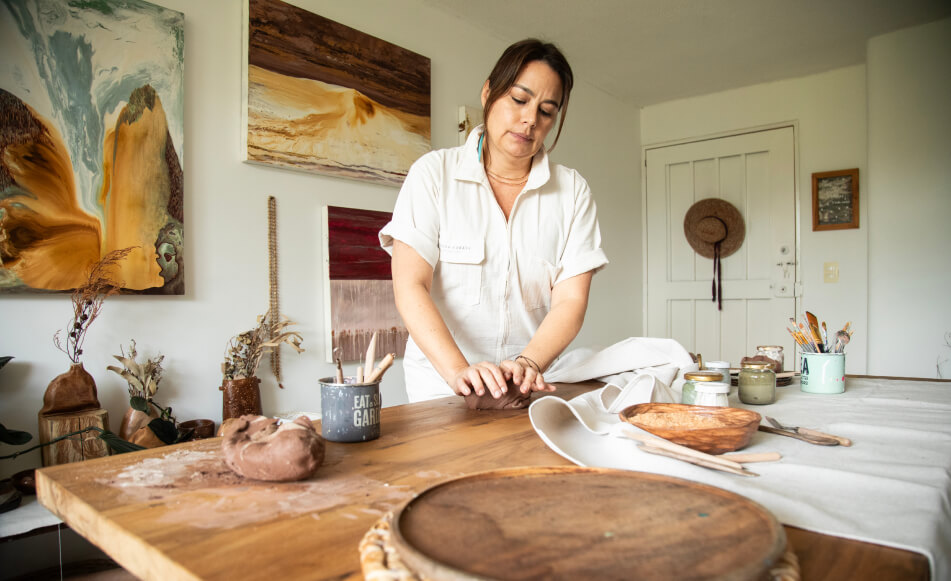
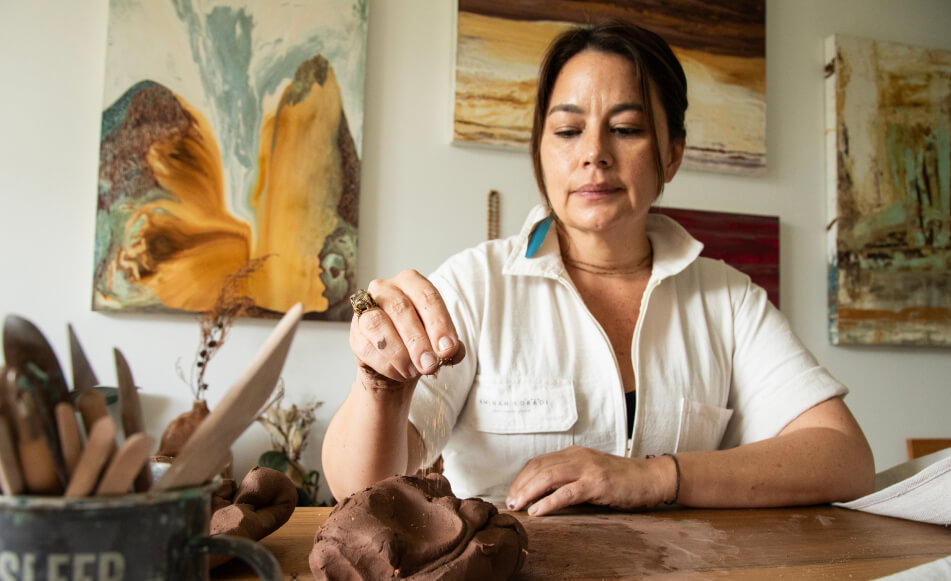
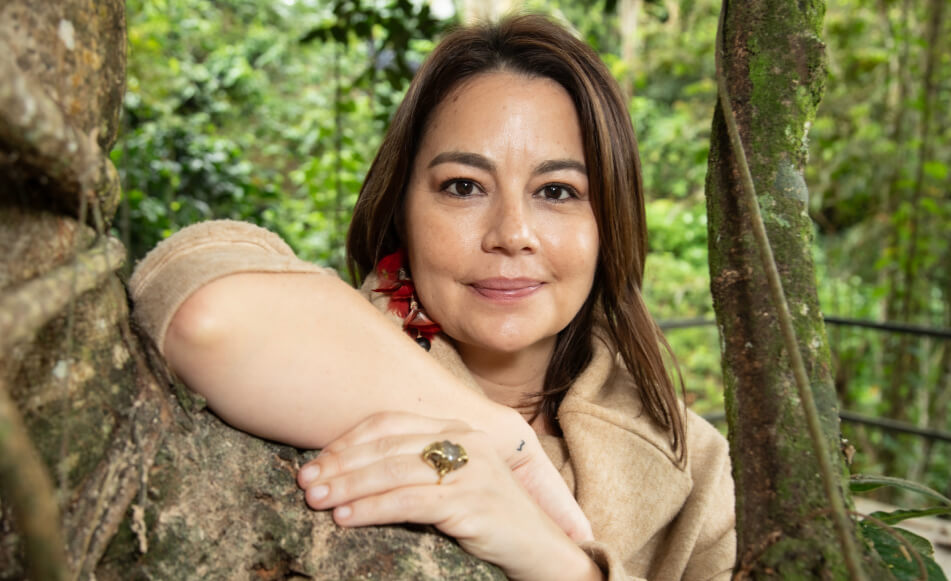
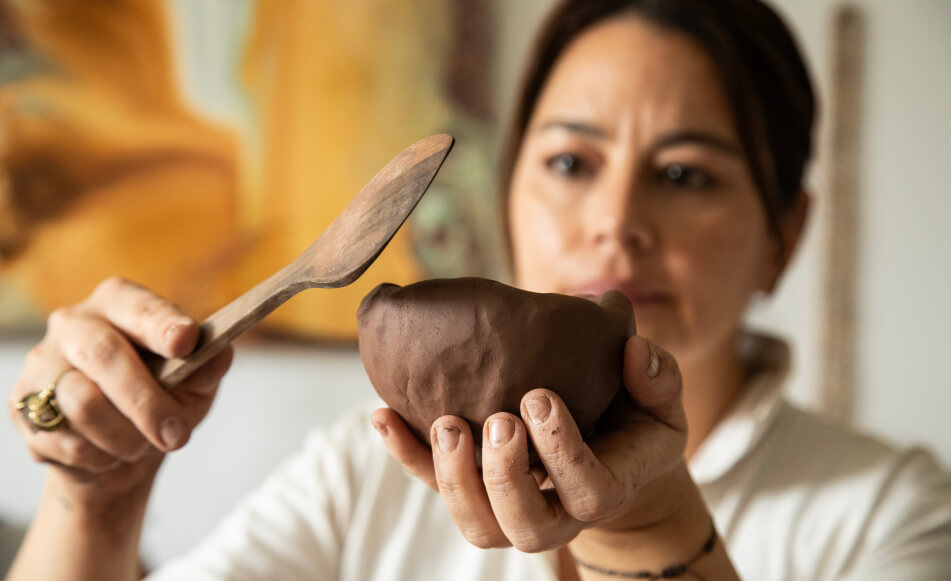
For me, clay is a guiding ancestor. When I’m working with it, I feel as if a wise and beautiful grandmother were sitting at my table,” says this woman with a gentle cadence. She chose the name Aminah Koradi because life pointed her toward it in her early twenties, just as she was becoming a mother. It was the outcome of a search that carried her across many parts of the world—among them Canada—where she was introduced to the sacred territories of the Lakota and Sioux peoples. Without knowing it, they helped her begin to find the answers she had been seeking, and that encounter eventually brought her back home. There, she revisited her own roots, her Nasa origins from Cauca, until she finally settled in her father’s land: Quindío. Her instrument for this kind of vital archaeology has always been clay.
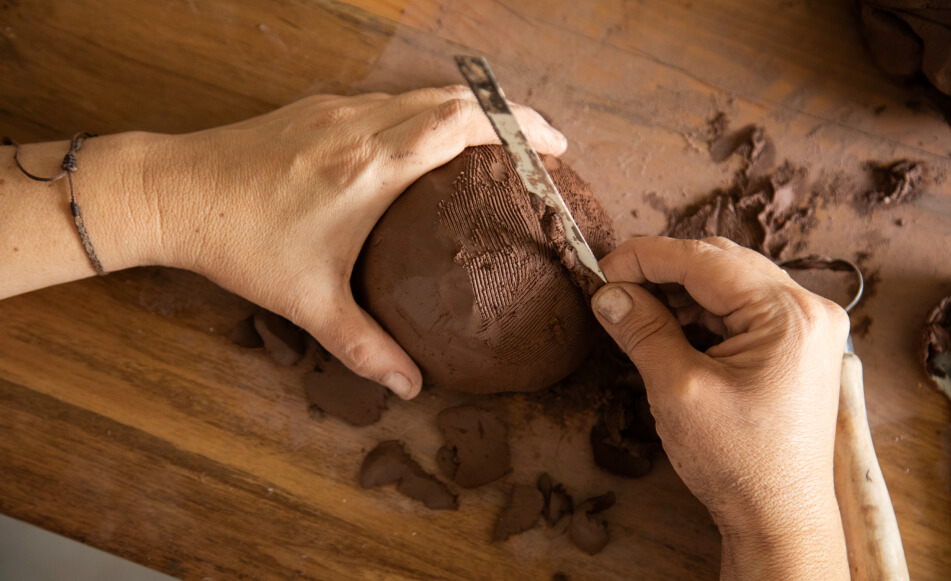
Aminah is a tireless seeker, a wanderer, an explorer who ventures into mountains and riverbeds to discover the land and immerse herself in its colored clays. She does so in the company of those who know the paths—those who converse with the spirits of the forest and guide her to the veins of earth. Then, in silence and complete solitude, she kneads the clay and asks permission to extract it, needing only a handful. A turning point in her journey as a ceramist came when she learned how to make rammed earth construction on the shores of Lake Titicaca in Bolivia. Building walls and houses of earth that held firm taught her that soil itself would be her raw material. Earth, fire, and hands—what more could she need? That is why her latest aspiration is to learn to fire clay in open wood-burning kilns in the Ecuadorian Amazon—one more step in her meditative, contemplative exploration.
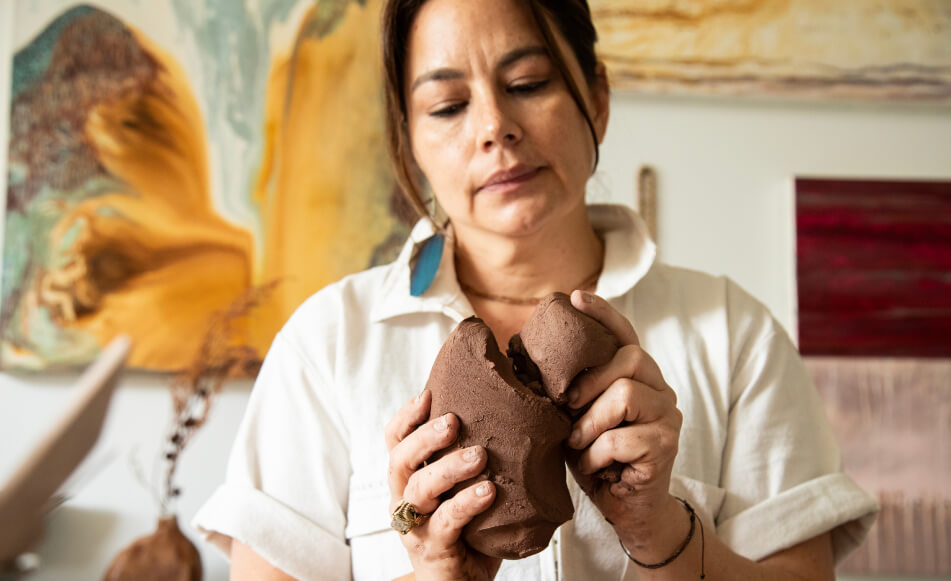
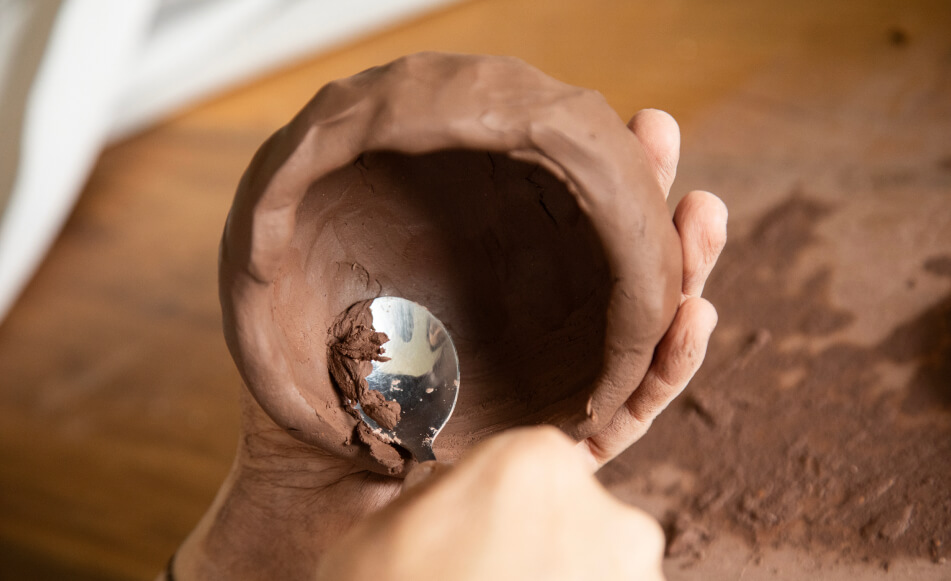
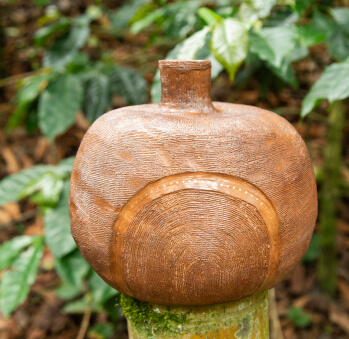
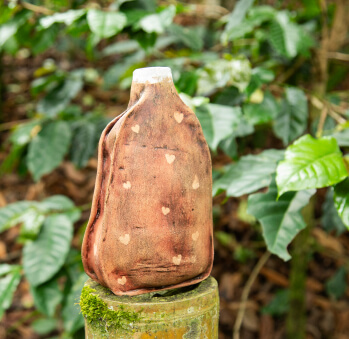
Speaking with her is like entering another dimension, one that is profoundly deep, where impatience must be set aside to dig into the sacred layer of things. It takes only a willingness to look—to really want to look—to begin to feel what she does. And then, a bowl is never just a bowl, but a testimony of time, a trace drawn from the earth and shaped by hands that chose it with devotion, knowing it to be unique and desiring it to remain so. Every piece she touches and finishes is a ritual, an offering, part of the materialization of her mission in this life. She knows that making ceramics is her anchor—the thread that ties her to the earth—otherwise she would be a bird, or a cloud. That’s why she creates Filomenas, to remember her grandmother, to offer shelter, warmth, and home through her bowls. She also makes whales, honoring her need to flow.
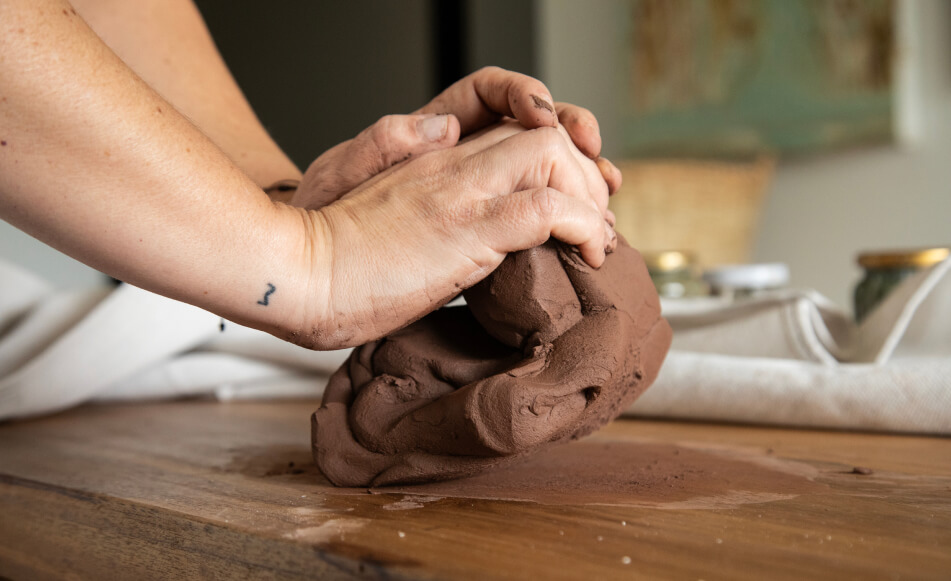
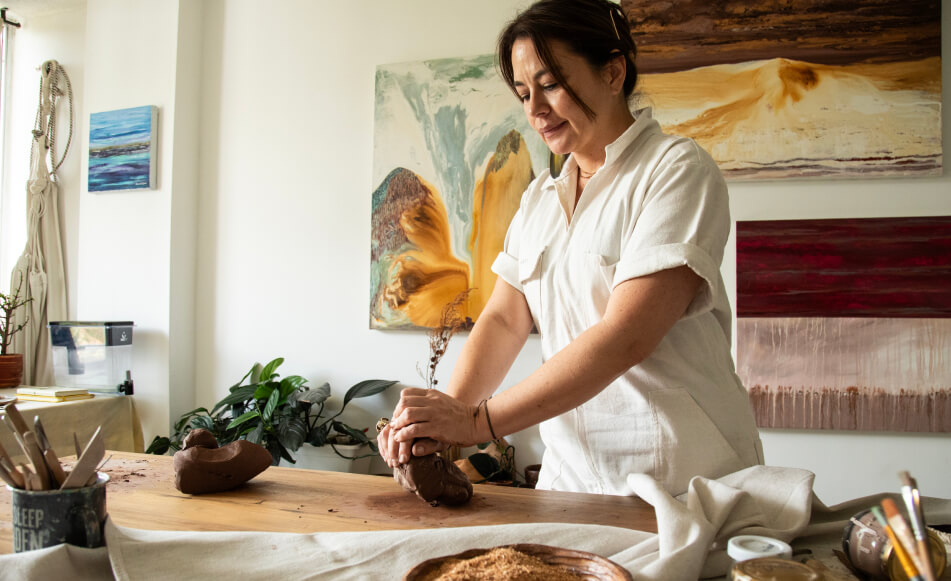
The discipline of kneading gives her temperance and balance. She sees clay as an energy of contrasts: the masculine strength it requires to shape it, and the feminine tenderness of firing and finishing each piece. Working alone, always alone, she confronts these two energies and harmonizes them. For her, ceramics is an understanding of malleability, a reminder, through the hard fragility of clay, that we cannot be too hard on ourselves. It is her metaphor for gratitude—for thanking life for giving her the tool to play, and to let go.
Workshop and process
Craft
Artisans along the way
Artisans along the way



No puede copiar contenido de esta página