
Edwin Potosí
Workshop: Manos que tejen tradición
Craft: Weaving
Trail: DIVERSE ROUTE WITH AN LGBTIQ+ FOCUS
Location: Sandoná, Nariño, Ruta Diversa
SCHEDULE YOUR VISIT
Cra 3, calle 12 No 10-07 barrio Hernando Gómez, Sandoná
3108225179
potosiwdwin310@gmail.com
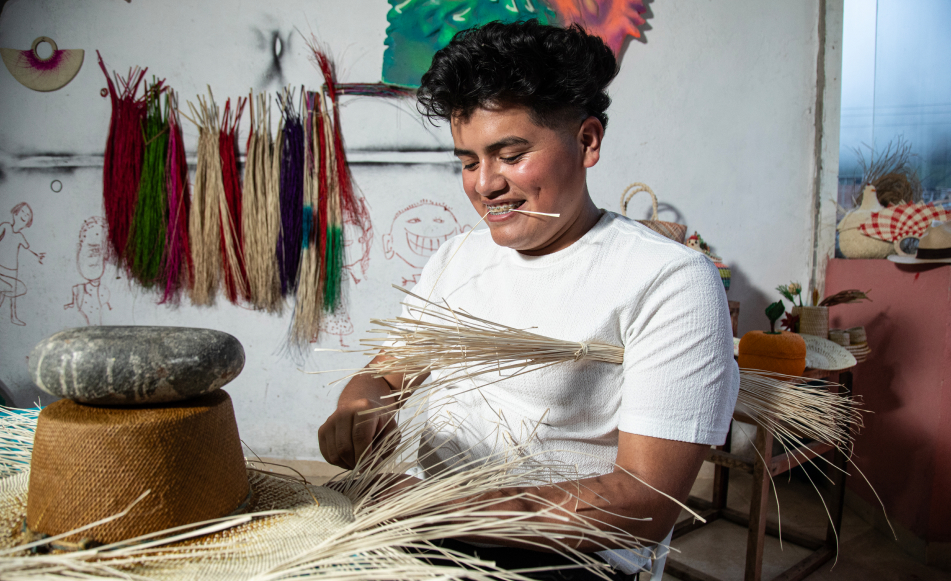
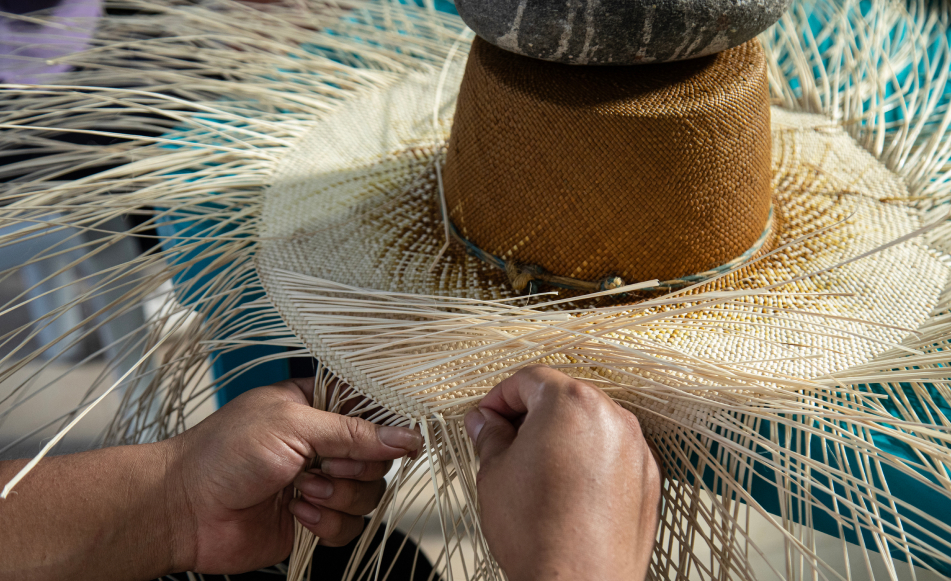
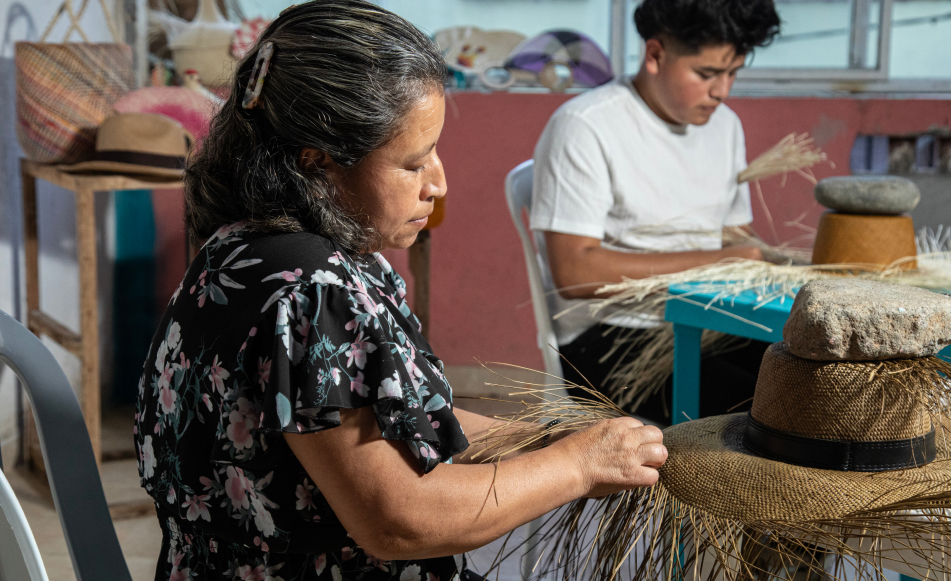
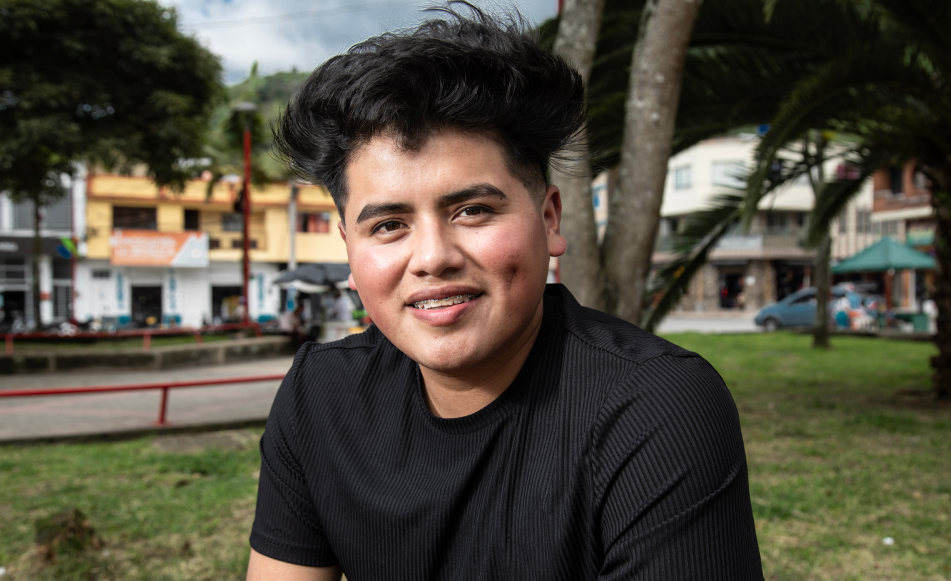
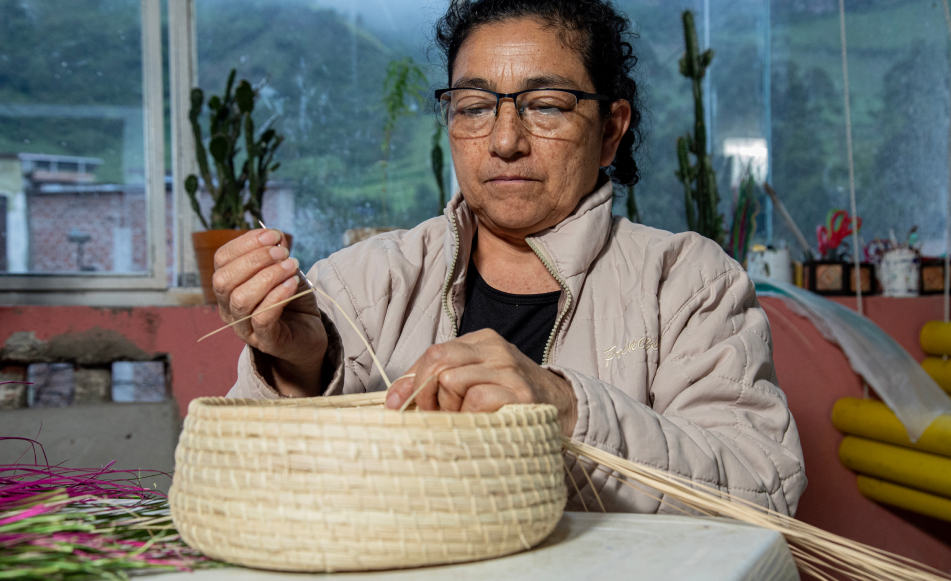
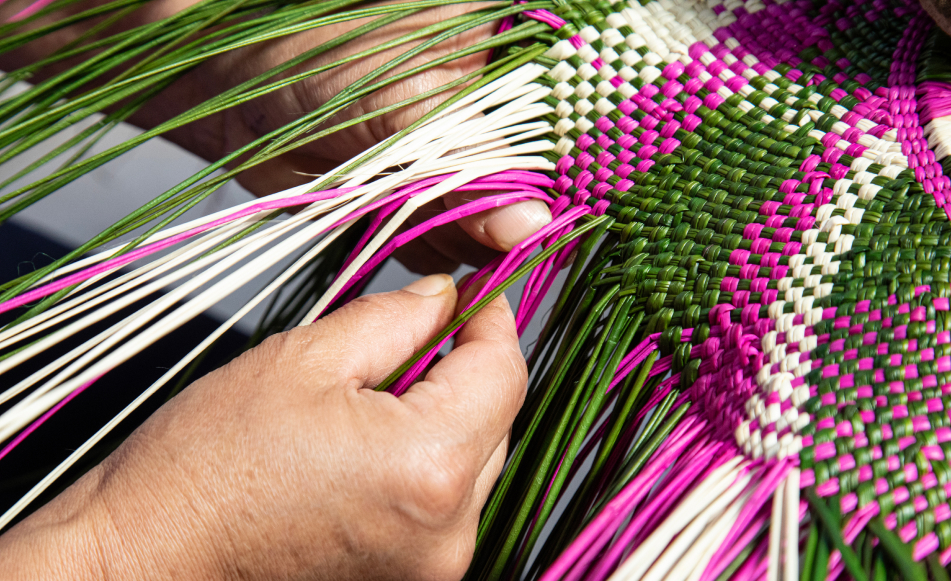
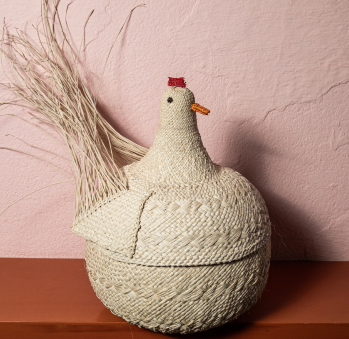
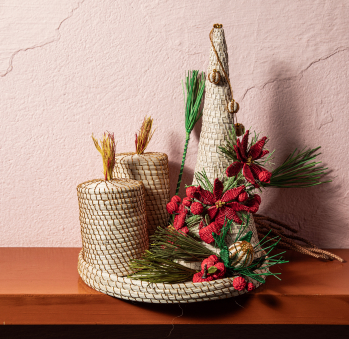
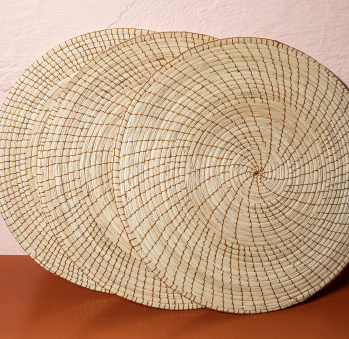
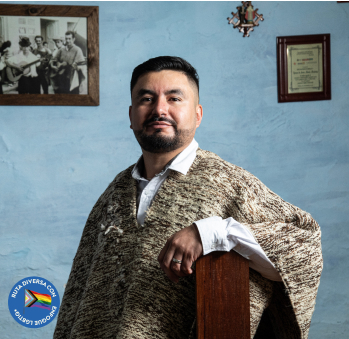
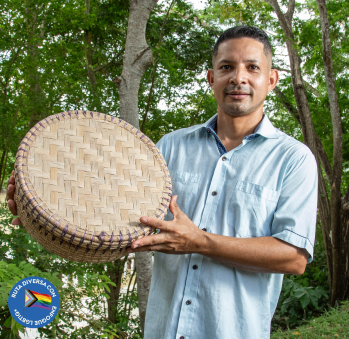
“Ever since I was a child, I always knew that art, drawing, and painting were my happy place—where I truly wanted to be,” says Edwin Potosí, an artisan who carries the ancestral tradition of weaving in toquilla straw or iraca, from the emblematic town of Sandoná. This warm and charismatic young man also embodies the return of men to this craft—just as men once wove the original Panama hats. His example has encouraged many more men in Nariño to learn to weave and to join the women who have never stopped doing so.
Edwin recalls that it was his paternal grandmother, Rosa Potosí, who first guided his hands to hold a hat when he was about ten years old. Later, his other grandmother and his mother, Isabel and Roxana—who raised him—finished teaching him everything he needed to know about the craft. Those early interests only awakened others. He also felt excitement watching his grandfather and father carve and paint. And he wanted to paint too. So when he imagined his future, he dreamed of becoming an artist, which led him to study Visual Arts at the University of Nariño in Pasto. But before that, we must look closely at how he created a movement of his own.
From early on, he knew he was not like the others. He was more sensitive than his peers, and gentleness guided him. And he was not willing to abandon either of these qualities just to fit in. He faced everything the best he could, fortunately with the support of a loving family. Of course, nothing was easy. Living in a rural village—Santa Rosa, half an hour from Sandoná—often made him the target of unkind looks. Today he reflects on those days when he wore makeup and recognizes that it was a way to affirm himself, freely expressing the body and soul that sought liberation. He did so in his village, in Sandoná, and in Pasto at the university. It was his way of breaking through fear—and he succeeded, to the point that he no longer needs eyeshadow or lipstick to show who he is, and only uses them when he feels like it. Through discovering himself, he found the people who are now his closest friends—his queer peers. Between that community and his family, he has the strength he needs to stand firmly in his convictions and emotions.
He also remembers what it was like to move from the cold of Santa Rosa to the warmth of Sandoná, and how the climate became yet another reminder of difference. He was the boy with red cheeks from the Andean highlands, the one with the sweet sing-song accent. Everything signaled that stepping outside his home and his grandmother Isabel’s protection exposed him to others. And yes, at first it was painful, but quickly, as he says, “you either stay there suffering, or you take the bull by the horns.” And that is exactly what he did.
His teachers discovered a boy with immense talent, devoted to what ran through his hands: the legacy that would give meaning to everything. And although he went to Pasto to study art, it was there—while being exposed to so much—that he turned his gaze back toward his own story, his own people. Toquilla straw became a necessary question—an anchor of craft, livelihood, and tradition. He understood that his family, like so many others, had spent generations weaving for others, supplying workshops, and remaining silent, letting intermediaries speak for them. And he decided, just as he had done with his own life, to confront this. He urged his family to open their own workshop and to finally speak together, in chorus.
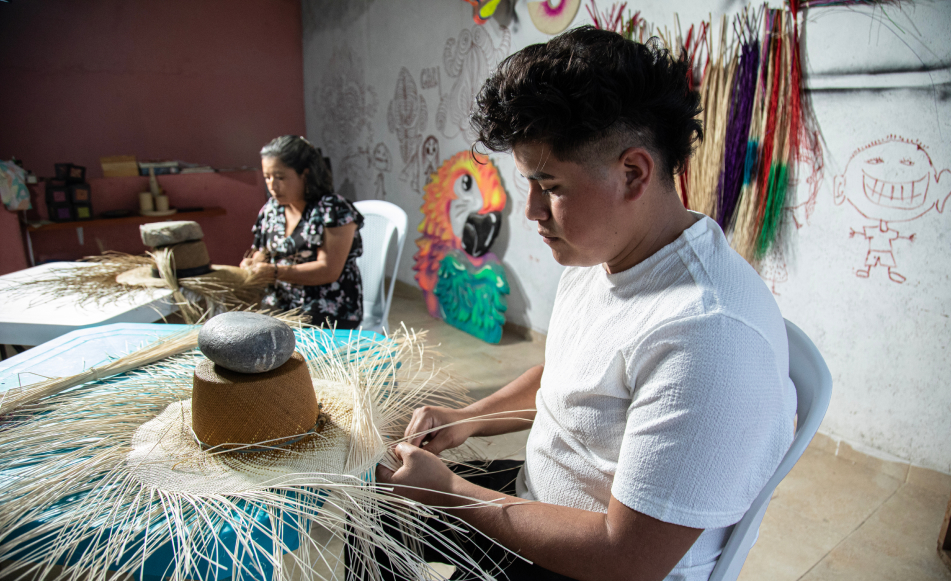
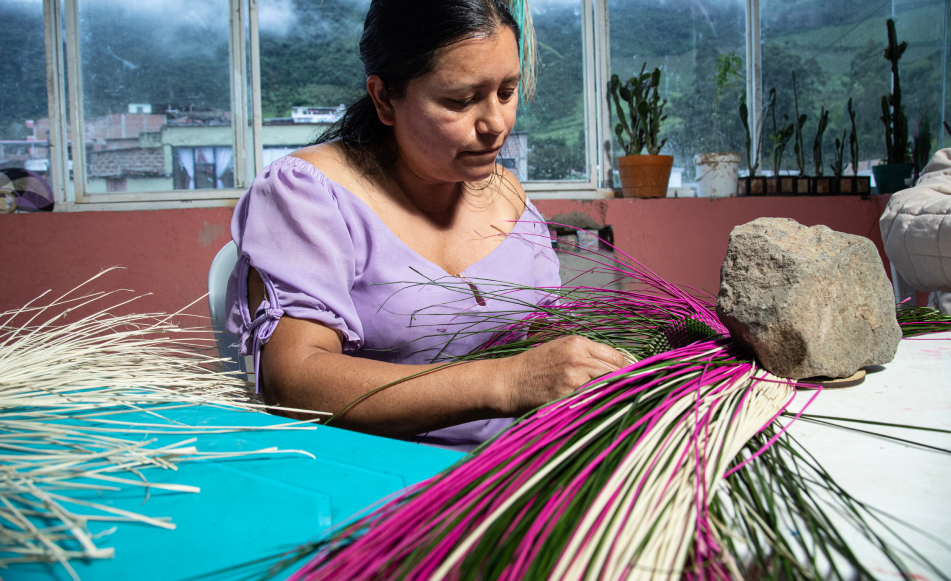
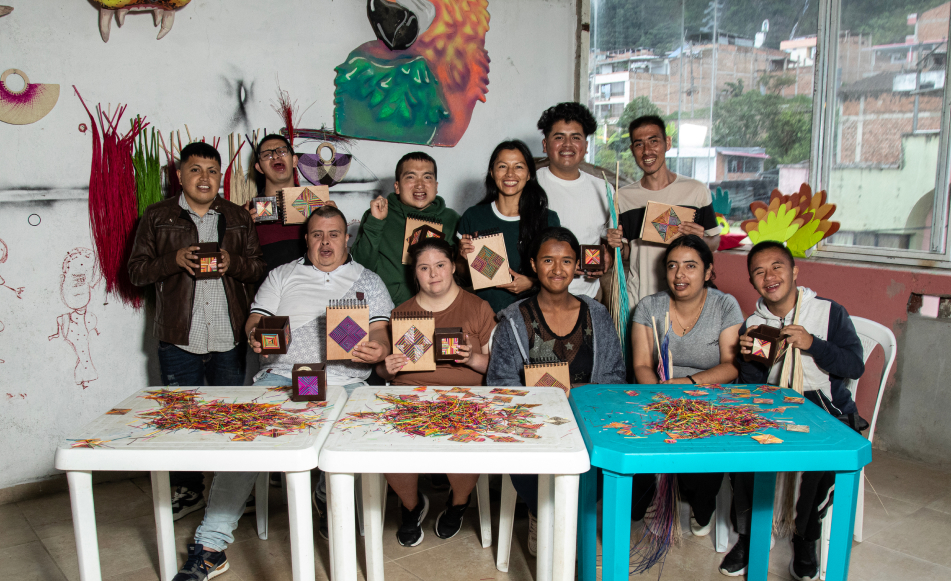
This way, he brought together the knowledge of his mother, who weaves the extra-fine hats characteristic of Sandoná, with that of the other women in his family who were practically born with iraca in their hands. He added his innovative spirit and his talent for painting. He also combined traditional dyeing techniques for the straw with the color theory he learned at the university. And with this exciting formula, they ventured forward as a family workshop. He also joined forces with his friend and business partner, Ana Milena Linares, director of the cultural center Irakasa, to organize exhibitions and gatherings, offer weaving workshops, and sell the pieces created by all these talented hands. A beautiful pretext, we see, because in the end, weaving becomes a means for many spirits and hearts to find a place to grow. Edwin realized that some of the mothers who taught workshops had children with disabilities who wanted to learn too, but couldn’t complete certain complex weaving techniques. So together with Ana Milena, who is a designer, they created more contemporary techniques that would allow those hidden skills to emerge. They’ve witnessed such amazing rebirths! Things went so well that this teaching has become another branch of their artisan venture.
And just as someone once saw his potential, he now sees the potential in others and gives them the wings to fly. Because there are no greater gifts than sweetness and sensitivity to guide that flight.
Workshop and process
Craft


Artisans along the way

Artisans along the way



No puede copiar contenido de esta página