
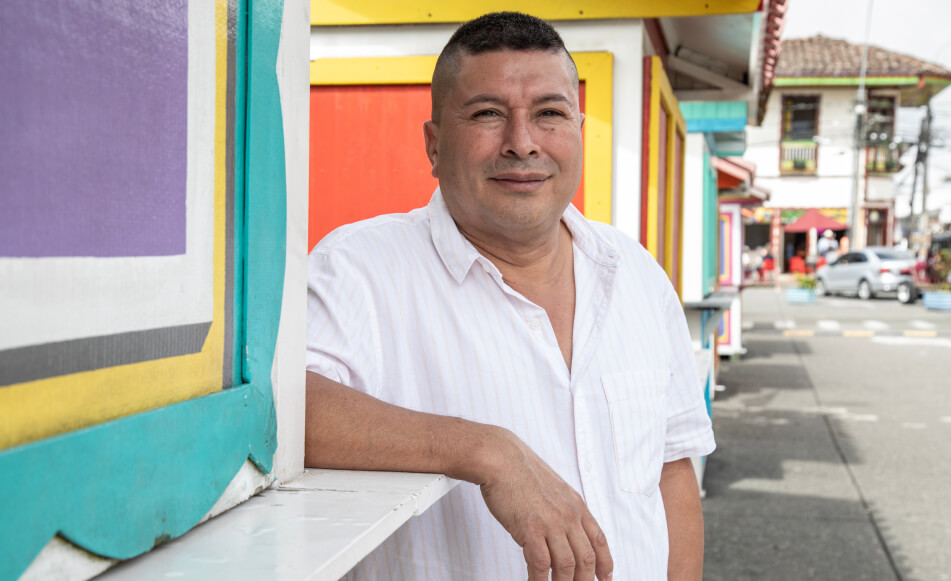
John Freddy Buitrago
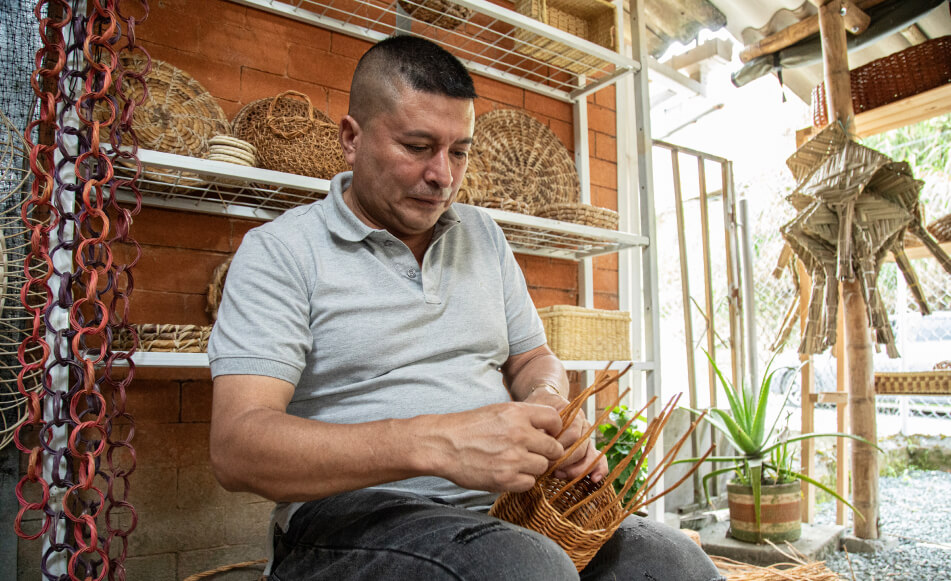
Workshop: Artesanias Bredar
Craft: Basketry
Trail: Quindío Route
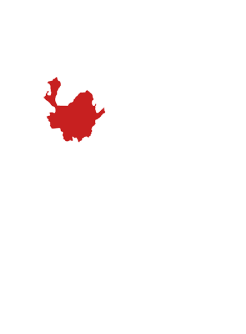
Location: Filandia, Quindío
SCHEDULE YOUR VISIT
Barrio Santiago López Manzana B Casa 2A
3146538171
@artesaniasbredar
@artesaniasbredar
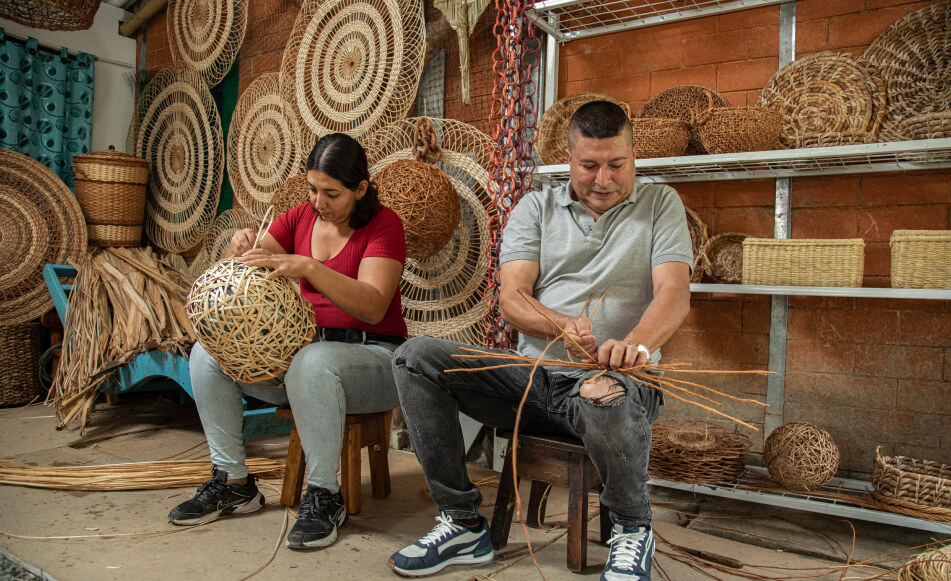
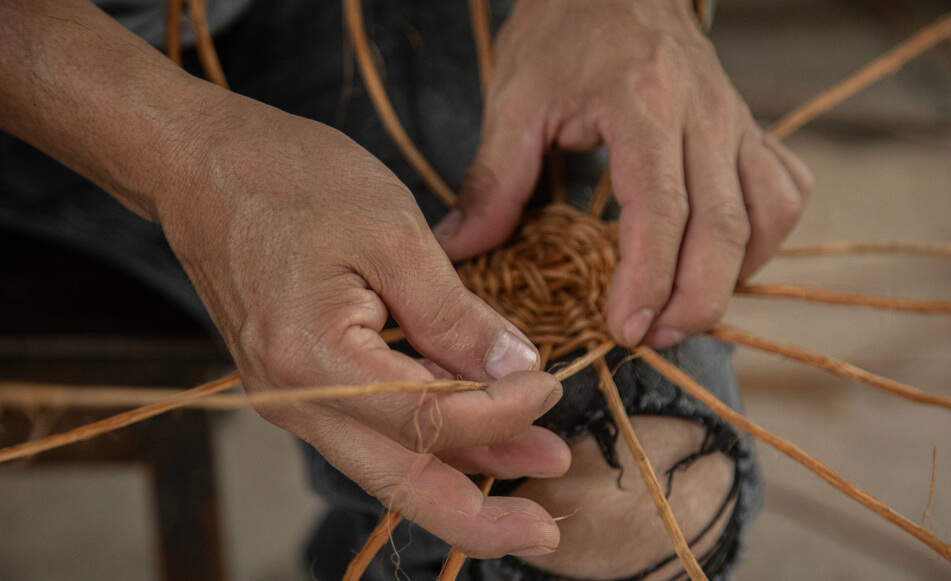
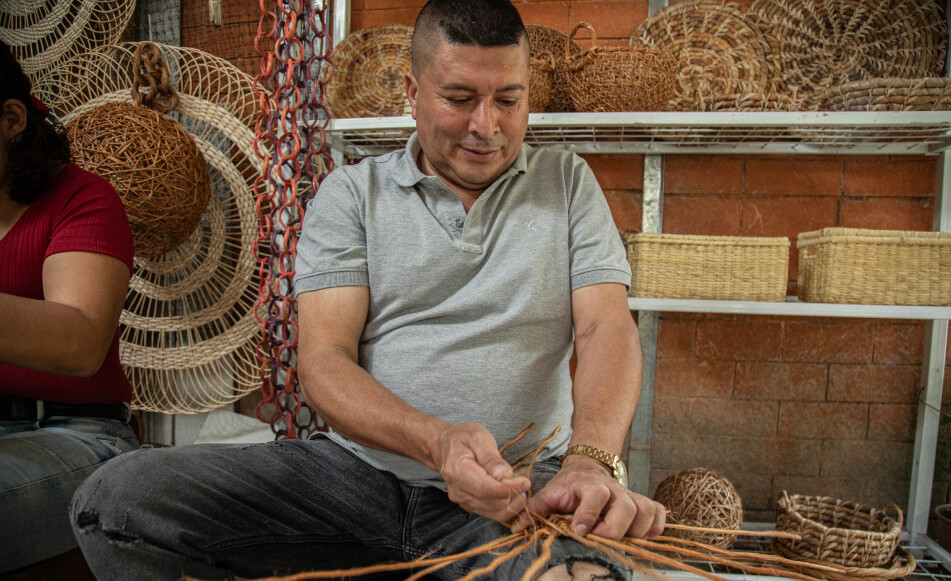
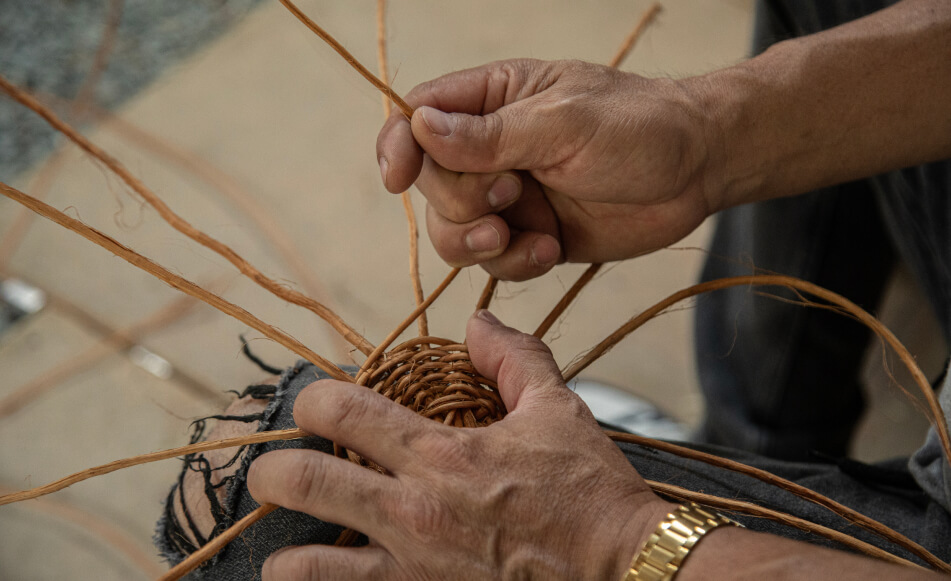
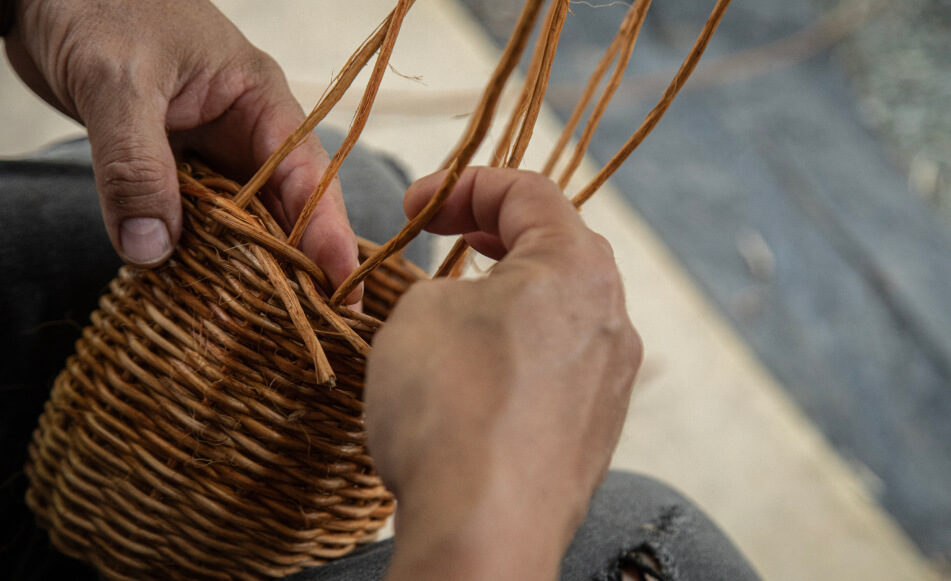
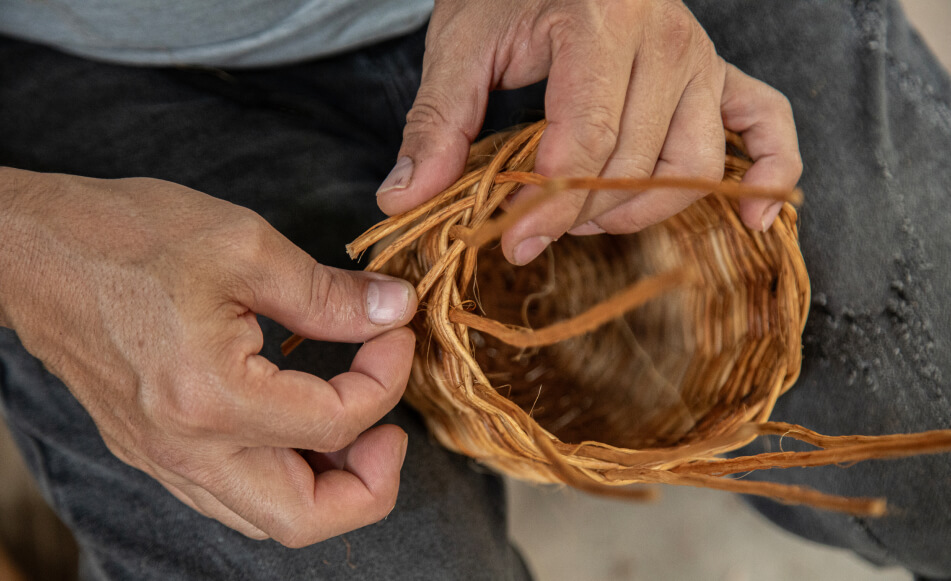
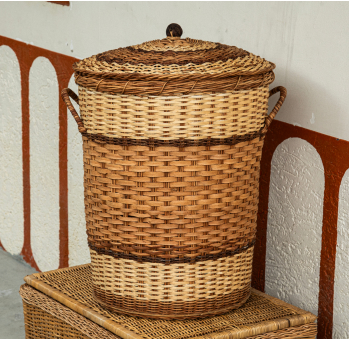
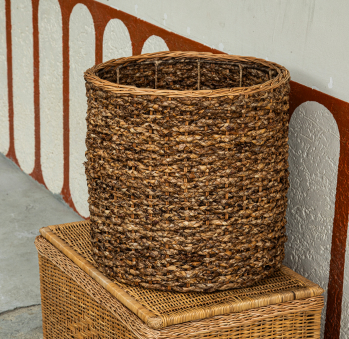
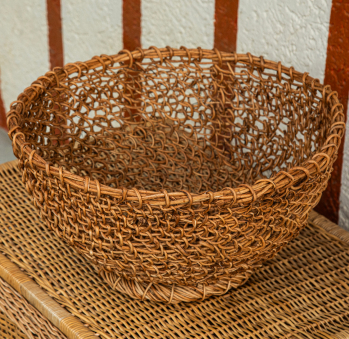
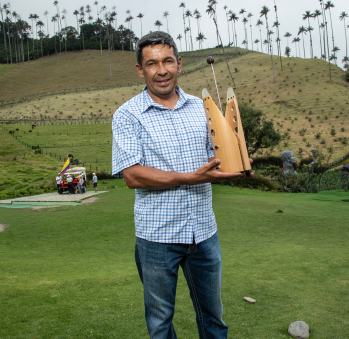
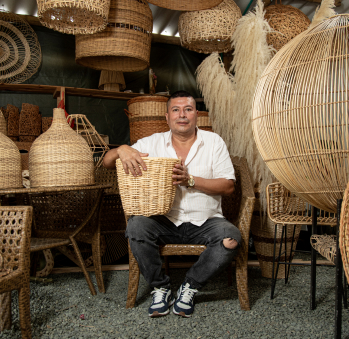
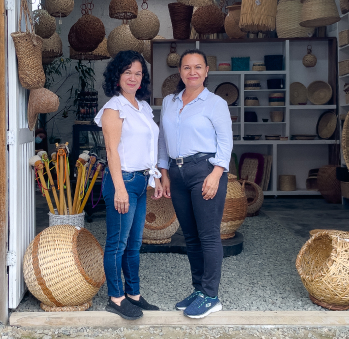
John Fredy takes great pride in continuing a tradition that his hometown of Filandia has preserved for more than a hundred years: weaving baskets from tripa e’ perro vine—also known as philodendron—a fiber that grows in abundance across the coffee-growing region. He knows this knowledge of the hands runs in his blood, passed down from his grandparents, parents, and uncles. In particular, he remembers his uncle Rosenberg Buitrago, who to this day remains hard at work, skillfully crafting the baskets that have put this charming corner of Quindío on the national map.
He recalls being ten years old, tagging along with the older ones to gather vine in the forest. It was an ongoing task, one he learned little by little simply by watching closely. But he also remembers, with sharper clarity, how bejuqueros—as those who harvested the raw material were called, his family among them—were often looked down on, treated as if collecting fiber was unworthy work. Looking back, he admits that hurt him deeply, and that perhaps that is why he set himself the lifelong mission of dignifying artisanal work. Only now does he recognize that, without consciously seeking it, he has followed a path consistent with that goal.
Before coming to fully embrace this, he also witnessed firsthand how Filandia’s economy transformed. For decades, it had revolved around making coffee-picking baskets and the many trades connected to them, until plastic containers replaced them in the 1970s and ’80s. In the early 2000s, when the Von Humboldt Institute conducted biological research in the area, he saw how basketry had to reinvent itself, offering new products—many of them decorative or with other household uses—so that families could still earn a living. He, too, had to make that transition, learning to weave new baskets in order to make a living.
But adapting to survive is one thing; realizing the true value of the vine they had always worked with is another. That awakening came when he met the botanist Néstor García, who told him he wanted to dedicate his doctoral thesis to tripa e’ perro. At that moment, John Fredy understood that the fiber so many had dismissed as worthless was actually worthy of study. “The money is hanging there in the forest,” he said, stunned by the evidence of the wealth that had always surrounded him and sustained generations of people in Filandia.
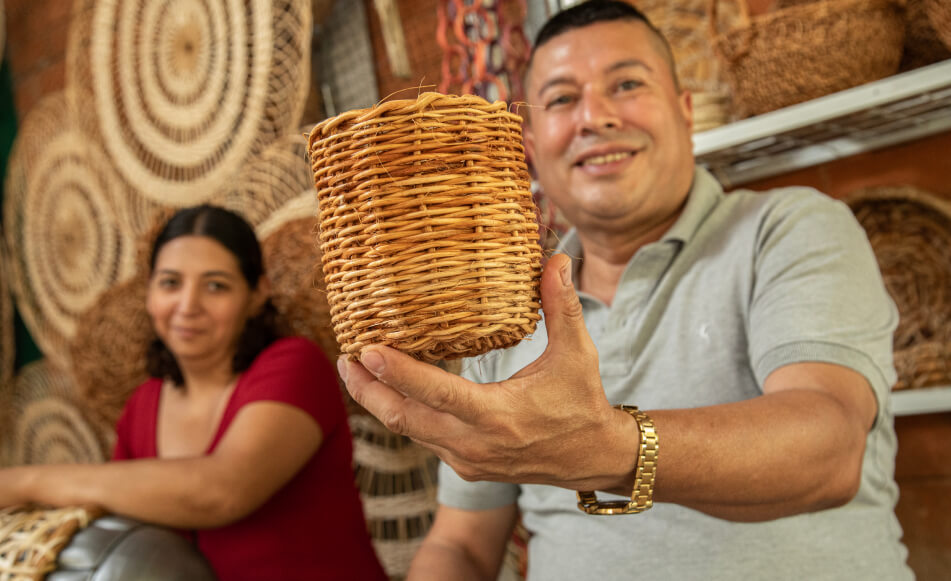
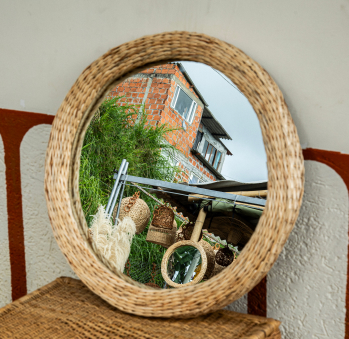
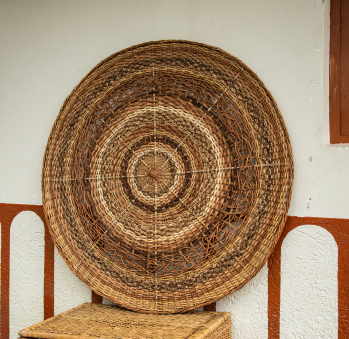
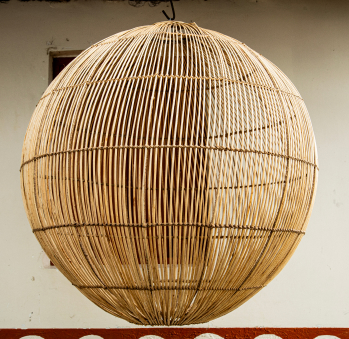
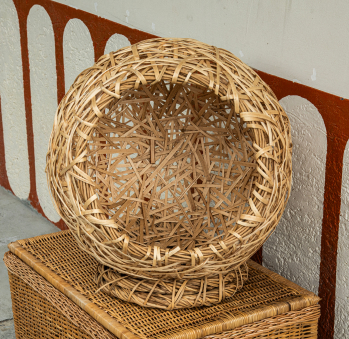
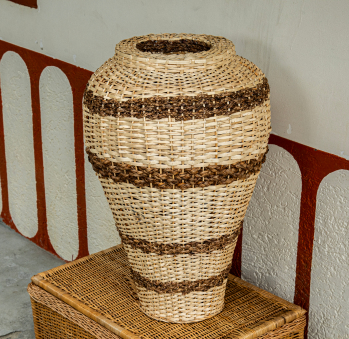
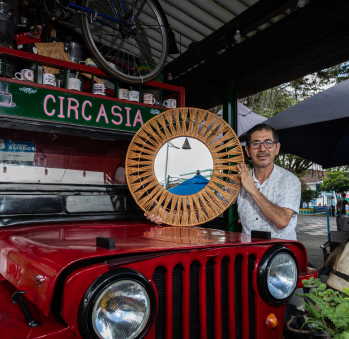
That realization led him to explore new directions in his craft. If the shoots of the vine grew differently at diverse altitudes and therefore behaved differently, then this diversity could expand his vision and inspire him to create new products that honored such natural beauty. And if the raw material could become scarce through careless, untimely harvesting, then it was better to combine it with other fibers, allowing nature time to recover. Thus he began weaving tripa e’ perro together with banana sock, chusco, china, atacorral, chipalo, and cucharo—other local vines and fibers—as well as wicker from Ibagué and even yaré from the Amazon. With this, he is not only fiercely protecting the environment that shapes his daily life, but also innovating within basketry. His work now showcases the many colors the forest provides, transformed into lamps, chairs, wall appliqués, rocking chairs, and, of course, baskets—so as never to forget where it all began. Together with his wife Jennifer, he is fully committed to this mission: to safeguard the vine and to reveal all the beauty that some, in their ignorance, once thought had no value.
Workshop and process
Craft
Artisans along the way
Artisans along the way



No puede copiar contenido de esta página