













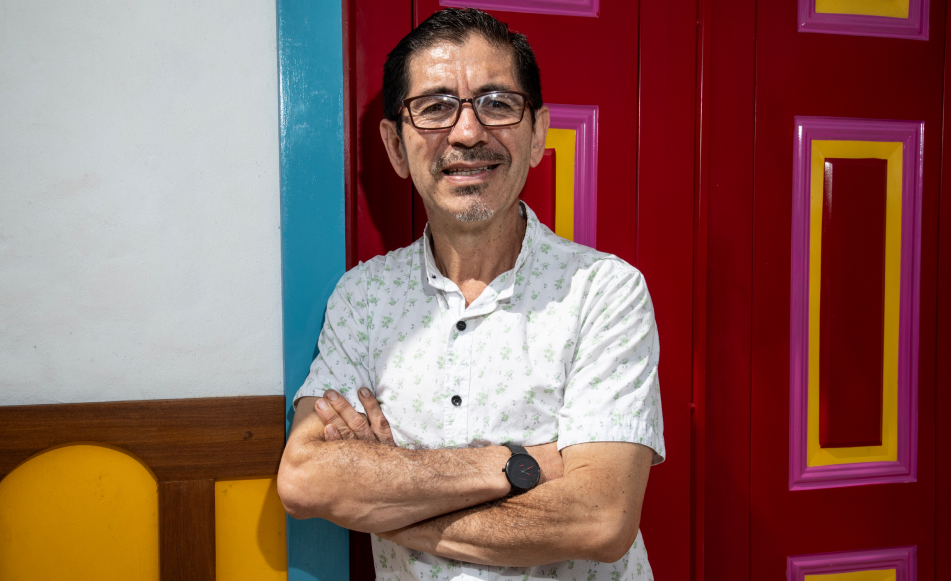
José Edilson López Marín
Workshop: Arte Colombiano
Craft: Weaving and tailoring
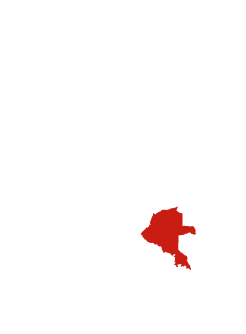
Trail: Quindío Route
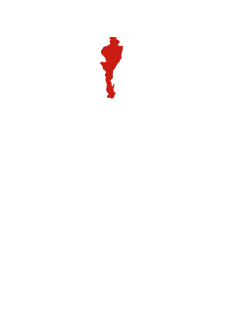
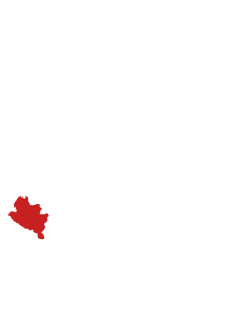
Location: Circasia, Quindío
SCHEDULE YOUR VISIT
Quebrada las Yeguas, Calle 7 #3-00
3107893439, 3046822806
jmarisssa@gmail.com
@wandrahome
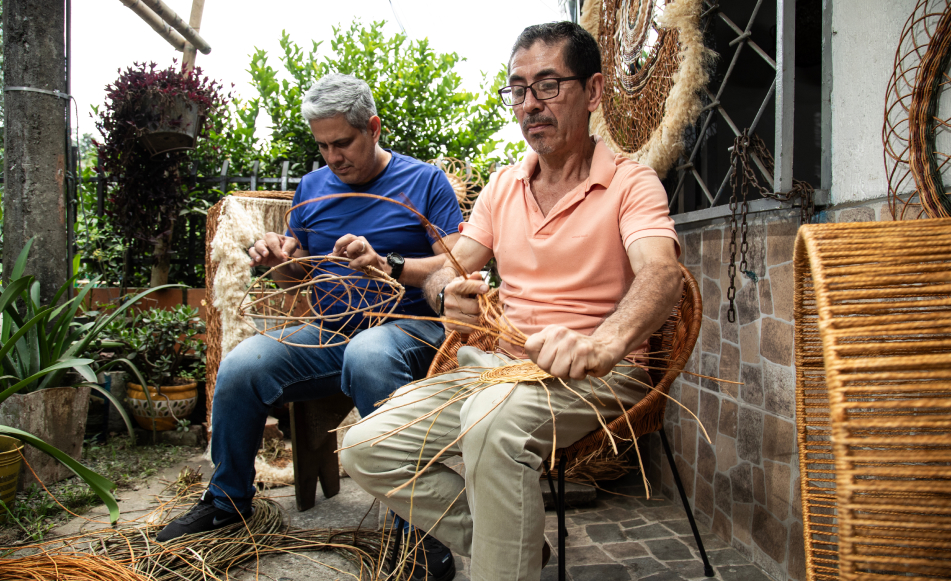
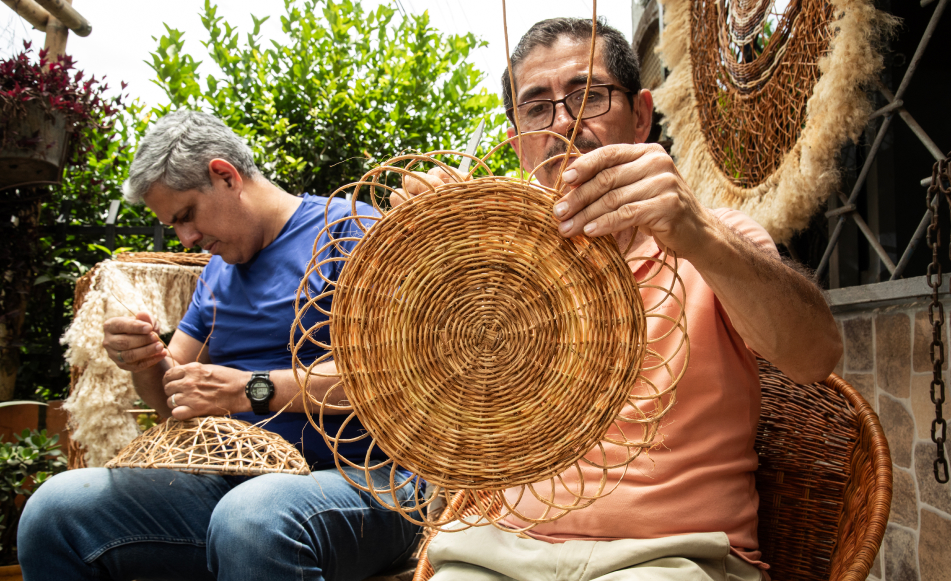
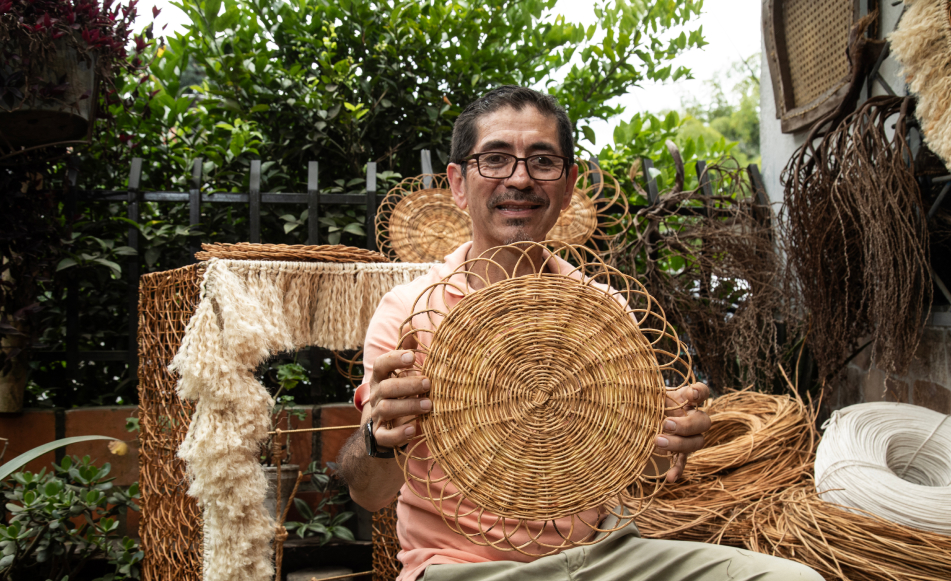
With José Edilson, you’re guaranteed a long conversation. Not only because he’s lived a thousand lives, but because he loves what he does and could happily spend a lifetime talking while weaving his baskets. And it’s curious, because although as a child he learned the craft from his grandparents and his uncles, it wasn’t until the pandemic that he truly discovered this path had been meant for him all along. Yet to realize it, he had to go as far as Jerusalem.
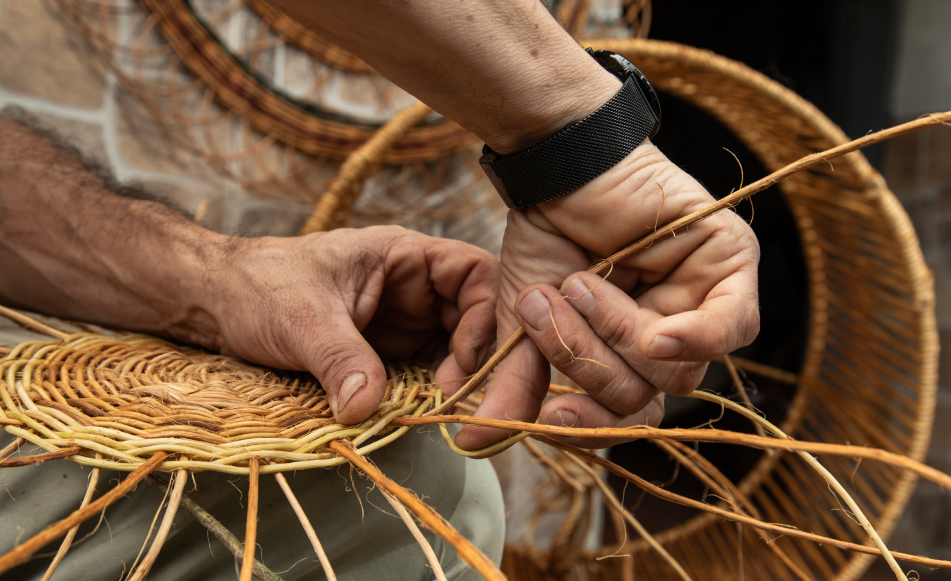
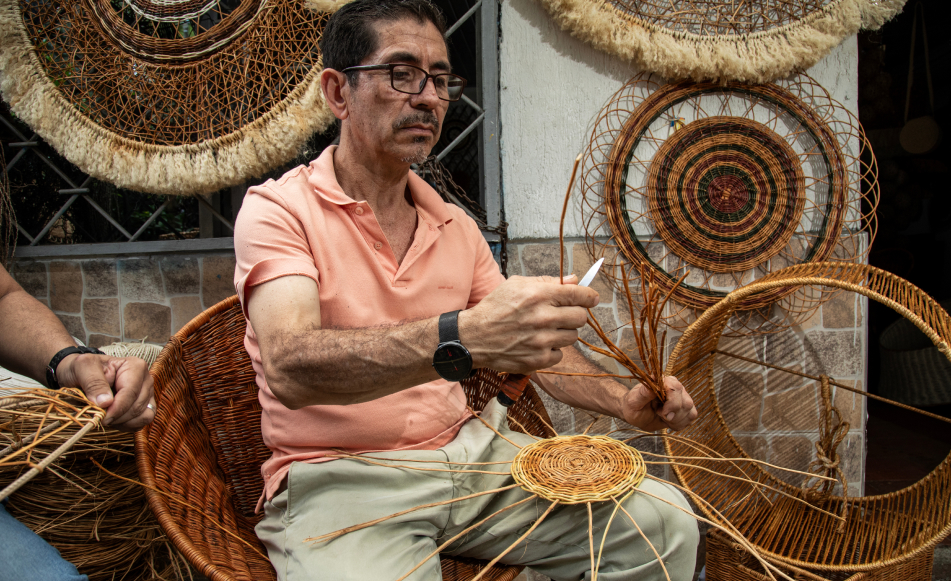
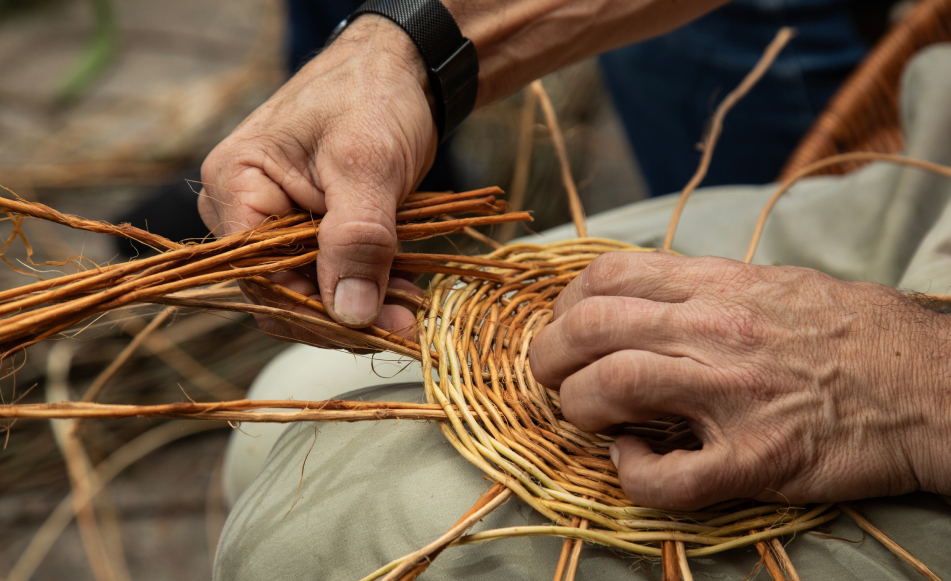
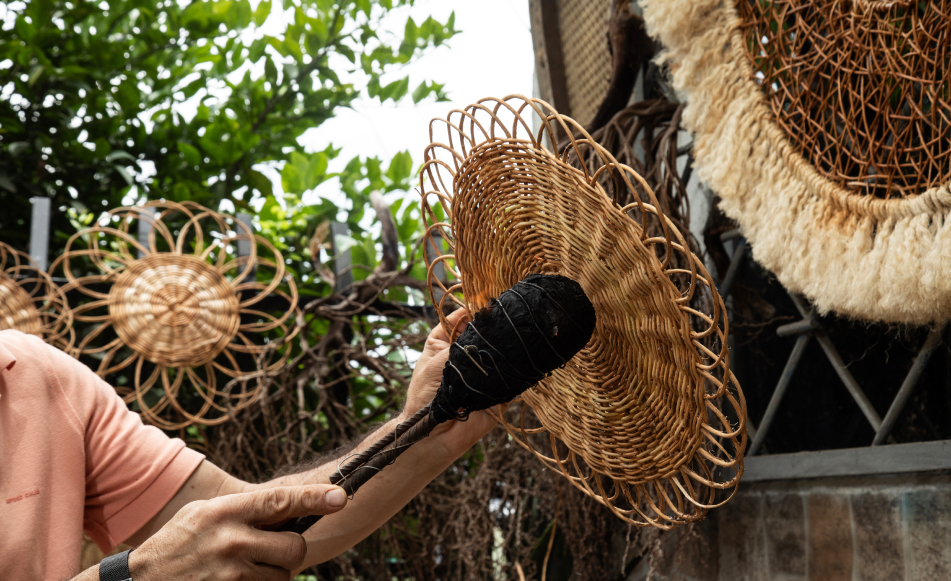
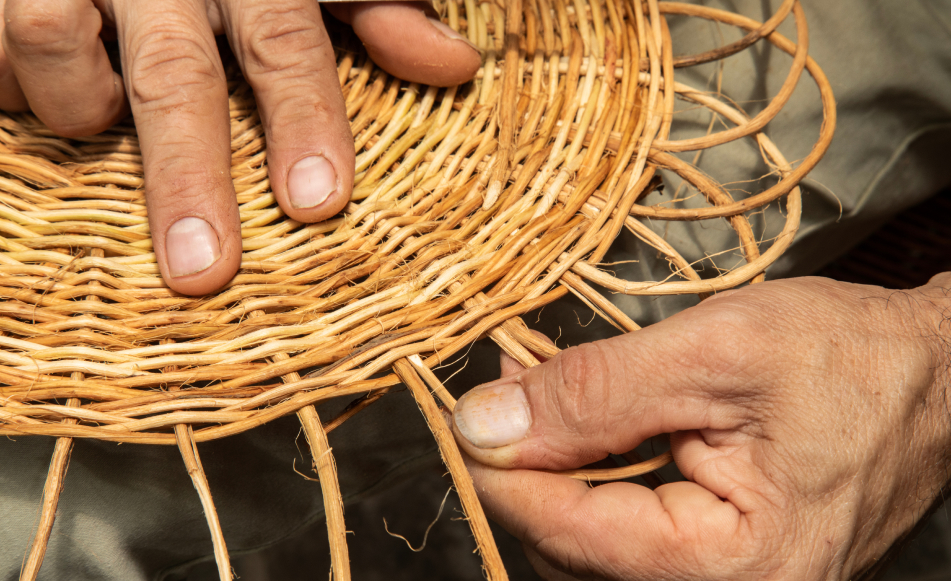
From an early age, he knew he held a gift within his hands. While most people find working with bejuco vine difficult—since it’s not a soft fiber and gathering it means going far beyond the nearest corner—for him it felt like play. He recalls not having toys at home, so he made his own out of guava paste boxes, using bottle caps for wheels. Later, he even built himself a bicycle out of bejuco. He never let hardship stop him, always finding inventive solutions. He learned by watching the agile hands of his uncles Homero and Nilsa, and also his aunt Vidalia. They, in turn, had inherited the knowledge from his grandparents, José Marín and Rosana Orrego. Basketry was a family tradition passed down on his mother’s side.
As a teenager, though, he had more than sharp observation to guide him. His aunt Vidalia was a master weaver with a great reputation, often invited to teach courses at Comfenalco, at the National Institute for the Blind, INCI, and even in prisons. Basketry was, without a doubt, a family vocation. One that, however, José Edilson himself took a long time to recognize. He admits he lost his taste for the craft in his twenties, when young love came along and basket-making didn’t bring enough money to take his girlfriends out. Poor pay and a lack of appreciation for the work disheartened him. So, he strayed from the path—for quite some time.
In that decades-long detour, he did it all. From working at fast-food stands and selling books in Armenia’s Pasaje Yanuba without even knowing how to read, to traveling across Israel with an art transporter—a journey that ended with his deportation back to Colombia for overstaying his visa. He laughs as he tells it, as if these incredible events had happened to someone else. Perhaps the closest he came to handcraft during those years was working with wax. He learned candle-making, mastered paraffin, and not only built a profitable business selling candles, but—after joining the Quindío Artisans’ Association—was invited to a cultural exhibition. There, he created a full period costume out of paraffin, complete with flowers and a hat, earning applause and a prize that reawakened his artisan roots. But then came the earthquake, and with it, the collapse of his business. What followed was a restless journey through countless jobs, anything to support his family.
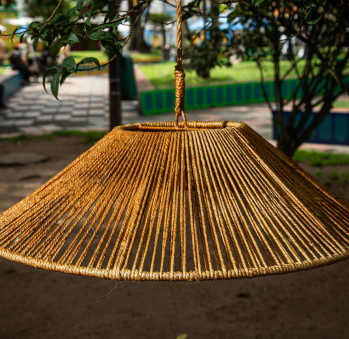
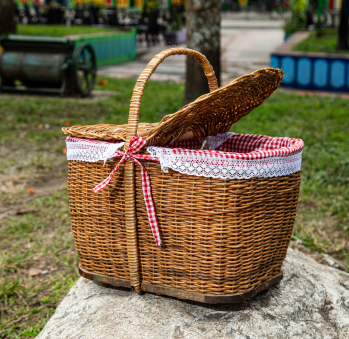
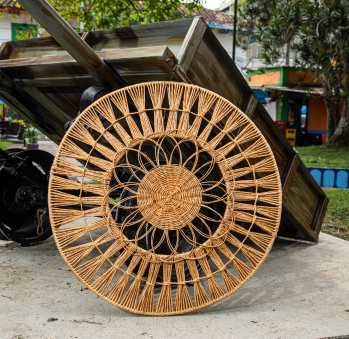
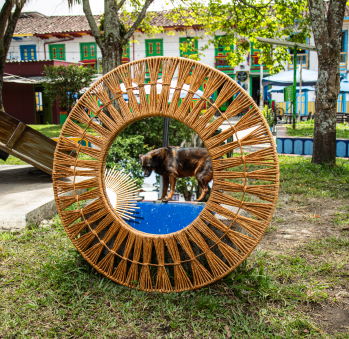
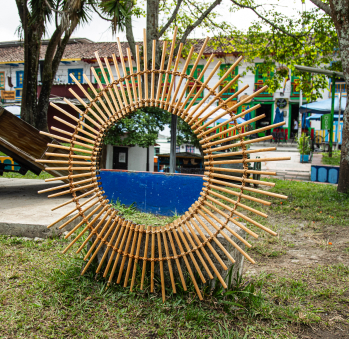
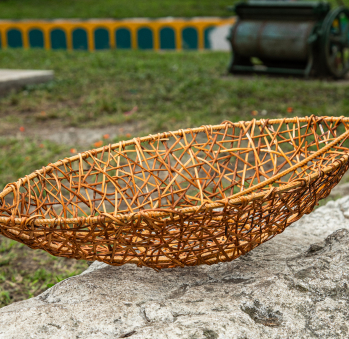
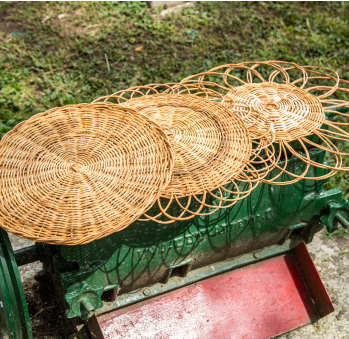
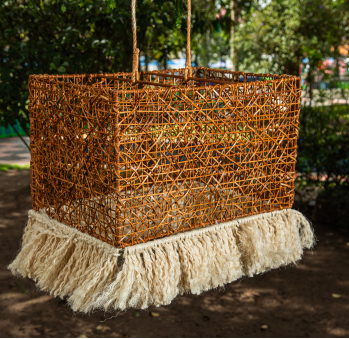
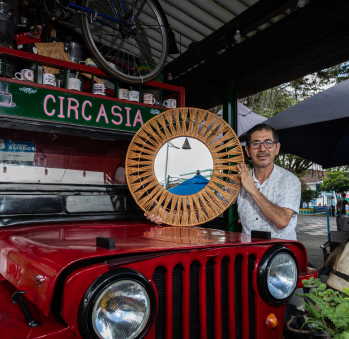
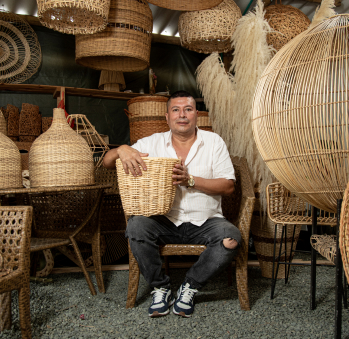
And family was always there. He recalls, with a lump in his throat, how upon returning deported, with nothing to his name, it was his ex-wife Claudia Milena and his daughter Marisa who broke open their piggy bank to help him start over. Today, Marisa is his right hand in the online sales of his now-thriving business, dedicated this time to basketry in bejuco, cabuya, and paper fiber. The pandemic, like for many, changed everything. It took him back to his origins, and faced him with the challenge of providing for his household, he turned to the one thing he knew how to do, the one thing that required little investment: craft. And with great fortune, the world—suddenly turned to social media—saw his baskets, animals, mirrors, and lamps, and the business took off. He dug deep into his memory, retrieving the lessons of his uncles and the teachings of his grandparents, and finally committed to the craft that was in his blood. Today, his workshop employs six people, ten if you count the raw material suppliers, and he cannot imagine doing anything other than weaving. It took him a long time to embrace his destiny, but now he knows he’ll never let it go. Simply because it makes him profoundly happy.
Workshop and process
Craft
Artisans along the way
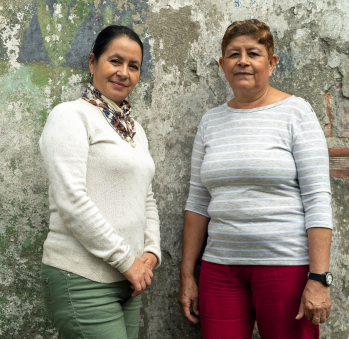
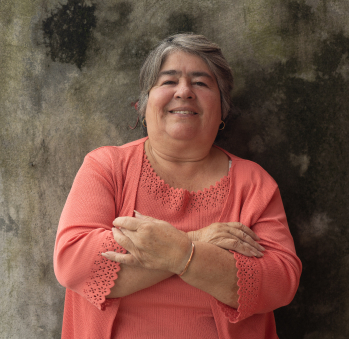
Artisans along the way



No puede copiar contenido de esta página