
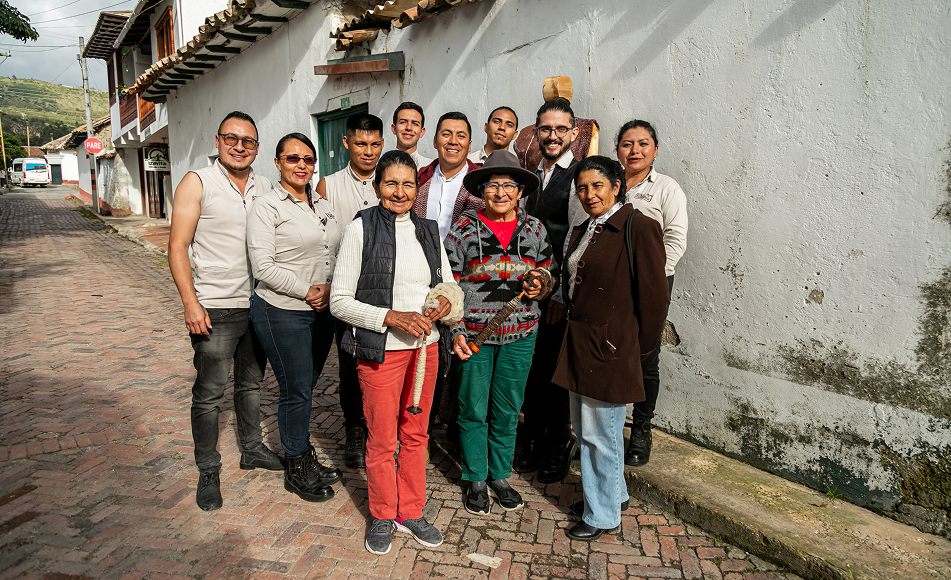
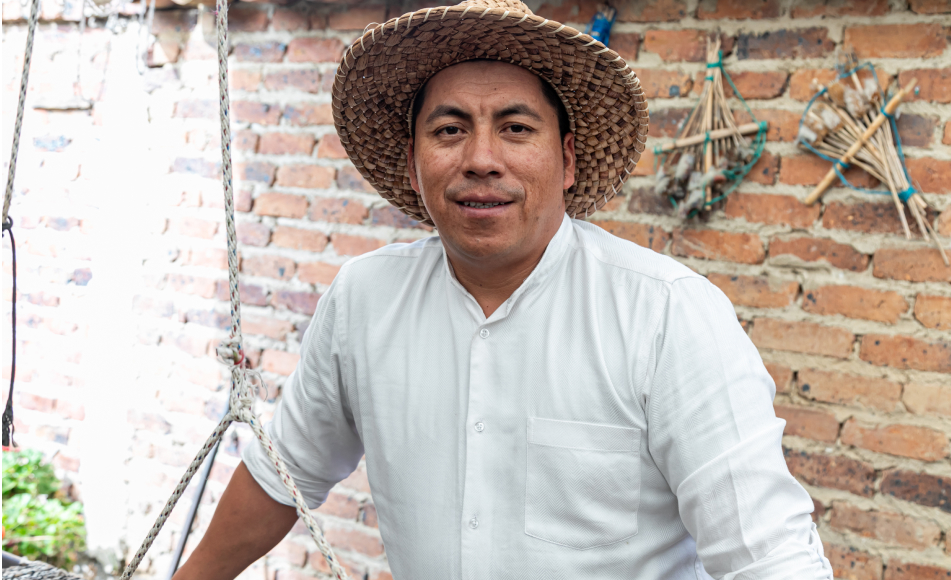
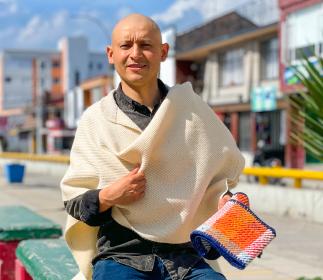
Silvino Patiño y Francisco Gómez
Workshop: Tejidos Rebancá
Craft: Weaving
Trail: Paipa-Iza and Paipa - Guacamayas Route
Location: Iza, Boyacá
SCHEDULE YOUR VISIT
Calle 4#5-52
3143332083
tejidosrebanca@gmail.com
@tejidosrebanca
@tejidosrebanca
Where to begin when one carries so much history? So many histories, in fact, because here we speak of two lives that ultimately came together through the warmth of wool: Silvino’s and Francisco’s. Let’s start with Silvino, who was named after his father—the father he lost when he was seven. It was also because of him that the family ended up in the Llanos, despite being from Boyacá, through friendships with El Cholo Valderrama. They also gave him the middle name Arjusto in honor of the Llanero prayer healer who removed the snake that had been sleeping on top of him when he was just a baby, back in Lejanías, Meta, where he was born. However, the ones he truly wants to speak about are his mother, Ana Rosa Molina, and his grandmother, Ana Silvia Rincón—mother of sixteen and the woman who inspired him to make weaving his life’s work and a source of pride. She was one of the first recipients of the Medal for Artisan Mastery, after a lifetime devoted to thread.
Now let’s move on to Francisco, who remembers himself surrounded by looms and fibers since childhood—not due to a longstanding family craft tradition, but because his mother used weaving as a therapeutic tool in her work. Francisco was born in Bogotá, yet when he begins to tell his story he admits he never liked big cities. Perhaps this is because, when he searches his memory, the feeling of home comes from his grandparents in the countryside of Rondón, Boyacá. And this memory, curiously enough, resurfaced in the most unexpected corner of the world: in an old elevator in Paris during the rainy season. What did those padded walls smell like? Like wet sheep, stored wool, the countryside, childhood.
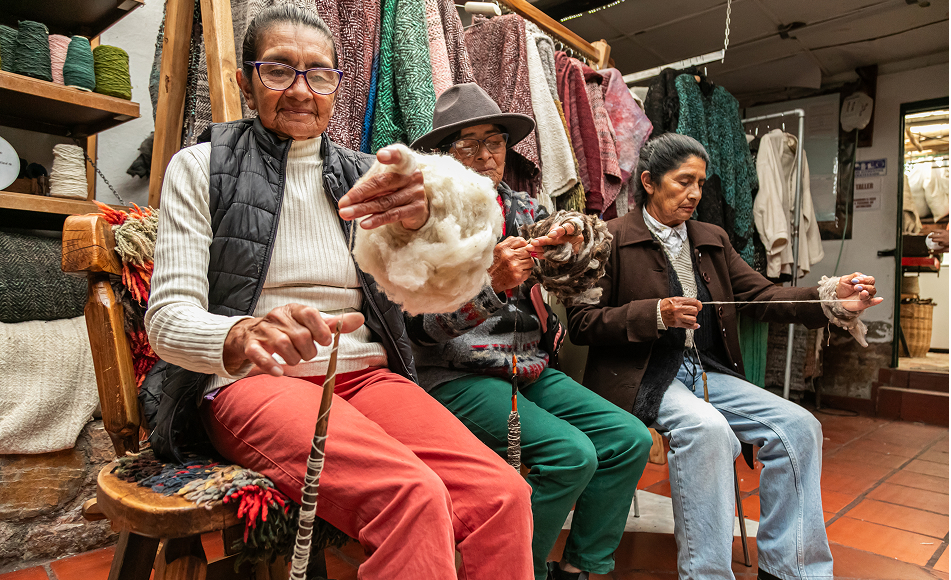
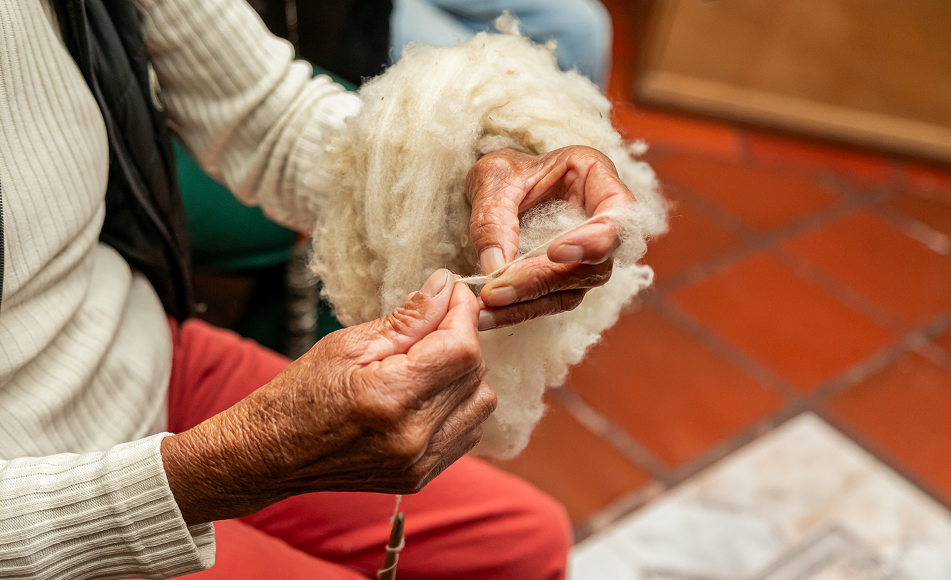
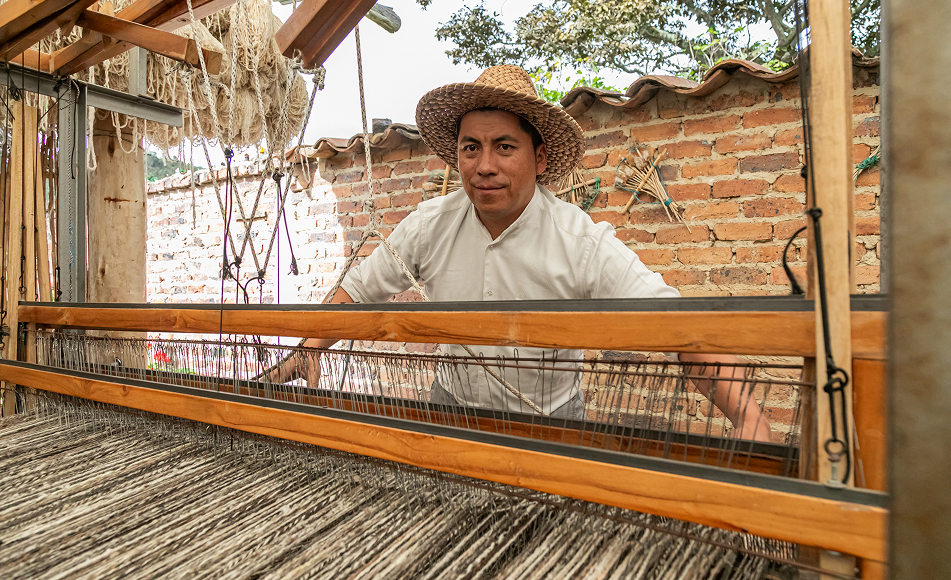
And here we see how life arranges the crossing of paths between those meant to meet. Silvino remembers that in his house, weaving was always present. His grandmother spun wool and taught her descendants that where there is wool, there is no hunger. Still, he explains that it was not a trade one could fully live from; everyone practiced it after long workdays, to avoid sitting idle after six in the evening. As he often repeats from what he learned in childhood: “In the countryside, they don’t teach you to be tired, or stressed, or depressed.” Perhaps that is why, when he worked as a security guard for 18 years, he used his downtime to weave. But although the craft ran in his blood, it was only when he studied Textile Design that he understood the incalculable value of what his ancestors had done. Embracing this love for wool, he learned to work on vertical and horizontal looms, with two needles, crochet, small looms, and netting.
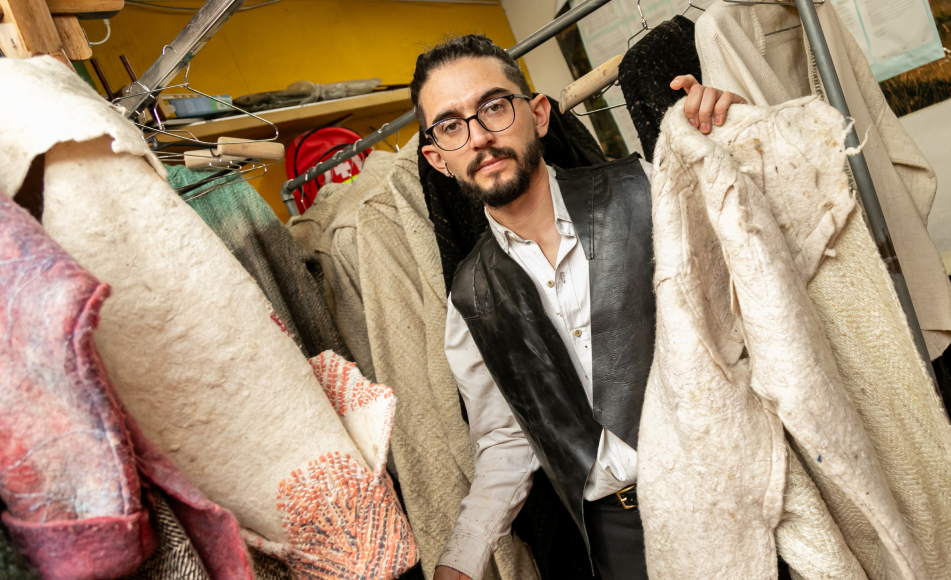
Francisco, for his part, came to craftsmanship almost as an act of resistance. While studying Fine Arts, the academy constantly insisted that what they—the artists—did had nothing to do with craft, always with a hint of disdain. But this never convinced him; he now realizes it unsettled him. So, when the time came to work on his thesis, he crossed the ocean in search of a broader perspective. He was troubled by the questions of belonging—where and what is home?—that deep exploration of where we come from and what we want to be. He needed distance to see it, to understand it. And it was in France that he discovered that weaving is not simply weaving: behind the movement of needles and looms lies community, trade, and the concrete desire to shelter and be sheltered. And this sense of giving was not taught to him by artists, but by artisans.
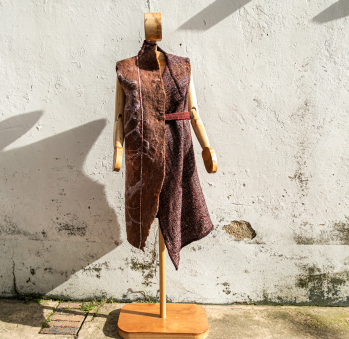
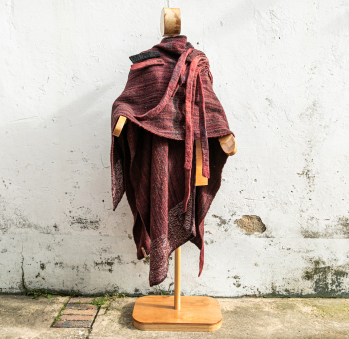
There is something in the humility of the artisan that moves them both—its genuineness. Silvino remembers going to school with the little crochet backpack his mother had made for him and his siblings; he sighs remembering how his belongings fell out through the tiny holes. Now he understands how hard everything was for her, and how well she did it. How well all these strong women who ground him did it. Francisco also recognizes that elders were essential in helping him understand that learning and knowledge do not necessarily come from school, that rural community dynamics built through shared work do not unravel but instead create networks as strong as knots—or as felt, which he loves for the dense amalgam that forms when wool is kneaded into a membrane resembling a sculpture.
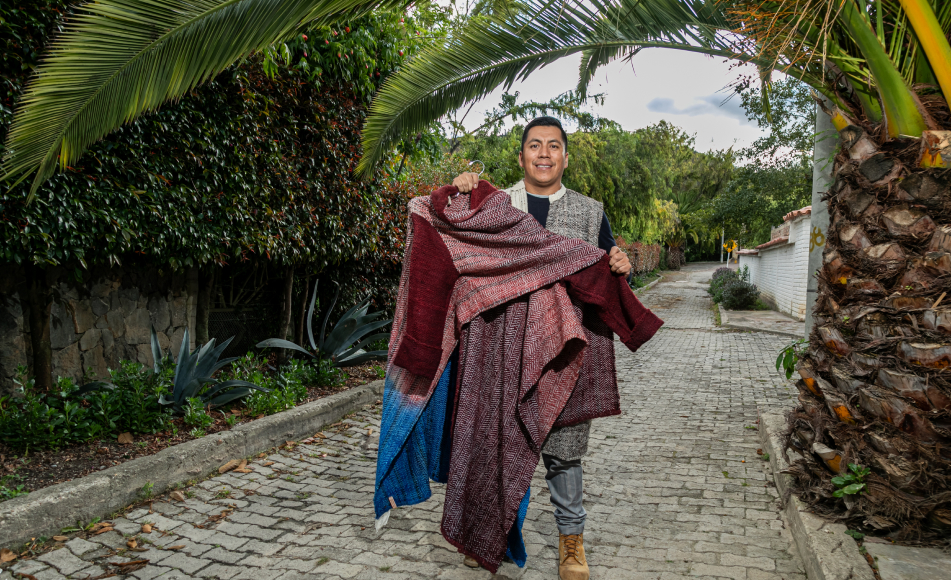
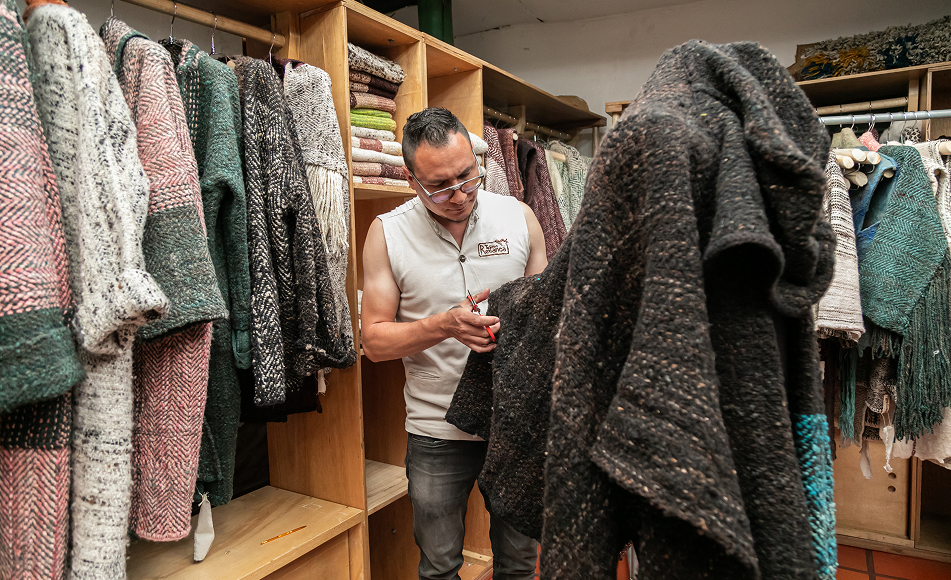
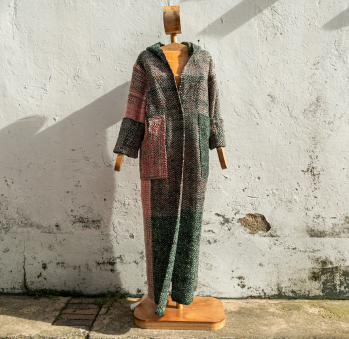
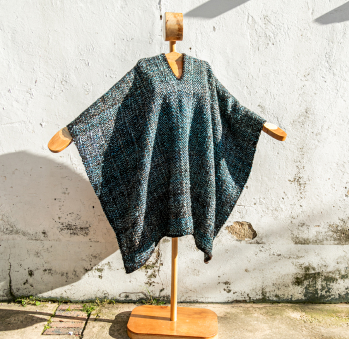
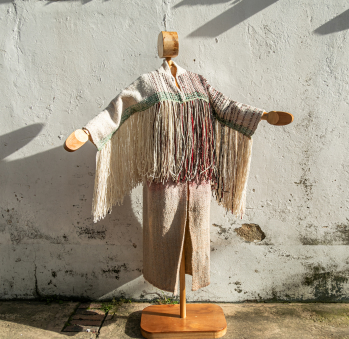
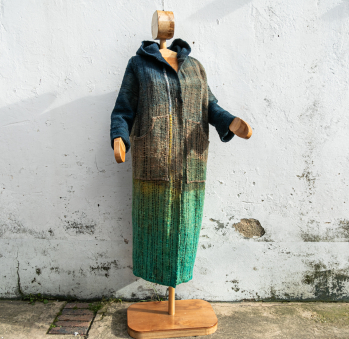
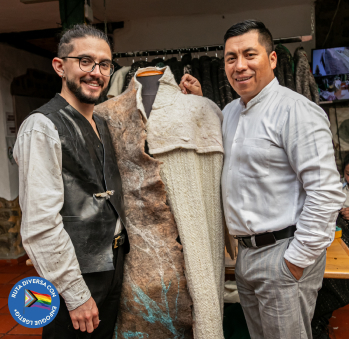
With so many shared questions, Tejidos Rebancá was born in 2016. It became the way Silvino and Francisco gave life to their imagination and carved out a place for wool in fashion. The brand’s name pays tribute to Silvino’s grandmother, who raised her sixteen children by selling rebancá seeds—the little plant used to feed birds, recognized by everyone in Boyacá and immortalized in the verses of carranga musician Jorge Velosa: I imagine my girl wondering what’s that they call arepa, mazamorra and rebancá.
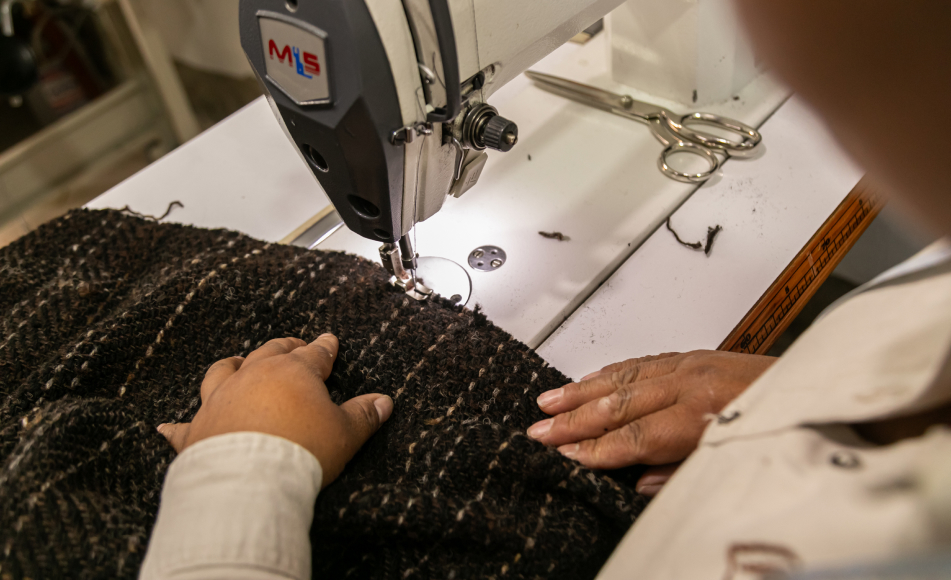
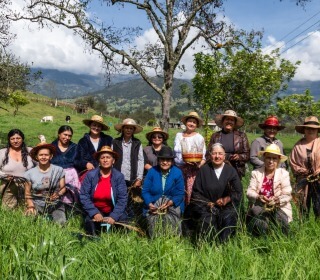
With Rebancá, they have succeeded in giving wool the value it deserves. Silvino promised himself that he would never again allow his grandmother or mother to be paid a full day’s work for less than what an hour is worth. That is why today he pays his spinners fair prices, positively impacting the quality of life of fifty families in Iza, the town where he eventually settled with Francisco. Francisco also brought to the business his specialization in natural dyes, always with that curiosity for what colors can tell. They work with ten people in their workshop and are reactivating seven more studios in the town—all in an effort to restore Iza’s former importance: it was once the origin of all the wool blankets in Colombia. It was a weaving town par excellence, with at least three looms in every home. Today, it comforts them to hear the looms’ sounds emerging once again, marking the revival of the weaving tradition. For them, being seen succeeding by other young people has become an inspiration for new generations to take up a life among wool.
Workshop and process
Craft
Artisans along the way
Artisans along the way



No puede copiar contenido de esta página