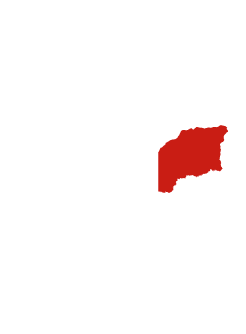

Quindío Route
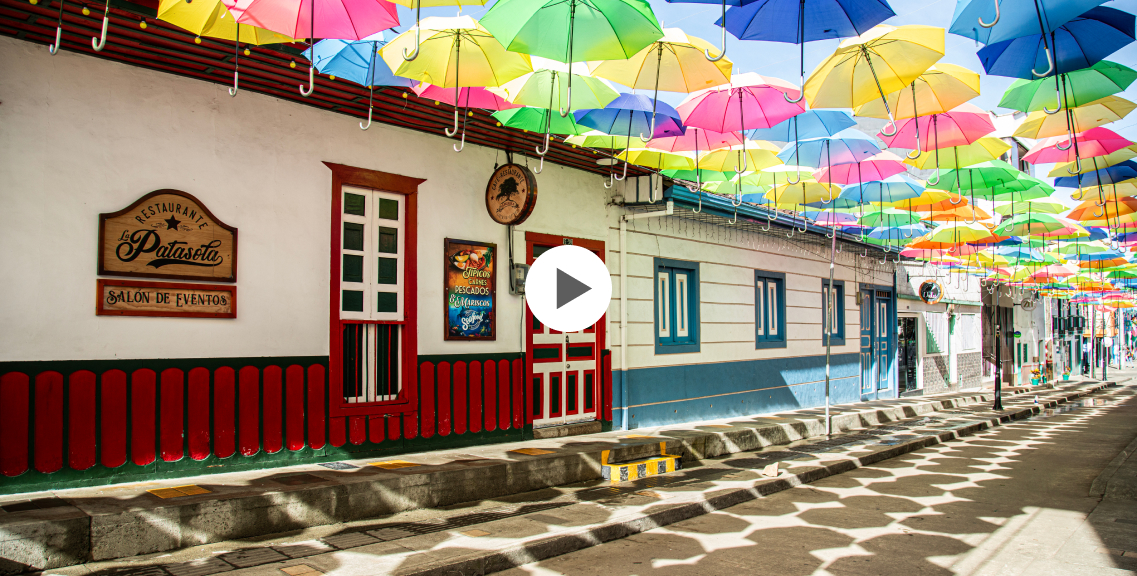
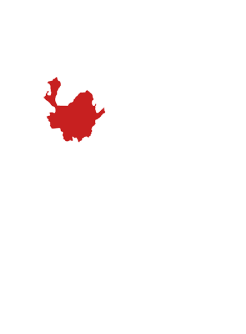
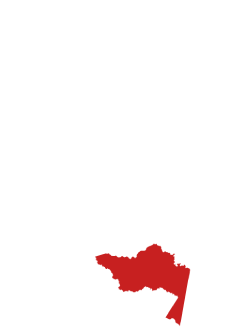
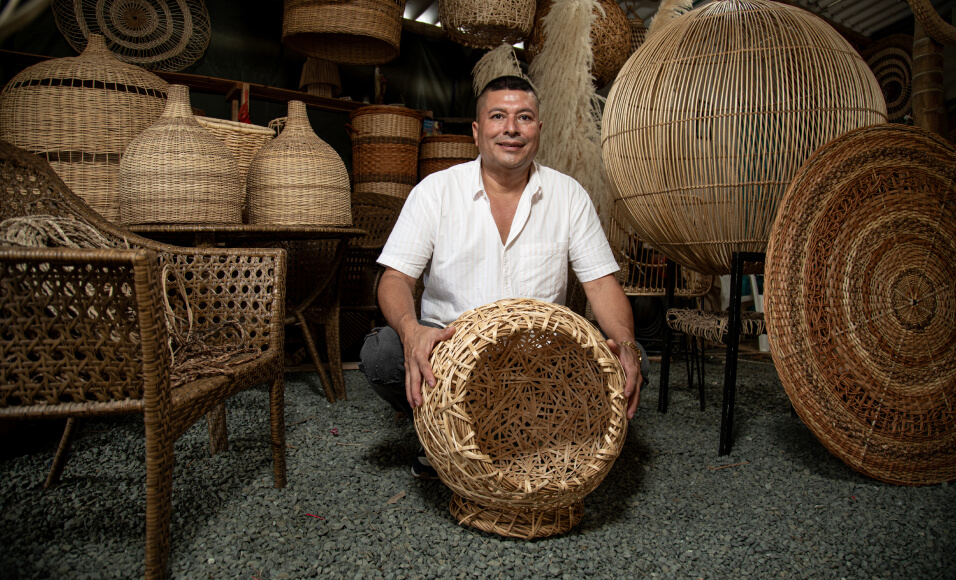
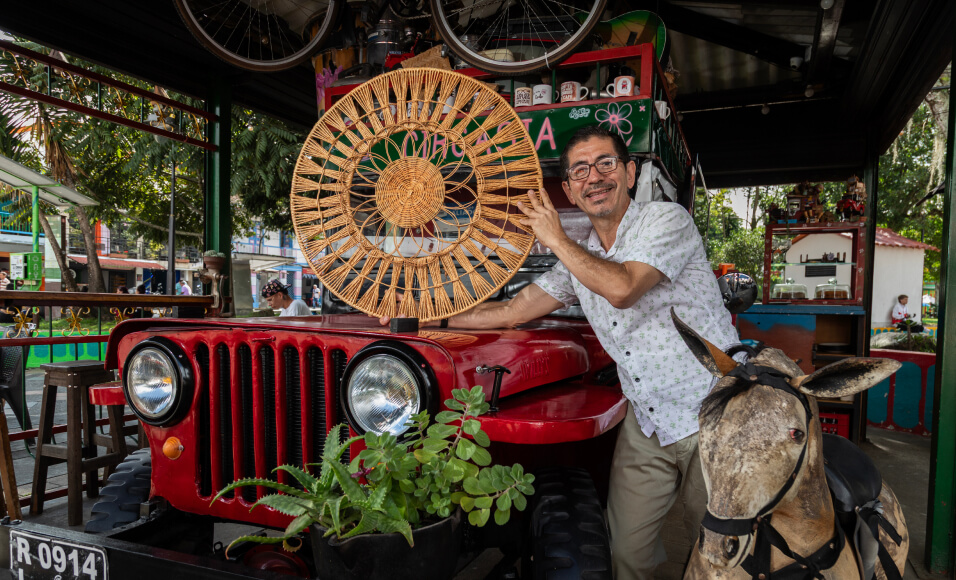
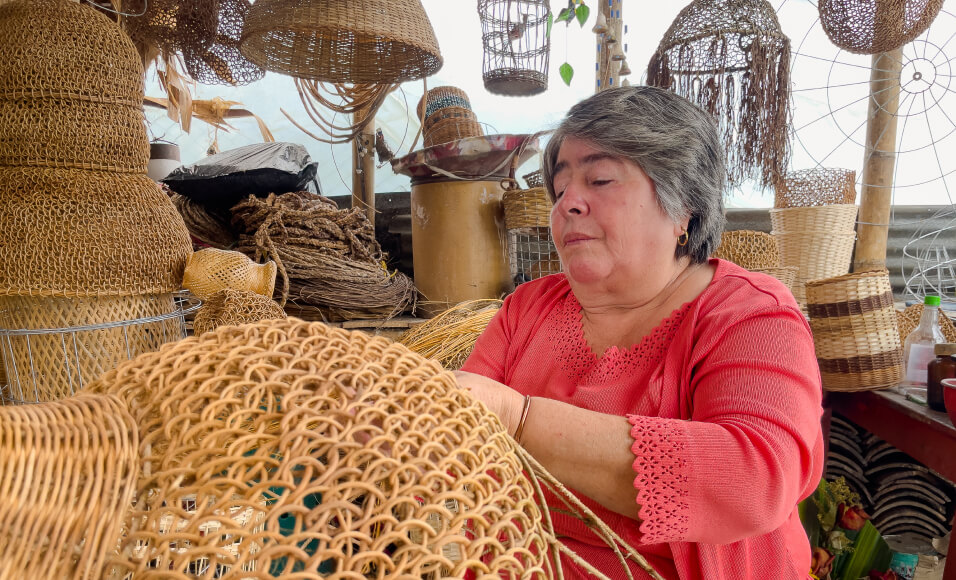
Visiting Quindío means setting foot in one of the most beautiful departments of Colombia—an icon of the Coffee Region along with its neighbors Risaralda and Caldas, and the birthplace of emblematic destinations for national tourism. Among them: the stunning “garden” of wax palms in the Cocora Valley, Salento—so iconic it appears on the $100,000 bills—as well as the Coffee National Park in Pueblo Tapado, an extraordinary open-air museum where you can learn everything about our most famous export product. Here, you’ll ride along roads and trails in the classic Willys jeep or jipao, a symbol of Antioquian colonization, and along the way discover the region’s charming haciendas with clay-tiled roofs and overflowing with flowers—many of which now welcome travelers with comfortable accommodations. On this route, which includes the towns of Filandia, Salento, Circasia, Quimbaya, La Tebaida and of course Armenia, the capital, you’ll meet master artisans whose creativity, skill, and versatility fill this territory with pride. As expected in these lands, coffee itself takes center stage, along with its constant companion: guadua, the remarkable bamboo-like plant with countless uses. Through the hands of these artisans, you’ll uncover new layers of the coffee story, and grasp how the region’s economy adapted when the traditional weaving of coffee sacks had to evolve and innovate to meet changing market demands. Masters of bejuco vine and banana sock showcase their talent in basketry of every kind. You’ll also find work in wood, leather, and textiles, as well as pottery traditions nourished by the area’s rich clays. And to crown it all, jewelry that revives the pre-Hispanic symbolism of the Quimbaya culture, or reimagines filigree with new designs. Without a doubt, this is a journey that will leave you amazed by all that you see and taste—and uplifted by the warm, welcoming voices that will greet you along the way.
Embark on a journey full of history
Artisans along the way
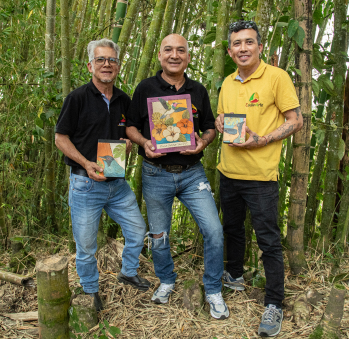
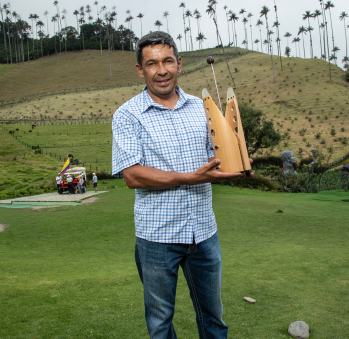
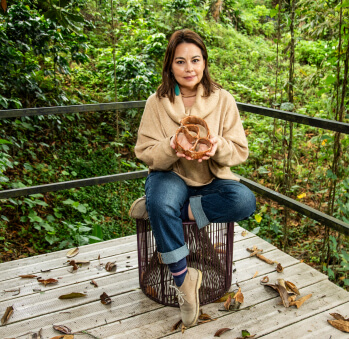
Artisans along the way
We recommended this tour
 Recommendations
Agendar anticipadamente la visita con los artesanos
Llevar dinero en efectivo
 Length
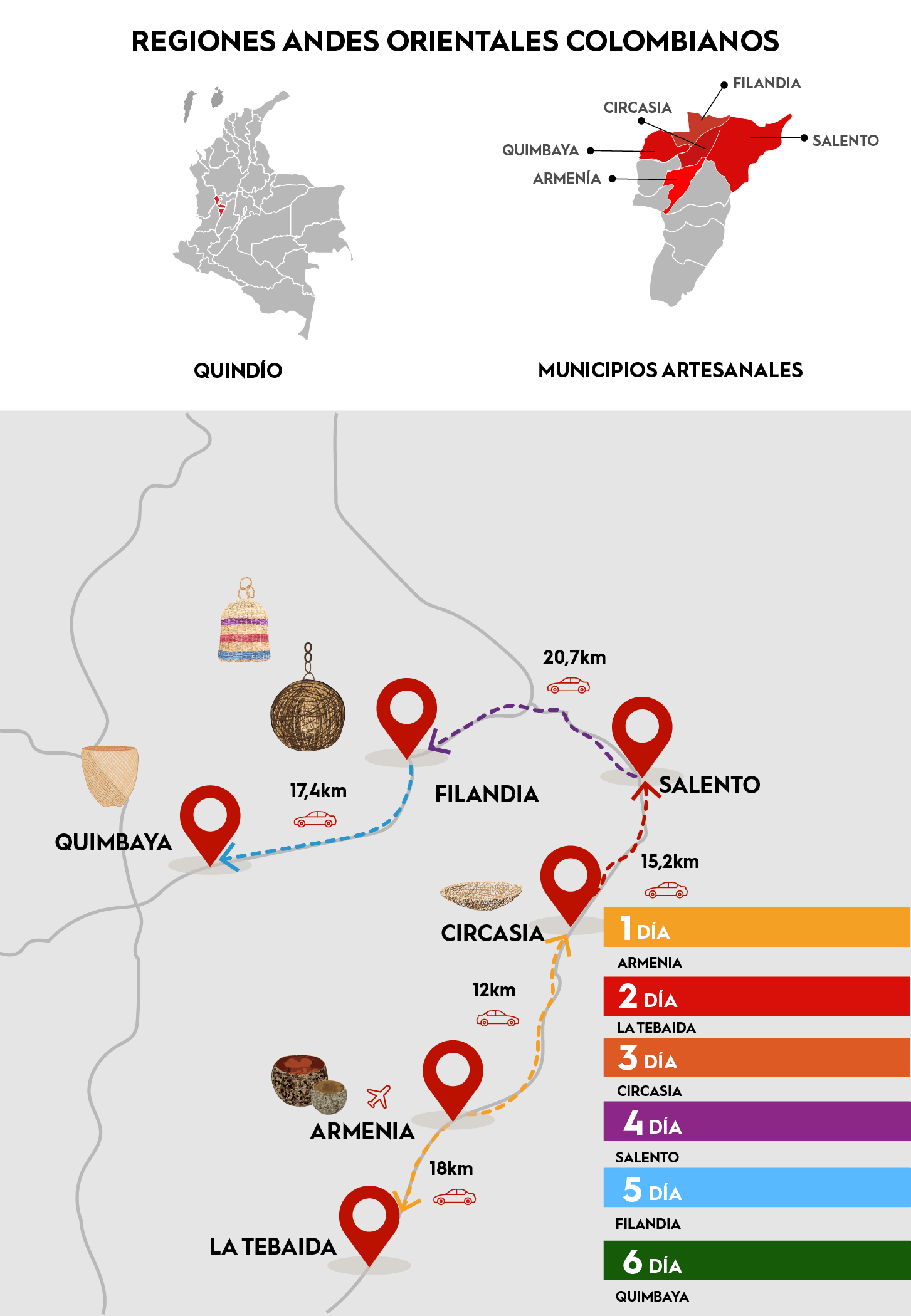
5 days
 Physical Complexity
 Transportation
Car or bus
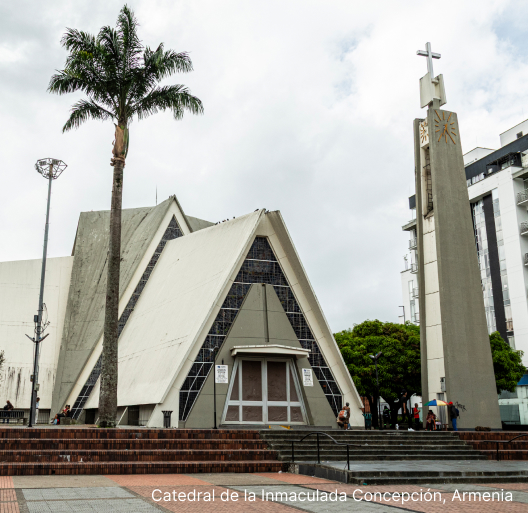
ARMENIA
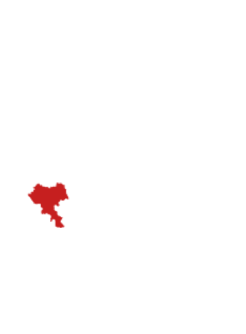
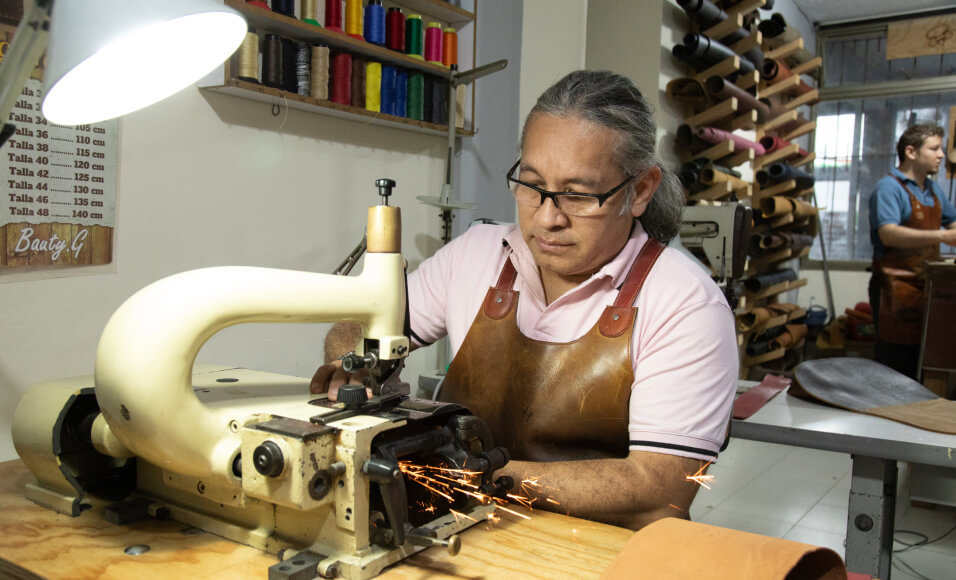
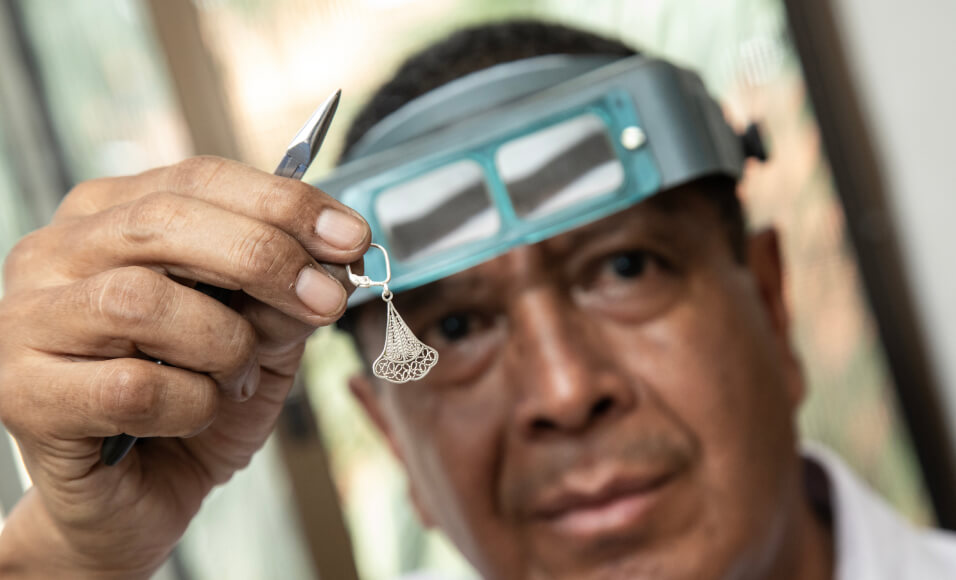
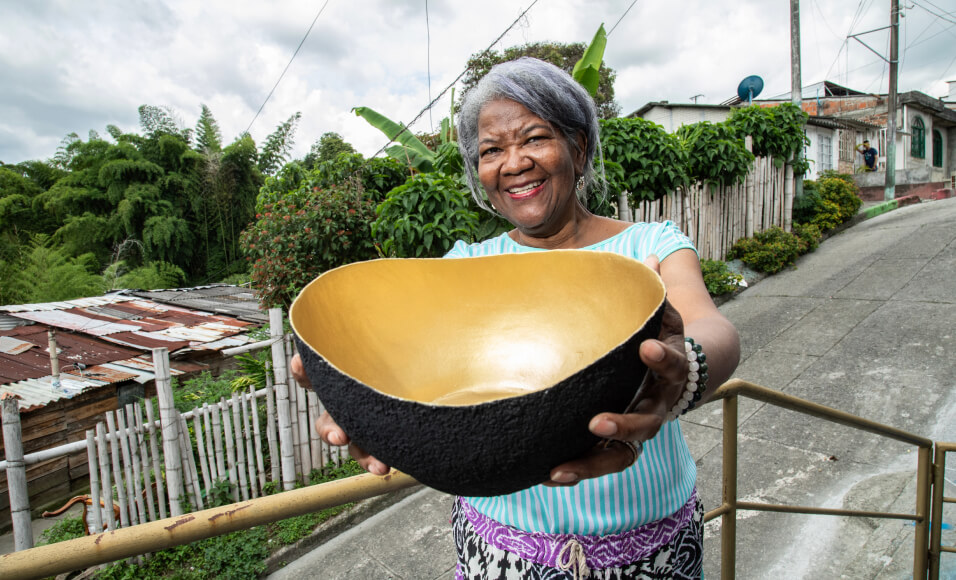
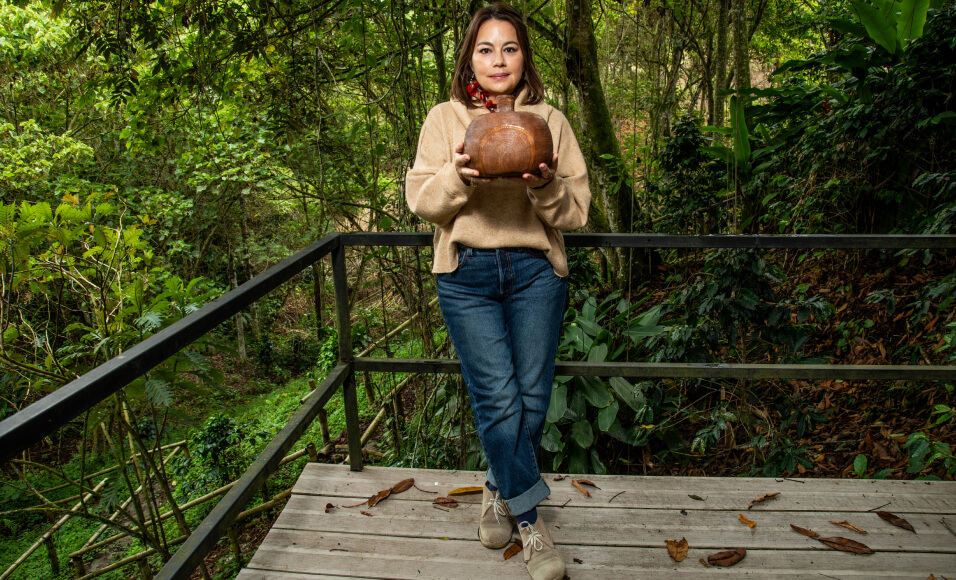
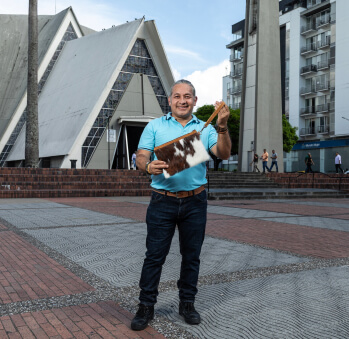
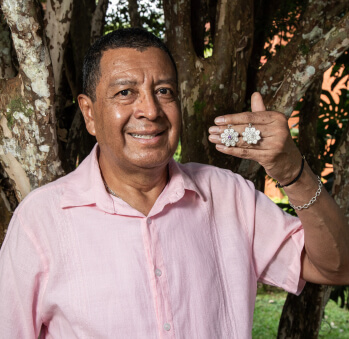
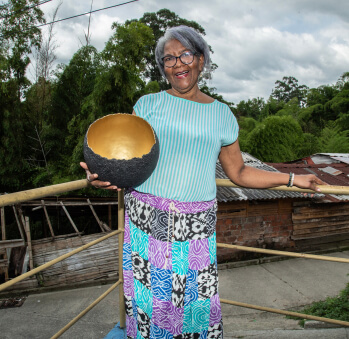
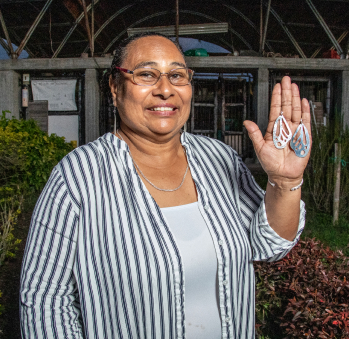
Welcome to the capital of the department, home of the impressive Quimbaya Gold Museum—a must-see not only for its heritage collection but also for its building, designed by renowned architect Rogelio Salmona. With its pleasant climate, Armenia is the ideal starting point, since all the towns we suggest are nearby. (If you’re arriving via Pereira, you can adjust the order: begin in Filandia, then continue on to Salento and Circasia, pass through Armenia, and finish in Quimbaya). Here you can visit the workshops of Ana Delia Barahona, who crafts with eggshell; potter Aminah Koradi; leatherworker José Alejandro Bautista; and jeweler Luis Leonardo Domínguez. Two must-do excursions just half an hour from the capital: the Coffee National Park and the Quindío Botanical Garden (toward Calarcá). Although not officially on this route, other nearby municipalities also offer attractions. La Tebaida has become a gastronomic hotspot; in Pijao, discover frailejones in the stunning Chilli Páramo; in Génova, enjoy exceptional coffee and visit the Juntas Lagoon; in Córdoba, explore the Río Verde waterfalls. And don’t miss Buenavista, home to the famous Café San Alberto—be sure to taste it at its source!
CIRCASIA
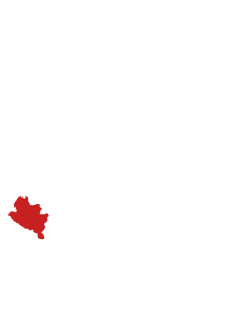
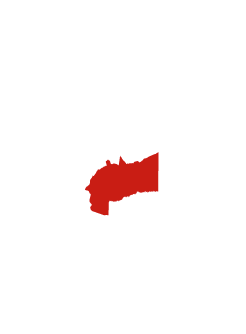
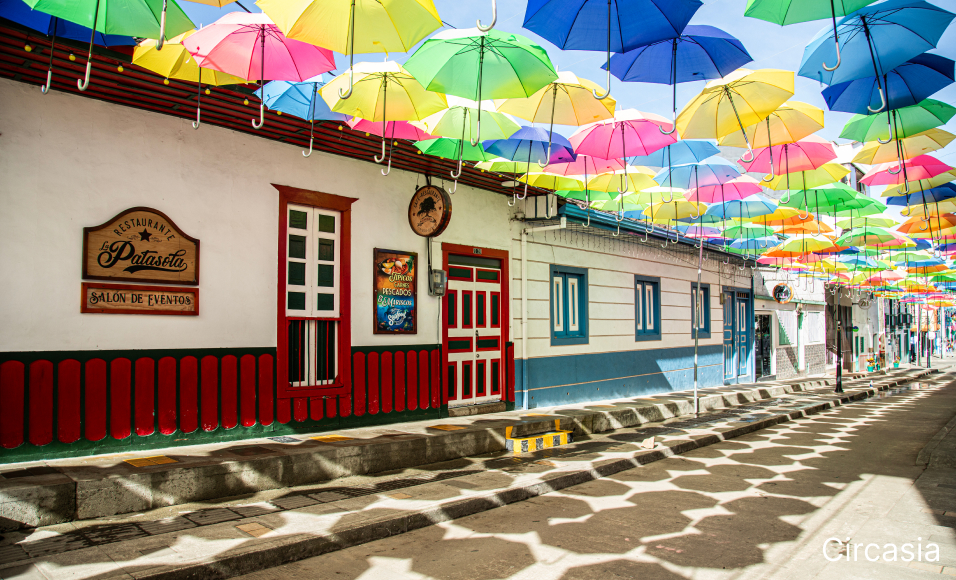
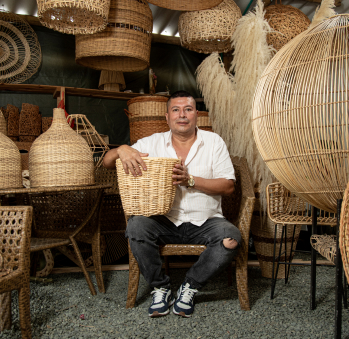
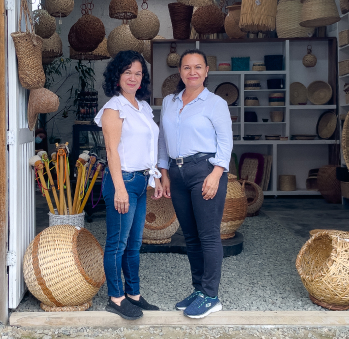
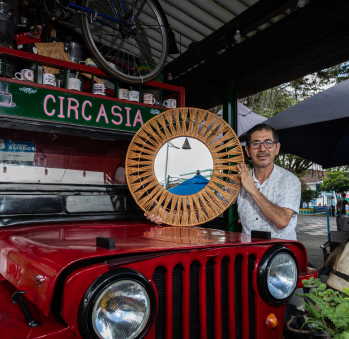
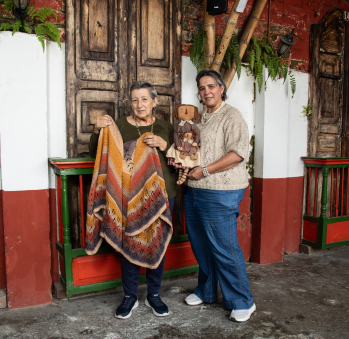
Just 12 km from Armenia (about 25 minutes by car), Circasia is a colorful, welcoming town. Here you can visit the Martínez brothers, inventors of a remarkable craft technique: veneering with the inner sheath of guadua bamboo, using the plant’s outer covering as it grows. Stop by the beautiful sewing workshop of Clemencia and her daughter Elisa, who weave stories into every piece, and meet José Edilson López, a master of bejuco vine. Don’t miss the Libre Cemetery, an architectural landmark considered a continental monument to freedom, tolerance, and love. Also visit the Cipriano Echeverri House Museum, a heritage site housed in a traditional home built between 1880 and 1930. Finally, climb to the Alto de la Cruz viewpoint—a 15-meter wooden tower offering breathtaking views of the town and its surroundings.
SALENTO
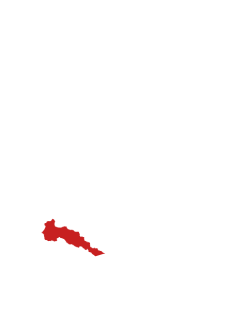
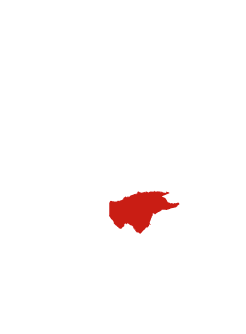
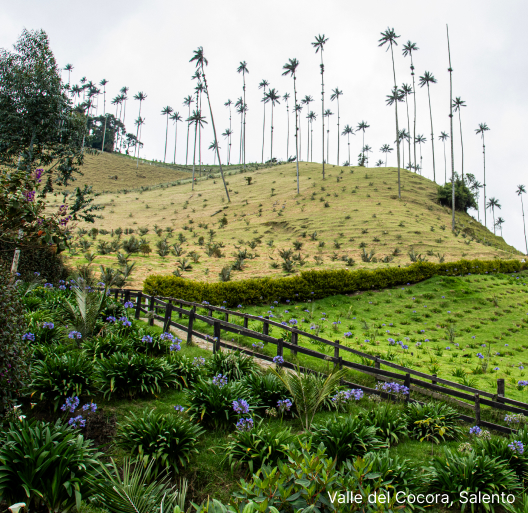
Just 12 km from the famous Cocora Valley, land of the wax palms, Salento is the oldest Heritage Town in Quindío. Be sure to visit the Artisan Village of Salento, home to some of the region’s finest artisans. Knock on the door of Duberly Galeano to discover the incredible potential of guadua and native woods. You can also take a coffee tour at El Ocaso Coffee Farm, perched just 4 km away (20 minutes by car or an hour on foot). The farm’s unique setting, surrounded by mountains and accompanied by the murmur of the Quindío River flowing 300 meters below, is unforgettable. It also features a century-old traditional coffee farmhouse that offers lodging. And if you’re adventurous, you’re in the right place for exploring Los Nevados National Natural Park—a páramo landscape with perpetual snow, where temperatures range between 14°C and 3°C. Its most famous peaks include Nevado del Ruiz, Nevado del Tolima, and Santa Isabel.
FILANDIA
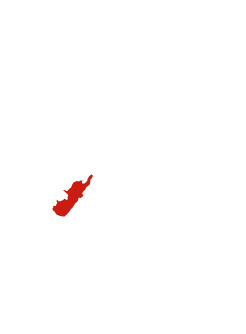
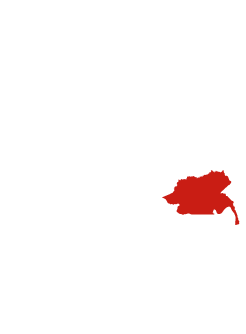
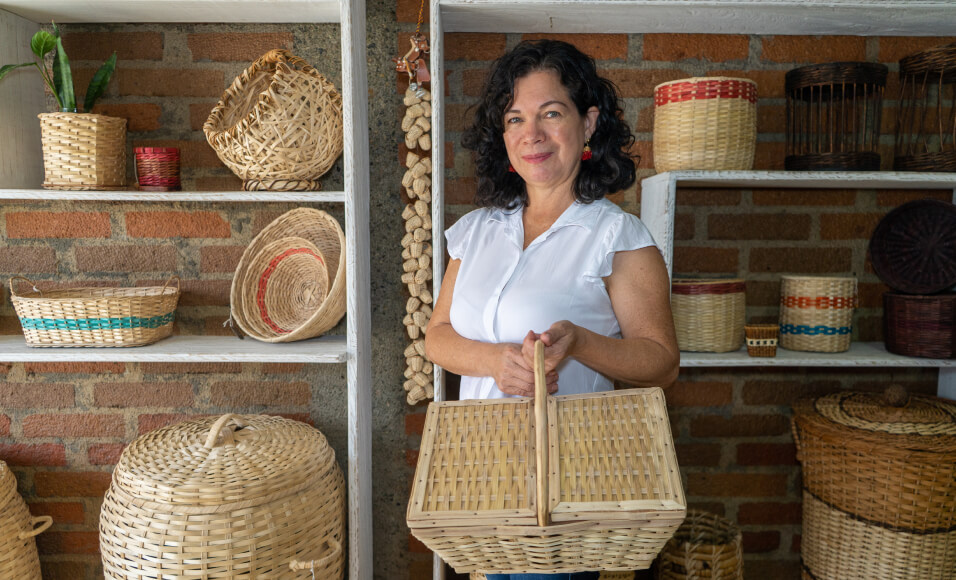
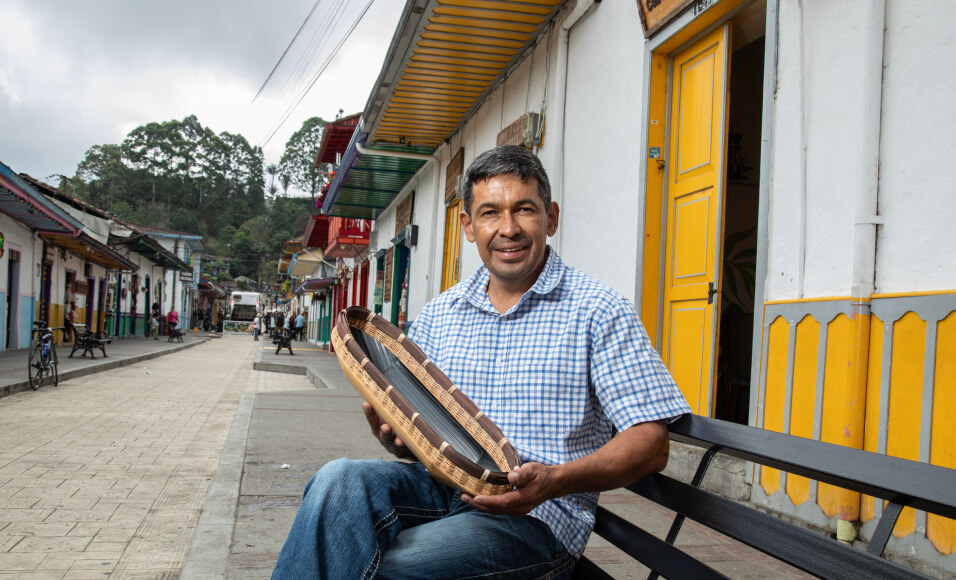
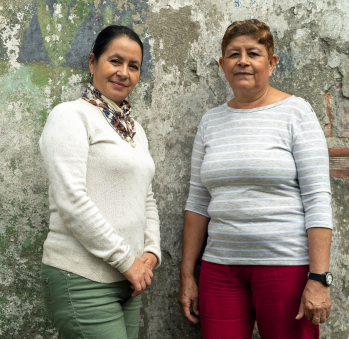
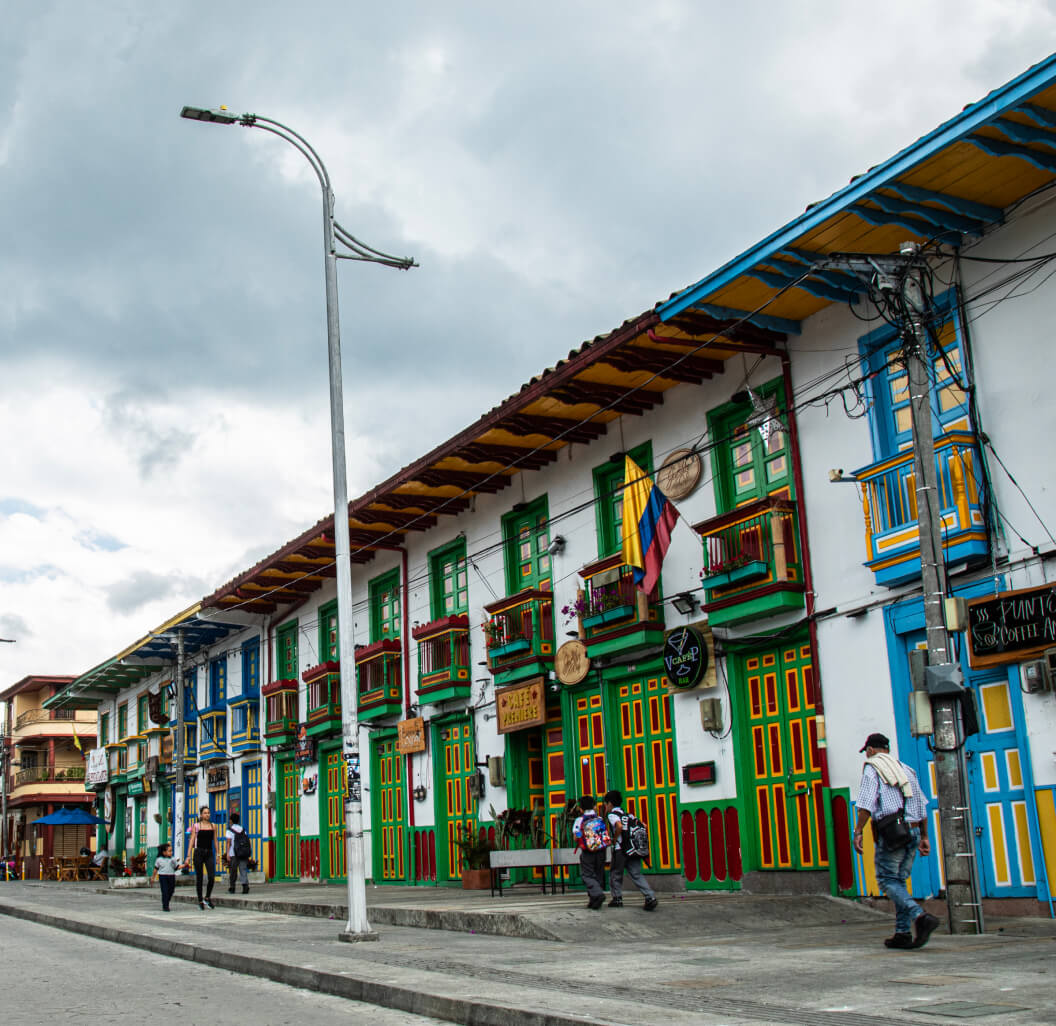
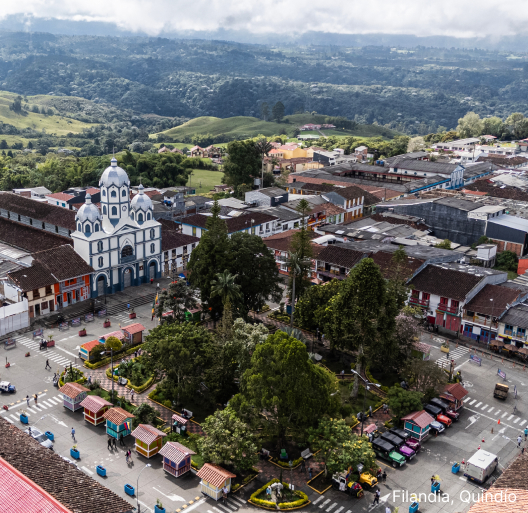
What will stay with you forever from Filandia, this charming town, are its colors: bright doors and facades, and the smiles of its warm, talkative people. With slightly cooler temperatures than the rest of Quindío, pack a light jacket or umbrella for the gentle rains. Known as “Quindío’s Balcony” this Pueblo Patrimonio is picture-perfect. Stroll through its plaza and streets, taste the traditional solteritas and casadas cookies filled with condensed milk, and visit the majestic María Inmaculada Parish. Here you’ll also meet Ruby Arias, sisters Alida Márquez and Ofelia Marín, and John Fredy Buitrago—master weavers eager to share the ABCs of their craft. Don’t miss the Interpretation Center From Vine to Basket, essential to understanding this region’s weaving traditions. Stop by the Record and Music Museum and the Artisan House Photo Archive, which preserves the town’s history through more than 2,000 photographs. After so much excitement, enjoy a caspiroleta, a warm drink served with toast, before a hearty lunch of typical or international cuisine. We recommend spending two days in Filandia: one to meet the artisans, and another for ecotourism—birdwatching, spotting howler monkeys, and hiking in the Barbas-Bremen Nature Reserve. For this outing, enjoy a fiambre, a traditional meal wrapped in plantain leaves, delicious and unmissable.
QUIMBAYA
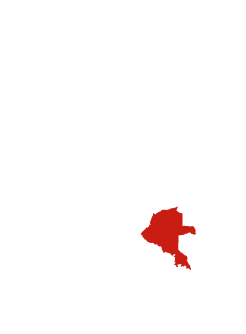
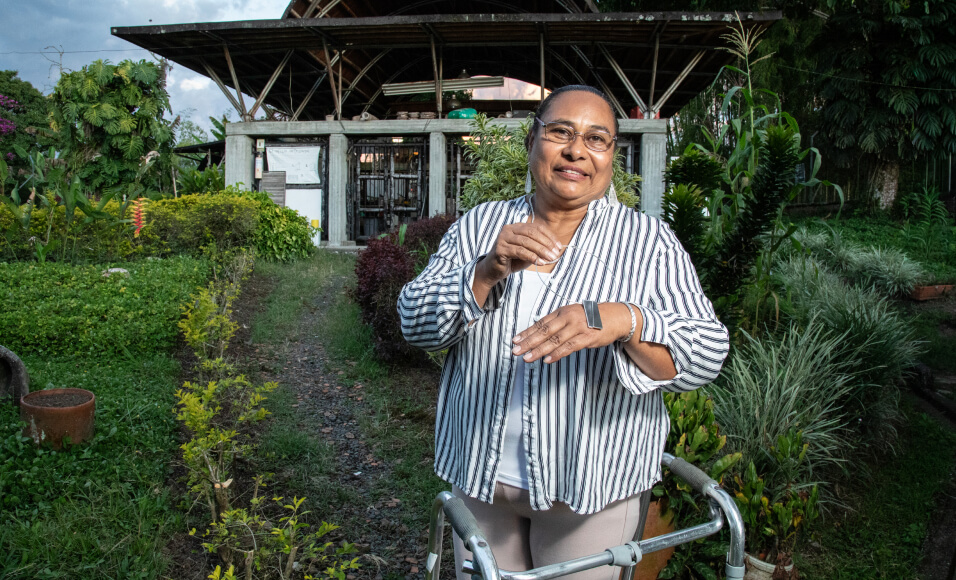
Just 17 km from Filandia, Quimbaya greets you with enormous sculptures inspired by Quimbaya culture, including its famous poporo, carved in relief on walls and cliffs around town. In fact, strolling past them is known as barranquismo. With these images in mind, meeting the jewelers who recreate such pieces in gold and silver is unforgettable. Be sure to visit the Collazos family’s weaving workshop, and Asodisquim, led by Gladis Quintero, an extraordinary woman who transformed disability into strength. Either stop could fill an entire morning. With its mild climate, shorts and a t-shirt are all you need. Cool off with a glass of guarapo in the main square, or try the unbeatable combo of a buñuelo with cold oatmeal drink. As deeply Catholic towns, Quimbaya is home to the Jesús, María y José Church, which features one of the largest Christ sculptures in Latin America, crafted by Buenaventura Malagón. For nature lovers, enjoy rafting on the river and discovering the local flora and fauna. Saturdays are a particularly vibrant day to visit, as farmers come down from the hills to fill the market square with abundance. In the plaza you’ll also find the Willys jeep station—don’t miss a ride through the trails and hamlets, full of laughter and charm. And right next door is Panaca Park, a must-see for animal lovers.
Traditional cuisine
and typical bites
Provoke yourself
Don't leave without eating this 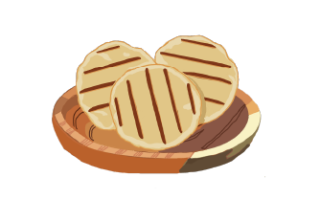
“Gastronomy is a demonstration of the pride we feel for our territory.” Roca Brothers – El Celler de Can Roca
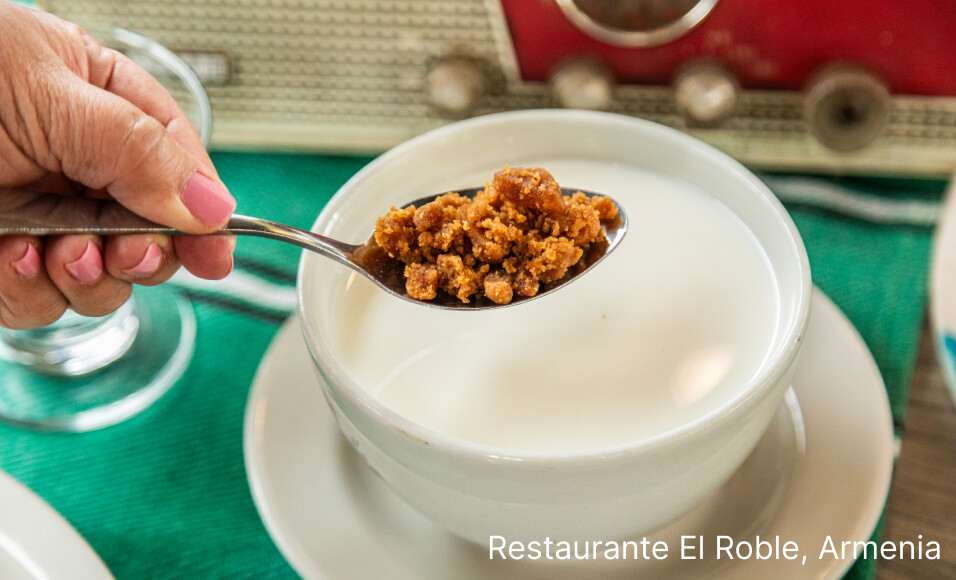
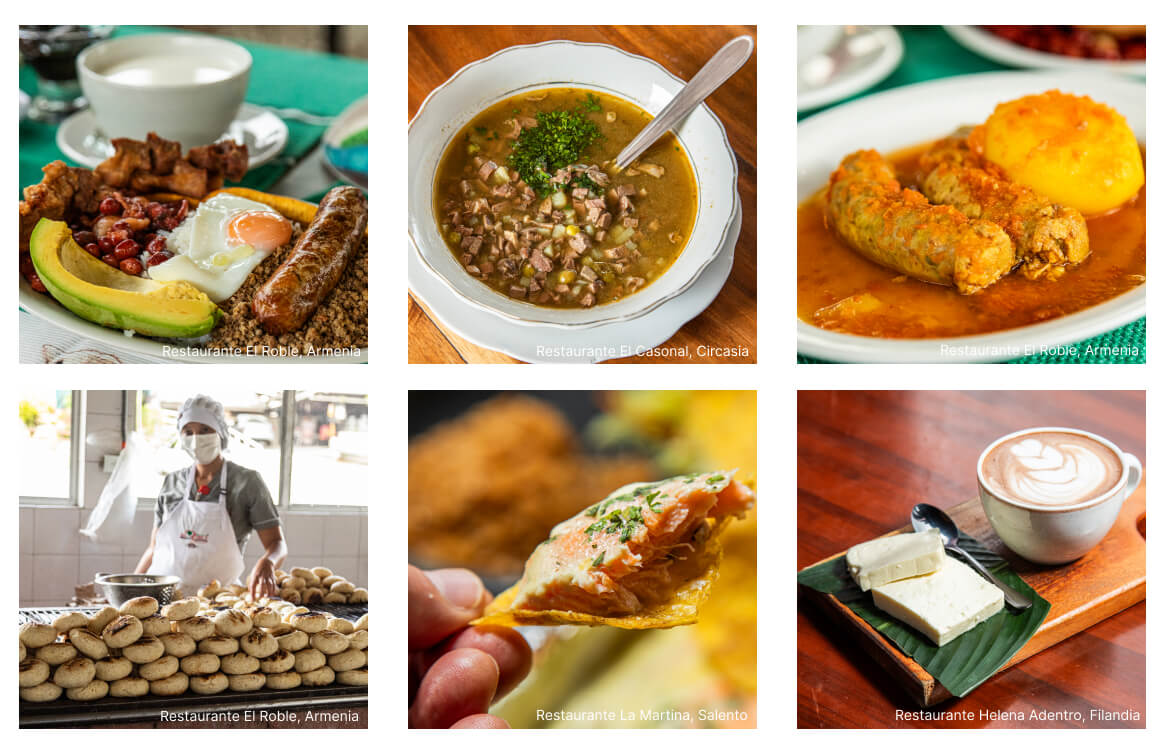
When you arrive in Armenia, land of the cuyabros—a demonym taken from the cuyabra fruit, native to the region—Doña Mirita’s boiled chorizos at El Roble restaurant are a true delight for the palate. They’re cooked with a tomato and onion stew and served with potatoes; and if you prefer, you can ask for them in a small cup with a spoonful of rice. Another option is the bandeja paisa, which many traditional restaurants serve with arepas, hogao (tomato-onion sauce), limes, and butter. And you can’t leave without tasting the popular mazamorra, a thick, corn-based food. Finger-licking good!
Let’s follow the influence of Antioquian traditions. That translates into a bandeja paisa or calentao’ paisa, and they must be enjoyed for their abundance and for being so typical of this region. Calentao’, for example, is a mix of leftovers from the night before: rice, ripe plantain, beans, ground meat, chorizo, arepa—and the classic finishing touch is a fried egg on top. In Armenia, El Típico Montañero is the perfect restaurant for this mission. Enjoy your meal!
If your trip finds you in Circasia on a Sunday, the best option is hen sancocho, that thick, nourishing broth served with yucca, corn on the cob, and plantain. Ask for Restaurante Canela Que Que—that’s the spot!
And if you don’t make it there, no rush: further along in Quimbaya you’ll find Guanapalo Restaurante, whose specialty is beans with rib cartilage.
And a little bonus: in Armenia there are two great options for vegans and vegetarians. To tease your appetite a bit, at Cerón Restaurante they start with rolls filled with two types of mushrooms and onion, seasoned with herbs from their garden, lulo nectar, honey, soy sauce, and a few other touches that turn it into a true delicacy. And ask for the Venetian risotto—you’ll definitely like it.
Another place to add to the list is BoticaSol, focused on healthy eating. To feed the soul, we recommend the cauliflower tacos with sweet-and-sour chipotle sauce. They also serve tempura tofu with sweet-and-sour sauce—a detail of refined charm.
To lunch we go 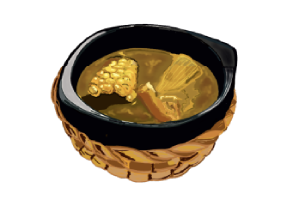
Continuing along the gastronomic route, asadura soup is a dish made with small pieces of liver, potato, and well-cooked peas that give it a soft texture. It becomes a deep, dark broth where all the flavors blend into one. At El Casonal restaurant in Circasia, they serve it with grilled tongue and beans. Here in Colombia we call it a “wake-the-dead” soup—because of how nourishing and energizing it is.
One way to end up truly trancao’, as they say in the Colombian Andes when you’re completely full and satisfied, is to order a plate of cacheo for lunch. Its ingredients are organ meats such as chicken gizzards or hearts. A nap after this fantastic street-food banquet is absolutely essential.
In Salento, there’s a restaurant called Donde Laurita, where traditional food is laid out on the table so locals and foreigners alike can enjoy the products of such fertile land.
If you’re in the mood to breathe fresh air, feel at peace, and eat well, in the Gaitán neighborhood—behind the Municipal Sports Field in Quimbaya—you’ll find La Reserva del Colibrí restaurant. Among their dishes is a pork chop marinated with ginger honey and pineapple; Fridays are frijolada days, and we must confess that their sancocho often becomes the perfect excuse to gather around the table and share food. Enjoy!
Flavors to discover and snack on 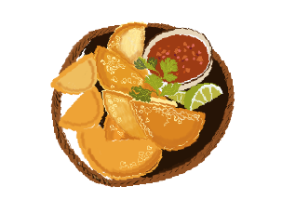
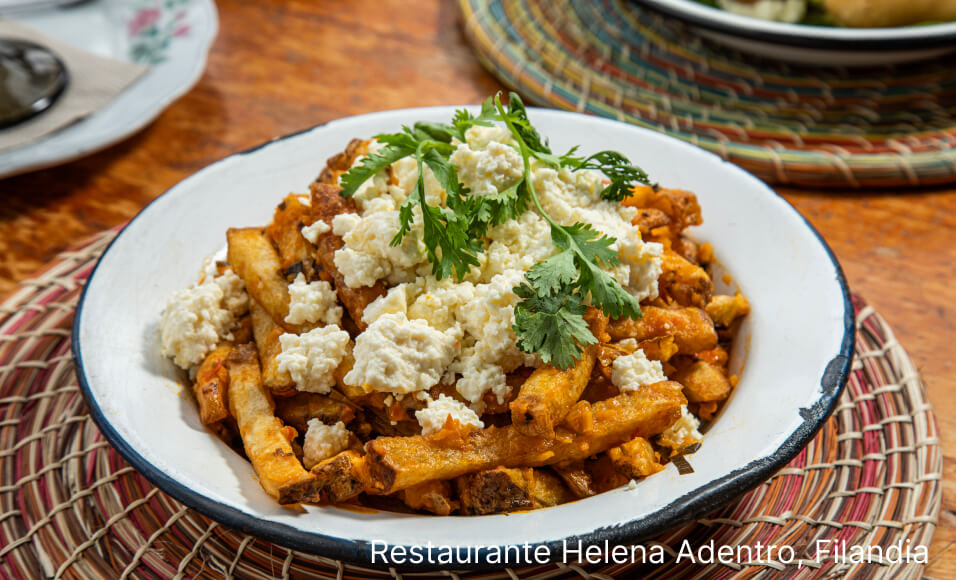
We arrive in Filandia, and here you must try the marranitas with a Quindío twist. They are spheres made of corn dough, filled with shredded pork leg, fresh farmer’s cheese, house-made mayonnaise,
and hogao’. At Helena Adentro restaurant, this is a guaranteed hit—a perfect snack to share, because it captivates the senses.
Another must is the garlic trout wrapped in papillote, a technique that allows it to cook in the steam of its own juices, preserving flavor and nutrients. The garlic notes are softened with parsley for those who aren’t too fond of this bulb.
This dish at La Martina restaurant in Salento becomes even more tempting with the thin, crispy patacón served alongside.
Another great place to enjoy excellent trout is Bosques de Cocora Donde Juan B, on the road connecting Salento with the Cocora Valley.
At the corner of 6th Avenue and 12th Street in Quimbaya, it’s unforgivable not to have avena (a thick oat drink) with a hot buñuelo. This is a tradition of this town in western Quindío that also pays homage to the pre-Columbian culture that once inhabited the area. Doña Gloria, now deceased, was the pioneer of this delight, and her children have carried on the tradition.
To sweeten the palate and unmissable drinks 
Solteritas are irresistible for their crunchy texture and are a delicacy throughout the Coffee Region. They’re fried, bright orange in color, and their flower shape charms everyone who comes across them. Ah! If you run into one, don’t miss the chance to be dazzled and transported back to childhood!
Broken suspiros: a passion fruit bomb filled with meringue and cream. If you dare, run over to Helena Adentro in Filandia. And finally, be sure to add the bread pudding with guava paste to your order—it’s the grandmother’s recipe of Alejo, one of the restaurant’s partners. You won’t regret it!
A bite of Quimbaya tradition is calados: ripe plantain slowly cooked with cloves and panela, served with cheese—a true delight. On Colombia’s Caribbean coast it’s known as plátano pícaro or plátano en tentación.
A sip of coffee always hits the spot, and in the Coffee Region it’s enjoyed everywhere and at any time of day. One recommendation is Café Quindío in Filandia. Here, flavors and aromas never cease to amaze and become distinctive among visitors. Their shops have everything you could want when discovering the beverage native to this land.
And when you order your little coffee, it’s lovely to pair it with a small meringue—also coffee-flavored.
Still in Filandia, the chontaduro margarita cocktail made with viche—a sugarcane-distilled alcoholic drink traditional to Afro-Pacific communities—at Helena Adentro is perfect for the afternoon. Cheers!
We also can’t fail to mention Alquímico Farm in Filandia, which is fascinating for its production model: they work with what they have on hand to supply their cocktail menu with fermented herbal infusions and aged goat cheeses, which are used at the bar of the same name in Cartagena. It’s inspiring to see how bar/restaurant and countryside come together as a gesture of sensitivity toward crops and land. This idea was born during the pandemic in 2020—and they also carry out reforestation with native trees to help restore the ecosystem.
Forcha is a frothy, white, slightly sweet drink with a natural fermentation process very similar to that of chicha. It’s made from wheat flour, water sweetened with panela, sugar, and sometimes fruit like pineapple. One of the most popular recipes is Don Luis’s, who more than 60 years ago started a business called La Súper Forcha, now a must-stop in Barcelona, a rural district of the municipality of Calarcá.
You must also try and savor sirope, a refreshing drink made with water, panela, and cloves or lemon juice for a special touch. This artisanal syrup is widely present in farmer’s gastronomy and is well worth seeking out in cafés and traditional eateries throughout the department. Elders say it pairs beautifully with bread.
Route acknowledgement

Best Tourism Villages
Filandia
Recommended sites

Important information for your trip





Pueblo Patrimonio
La Red Turística de Pueblos Patrimonio de Colombia es un programa especial del Ministerio de Comercio, Industria y Turismo, ejecutado por FONTUR, que trabaja con 17 municipios de Colombia que poseen declaratoria de Bien de Interés Cultural (BIC) a nivel nacional para su valoración y proyección mediante el turismo, generando así más oportunidades de desarrollo y sostenibilidad en las comunidades.

La Medalla a la Maestría Artesanal es un galardón que Artesanías de Colombia entrega anualmente, con el cual se hace un reconocimiento a aquellos artesanos, empresas y comunidades artesanales que, contando con una trayectoria destacada, sobresalen a nivel nacional por su excelencia en el oficio así como por preservar el quehacer artesanal.

Denominación de Origen
Es un signo distintivo que identifica productos reconocidos o famosos por tener una calidad o características específicas derivadas esencialmente del lugar de origen y la forma tradicional de extracción, elaboración y producción por parte de sus habitantes. La protección conferida sobre una Denominación de Origen implica que ninguna persona puede identificar con la denominación protegida productos iguales o similares a los amparados, cuando no provengan del verdadero lugar y no cumplan con las características o calidades que le han dado la reputación al producto reconocido. Las Denominaciones de Origen para productos artesanales colombianos que han sido protegidas por la Superintendencia de Industria y Comercio en nuestro país son actualmente 13.
Best Tourism Villages
Best Tourism Villages de ONU Turismo reconoce a pueblos rurales que destacan por sus valores culturales y naturales, la preservación de su patrimonio y su compromiso con un turismo sostenible que contribuye al desarrollo de las comunidades.



No puede copiar contenido de esta página