
Miryam Barbosa
Workshop: Arte Amero
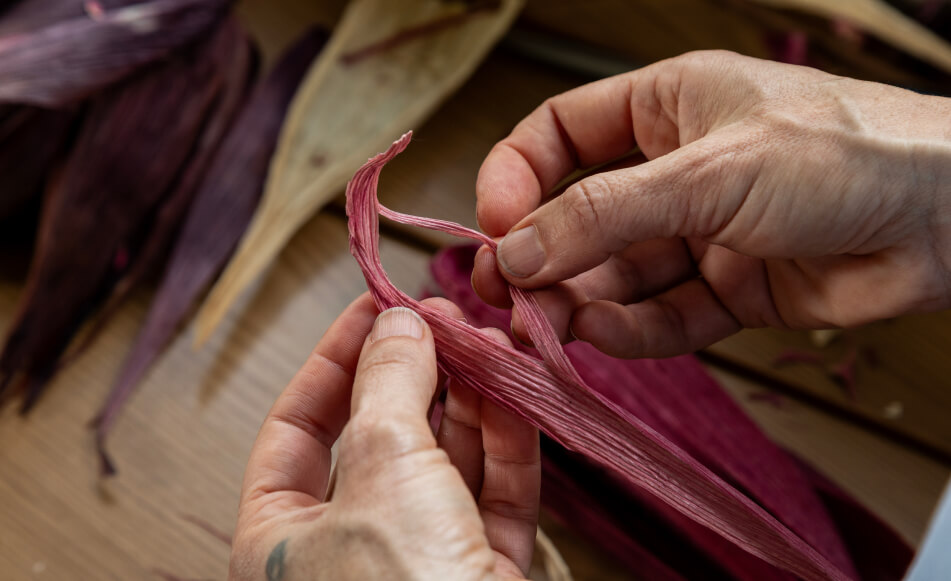
Craft: Nonwovens, plant-based textile
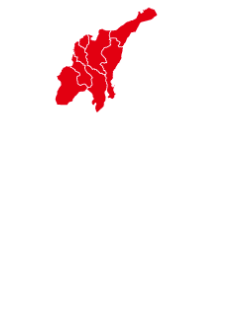
Trail: Oriente Route
Location: Choachí, Cundinamarca
SCHEDULE YOUR VISIT
Vereda Resguardo Sur, Sector El Pajonal, a 1 km de Choachí
3114812881
miryamlbarbosa@gmail.com
@arteamero
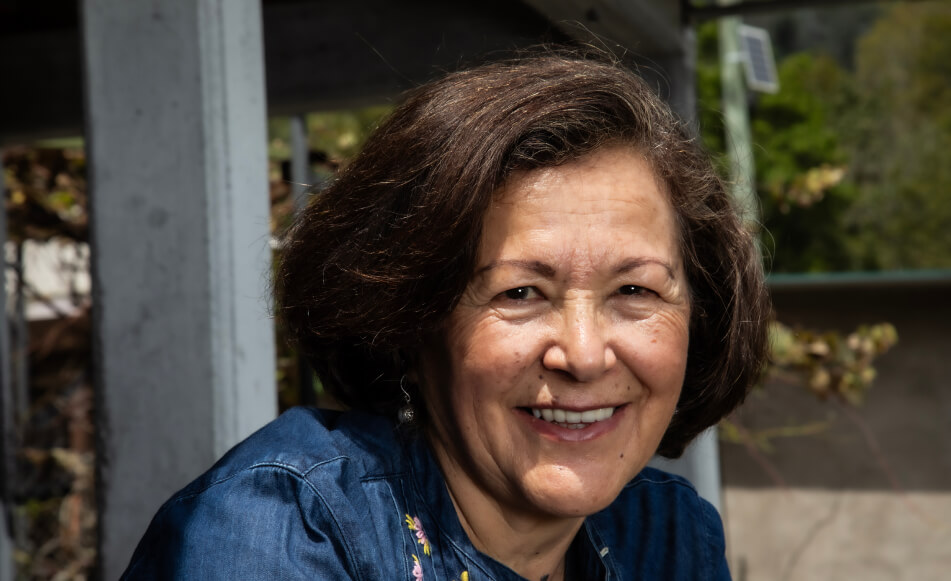
Miryam’s life is as rich as a good story—full of ups and downs, adventures, and hardships. It is clear that every step she has taken helped shape the strength she carries today. With gratitude in her voice, she goes far back into her past to show that what she has now—that calmness in her soul—was not always there. Not because she had a bad life, nothing like that, but because growing up in a family of fourteen siblings was, to say the least, demanding. The fourth of seven sisters, she took on—alongside them—the role that was always expected of the girls: taking care of the house and their younger brothers and sisters, and giving up any privileges for their sake. Yet for her, having done so is neither a source of sadness nor complaint. It was simply what had to be done.
Even so, she remembers that Leonorcita, as she affectionately called her mother, always wanted her daughters to better themselves. She did everything she could to give them the chance to do so. Miryam speaks with pride when she says that although her mother was a rural woman—and proudly so—she loved to read and had beautiful handwriting, “a gorgeous Palmer script.” She goes on to say that it was thanks to religious orders that they were able to receive an education. It is no coincidence that she is deeply devout and spends her days thanking God for everything she has been given. Stored in the archives of her memory are those days when she left her small village in **Choachí** and boarded a bus bound for Santander, where she spent six years as a boarding student with the Salesian sisters to finish high school. Being separated from her family hurt deeply, and there were few opportunities to return home during those years. Still, she knew it was what had to be done if she wanted to fulfill her mother’s dream of giving her daughters a better life.
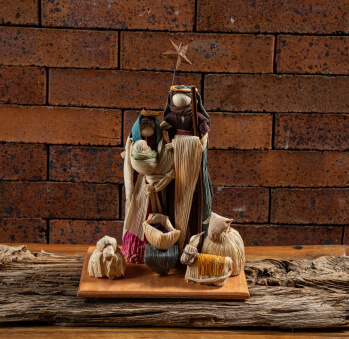
But before continuing, we must talk about craftsmanship. One day, when she was still just a young girl, a family acquaintance—a Jesuit priest—arrived at their house with a magazine he had brought back from a trip to Mexico. Everyone gathered around it with curiosity, flipping through the beautiful objects they saw there, until one image especially caught their attention: dolls made from corn husks.
Her father liked them so much that within a few days he came home with a bundle of husks so that the whole family could try to recreate what they had seen. Miryam laughs when she remembers how “ugly” their first attempts were. “They looked like little monsters,” she says between bursts of laughter. She and her sisters learned how to make them and, through trial and error, eventually managed to produce something that somewhat resembled the figures in the magazine. But life moved on, and that craft was soon forgotten and tucked away in a cupboard.
Days turned into years. From Santander she moved to Tolima, and there, with the Sisters of the Presentation, she was able to work as a teacher—the profession in which she had graduated. Handicrafts, however, remained a constant companion. They were her way of earning a little extra money to indulge in small treats. What had begun as a childhood pastime gradually became something more serious, because while living in Ibagué, she complemented her teaching job by studying Art History at night at the University of Tolima. Eventually, she returned to Choachí when she was nearly thirty. She came back for love. There she married the boyfriend she had nurtured from afar for years—the one who never let her forget her roots. Sadly, just three years into their marriage, he passed away, leaving her alone with their young son.
Once again, she had to start over. That, she knows, is something that shaped her character. As painful as it was, today she celebrates having had the strength to begin again. She did what mothers do to raise their children: she performed miracles. While balancing her work as a teacher and later as the director of the Choachí Cultural Center, she dusted off her childhood memories of working with corn husks and joined the growing wave of tourism that began to flourish in the town more than thirty years ago, when visitors started coming to enjoy the hot springs. She remembers it clearly because that boom unfolded alongside her son’s childhood.
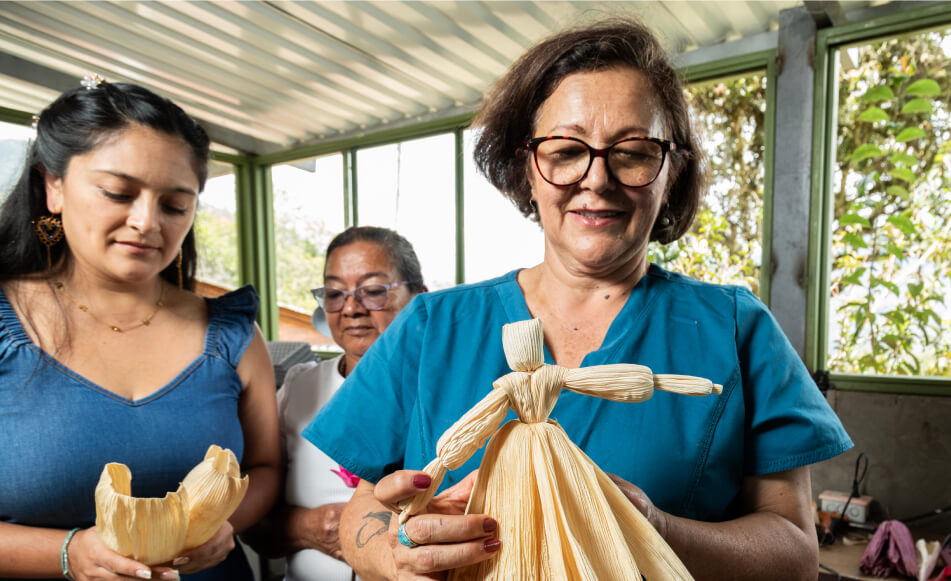
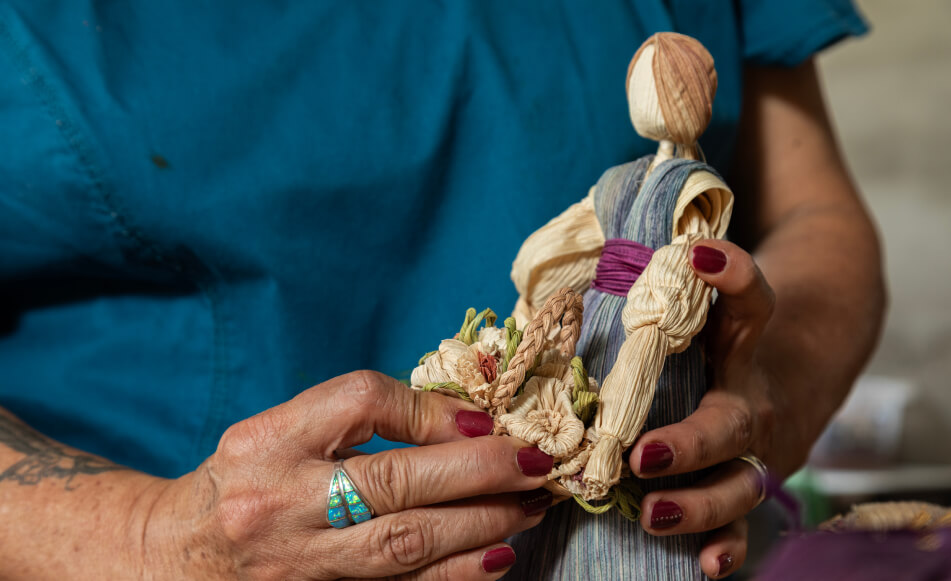
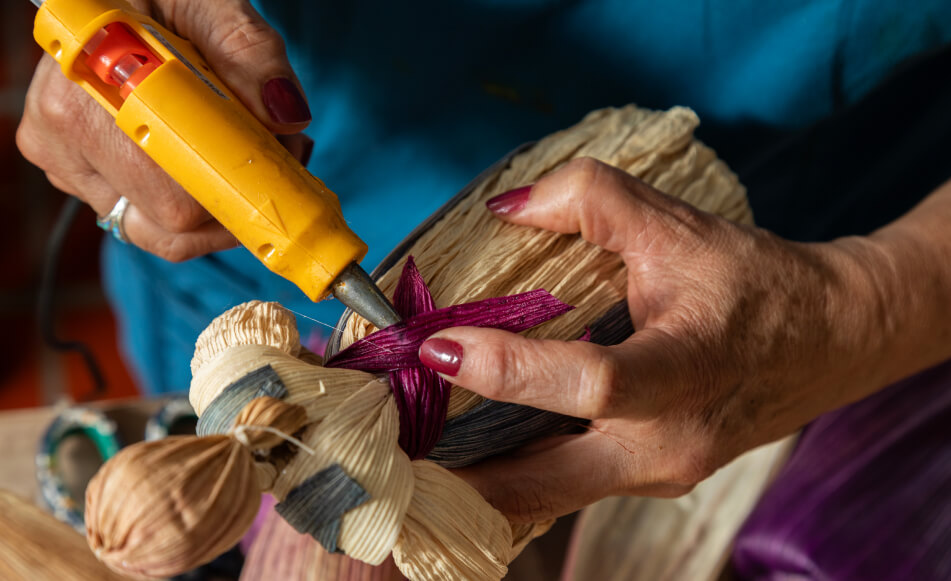
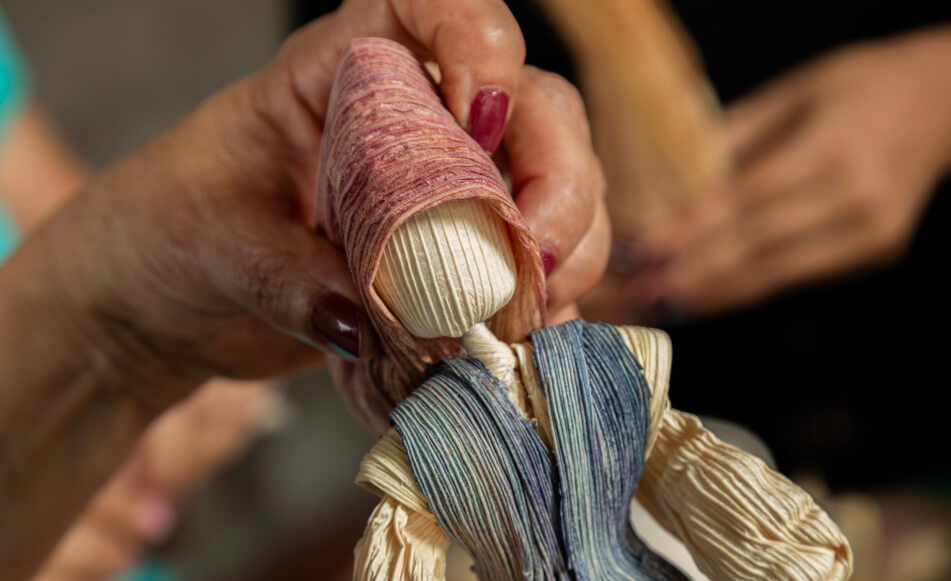
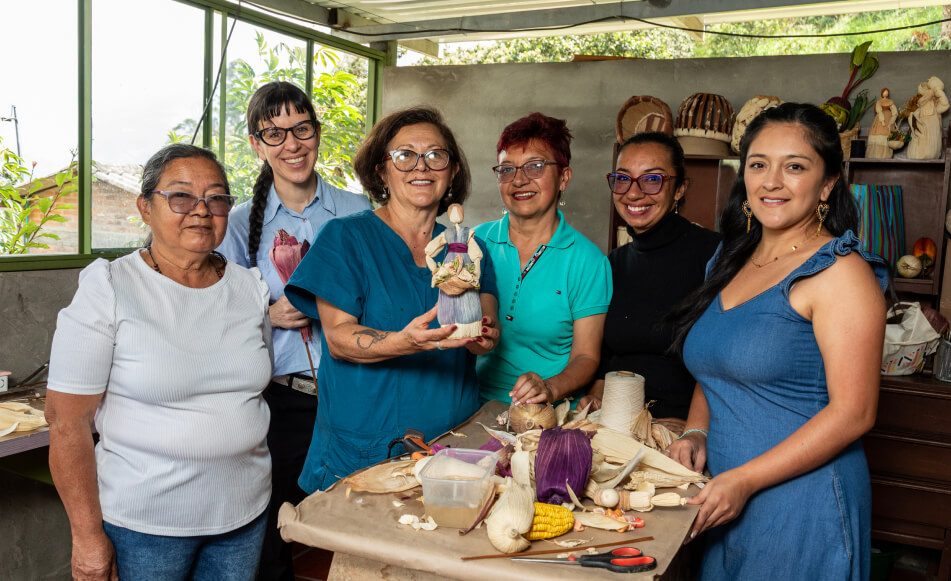
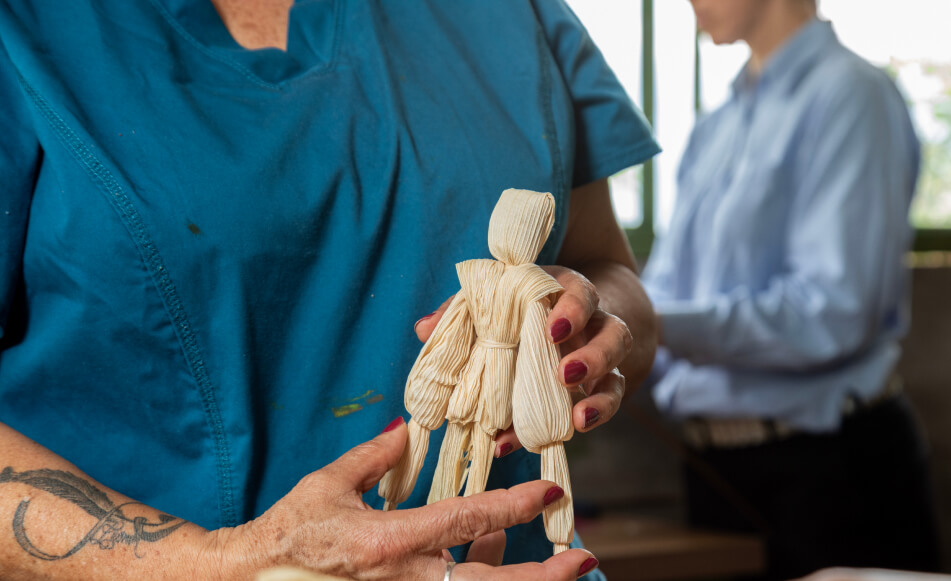
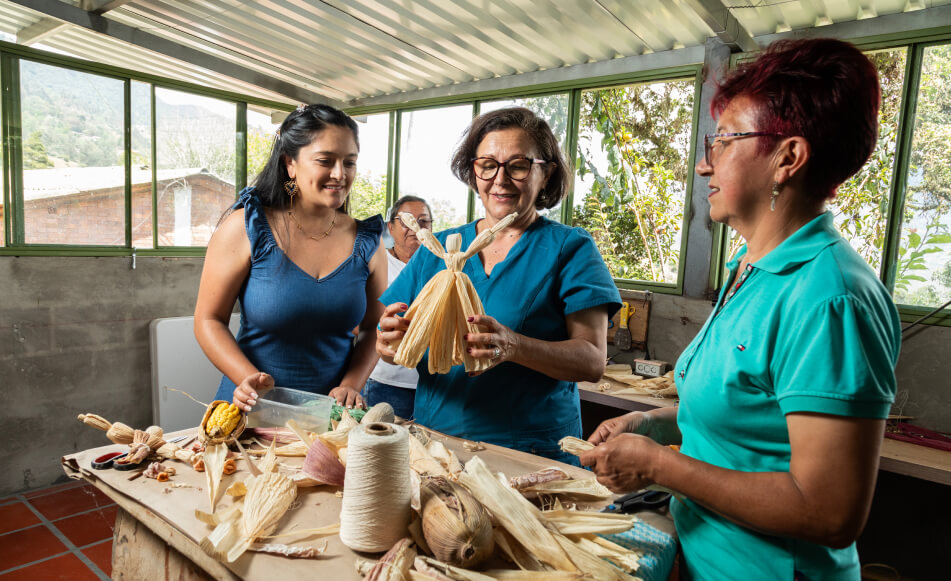
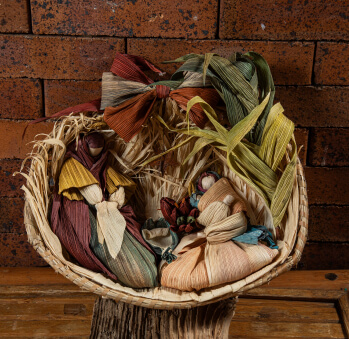
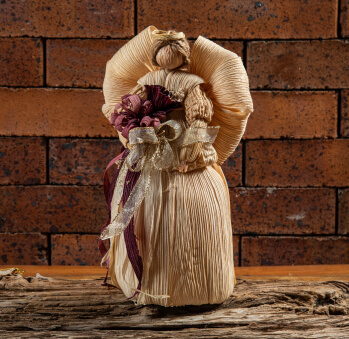
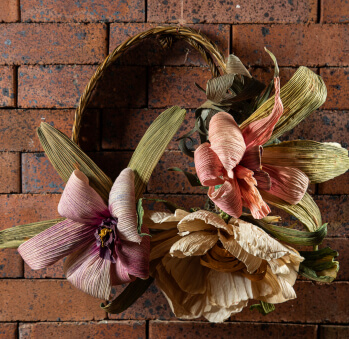
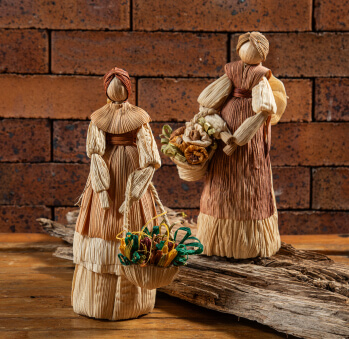
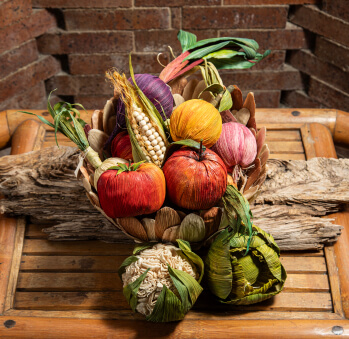
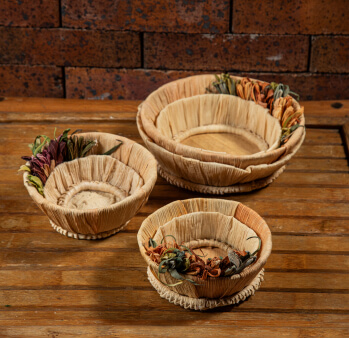
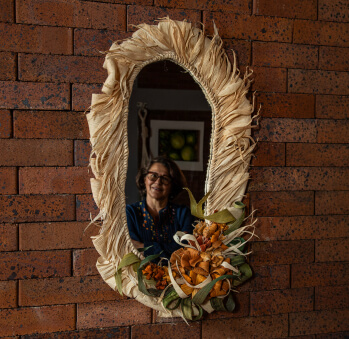
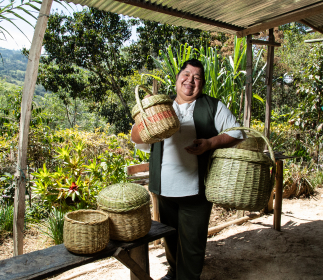
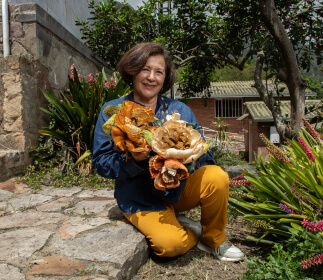
A few years ago she retired from teaching, and it was then that she decided to open a workshop in her lovely home—just five minutes from town by mototaxi—to devote herself fully to crafting with corn husks. Though she is a master of the craft, she cannot hide her vocation as an educator. Her mission, she says, is to teach more and more artisans the mastery required to knot, glue, and weave this humble corn husk, which in her hands becomes an orchid, a Virgin, or a campesina. She knows that if she ever wishes to rest—or travel—there will already be others ready to carry on this beautiful craft, one that was born from simple curiosity.
Workshop and process
Craft
Artisans along the way
Artisans along the way



No puede copiar contenido de esta página