
Salvador Zea Espinosa
Workshop: Arfalla, arte y fauna llanera
Craft: Wood carving
Trail: Casanare Route
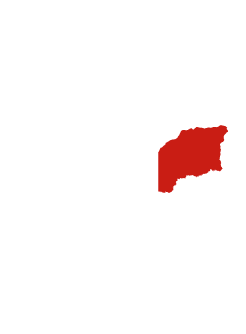
Location: Monterrey, Casanare
SCHEDULE YOUR VISIT
Calle 10 #13-42, barrio La Esperanza II, Monterrey
3115855042
arfalla.zeaespinosa@gmail.com
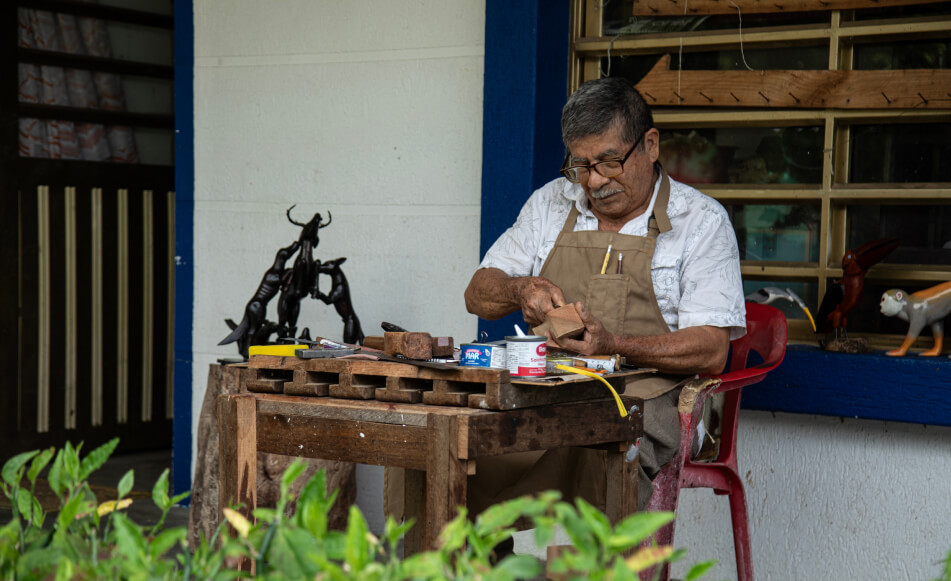
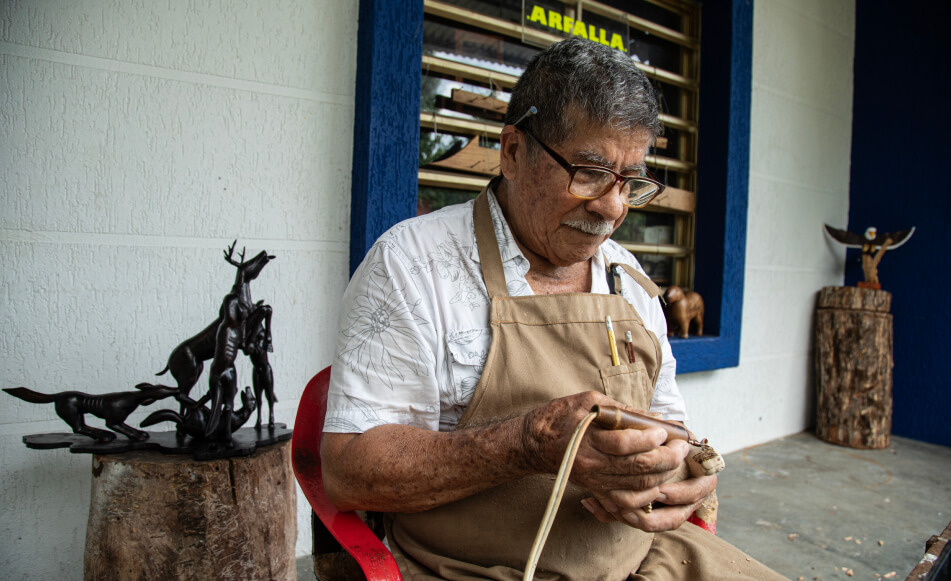
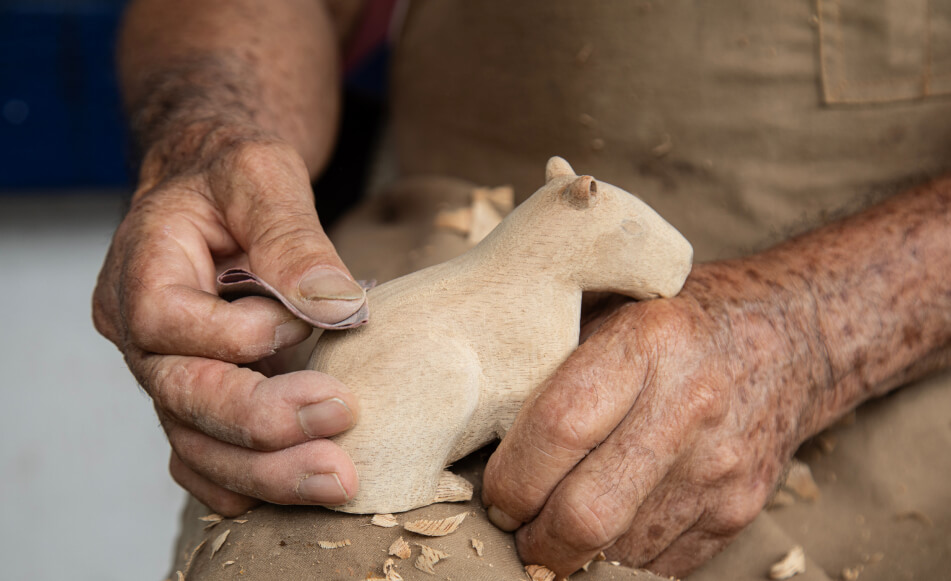
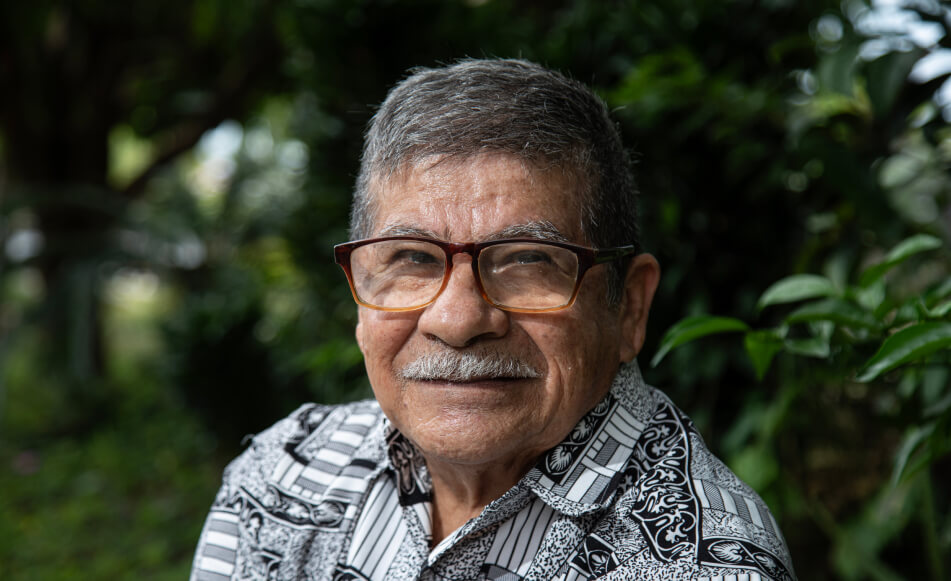
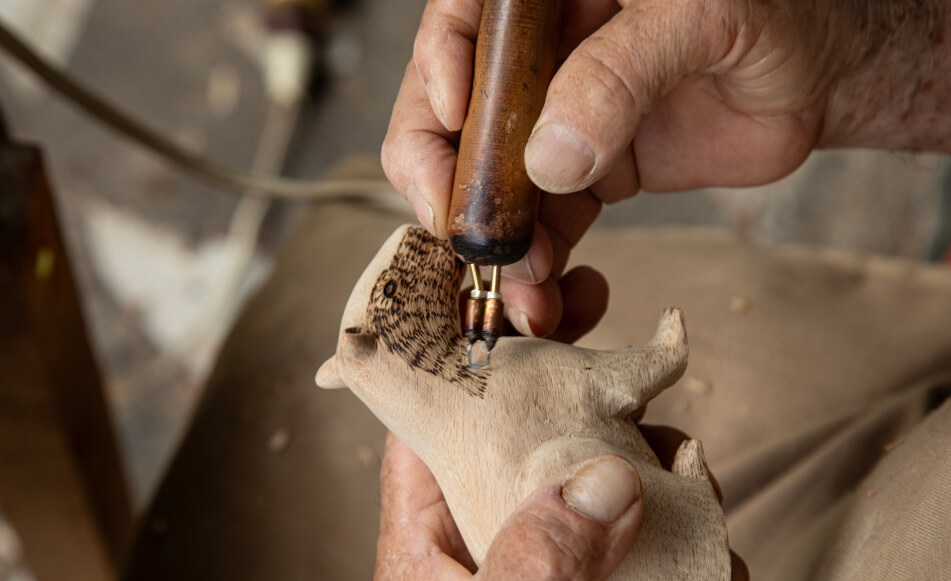
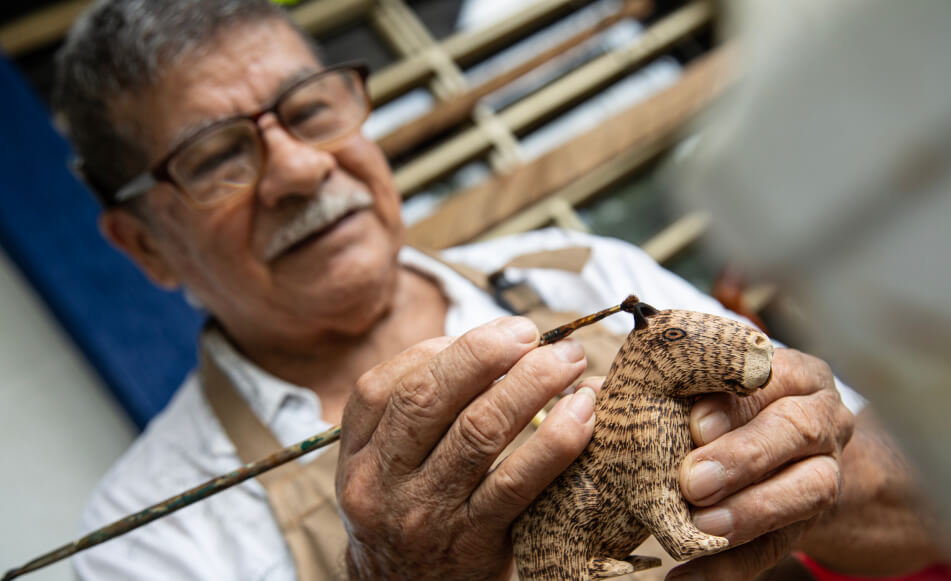
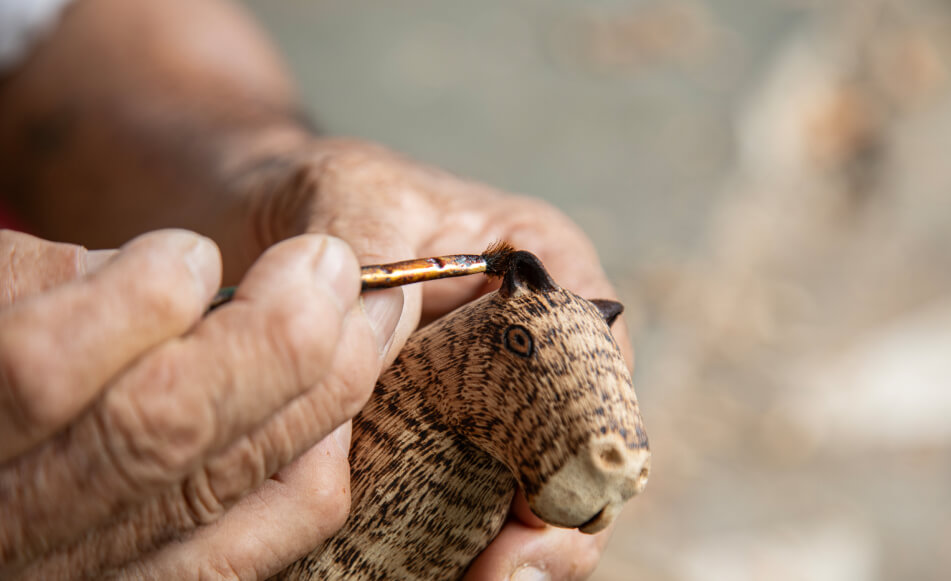
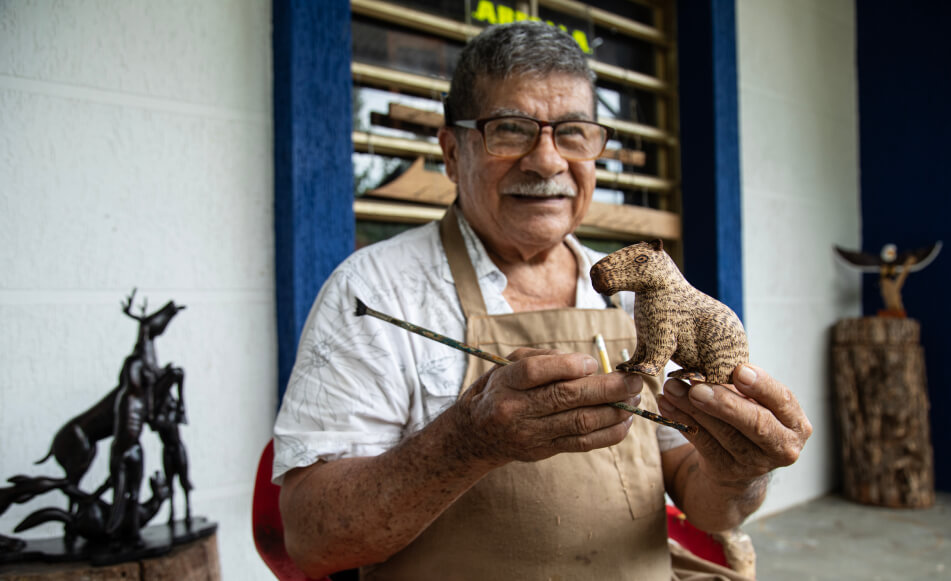
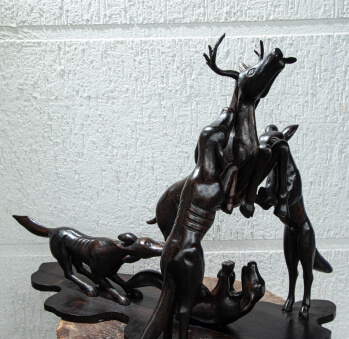
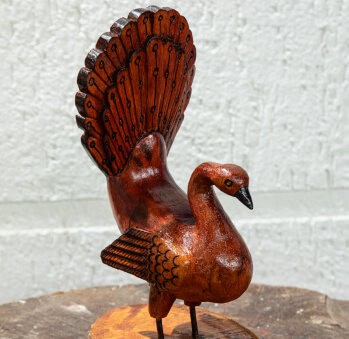
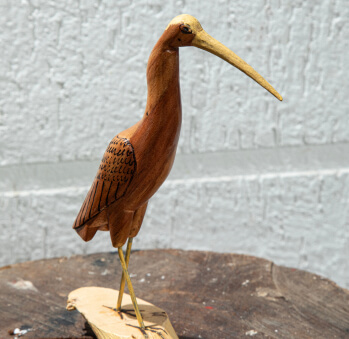
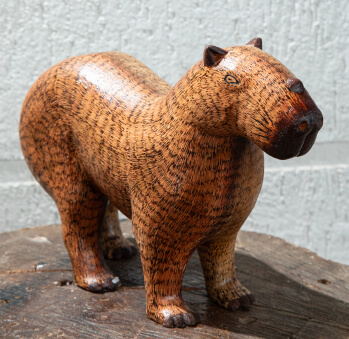
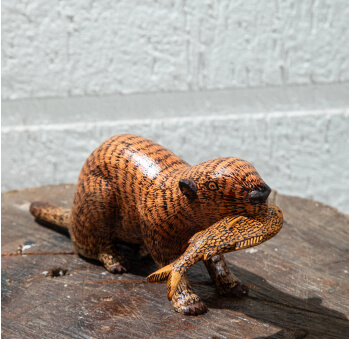
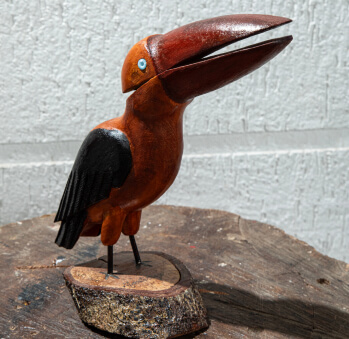
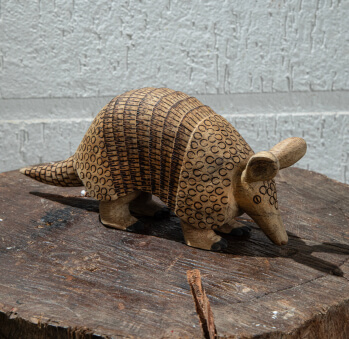
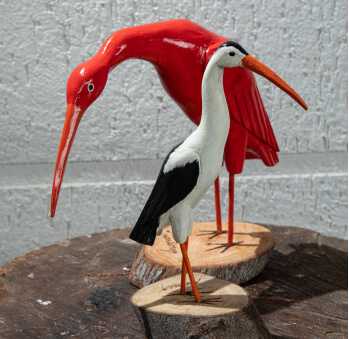
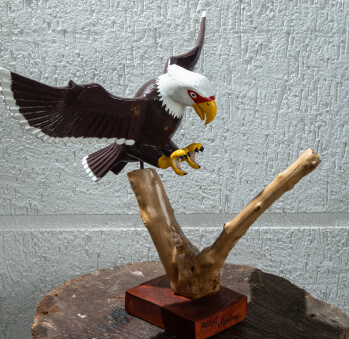
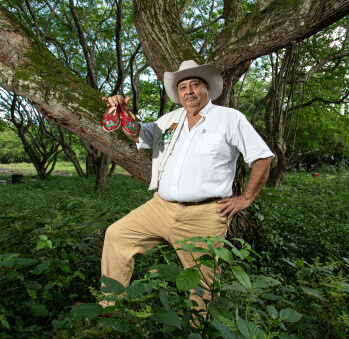
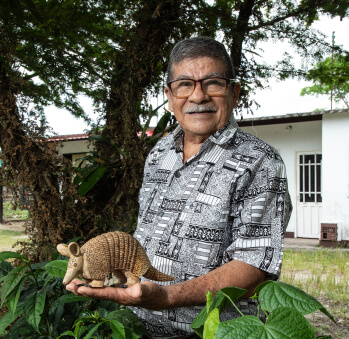
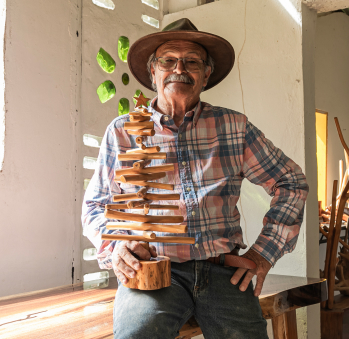
“I love nature in a frightening way,” says woodcarver Salvador Zea. He loves plants, he loves flowers, and of course, he loves wood—the material he transforms into every animal he can imagine: armadillos, capybaras, turtles, horses, toucans, little black-feathered zamoras with orange legs, white herons, and the emblematic bird of the Llanos, the scarlet ibis, with its crimson feathers and long beak like a sewing needle. He knows all these animals well, either from crossing paths with them when he worked as a sawyer in the mountains, or because they still come flying into the yard of his home.
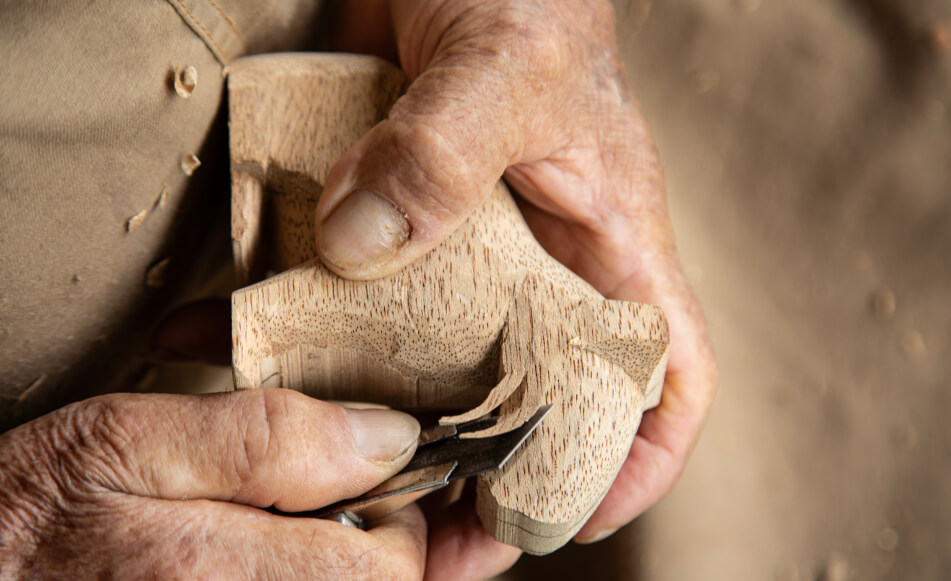
Woodcarving has accompanied him through difficult times, always showing him light and solutions. The first time was back in his hometown of Campohermoso, Boyacá, where he carved yokes and plows for oxen. The second was when he arrived in Casanare without a single peso in his pocket, after being robbed of everything he had, and decided to enroll in a carving course in Yopal taught by master William Contreras. That marked a before and after. There he learned to make his first armadillo and his first herons, which he still keeps to this day. Looking at them softens his heart: he notices how he carved them with flat duck-like bills instead of the pointed beaks of herons, and how he placed them all in the same posture, lacking the experience and close observation needed to notice that a bird’s stance changes depending on the moment—whether it’s hunting prey, resting on a branch, or twisting its neck to preen its feathers. It was then when he discovered the joy of taking a crooked log and giving it a new shape, like the life-sized horse he remembers carving in those early days.
But that was before health problems forced him to reconcile his body with his craft. Before he spent seven years enduring the back pain that began when, sawing wood alone in the mountains, a beam struck his shoulder and twisted his spine. The pain would return with something as simple as a sneeze, pulling him away from his work as a construction worker and sawyer. Yet in return, it revealed to him that his true path lay in woodcarving, which demanded less physical strain and could be done from home. So, while he waited for the miracle that would heal his back, he dedicated himself to the new world of craftwork, drawing on the knowledge he had gained in the mountains—like how male cedar yields easily to shaping, unlike the dense nauno and almanegra woods, which were used to build fences resistant to heat and water.
For Salvador Zea, his craft is a blessing—literally—because it arrived after he prayed to God for work he could do even in the midst of illness, something that would allow him to live without ever having to beg. Woodcarving, like his prayers, has been his salvation. From that, his profound love and gratitude for nature.
Workshop and process
Craft
Artisans along the way

Artisans along the way



No puede copiar contenido de esta página