
ASOARKA
Workshop: ASOARKA
Craft: Weaving
Trail: Cesar Route
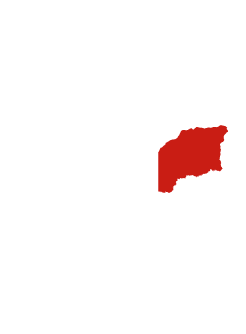
Location: Atánquez, Cesar
SCHEDULE YOUR VISIT
Casa artesanal Kankuama en Atánquez, calle 6 # 04-06 barrio Fátima, Comunidad de Atánquez – Resguardo Indígena Kankuamo, Valledupar-César y Casa artesanal kankuama en Valledupar, Calle 16 # 06 - 48 centro histórico de Valledupar-César
3215111324
artesaniaskankuamas@hotmail.com
@asoarka
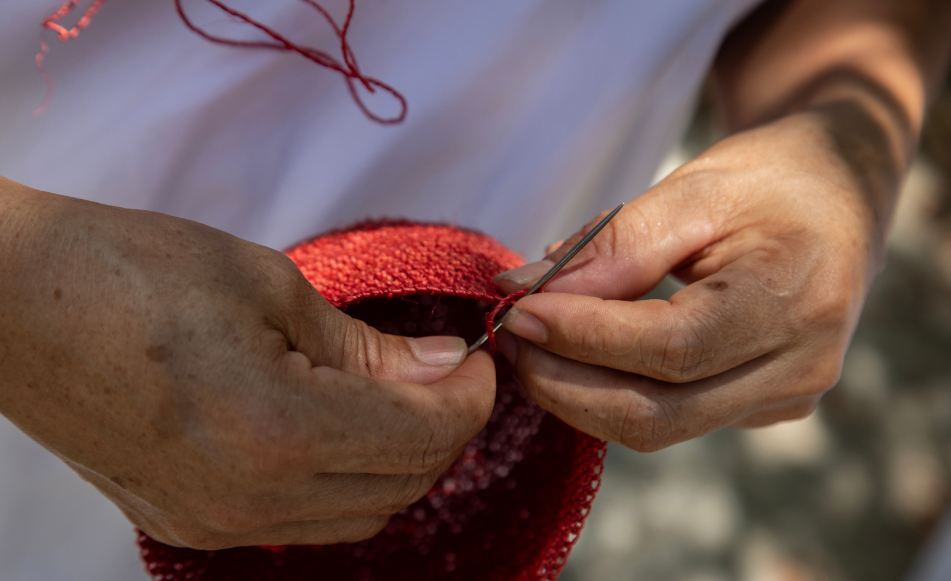
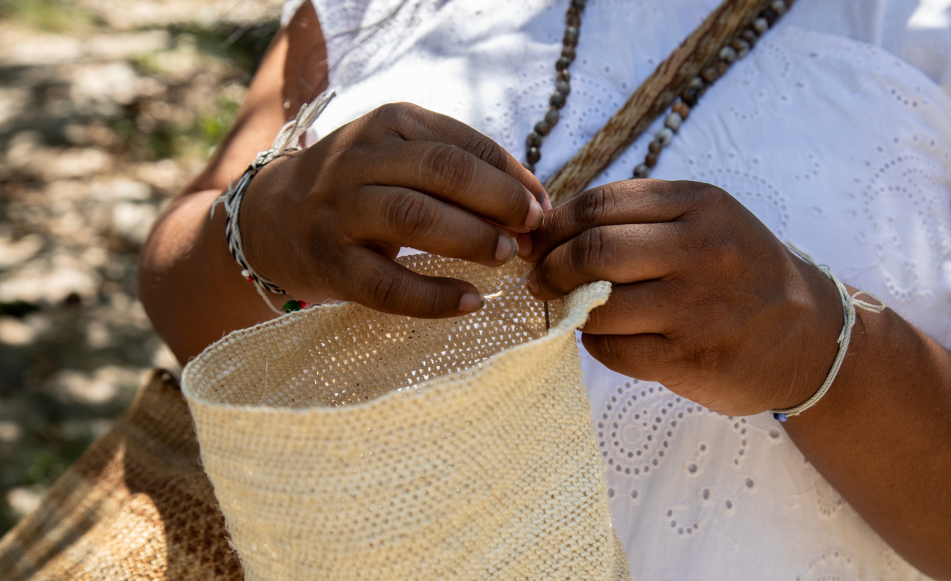
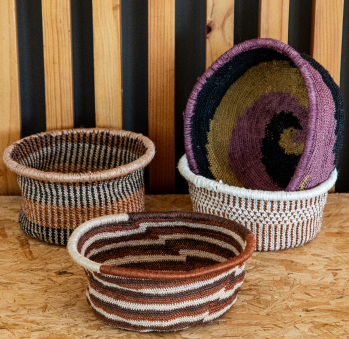
This association, nestled in the Sierra Nevada and located within the department of Cesar, was born out of sheer necessity for survival. That is why its women remember the exact day they began operating: July 6, 2006. On that Thursday, the Association of Kankuamo Indigenous Artisans (Asoarka) was formally established. Today, after many years of collective effort, they proudly count 260 members. Their mission has remained unchanged since the beginning: to safeguard their culture, reclaim traditions threatened by war, and make fique weaving the emblem of their people, embodied in the thought and spirit of women—the ones who give life and care for the home.
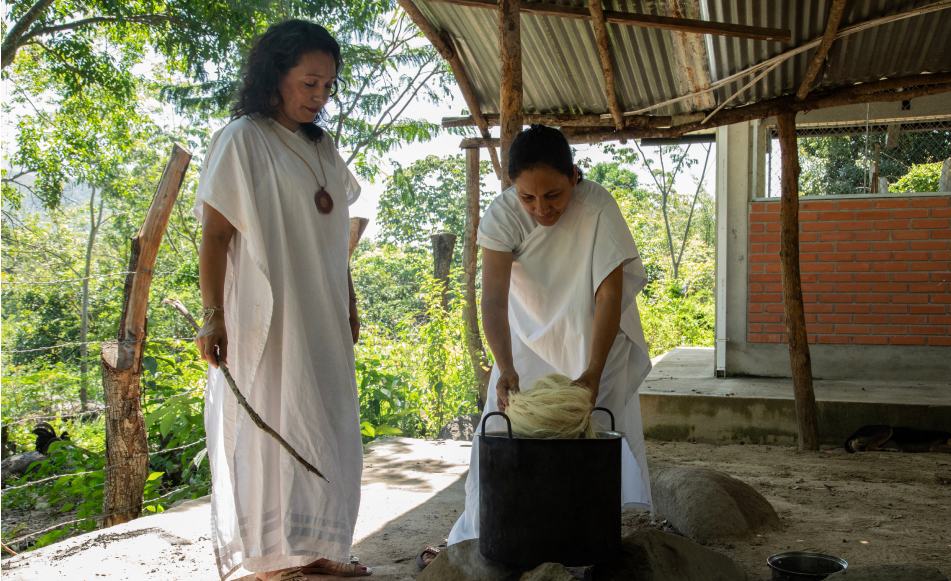
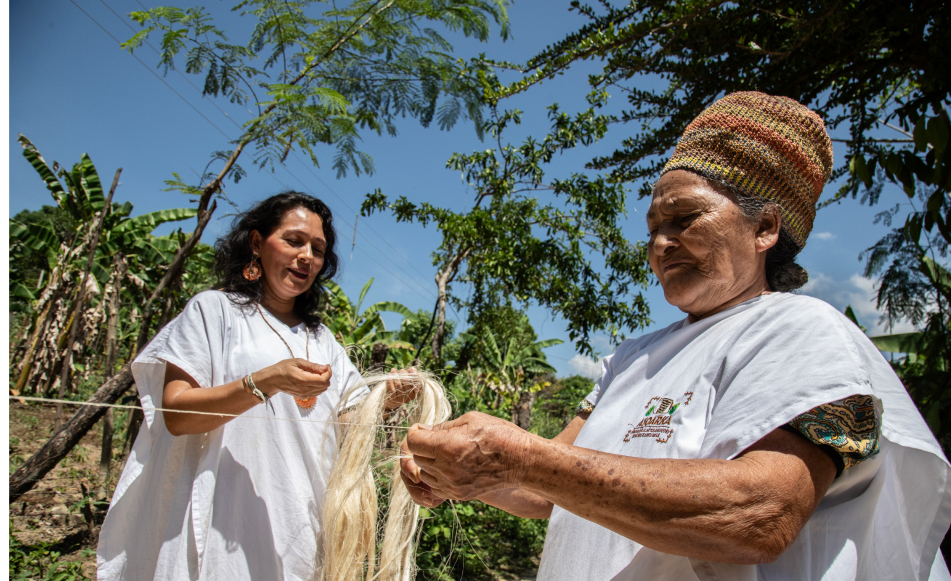
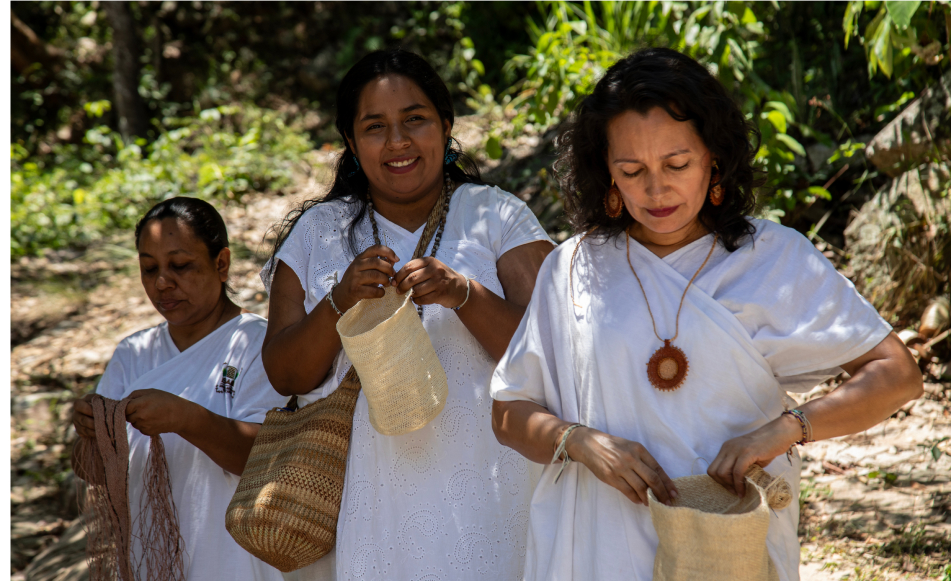
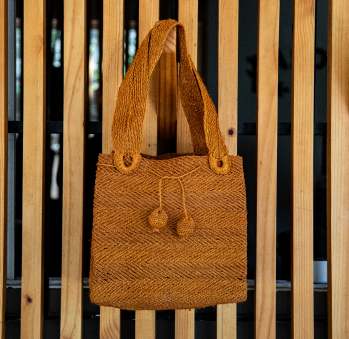
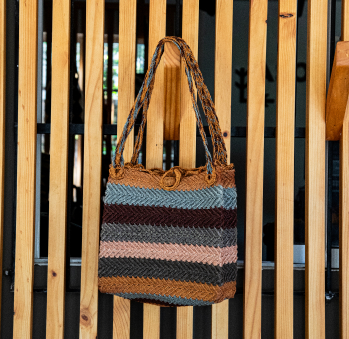
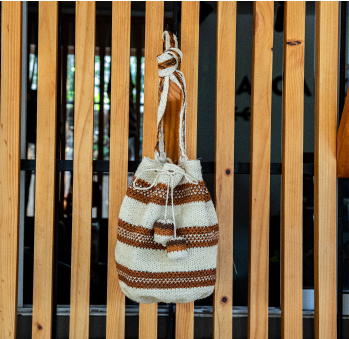
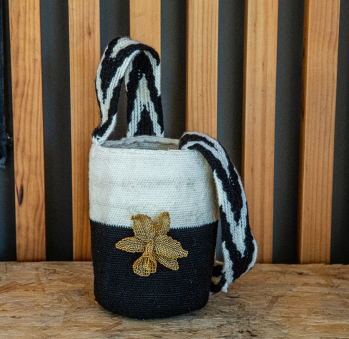
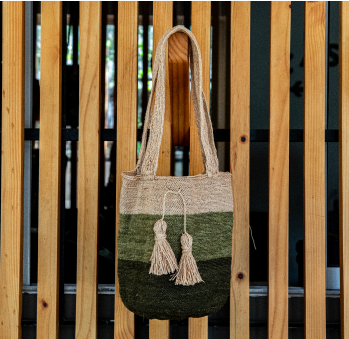
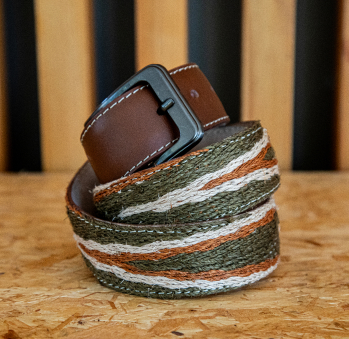
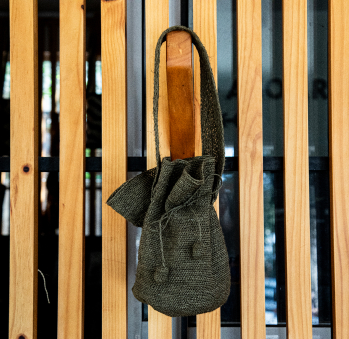
To this clear sense of purpose, they have added new challenges—or commitments, as these powerful women prefer to call them. One is to give greater recognition to the very beginning of the production chain: the people who cultivate fique, as well as the macaneros—the men who clean the maguey leaves by hand using a lever-like tool known as a macana. Their work is essential, as it prepares the fique fiber that women will later weave. At the same time, Asoarka has expanded its portfolio through a craft commerce network that includes not only sales points in Valledupar and Atánquez for their backpacks, large carrying bags, and weaving tools, but also the promotion of other Kankuamo economic activities. Their goal is to eliminate intermediaries who, for far too long, have profited from what rightfully belongs to the community: the production of organic coffee and panela, as well as the making of chirrinchi, their traditional liquor, and alfandoque, both derived from sugarcane.
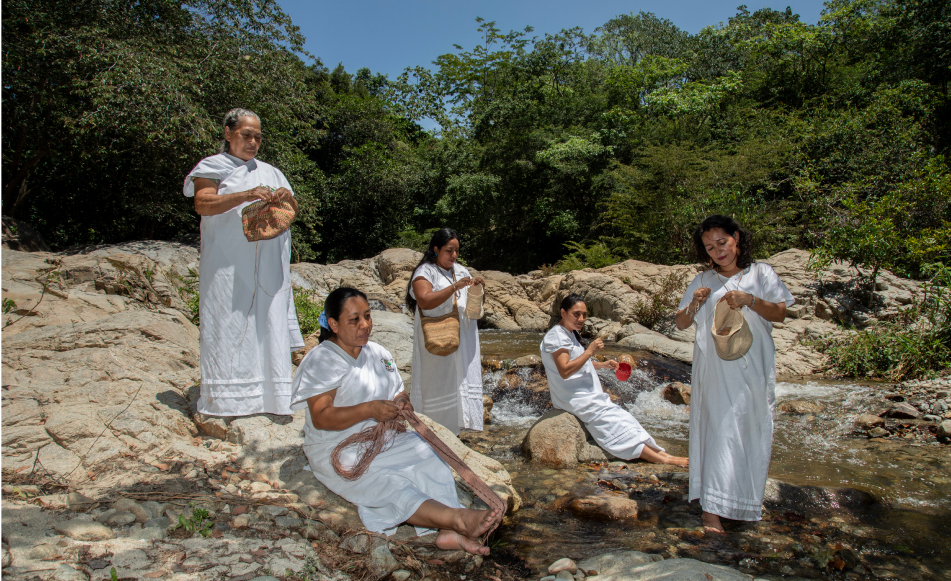
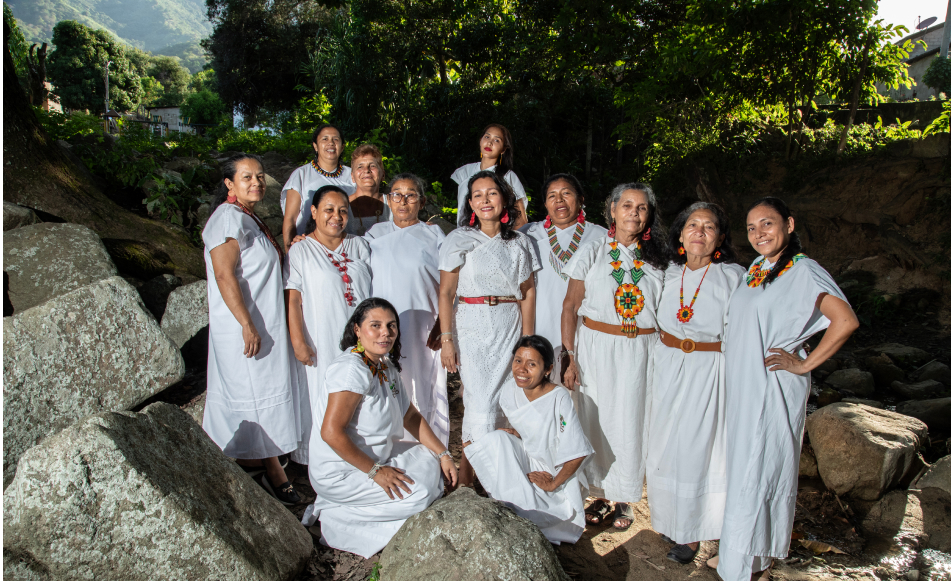
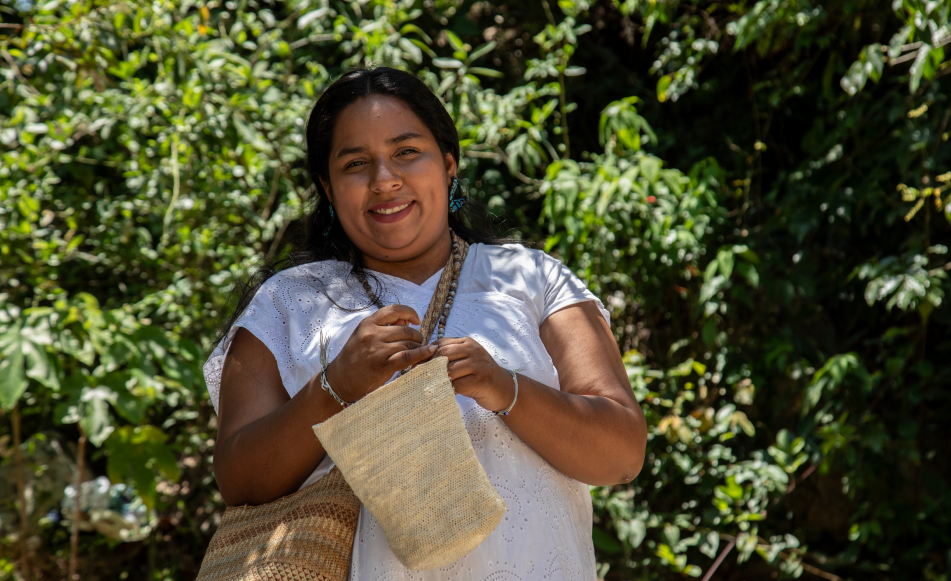
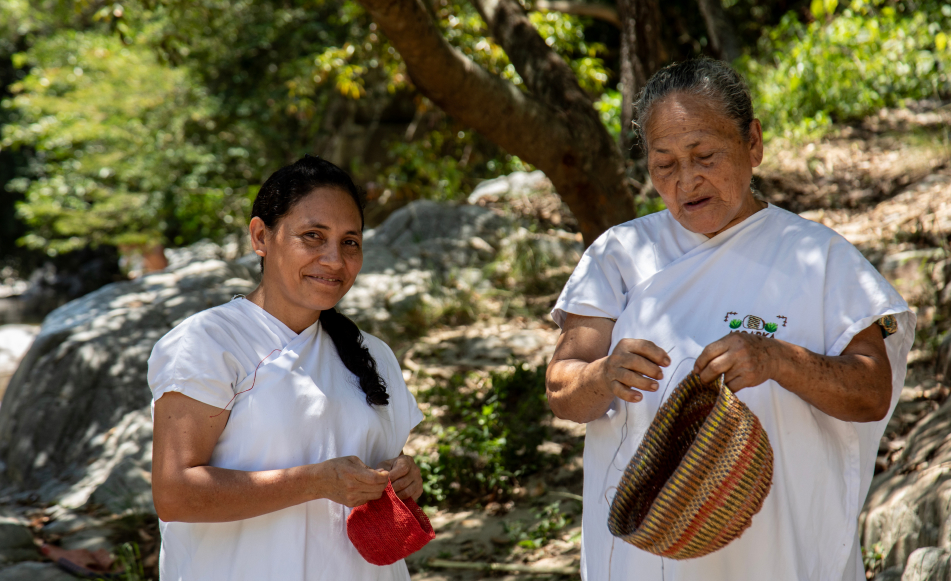
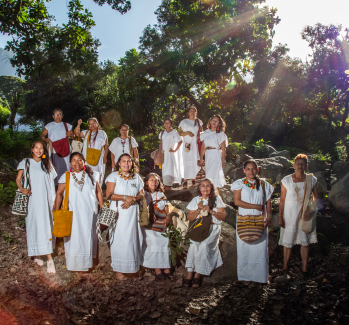
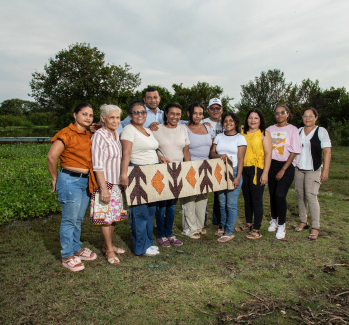
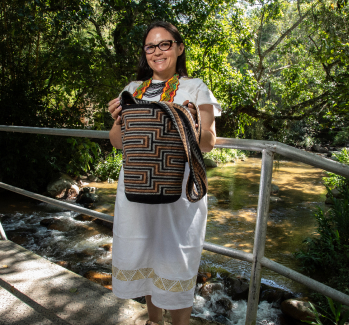
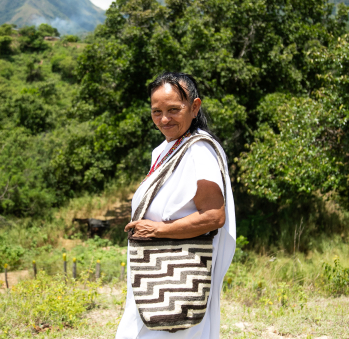
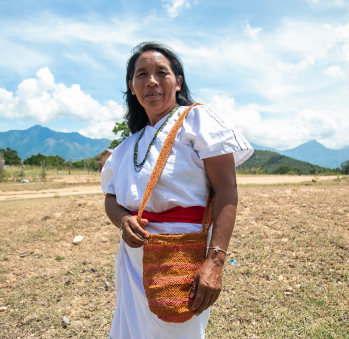
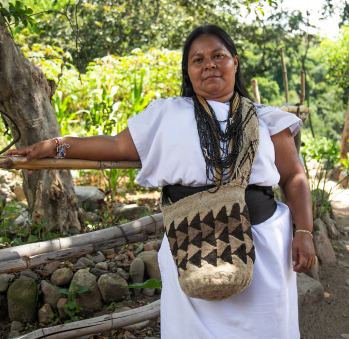
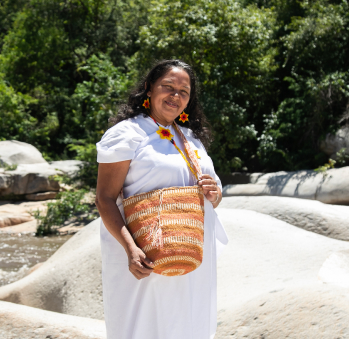
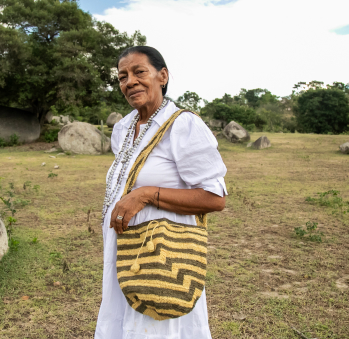
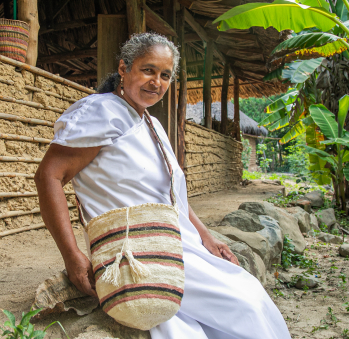
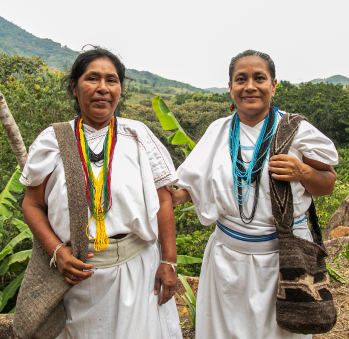
Before us stands Carolina Sequeda, Asoarka’s legal representative, supported by the respected elder women Judith and Ángela María Corzo, along with fellow weavers Angie, Betsy, Sista, Yolsadis, Andrea, Almis, María, and Lyleth. Together, they embody a simple truth: in the communities of the Sierra, family is extended and unconditional. It does not matter whether they live in Valledupar, Atánquez, or in the Indigenous settlements of Rancho de la Goya, La Mina, Los Haticos, Guatapurí, Chemesquemena, Las Flores, or Murillo. Being together, acting together, and supporting one another has been the secret behind the success of this remarkable collective. Each woman—and each man—knows they are part of a larger weave, and that without every hand involved, the stitches would remain unfinished. That is why they work collectively. They understand that a thread may break, but if it truly wishes to find its way again, all it takes is the will to tie a knot and continue—to heal.
They speak from experience. The Kankuamo people endured relentless violence in the early years of the new millennium, forcing many to flee and fragmenting their communities. Because of the territory they inhabited, they suffered harassment, confinement, forced disappearances, and the killing of more than 400 members of their people, leaving behind countless widows and orphans. Perhaps that is why, even though times have changed, these women remain watchful, guided by a finely tuned instinct that alerts them to any threat. They do not grant trust lightly. But once they do, they open themselves fully and speak about who they are, about how the fique mochila reflects both their thoughts and the state of their soul. This act is complemented by the man who reflects with a poporo in hand. In every action, both men and women are grounding their minds and shaping their thoughts in the silence of contemplation. Women, who often carry the burdens and sorrows of the family, are entrusted with ensuring that the stitches of the mochila find harmony and invoke protection. Their work is spiritual in nature.
They know this well. They are also deeply aware that encouraging younger generations to weave—and in doing so, to preserve the legacy of their people—is an enormous challenge. Perhaps that explains the practical spirit that underlies such an ambitious artisanal and productive enterprise. It is their strongest commitment: proving to the Kankuamo community that everything they need is already in their territory, that it can sustain them, and that they owe it their care and devotion.
Workshop and process
Craft
Artisans along the way
Artisans along the way



No puede copiar contenido de esta página