
Cristian Gasca
Workshop: Arte y Madera, Taller de Cristian Gasca
Craft: Woodwork
Trail: Huila Route
Location: Garzón, Huila
SCHEDULE YOUR VISIT
Calle 5 #4-02, Barrio San Francisco La Jagua, preguntar por el flaco de la madera
3125104064
maderarte.jagua@gmail.com
@cristian_gascav
@Cristiangascaarte
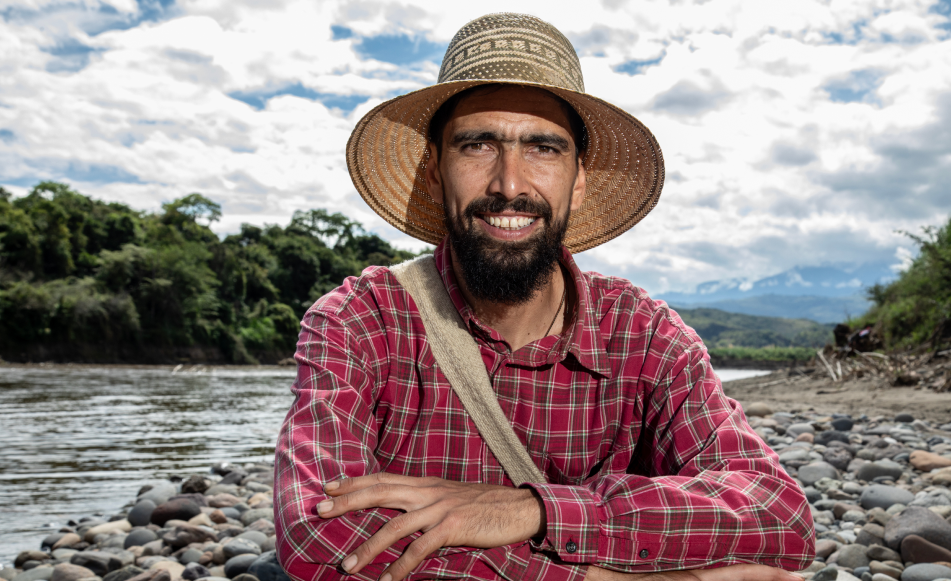
From the very beginning, Cristian Gasca speaks about a defining event in his life and in his decision to become an artisan: the construction of the El Quimbo hydroelectric megaproject in Huila. He knows he came to understand it late, that he did not realize what was happening until others opened his eyes to it, but once he did, he wanted to stand alongside the farmers, fishers, and riverside communities of the upper Magdalena and Suaza River basins whose lives were so profoundly affected when the rivers were dammed. The question that guided him was simple: how could he recover a fragment of the river’s memory using the tools he had at hand?
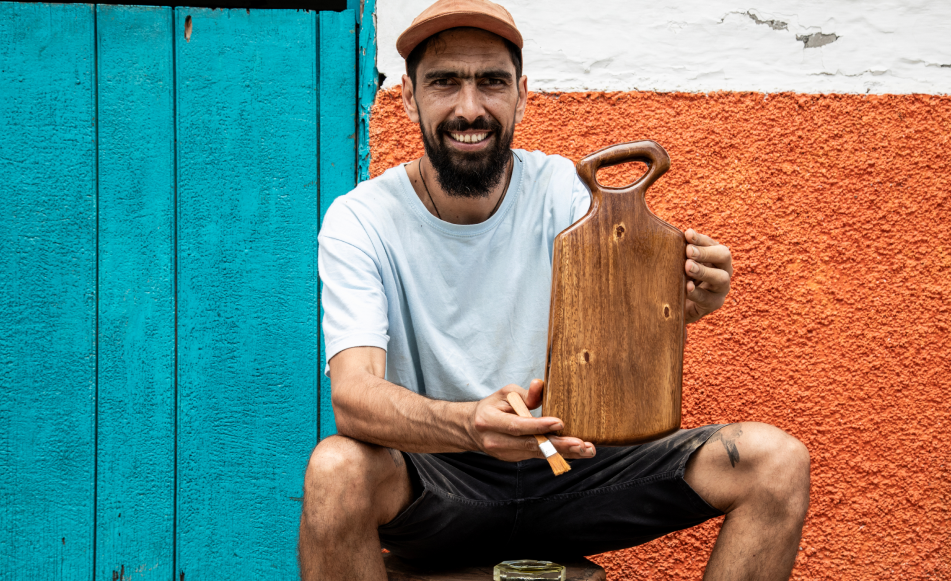
This artisan, who was almost named Carmelo because he was conceived after his parents prayed to Our Lady of Mount Carmel, and who was miraculously born on her feast day, July 16, had spent ten years working as a business administrator before feeling compelled to change direction. He had already decided he wanted to start his own business but had no idea what it would be until a conversation with his father illuminated the path ahead. “The wood is right here,” his father told him. Cristian was twenty-eight years old. He remembered that his grandfather, José Ignacio Gasca, had worked with wood out of necessity when there were no carpenters in Garzón, his hometown. If he wanted a window or a door for his house, he had to make it himself. He also remembered that his father and uncles, hardworking country men dedicated to construction, had inherited those woodworking skills from their father. So Cristian gave himself two years to find his own path, embarking on a life where uncertainty and happiness existed side by side, as they still do today.
Around that same time, he returned to the same stretch of riverbank where his family had once gathered for riverside picnics when he was a child, only to discover that not a single tree remained to provide shade. The transformation of the landscape affected him deeply, and he wanted to understand why. He began attending meetings of the grassroots organization Jaguos por el Territorio and learned about the profound changes in land and water management that had begun with the studies for the hydroelectric project in 2000 and intensified after the dam gates were closed in 2015. It was no small matter. A community whose lives revolved around a free-flowing river—farmers, fishers, and families who swam in its waters—had suddenly seen their way of life transformed. And certainly not for the better.
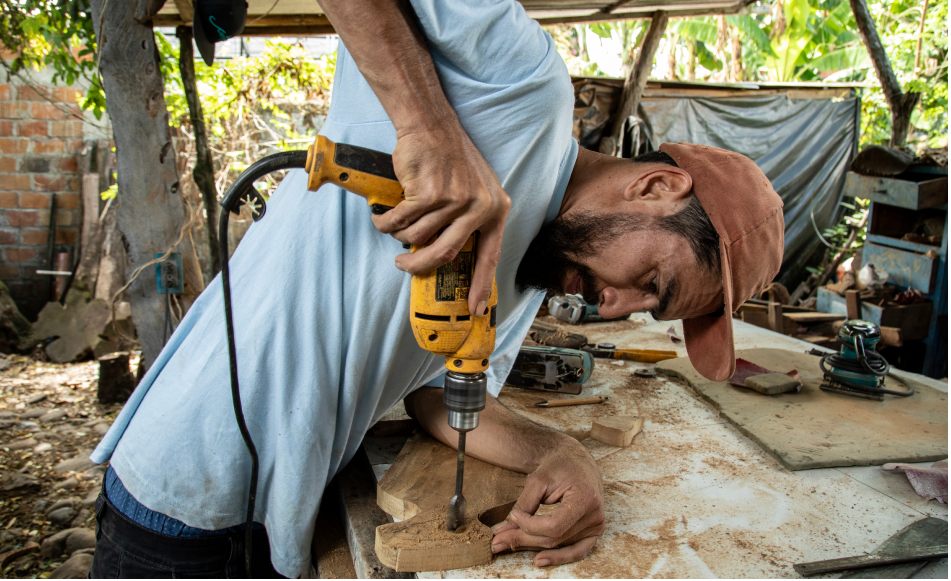
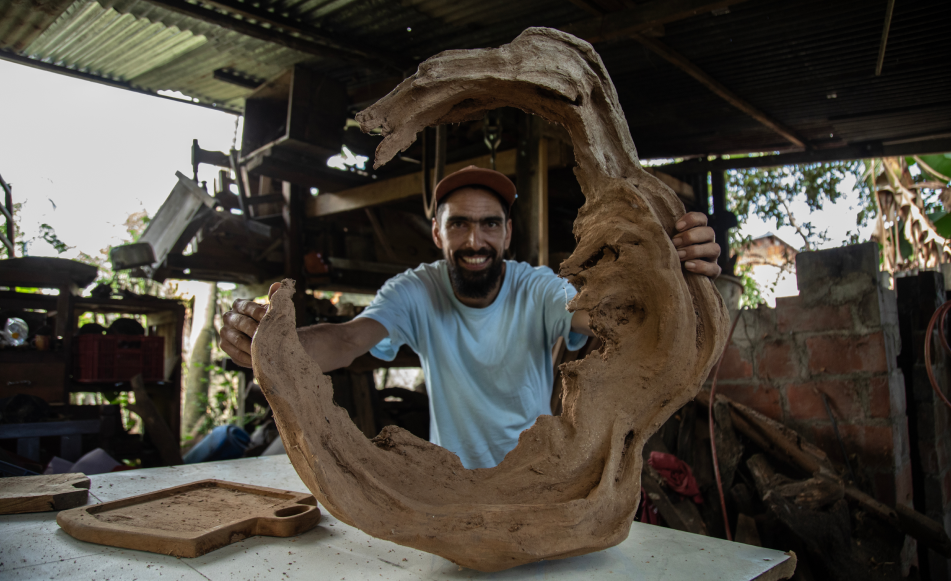
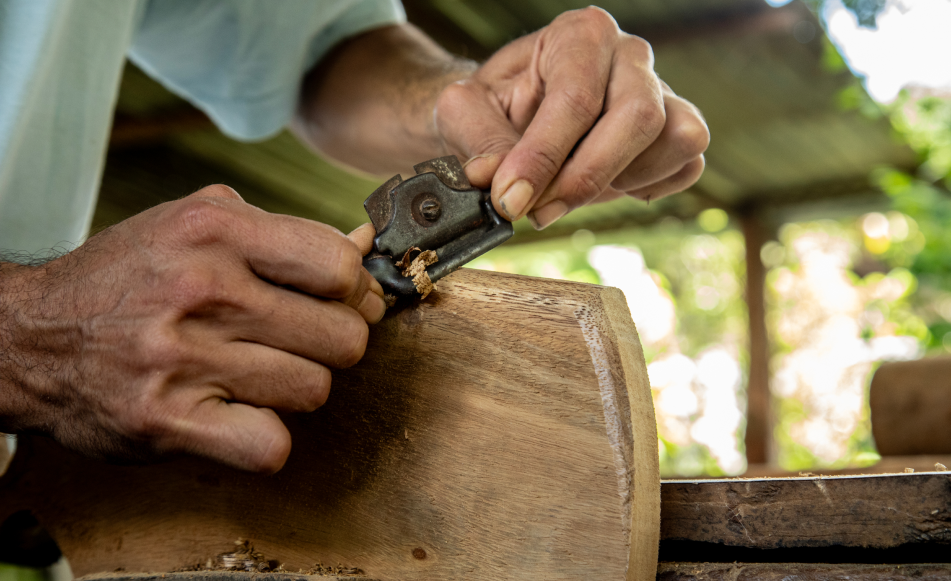
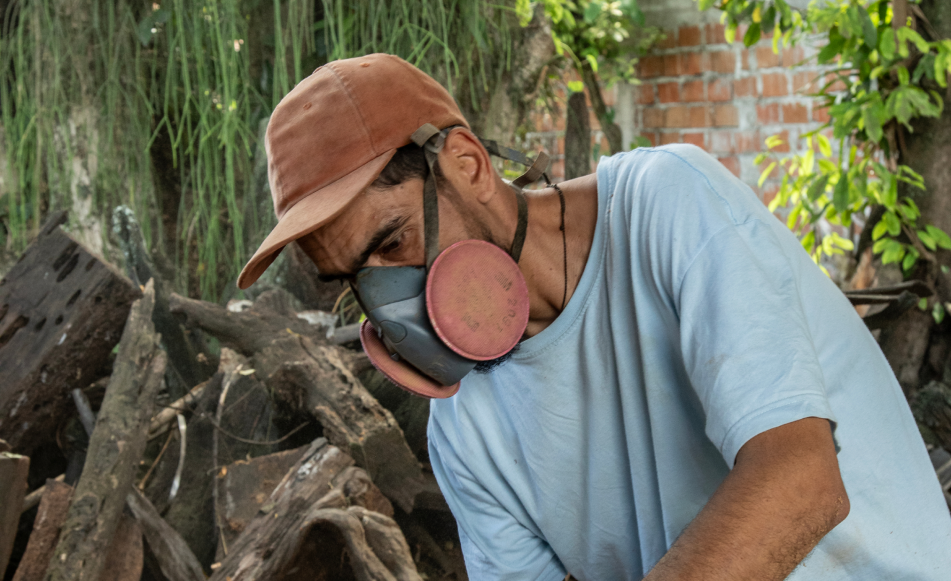
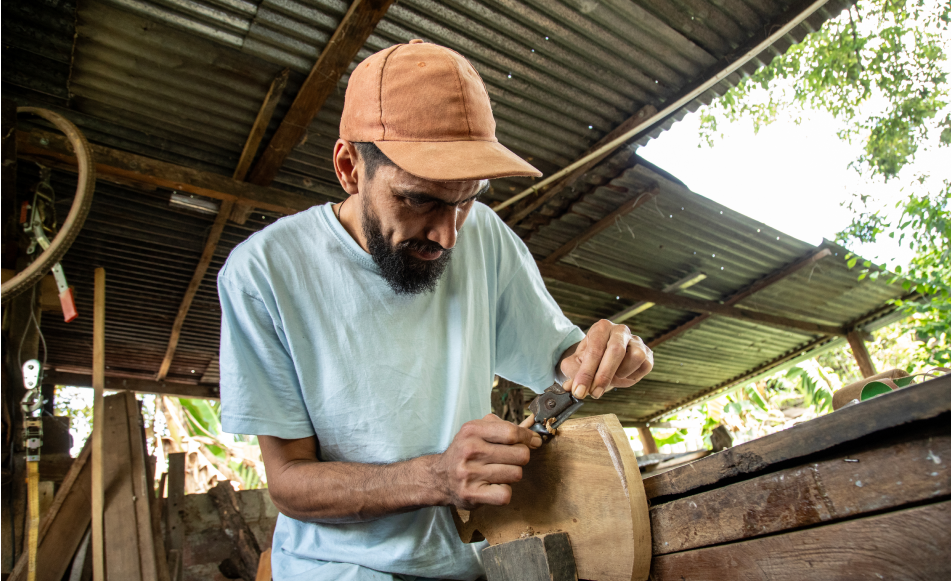
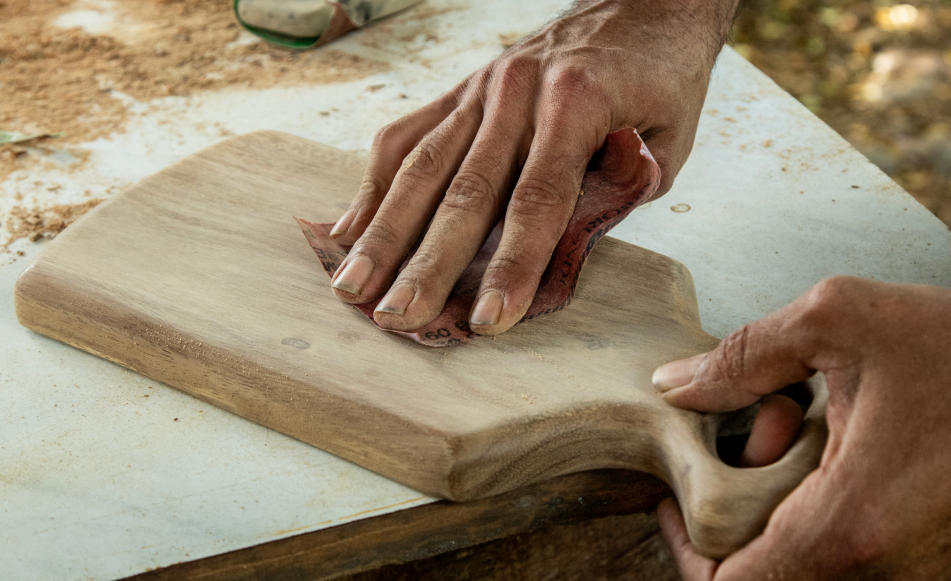
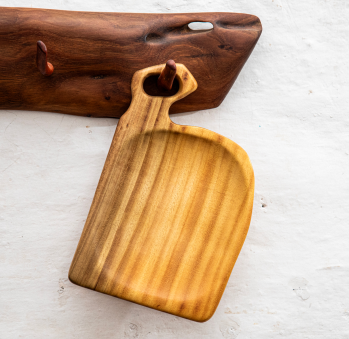
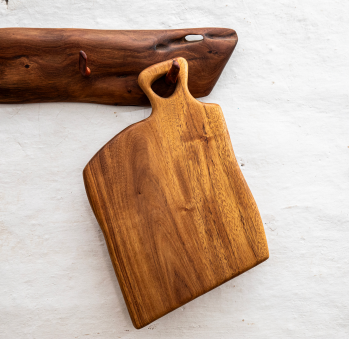
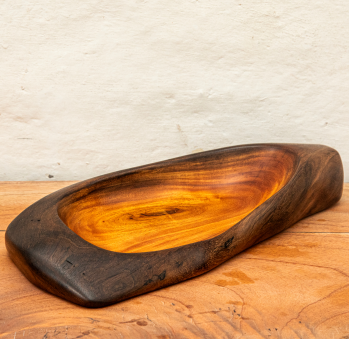
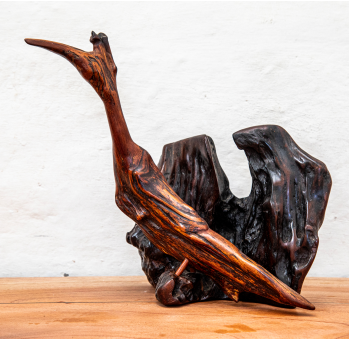
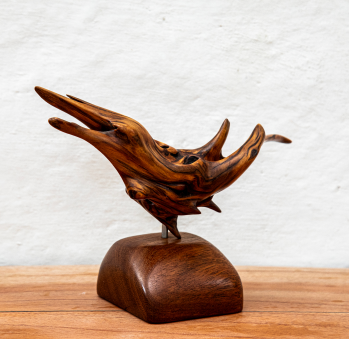
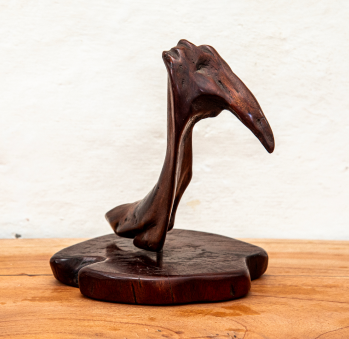
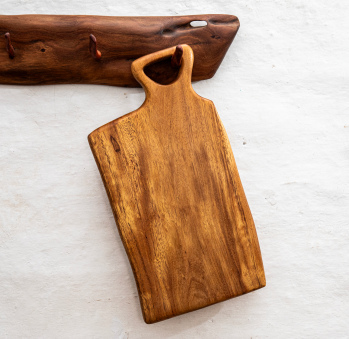
Everything began to make sense, because wood carries within it the memory of a tree’s life, and one of the most visible consequences of the El Quimbo project had been the felling of the forested hillsides that would later disappear beneath the reservoir. Cristian began following the people who knew the river and its trees, learning from them. He befriended chainsaw operators who could identify every species by sight, and he turned to his father to learn woodworking. Through that process he realized this was what he was meant to do. He chose three types of wood to work with, all of them gradually recovered from the river and the surrounding mountains: the dense and durable matarratón, dinde, which turns black after drifting downstream, and diomate, known for its striking burgundy-red color.
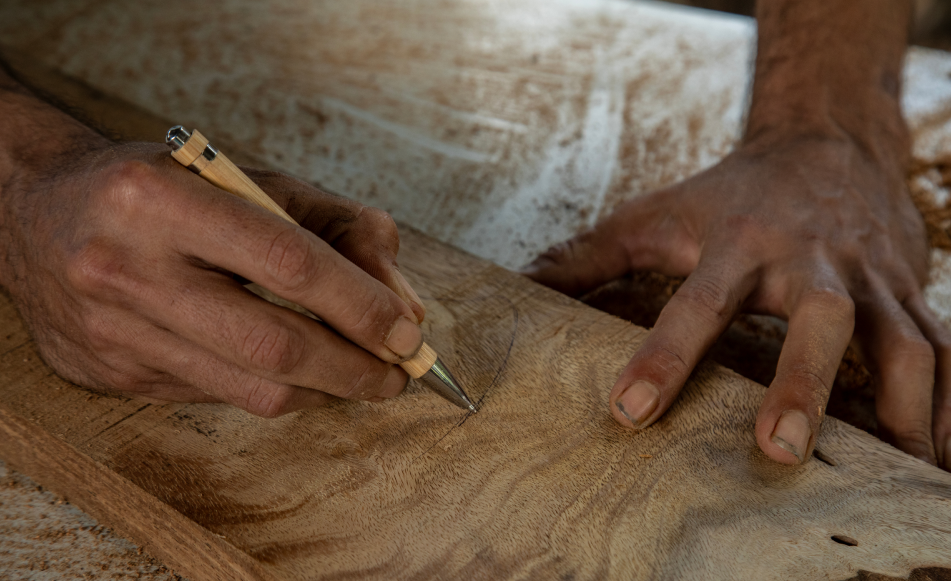
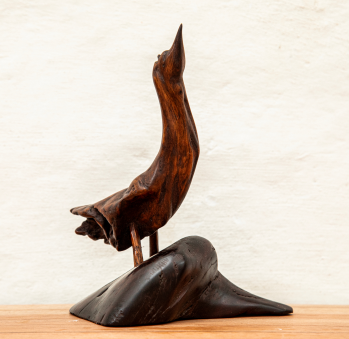
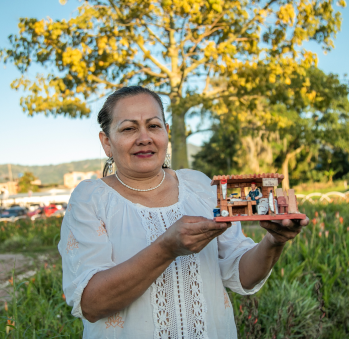
With these woods, Cristian began carving fragments of what had been lost. Within their forms he saw the Amazon parrots that no longer returned, the woodpeckers that had depended on the high forest canopy, the pato pisingo that had stopped migrating, the bocachico fish that could no longer swim upstream to spawn, the pataló and bagre peje that local fishers no longer caught, and the herons and osprey that now remain year-round beside the reservoir instead of continuing their seasonal migrations. He carves these creatures into the wood of the very trees that once sheltered them, making their absence visible and preserving their memory. Today, he spends his days surrounded by old wood in a home that is at once a house, a workshop, and a museum, accompanied by his dog and two cats. Once a week, he heads out in search of more wood, listening to the shapes hidden within it so he can continue the work that, fortunately, found him ten years ago.
Workshop and process
Craft
Artisans along the way

Artisans along the way



No puede copiar contenido de esta página