
Julián Díaz
Workshop: Taller de Julián Díaz
Craft: Stonework
Trail: Huila Route
Location: San Agustín, Huila
SCHEDULE YOUR VISIT
Vereda Alto Mesitas, San Agustín, Cerca al Parque Arqueológico
3181380215
juliandiazsamboni@gmail.com
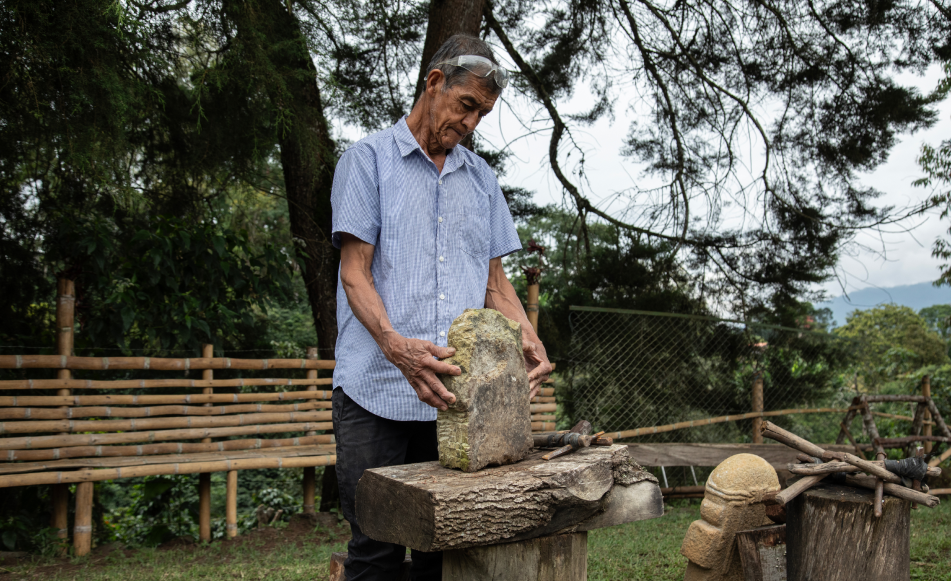
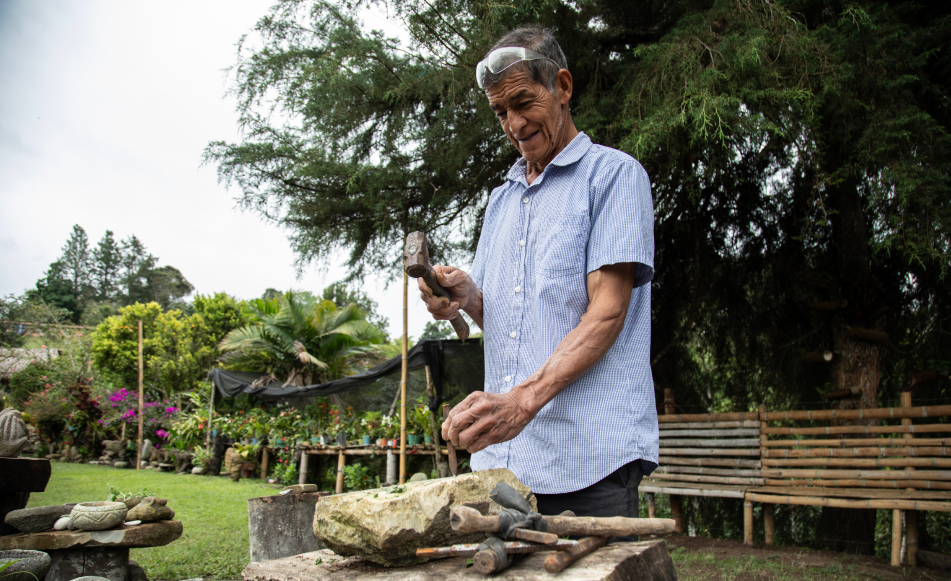
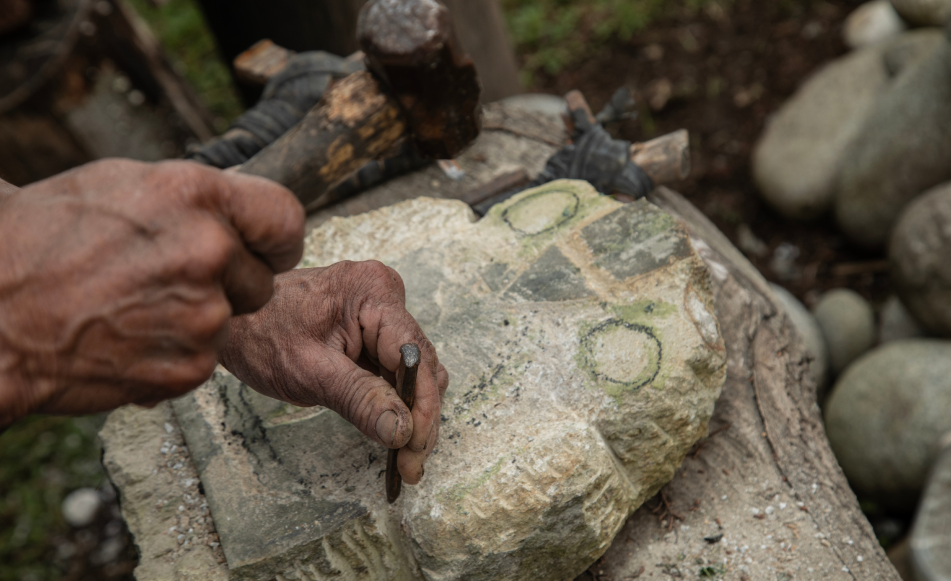
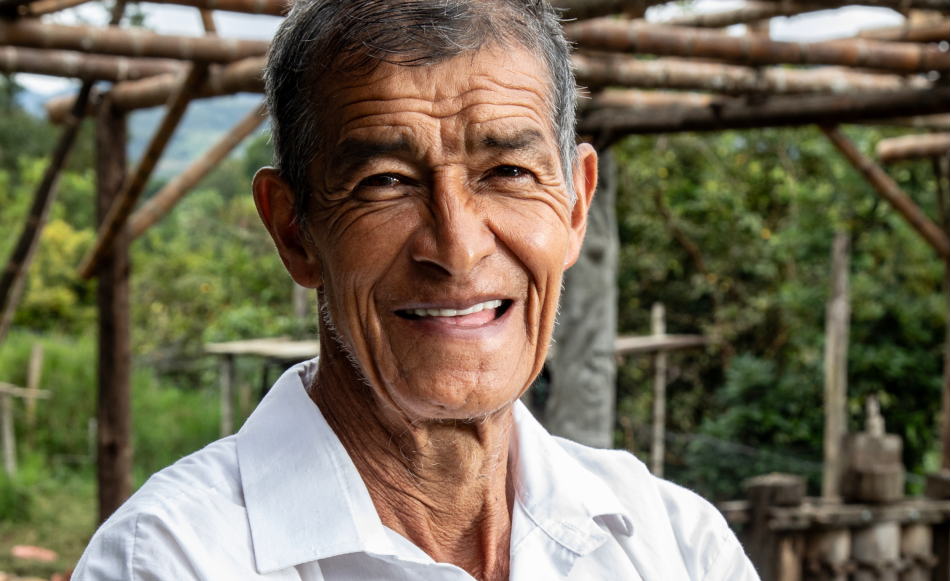
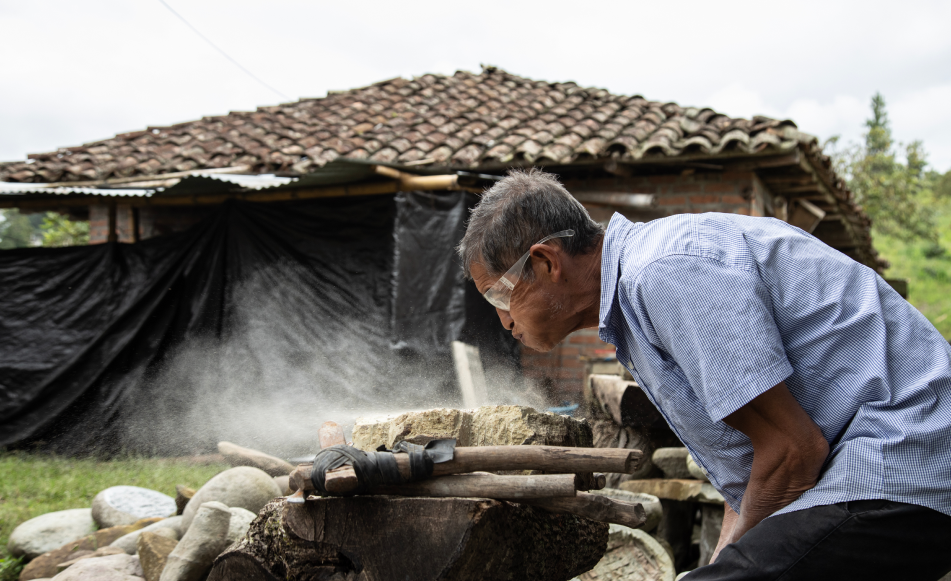
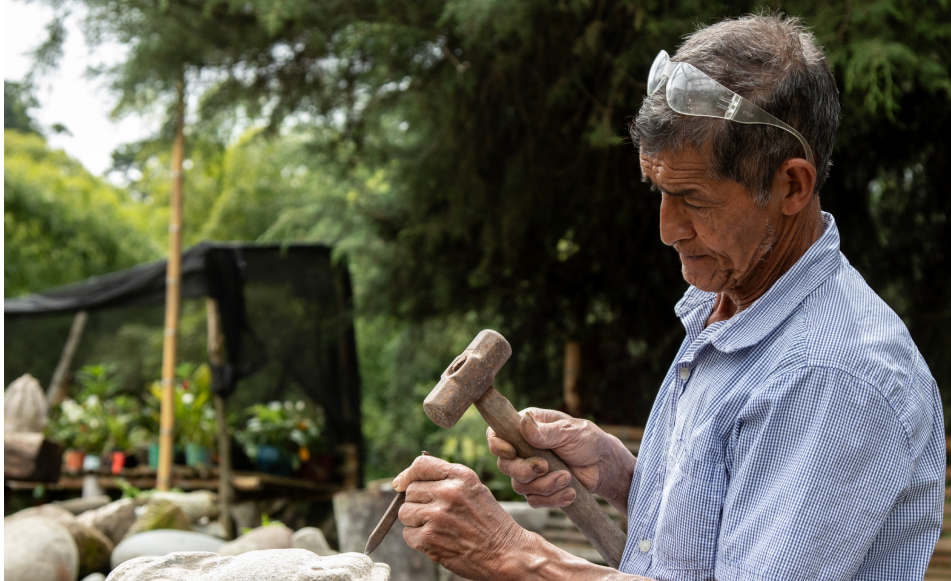
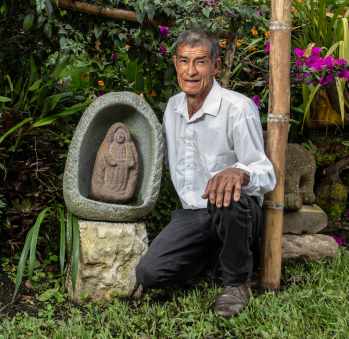
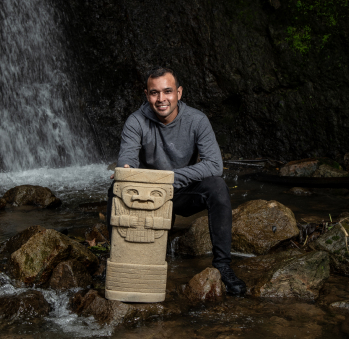
Julián Díaz’s story as a stone carver began in his teenage years—on horseback. A relative owned a lodge that organized horseback excursions through the mountains, and Julián became one of its guides. He led visitors on journeys as long as the five-day ride required to reach the source of the Magdalena River in the Páramo de las Papas. Those years gave this proud native of San Agustín an intimate knowledge of every river and village in the region, names he recites almost like poetry: Balseros, Naranjos, Quinchana, Mulales, Magdalena. It was the travelers themselves who unknowingly steered him toward his future. They repeatedly asked where they could buy a carved stone sculpture, and eventually Julián decided to make them himself. He taught himself the craft using whatever tools he could find—discarded metal files left behind in the fields by farmers and an ordinary hammer. More than once he began with five stones and ended with none at all because every one of them broke apart. At that point, he still did not know that as a carving progresses, the tools must become lighter and more delicate, since repeated blows gradually weaken the stone.
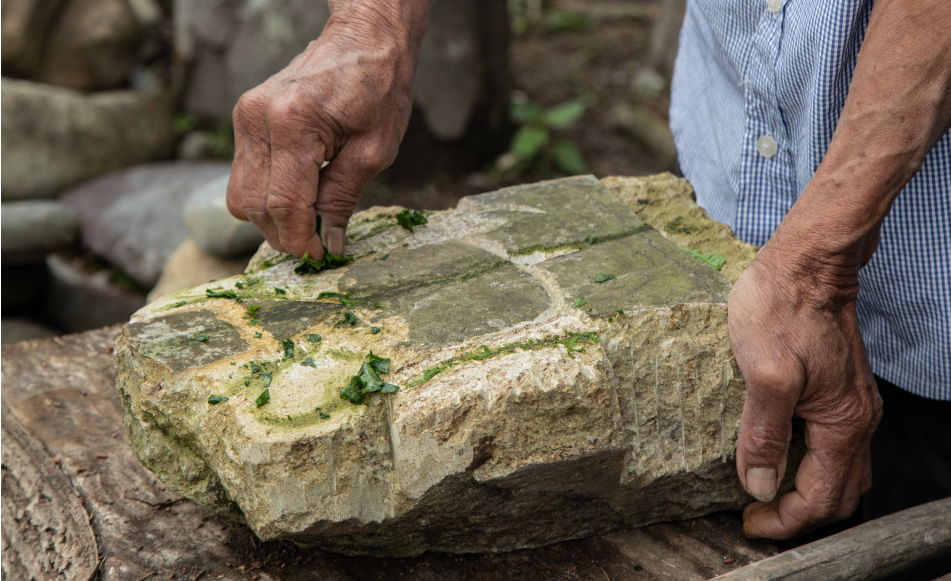
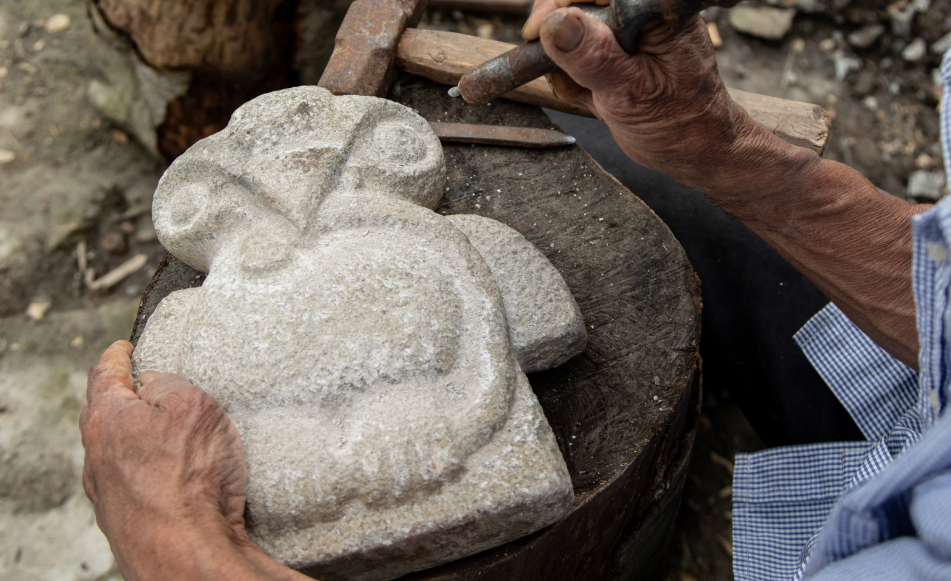
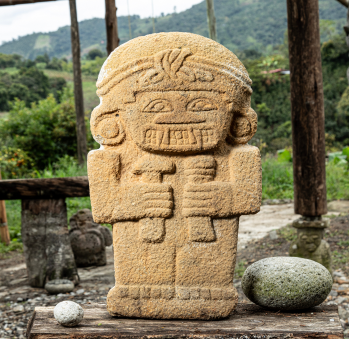
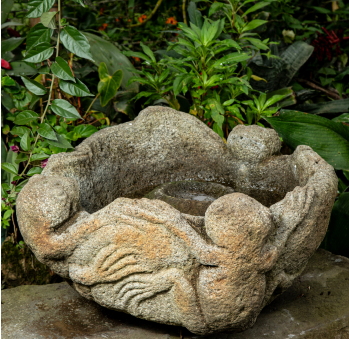
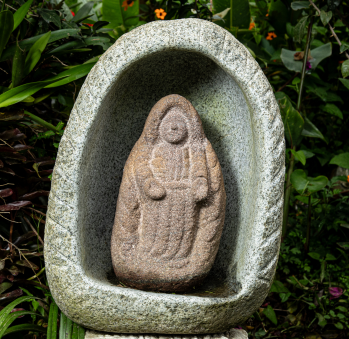
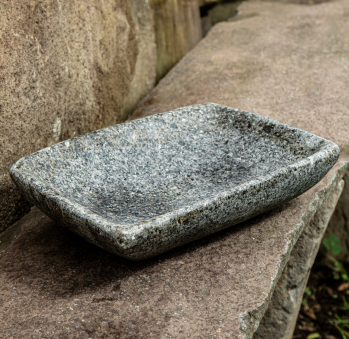
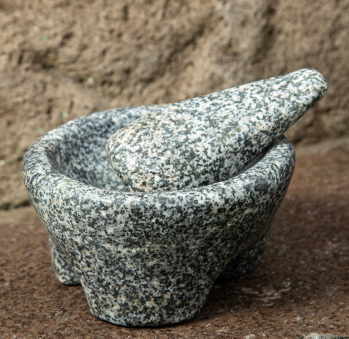
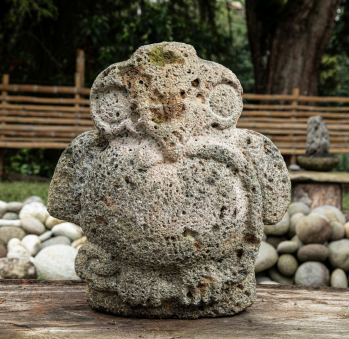
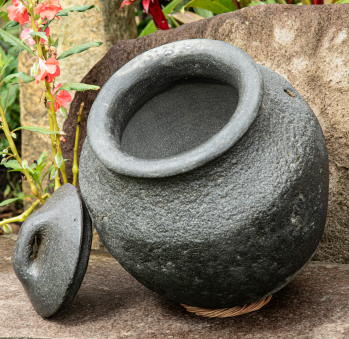
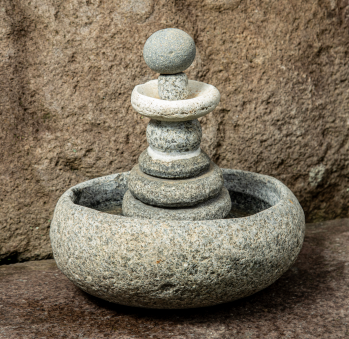
Yet not everything was difficult. When he chose to change his path, he realized that his years as a guide had unknowingly prepared him for his second life as a sculptor. While riding through the mountains, he had been building a mental map of his future raw material—the stones from each of the rivers that shaped his homeland. Today he knows that the granite-colored stones from the Granadillos River are ideal for carving washbasins; that the rivers Naranjo, Negro, and Balseros yield the best stone for mortars; and that faithful replicas of the sculptures in the San Agustín Archaeological Park are best carved from volcanic stone extracted from local quarries, a material that must be worked patiently with a chisel because power tools will cause it to fracture. He also had the good fortune of learning from master sculptor Ángel Miro Guerrero while helping him carve the four monumental replicas commissioned for San Agustín’s main square, each of which required fifty days of work.
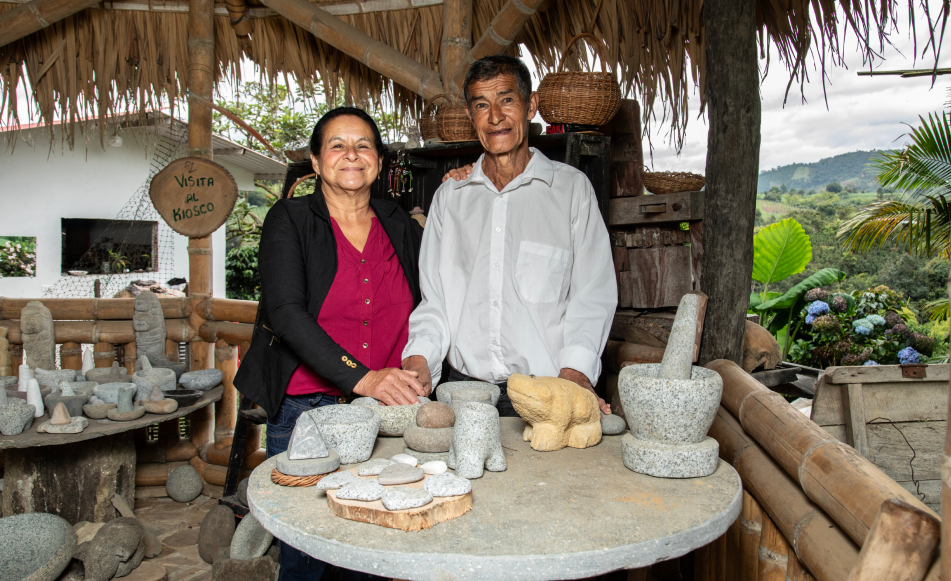
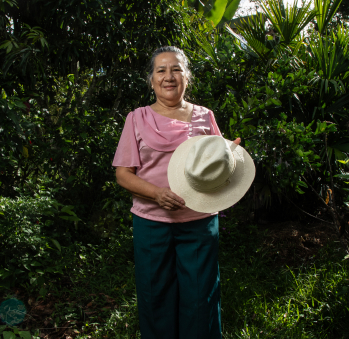
Just as he had always loved the mountains, rivers, and landscapes, he gradually fell in love with the craft itself and with the ancient sculptures that inspired it. His favorite one is the Double Self, an iconic statue from the Archaeological Park in which a human figure and a caiman align and stack together to become a single being. Throughout those years of learning, one person witnessed every step of the journey: Nubia Irua, the love of his life, who moved in with him when they were both eighteen. At first, she could not understand his obsession with carving stone. It frustrated her to watch him spend entire days shaping a single rock when he could have been farming sugarcane, coffee, avocados, plantains, or corn—skills he already possessed—or helping her raise the pigs she has cared for over the years. But little by little, she softened as she saw that people were genuinely interested in buying the sculptures born from what had once seemed like her husband’s impossible dream. Before long, she too returned to working with her hands, reviving the basket-weaving tradition her mother had taught her as a child, when she and her siblings would gather vines to weave baskets for harvesting coffee and carrying potatoes and eggs.
Over the years, Nubia and Julián have built a home designed to celebrate their craft and welcome anyone curious to learn about it. The walls are covered with murals that tell their story: Julián with his beloved horses, Julián carving stone, and the iconic sculptures that continue to inspire his work. When you visit, they guide you through every stage of the process and demonstrate the technique that has served Julián best for producing sculptures faithful to the symmetry of the originals: working from simple paper photocopies as reference. And one final tip—when you ask for him, call him Julio rather than Julián. That is the name by which everyone in the village knows him.
Workshop and process
Craft
Artisans along the way

Artisans along the way



No puede copiar contenido de esta página