
Marleny Toledo
Workshop: Sombreros Suaza Muñoz Toledo
Craft: Weaving
Trail: Huila Route
Location: Suaza, Huila
SCHEDULE YOUR VISIT
Sobre la vía nacional del centro poblado Guayabal, diagonal al Hotel El Descanso
3118079458
tejidosombrerosuaza@gmail.com
@p/Sombreros-suace%C3%B1os-100063937...
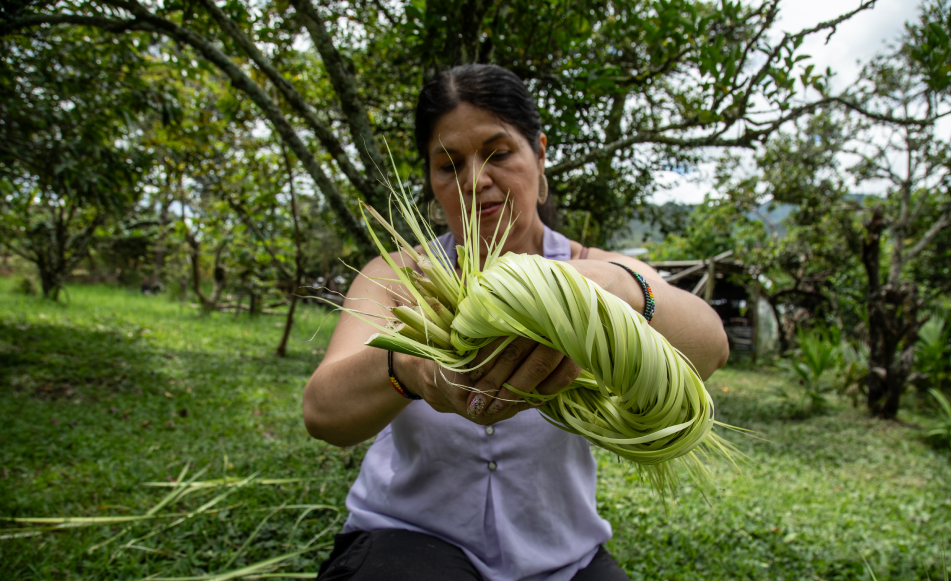
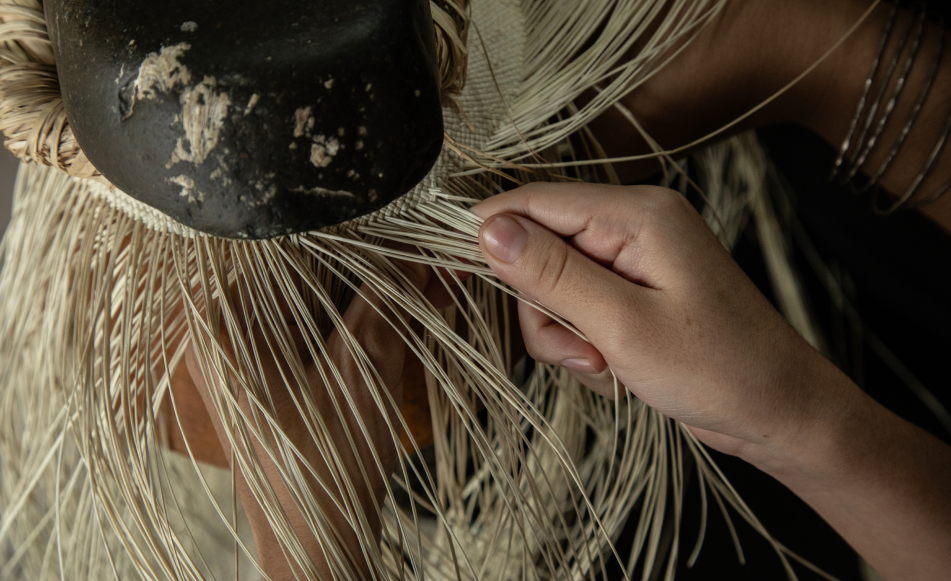
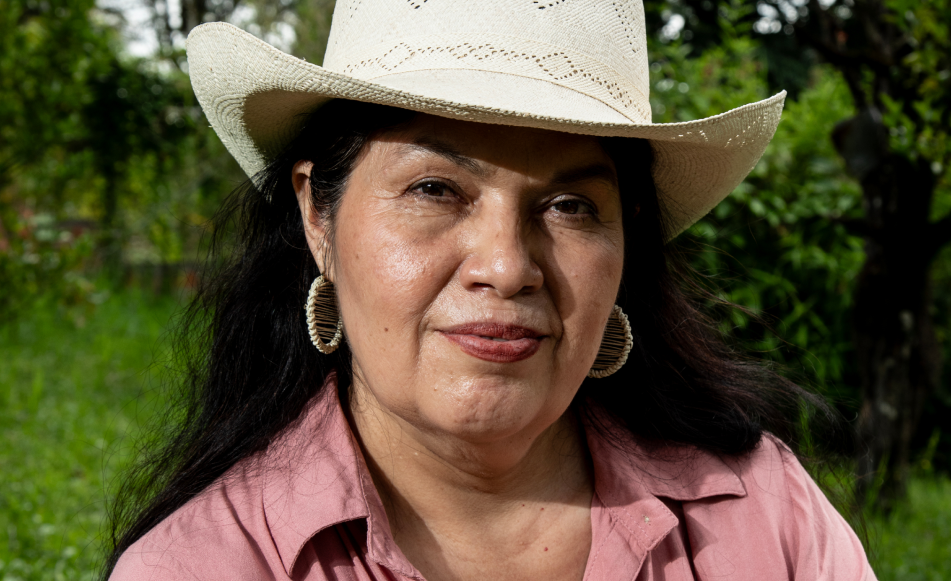
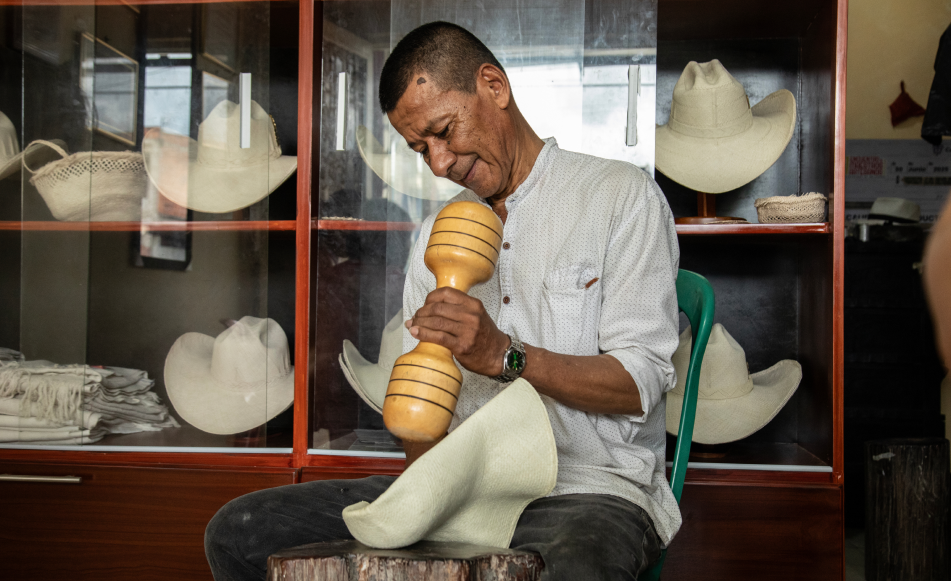
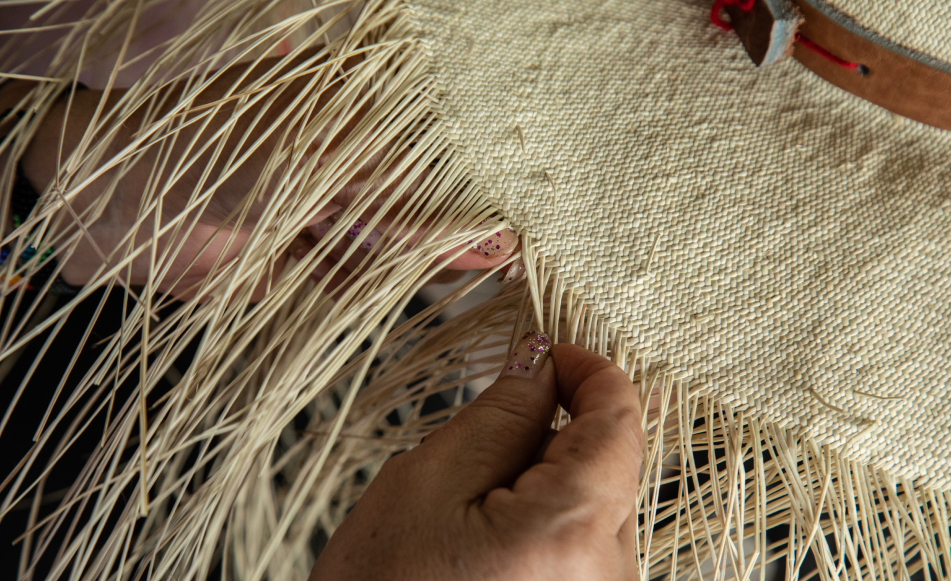
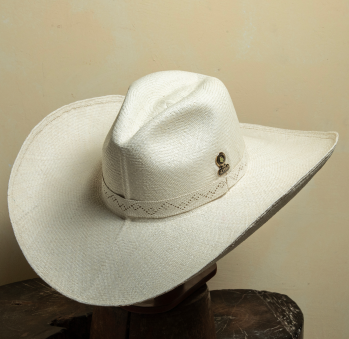
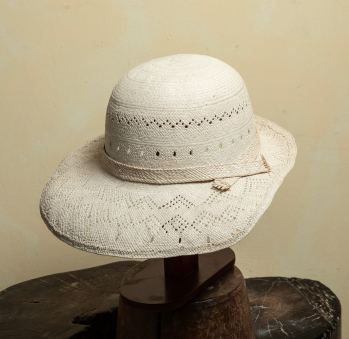
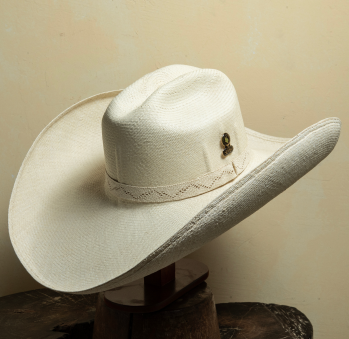
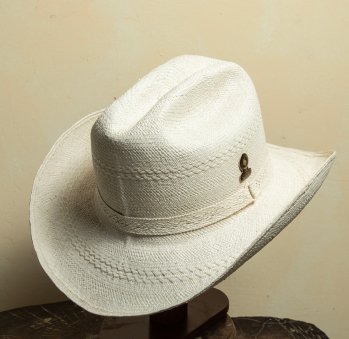
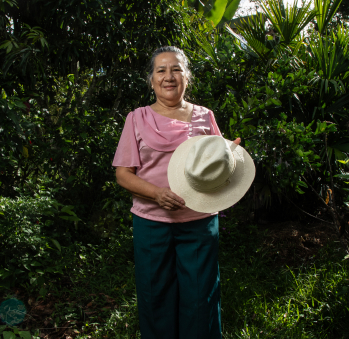
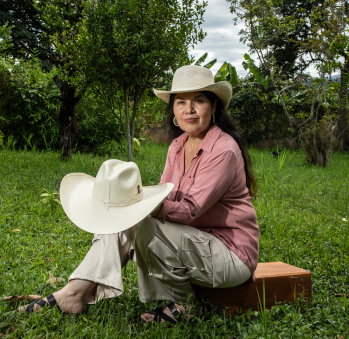
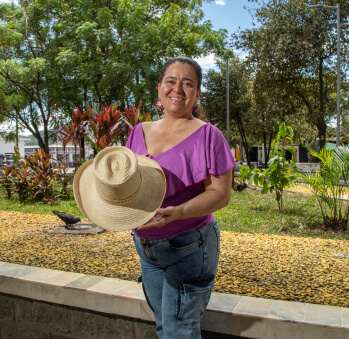
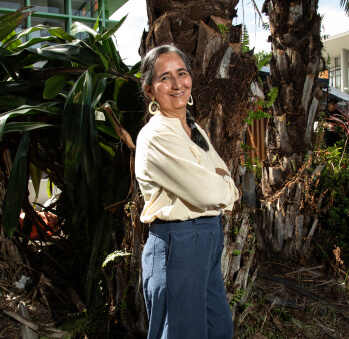
In Marleny Toledo’s home, weaving takes place away from the sun and the wind to protect, like a treasure, the iraca fibers she has used to weave hats all her life. Her relationship with this raw material is deeply personal: she plants and fertilizes it, processes it, and carefully shields it from heat and wind so it will not dry out or become brittle when it is time to weave. She does this because hats have given her a lifetime of work, the joy of sharing her knowledge, and even brought her love. It was while selling hatbands for the crowns of hats that she fell in love with her husband, Antonio María Muñoz Duarte, the son of master weaver Oliva Duarte. Marleny wove the hatbands, Antonio bought them, and little by little they became intertwined, much like the strands of iraca themselves. With a laugh, she says that thanks to that encounter she now has someone to finish and hammer her hats into shape, a task that has traditionally belonged to the men of Suaza.
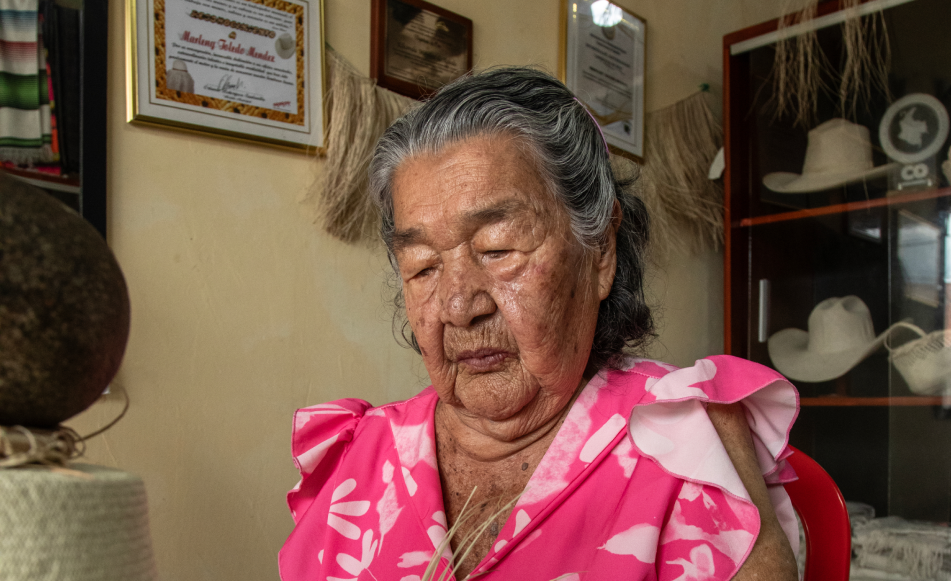
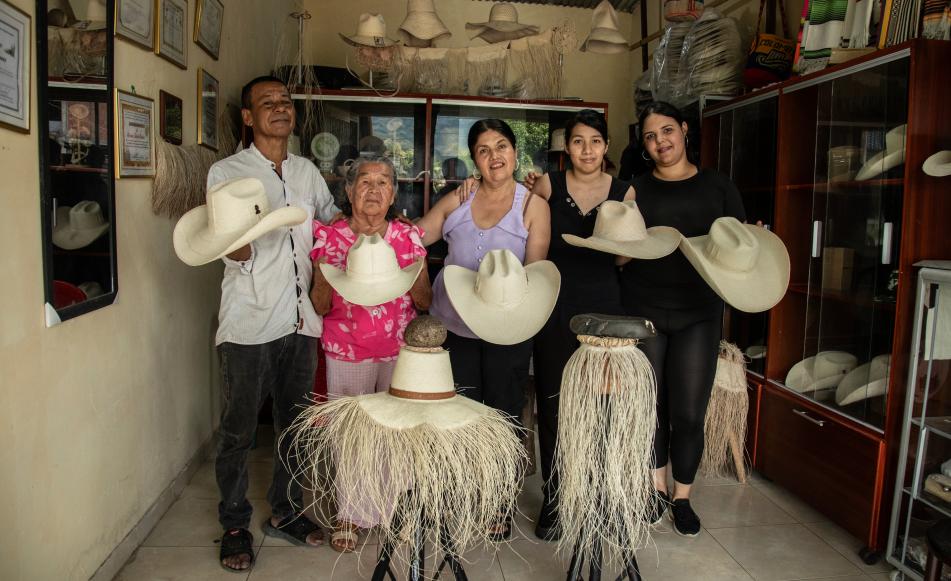
Marleny learned the craft from her mother, Elisenda Méndez, now well into her nineties and, proudly, one of the last remaining weavers in the rural community of Guayabal. Her lessons began when she was eight years old, were interrupted by a bout of Guillain-Barré syndrome that filled her future with uncertainty, and fortunately resumed after she recovered at the age of nine. There were eight children in the family, but, as Marleny puts it, “I didn’t like school, and they didn’t like handicrafts,” so she was the only one who followed in her mother’s footsteps. She watched Elisenda become one of those extraordinary women who somehow multiply the hours in a day, weaving the demanding hats of Suaza while feeding and caring for eight children.
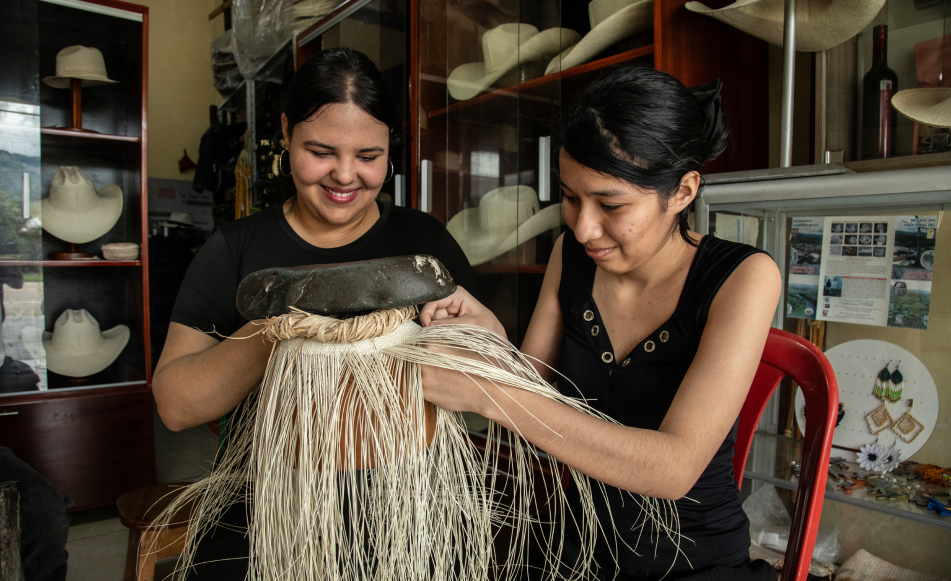
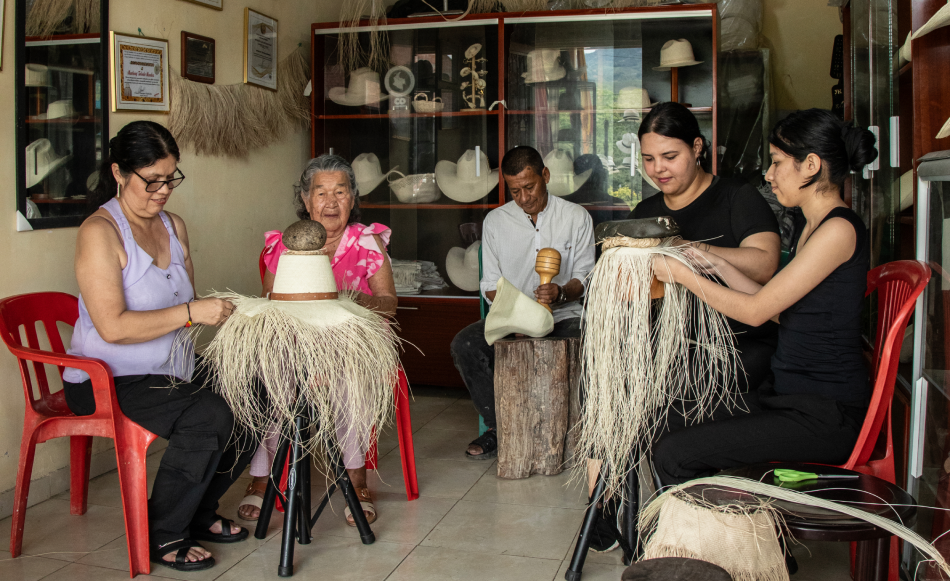
Although she has fewer children of her own, Marleny’s days reflect the same strength that comes from dedicating an entire lifetime to this work. Weaving a hat requires countless hours seated in the same position, endlessly interlacing fine strands of iraca, and the physical toll is considerable. The strain settles into the back, neck, hips, and legs, which swell from remaining bent for so long, while the fingers become stiff and aching from constantly tightening the fibers. The work demands such commitment that even with four people weaving the same hat simultaneously, it still takes twelve days to complete, not including the finishing and hammering that follow. Sitting in a circle with two of her sons and her daughter-in-law, Marleny feels close to the stories her mother used to tell about the mingas—communal weaving gatherings where neighbors came together to weave a single hat, passing it from hand to hand, usually at night by the light of tallow candles. Elisenda also loved to tell them that, more than once, when the weaving continued well past midnight, some ghost would eventually send everyone running home.
In addition to weaving, Marleny loves to teach. Children, young people, and adults are all welcome to learn from her hands, provided they truly want to learn. Even if only five people remain from a group of thirty students, she considers that a victory in a world where fewer and fewer people choose occupations that involve no screens and offer no immediate financial reward. Given her patience and dedication as a teacher, it is remarkable that she never actually had to teach her own son. One day he surprised her by presenting two platos—the woven centers that form the beginning of a hat—which he had completed entirely on his own. He was only seven years old.
Among all her responsibilities, it is also worth mentioning that Marleny serves as president of the Asociación del Sombrero Valle de Suaza, whose sixteen members are spread across Guadalupe, Acevedo, and Suaza. Together they planted 6,000 iraca seedlings on municipal land to ensure a supply of raw material for future generations. But while thinking about the future, they have not forgotten the past. Considering that an iraca plant takes five years to mature before its fibers can be harvested, the association has also focused on supporting the older generation of weavers. They found a way to help the women who deserve to rest after spending a lifetime weaving hats by renting out the association’s pressing machine and distributing the proceeds among them. In this way, they ensure that a lifetime devoted to the craft has truly been worthwhile and that these master weavers can look forward to a dignified old age.
Workshop and process
Craft
Artisans along the way


Artisans along the way



No puede copiar contenido de esta página