
Aty Janey Mestre
Workshop: Aty Seynekun
Craft: Weaving
Trail: Cesar Route
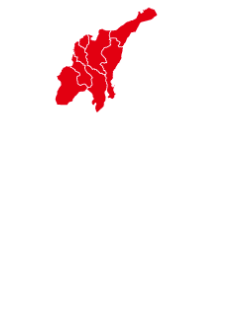
Location: Pueblo Bello, Cesar
SCHEDULE YOUR VISIT
Cra 7 # 4-157 o cra 7 # 2 – 130, Barrio Ariguani, Pueblo Bello
3162110422
316843111
tutuseynekun1@gmail.com
atyarhuaca@gmail.com
@tutu_seynekun
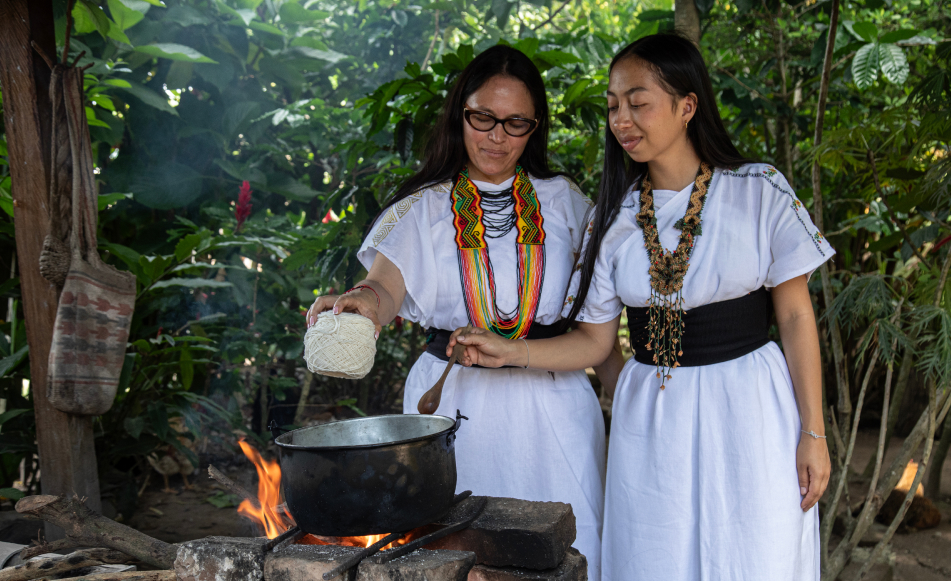
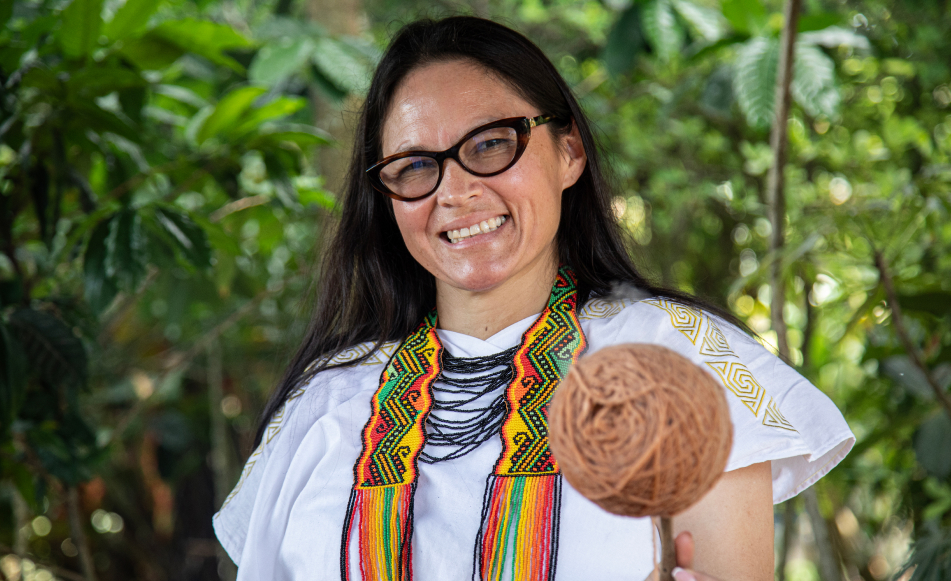
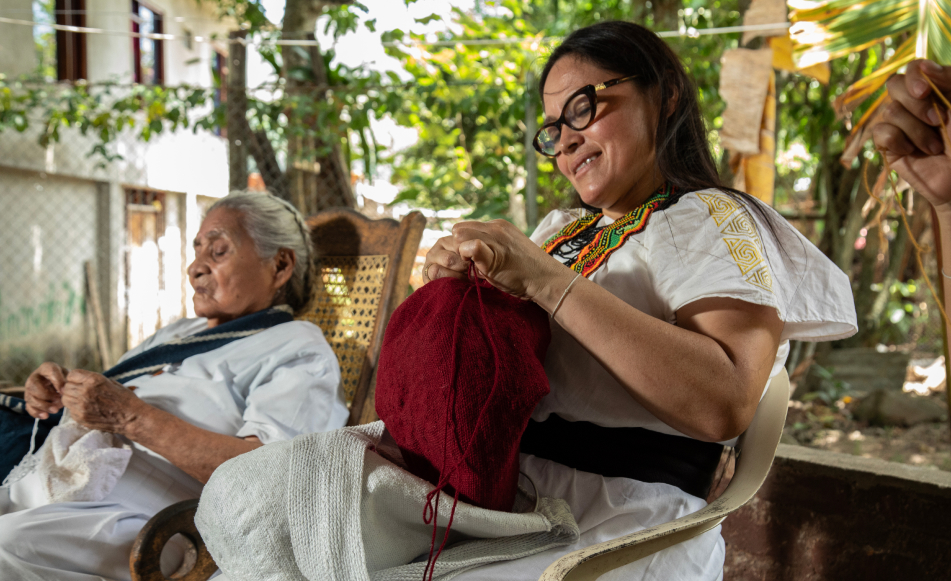
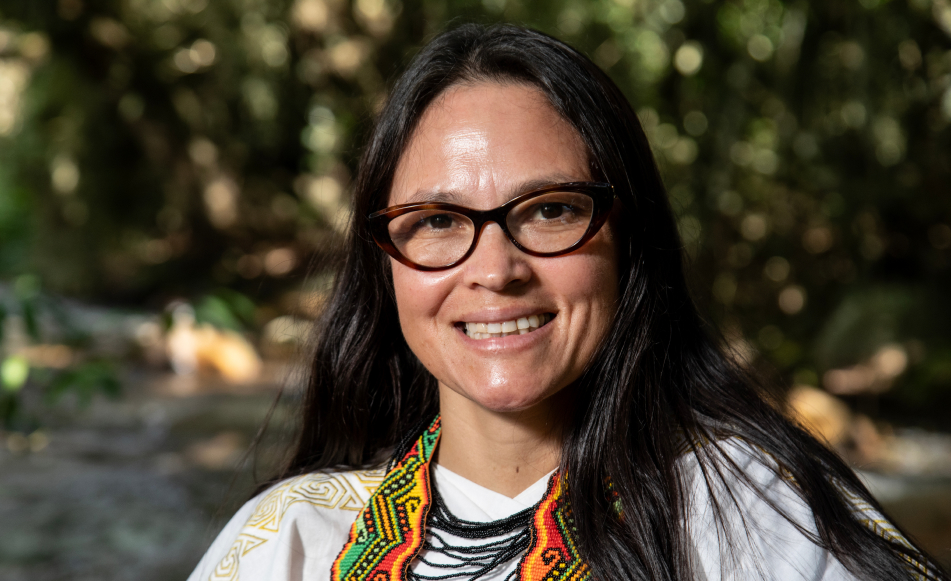
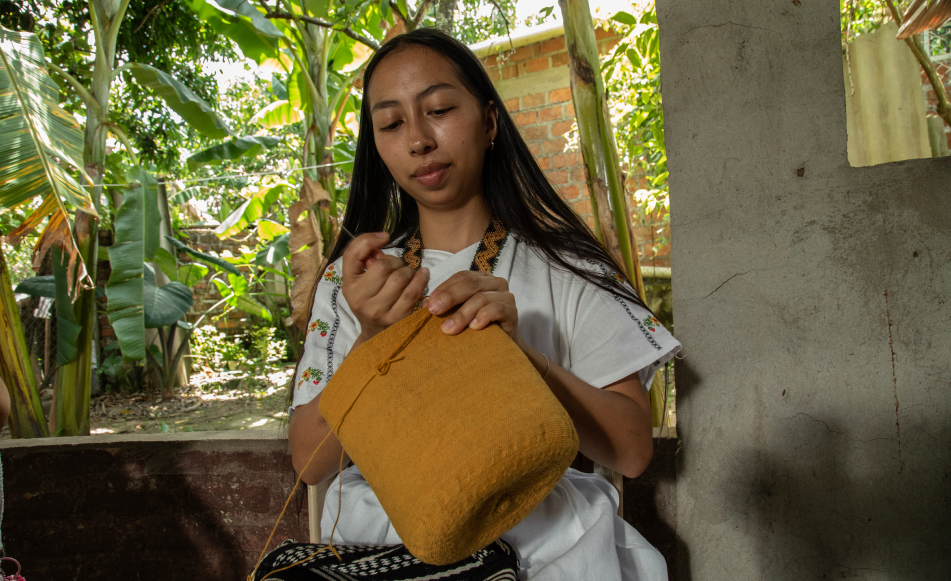
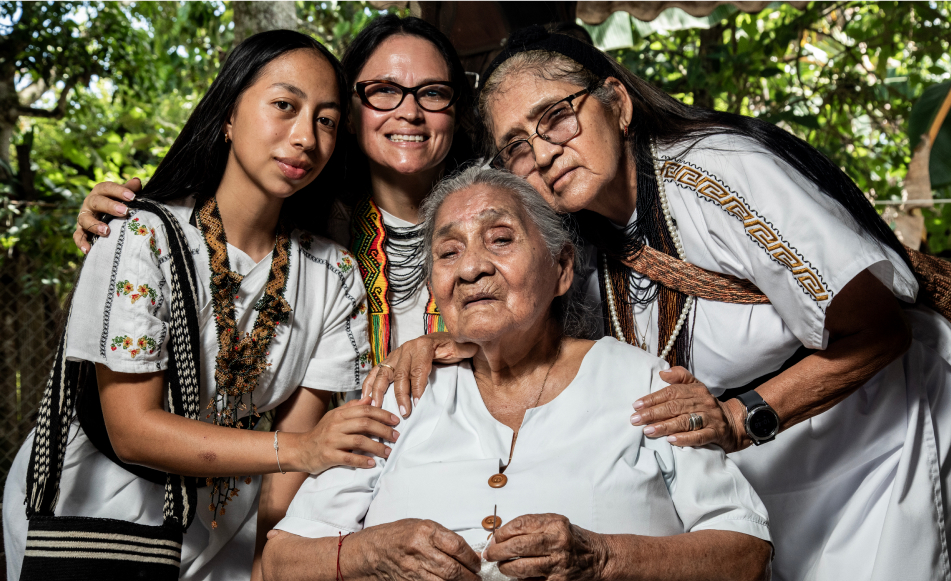
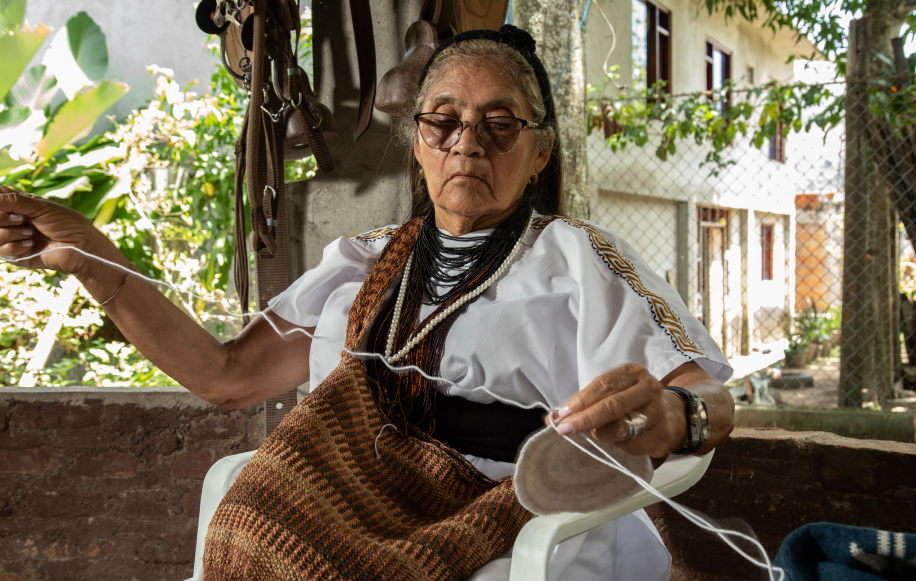
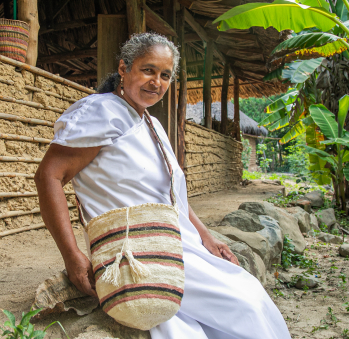
Her name means Mother of Thought, and she says she comes from the land where water is born. Everything about Aty seeks meaning and is tied to her territory—her navel, her center—in the Sierra. Her most vivid childhood memory is watching her grandmother and great-grandmother weave from morning until night, their hands always occupied, their words measured and wise as they shared the stories of the Arhuaco people. With such examples before her, it was inevitable that by the age of five she wanted to get her hands on the threads as well, tangling them now and then, only to untangle them amid laughter with the help of her elder women. It was these two revered women who raised her at the request of her mother, Alcira Izquierdo, heir to the authority of her father and grandfather, both mamos, which is the name given to spiritual leaders, and who had become a leader within her community. During the 1980s and 1990s, while the Arhuaco people fought to reclaim the sacred lands tied to their ancestral offerings, Alcira traveled from assembly to assembly in search of justice for her people. Yet whenever she returned home, she made up for the time spent away from her four children by embracing them through lessons about life. Aty grew up this way until she was ten years old, when she was taken by the hand to Nabusímake, the spiritual capital of the Sierra Nevada de Santa Marta, where she would live and complete her secondary education.
What she struggled with most was the cold—the biting chill that greeted her in January and forced her to bathe at three in the morning. For many days she cried over being far from her grandmother Mita and often wondered whether she would be able to endure it. But she did. She persevered once she realized that many other children were in the same situation. Being the youngest among them worked in her favor, earning her small acts of affection from Magdalena and María Agustina, who would save the crispy rice from the bottom of the pot to make her feel at home. She also discovered that her curious spirit could be an advantage. She organized little excursions into the mountains in search of plants, braided her classmates’ hair, or gathered them around to tell the haunting story of how, during the missionary era, her great-grandmother had been kidnapped and taken to the Capuchin missions, where she was threatened with having her tongue cut out if she spoke her native language. They even called her an orphan despite the fact that her parents were alive. Once she felt fully integrated, the children shared whatever cheese or panela their families sent them to help endure the cold. Looking back, she considers those six years a positive experience. They taught her independence and allowed her to find her place through her eloquence.
When she eventually returned home, she wanted to continue her studies. She ended up doing so in Manizales after realizing she did not feel comfortable in Bogotá. Her mother had told her that the capital of Caldas was small and welcoming, and there she enrolled in university to study Business Administration, becoming the first Indigenous woman to attend those classrooms. “I could feel everyone’s eyes on me,” she recalls. That feeling made her walk even more proudly, wearing her traditional Arhuaco clothing and weaving during lectures while listening to her professors. She embraced the curiosity she inspired as an opportunity to speak proudly about her roots and introduce her classmates and teachers to her Sierra. As if her story were destined to keep sowing beauty, during her third semester she met—or perhaps rediscovered—Hugo Jamioy, the Kamentsá poet and son of Mamá Pastora, a remarkable weaver from Putumayo who has since passed into another realm. One of Aty’s aunts was married to Hugo’s brother, so they had crossed paths a few times before. But it was when she unexpectedly arrived in Nabusímake as the host of a university field trip led by one of her professors that she encountered him again. What a peculiar place for such a meeting, she thought—right there in the spiritual capital of the Sierra. Apparently, Hugo was smitten. He left his studies in Bogotá and moved to Manizales to study economics, setting himself the challenge of, as she puts it, “breathing down my neck” until he won her heart. And he did. Aty graduated with five children by her side. It was then that she knew she needed to return home.
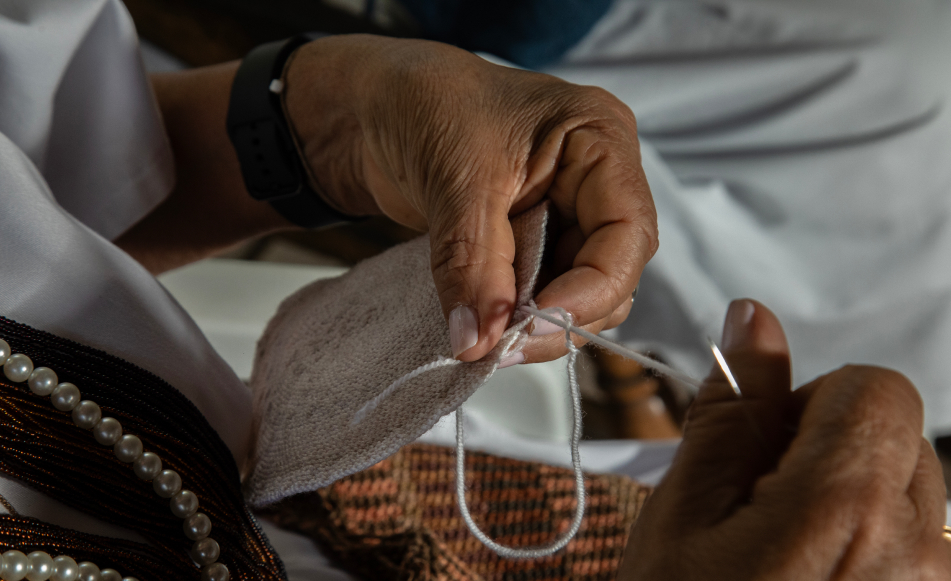
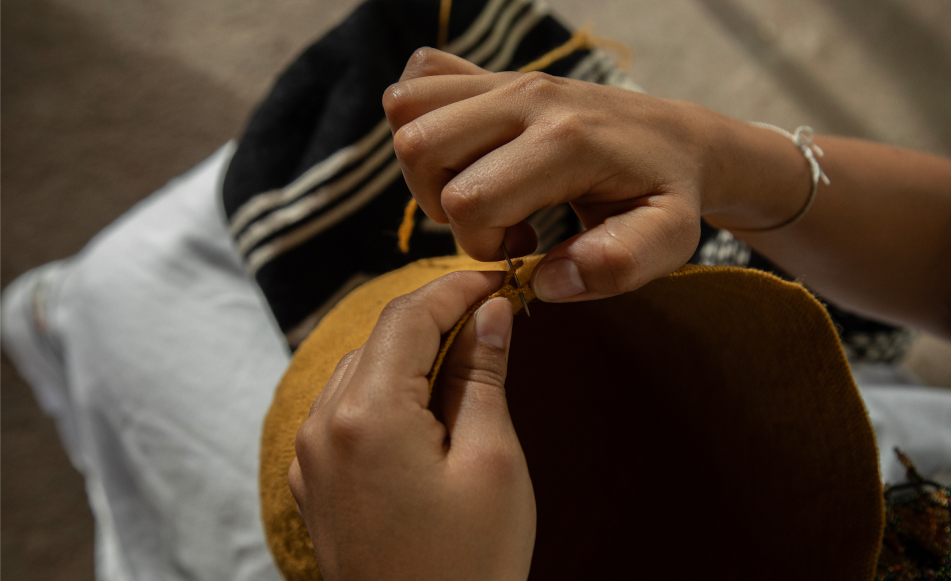
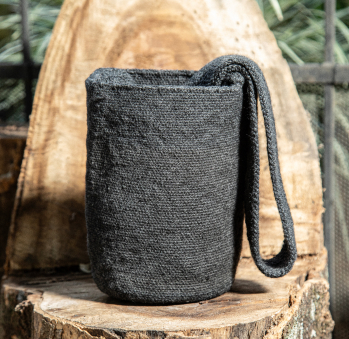
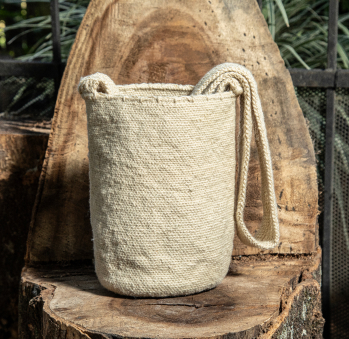
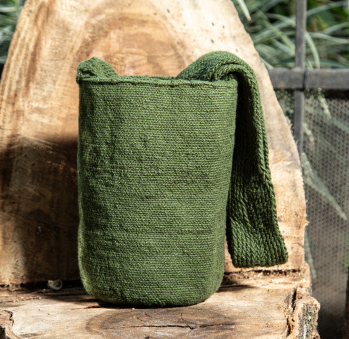
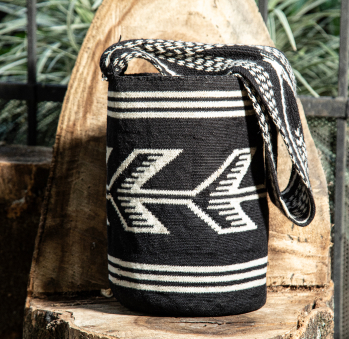
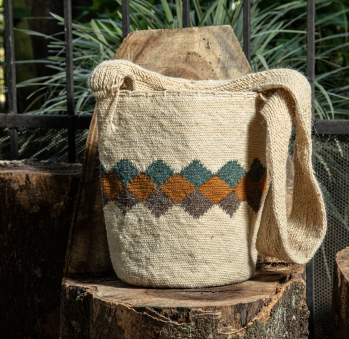
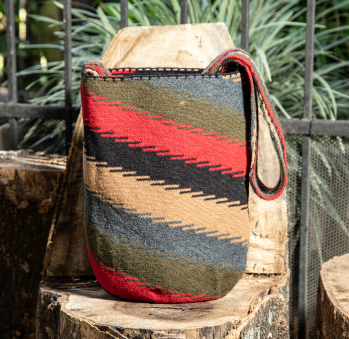
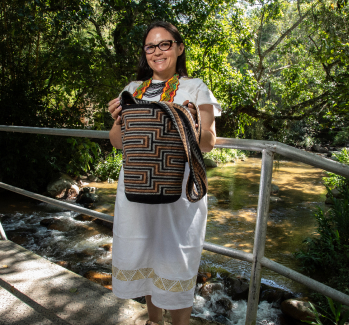
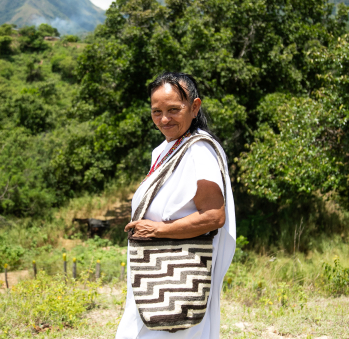
Today, she and Hugo live in Pueblo Bello. Together they have passed on the profound meaning of weaving and of their respective cultures to their children—from the Arhuaco mochila or tutu, symbolizing the womb, to the chumbes that support the belly and carry the history of the Kamentsá people. For Aty, teaching the meanings behind what they make and what they weave is essential. Without the stories, everything loses its purpose. Without them, it would be impossible to understand that weaving is a way of transforming the world and maintaining balance. Hugo fulfills his own role through the library he directs in the territory. Today, Aty feels pride not only because her artisanal legacy is already in the hands of her children, but also because she became the first Indigenous Secretary of Government of Pueblo Bello. She knows that what truly matters is walking the path—and leaving a mark wherever one goes.
Workshop and process
Craft
Artisans along the way
Artisans along the way



No puede copiar contenido de esta página