
Jaime Castillo
Workshop: Castillo y Paz
Craft: Woodworking
Trail: Sucre Route
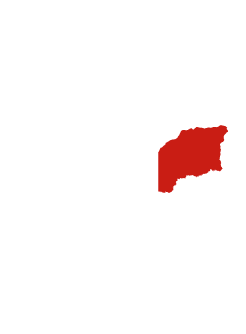
Location: Toluviejo, Sucre
SCHEDULE YOUR VISIT
Transversal 4 #2-22, Toluviejo, Sucre
3006445607
jacal2707@gmail.com
@castilloypaz
@Castilloypazcolombia
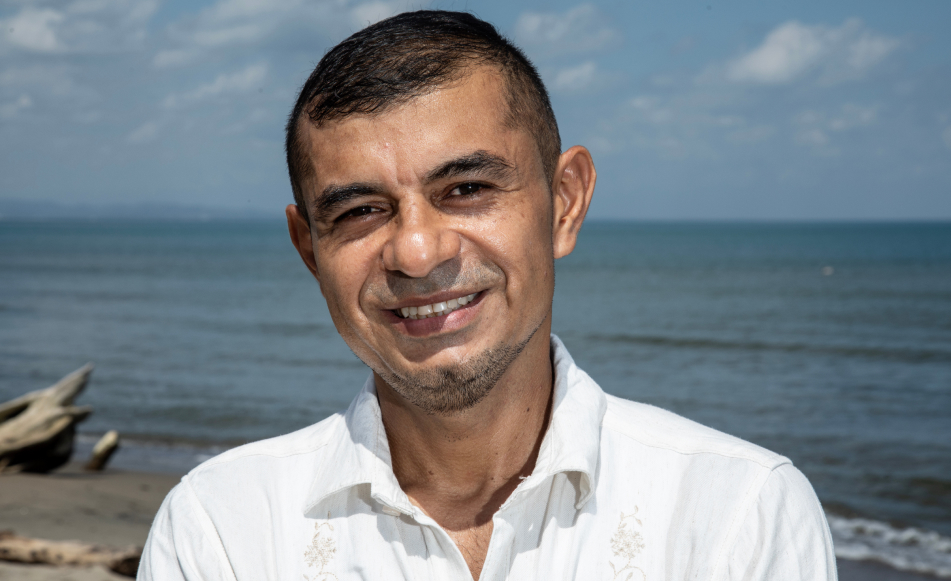
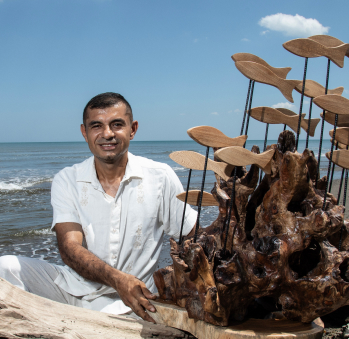
Jaime is one of those courageous people who, after many years, finally admit something that others often refuse to acknowledge: they are simply not happy. For seventeen years he held a supervisory position at a company that offered security, benefits, and the comfort of a steady monthly paycheck. But one day, seventeen years later, that was no longer enough. Perhaps it began during one of those moments when he was already contemplating leaving everything behind. He was walking along the beach at Rincón del Mar, on the shores of the Gulf of Morrosquillo, when he came across a collection of beautifully weathered driftwood logs. He stopped and wondered what could be made from them. That single thought reconnected him with a childhood and youth spent constantly making things with his hands—bracelets, necklaces, macramé, hammocks, and woven chinchorros. Once he became an office employee, that part of himself had simply been buried beneath routine. It was as though those pieces of driftwood unearthed a forgotten happiness. He told himself, enough, and decided to follow the call.
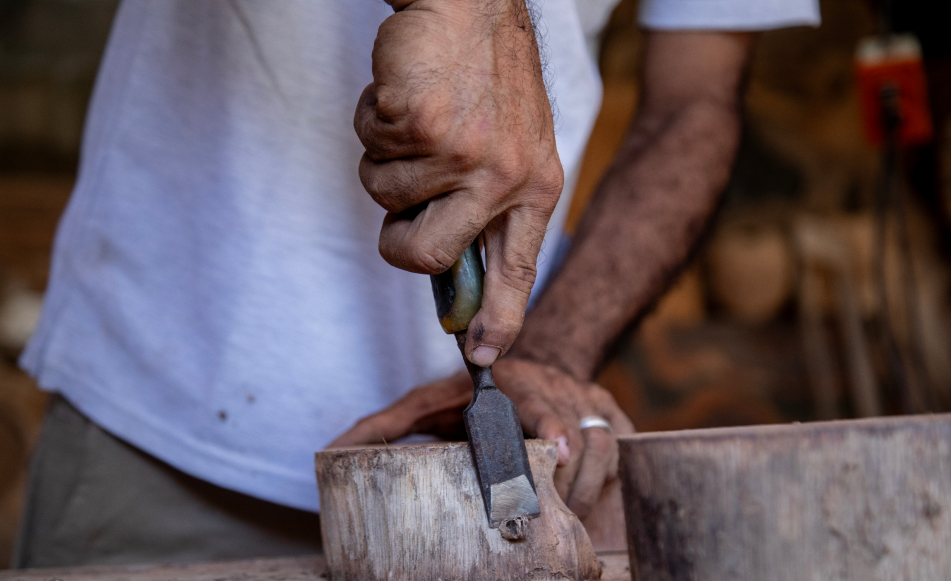
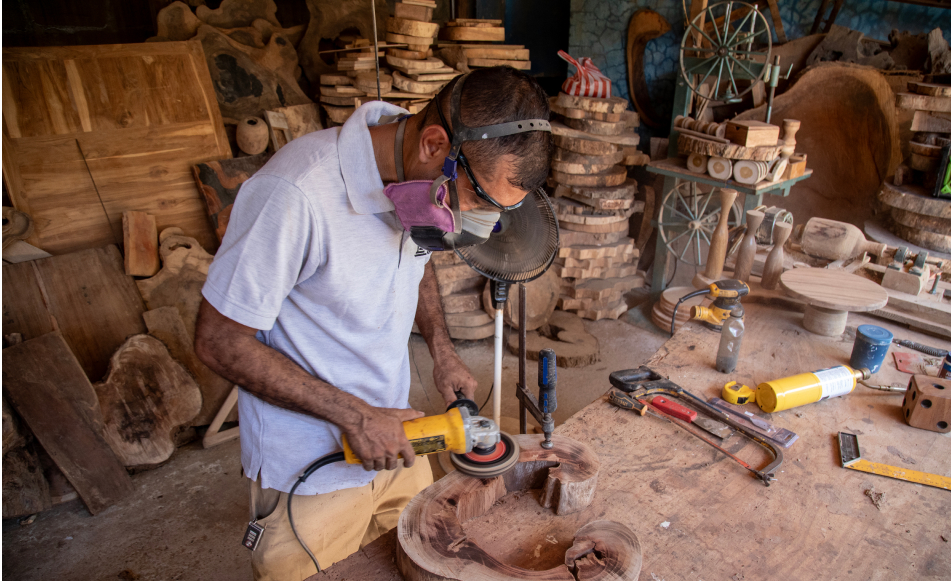
It was October 31, 2019. Encouraged by a relative who promised to support him financially for three months while he got started, Jaime invested every peso of his severance pay in woodworking tools: gouges, chisels, a chainsaw, grinder, drill, rotary tool, and cutting saws. The promised support never materialized, instead, it was his father who stepped in. Looking back, Jaime says that promise served its purpose anyway—it gave him the courage to leap into the unknown. It is a leap that, in his own words, gave him back his soul. Today he is so fulfilled that he cannot believe it took him so many years to pursue the life he truly wanted. Of course, the timing could hardly have been worse. The year 2020—and the pandemic—was just around the corner.
He had barely begun to build a clientele when the world shut down. With no income and no immediate prospects, he chose not to despair. Instead, he used the silence and solitude to perfect his craft. His wife did the same. Fortunately, several babies were born among family and friends during that time, and together they began creating nursery decorations and personalized gifts: an opportunity to apply everything he had been learning about woodworking. His father’s unwavering support gave him the peace of mind to continue. Although both his parents struggled to understand why their son had given up the security of salaried work, his father never hesitated to help. With wood on Jaime’s side and weaving on his wife’s, they weathered both the health crisis and the financial uncertainty.
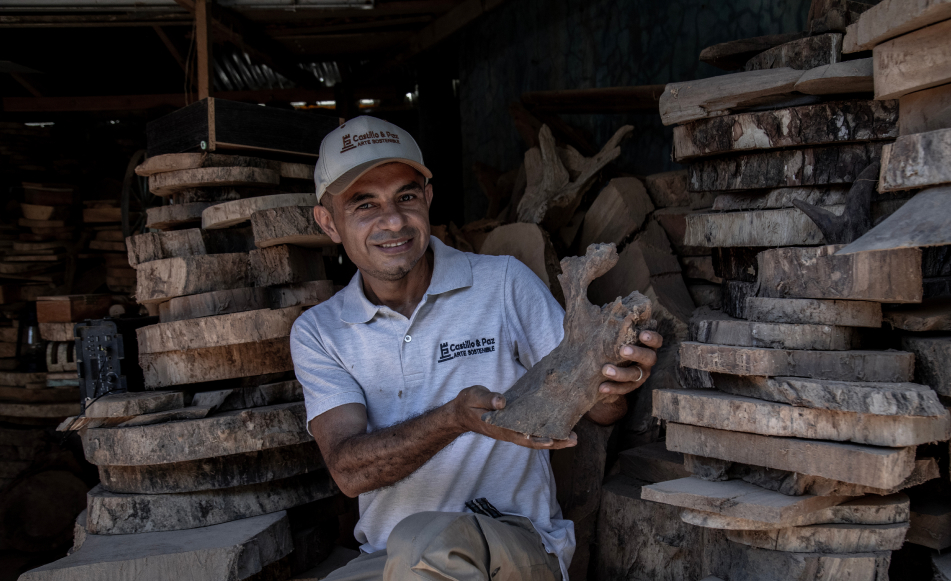
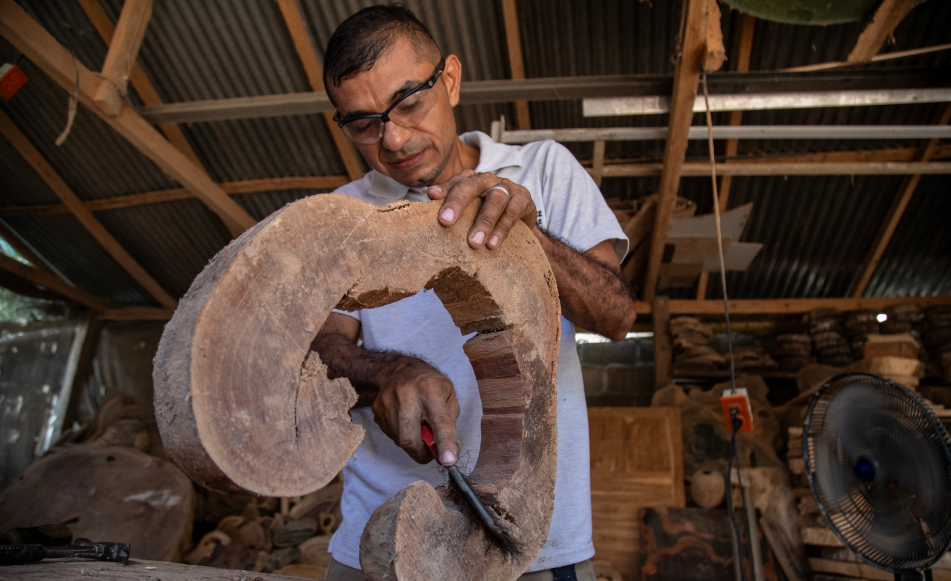
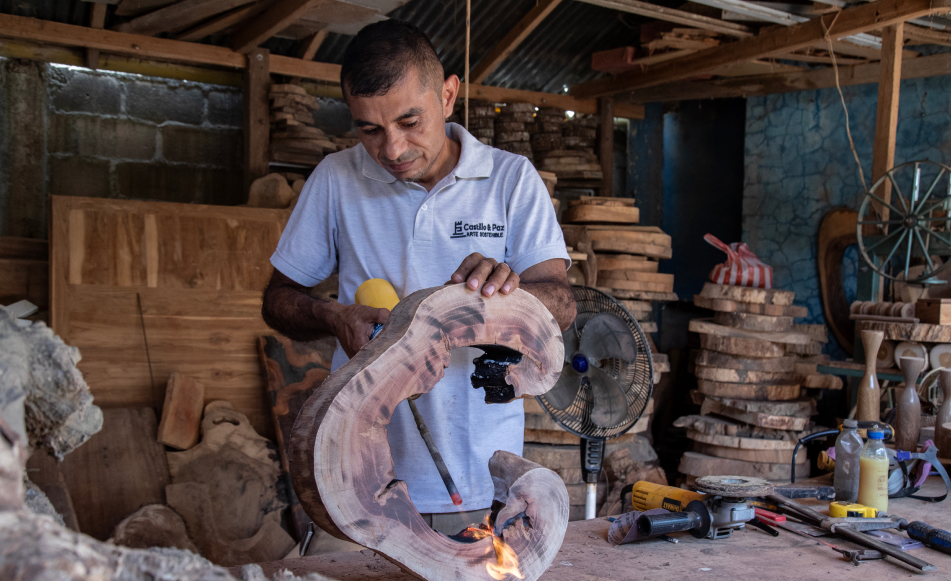
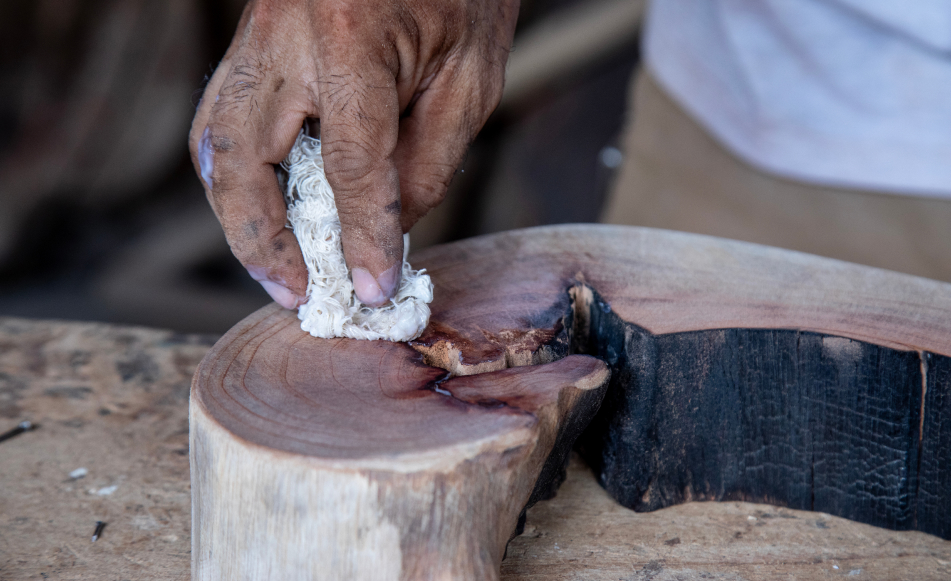
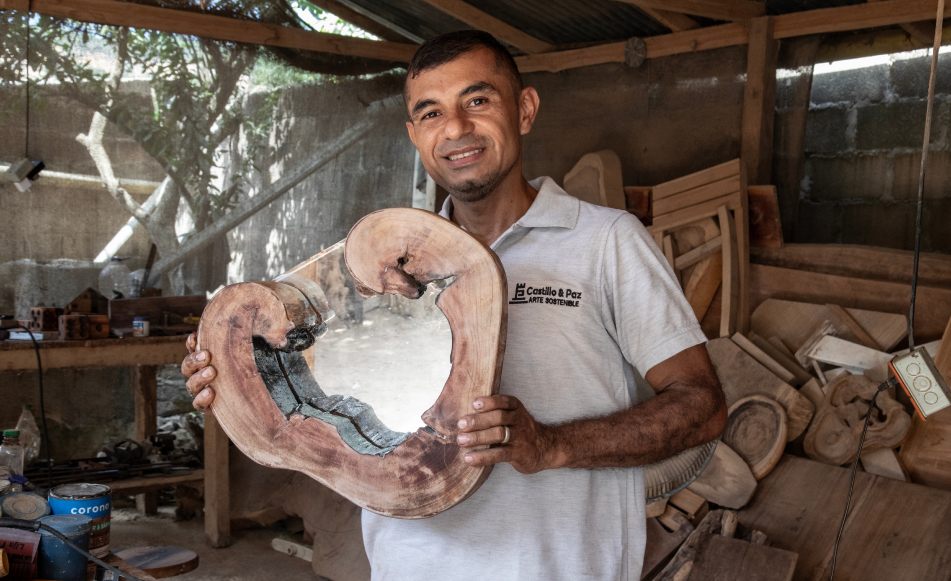
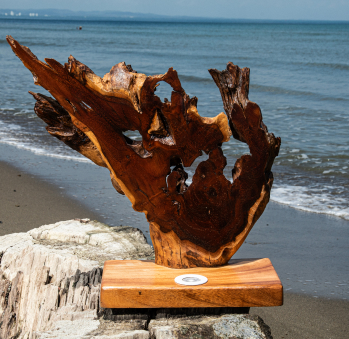
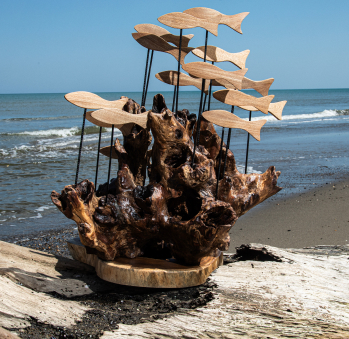
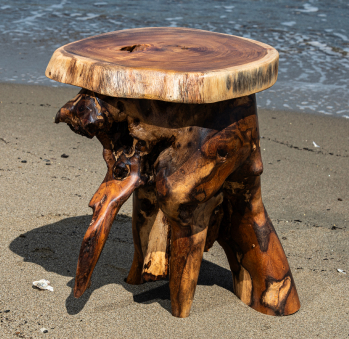
Jaime works exclusively with reclaimed wood. He gathers driftwood washed ashore along the coast or salvages fallen trees from the freshwater rivers that wind through the tropical dry forest. He knows that what the timber industry sees as waste is, for him, a treasure. Whenever he comes across a fallen samán or a campano, he mourns the loss of the tree before immediately setting to work, determined that its death will not be forgotten. The hollow cavities inside an old trunk are, to him, precisely what give an artisan piece its value. Those irregular forms, shaped by time rather than by tools, eventually become sculptural wall pieces, lamps, tables or countertops.
He has become an attentive observer of the landscape. Years of searching have taught him to recognize which woods are worth rescuing. Sometimes all he has to do is lift a piece. If it feels light and porous, it has already begun to decompose. If it still has weight, it likely has another life ahead of it. At that point, the passionate teacher in him takes over. He delights in explaining how nature itself transforms wood. A log found near the sea has usually traveled downstream from the forest, carried first by freshwater before finally reaching saltwater. During that journey, salt and sand patiently sculpt its surface, polishing and smoothing it over time. “The work the sand does,” he explains, “combined with the constant movement of the water, means that by the time the wood reaches the shore, it’s already perfectly cured—thanks to the salt and the journey itself.”
“There goes the crazy wood guy!” people often joke when they see him dragging home another branch or log. Drying the wood is another lesson in patience. A piece may remain in his workshop for an entire year before all its moisture has evaporated. During that time, the tiny shoots that remain on the dead trunk finally surrender and dry out. He vividly remembers cutting into a matarratón tree and discovering what looked like a rainbow inside—veins of every imaginable color that left him speechless. Even now, before working with any tree, he quietly asks its permission to give it a second life.
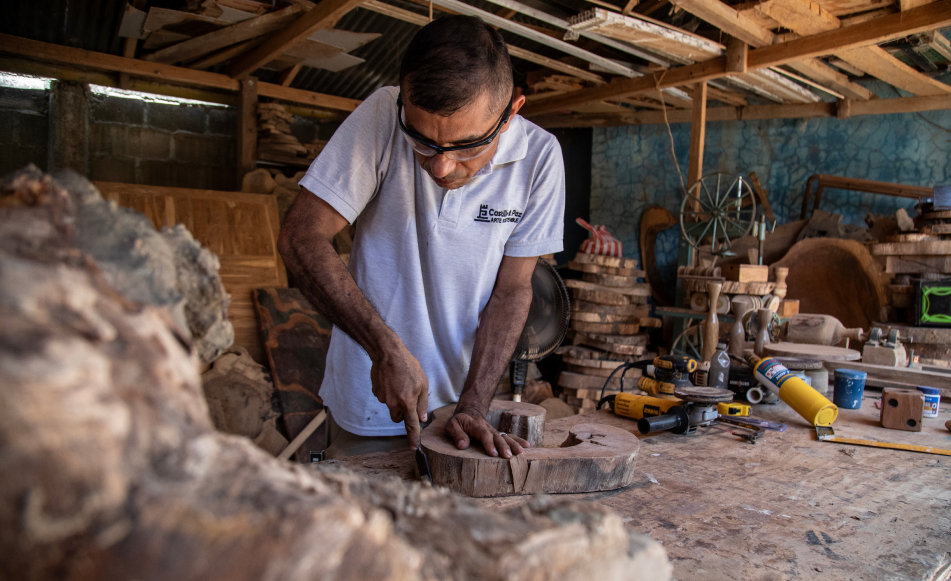
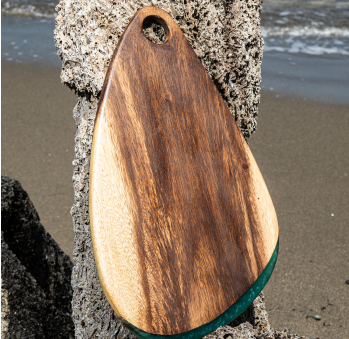
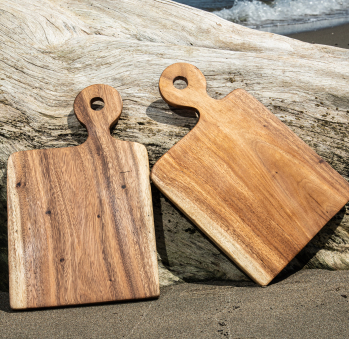
Today Jaime feels whole, fulfilled, content, disciplined. After running for an hour and a half every morning, he begins his workday in the workshop, where he also trains young apprentices in the craft. Together they make pendant lamps, table lamps, dining tables, wall art, wooden spoons, cutting boards, and other household objects. Each creation depends on the character of the wood itself—matarratón, ceiba tolúa, oak, campano, or teak. Teak is one of the few woods he rarely finds as driftwood. Occasionally, however, he is fortunate enough to purchase its roots, transforming them into striking lamps. He never stands still. He constantly updates his skills through online courses, studies English, and attends every workshop he can find, always eager to refine his techniques. The effort has paid off. He now returns from craft fairs with empty hands. But this is no longer the emptiness he felt at the beginning—it is the satisfaction of having remained true to himself.
Workshop and process
Craft
Artisans along the way
Artisans along the way



No puede copiar contenido de esta página