
Leonor Cruz y Edwin Narváez
Workshop: Alfareros La Vega E&L
Craft: Pottery and ceramics
Trail: Huila Route
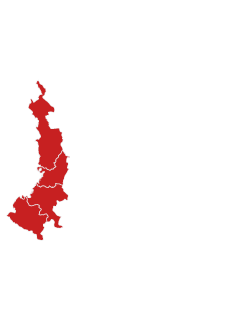
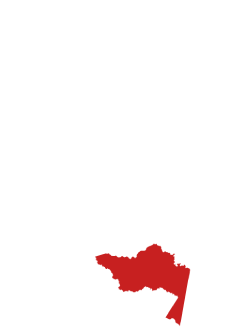
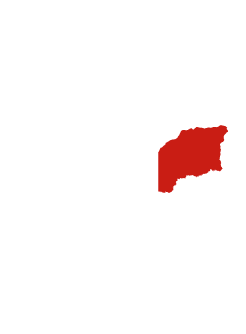
Location: Campoalegre, Huila
SCHEDULE YOUR VISIT
Vereda la Vega, por el callejon de la caseta comunal
3202198436
leonorcruz385@gmail.com
@p/Alfareros-La-Vega-EL-100086028594...
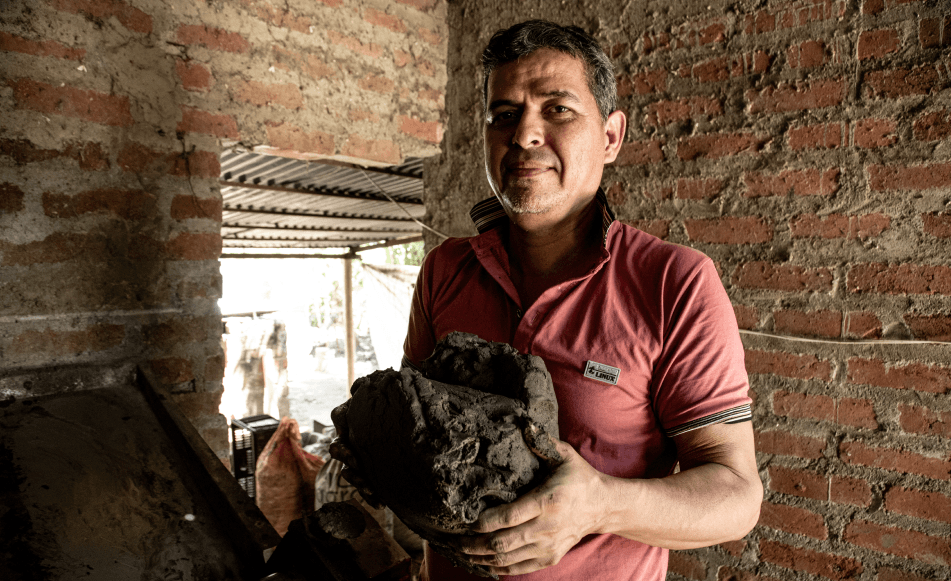
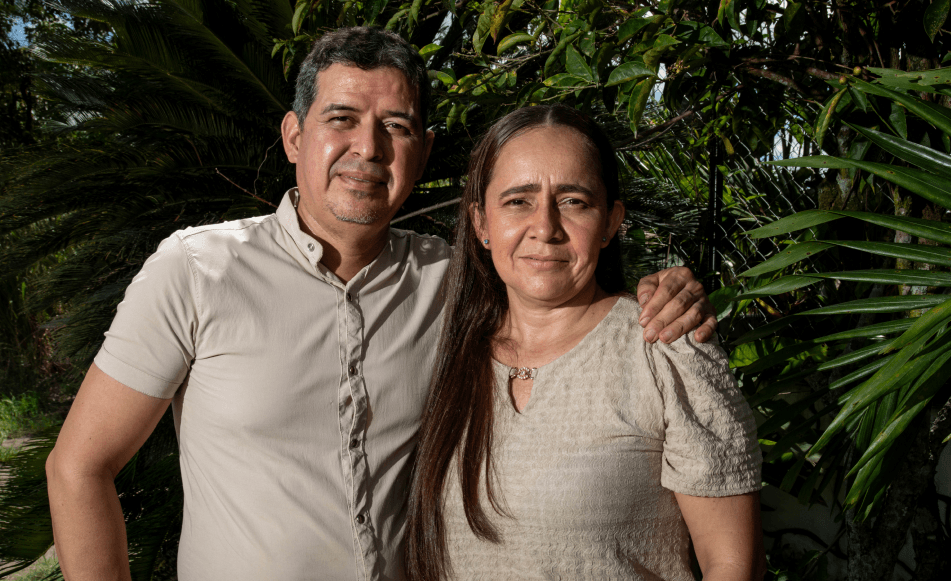
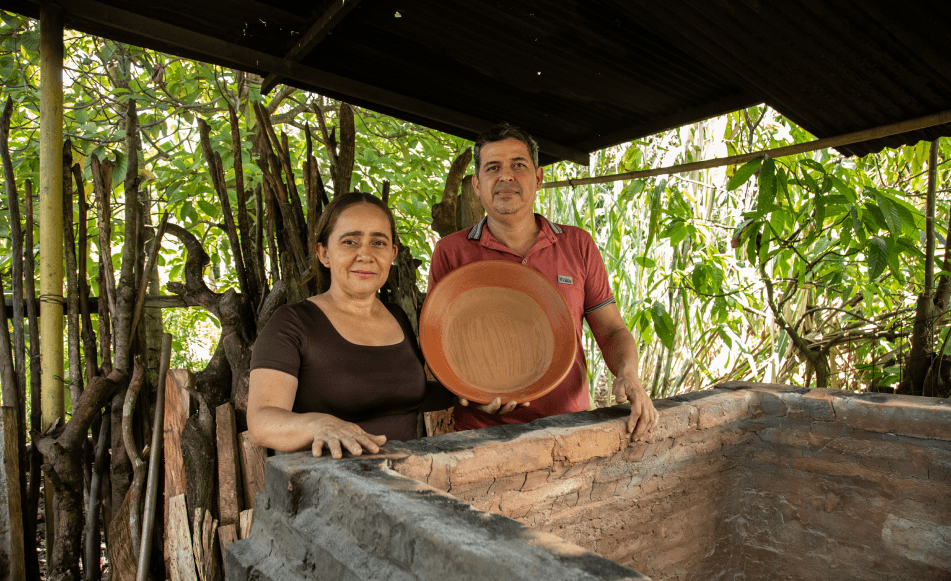
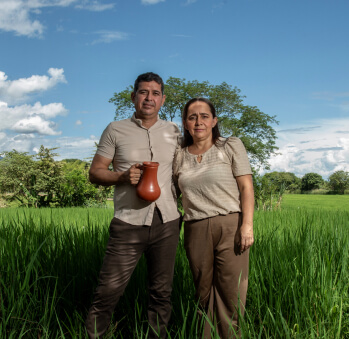
The first time Leonor Cruz visited the home of her suitor, Edwin Narváez, she was in for a surprise—and it was a wonderful one. She discovered that he came from a family of potters. Until then, she had only known that he worked in the rice fields, but she had no idea that in the afternoons, after returning home, he would sit down to burnish the jars and serving platters his father had made during the day. They were both just seventeen years old. They have been together ever since, and now, nearly thirty years later, they tell their story knowing that from their union a new family of potters was born in the rural community of La Vega, Campoalegre: the Narváez Cruz family.
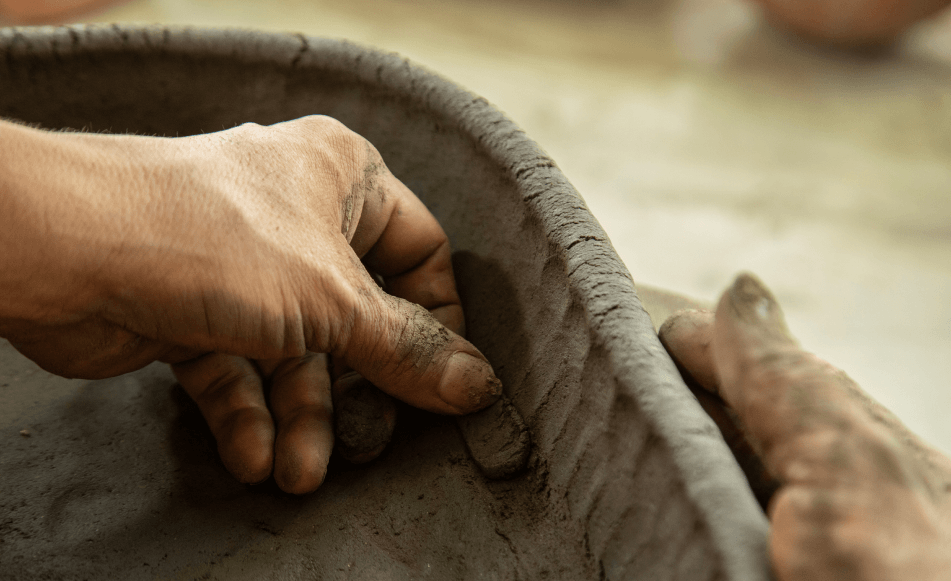
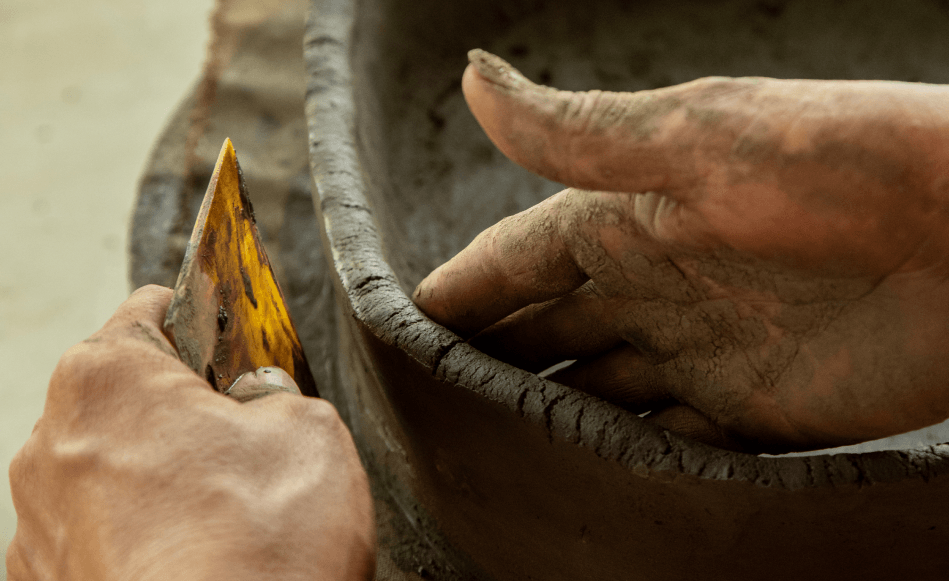
Leonor had never touched clay in her life, much less watched anyone work with it, so she was captivated as she observed her father-in-law, Jorge Narváez, building enormous jars coil by coil, kneading the clay before shaping it, and polishing it with a stone before firing it. She was struck by how demanding the work was, by the discipline and physical effort it required. Yet she did not dare put her own hands into the clay until four years after that first visit, when she moved into the home where Edwin lived with his father and began sharing everyday life with these two potters.
After the birth of their first daughter, once the little girl began attending school, Leonor saw clay as an opportunity—the perfect one for a mother who wanted to work while remaining close to her child, without having to choose between the two. She took the leap, and the first things she made were small serving platters. Jorge patiently explained the process, allowing her to start over as many times as necessary, because that is the nature of clay: before it is fired, it can always be rehydrated, kneaded, and reshaped over and over again. Leonor soon realized that simply watching him work for hours was not enough; she had to devote herself to learning with her own hands. When she sold her first platters, she caught a glimpse of the future that awaited her and found the motivation to keep learning until she could fully embrace it. Edwin accompanied her every step of the way. Seeing how dedicated she was inspired him to refine the skills he had learned as a child. After all, he was the only one of Jorge’s five children who had inherited the craft, and it deserved to be learned well.
As Leonor’s story unfolds, another essential figure appears: Alirio Parra, a master potter who came from Neiva in 2015 to teach the Narváez family new techniques such as pinching and slip casting, and from whom they continue learning about finishes, molds, and glazes to this day. There is one important distinction, however. Leonor and Edwin eagerly embraced these new forming techniques, while Jorge chose to remain faithful to the coil-building method in which he had already become a true master.
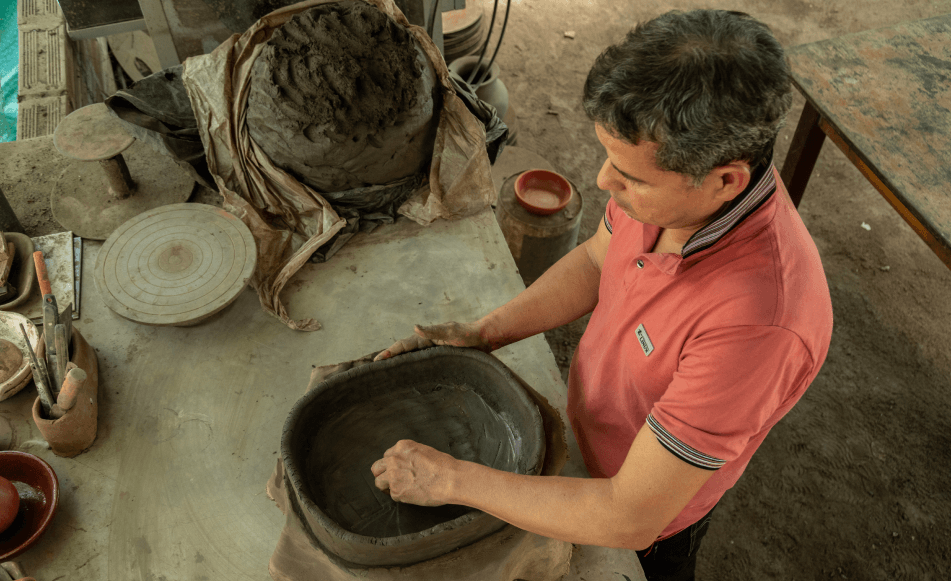
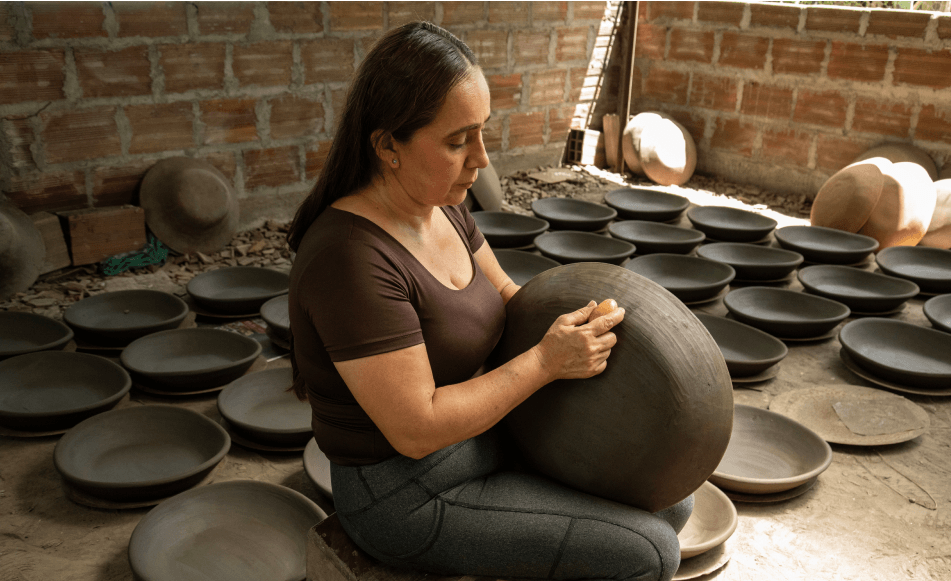
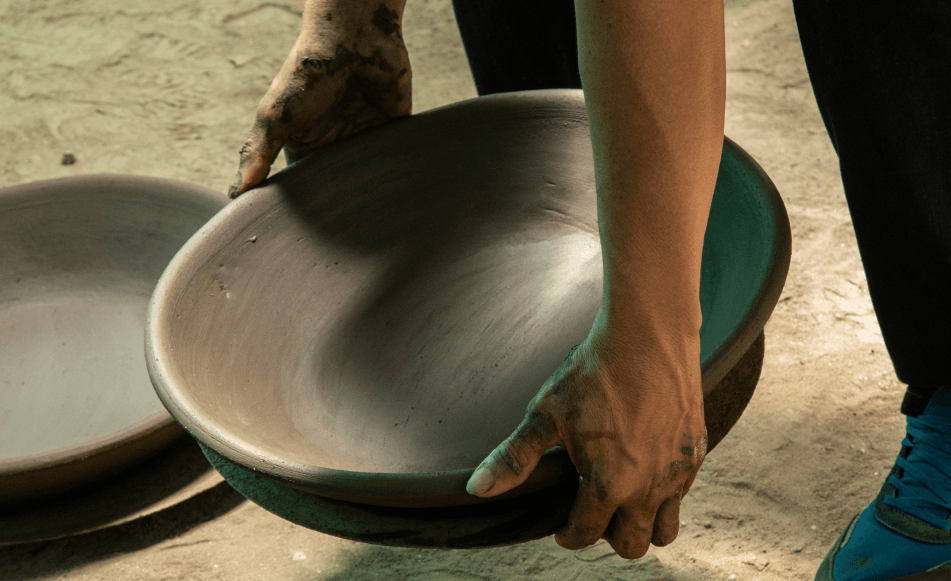
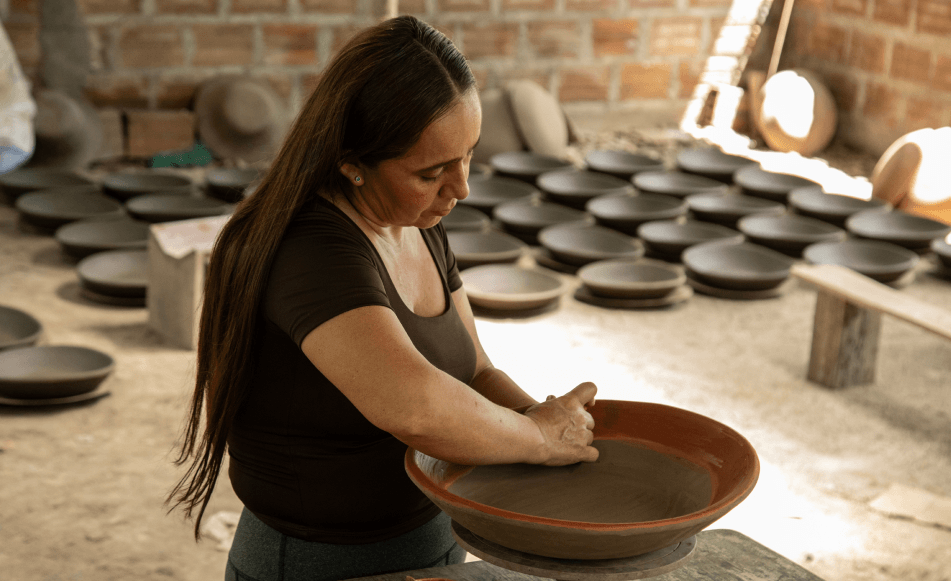
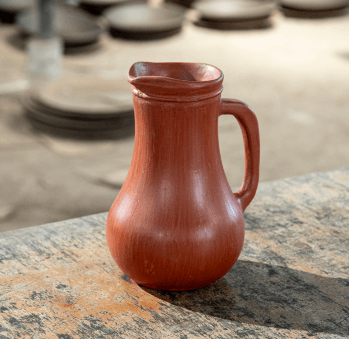
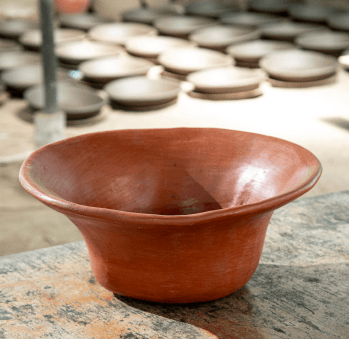
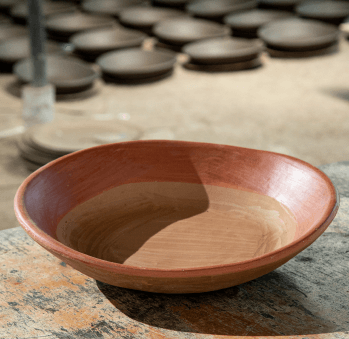
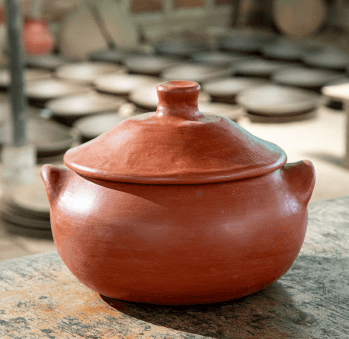
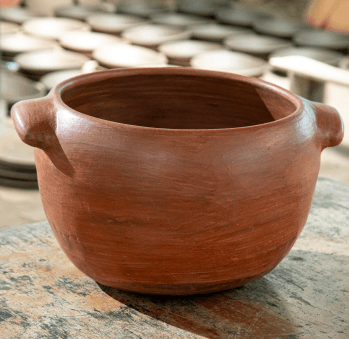
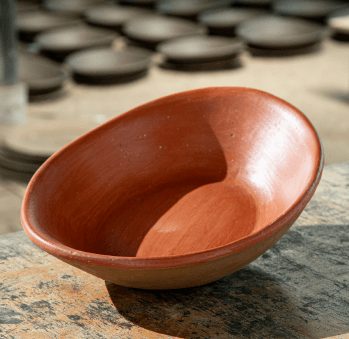
The very first thing Alirio did was get them on their feet. The Narváez family had always worked sitting on the floor with their legs folded beneath them, a position that caused Leonor, who was unaccustomed to it, constant back pain and numb legs. Naturally, she was the first to follow his advice and begin working standing at a high table. He also convinced Edwin that he would be better off dedicating himself full-time to the pottery workshop instead of dividing his days between the rice fields and clay. It proved to be the right decision. Today they produce an impressive variety of pottery: fermentation jars for chicha, traditional bowls for mixing sponge cake batter, and their signature piece—the serving platters used to prepare the famous Huila-style barbecue (asado huilense). Anyone who cooks the meat for the June festivities on one of these platters never wants to prepare it again in a metal pan or pot.
Leonor and Edwin shared twenty years of work and daily life with their master, Jorge Narváez, before he passed away. They know he left this world with peace of mind because the couple had embraced the craft he himself had learned from his mother, Ana Rosa de Narváez. He had long feared that the tradition might disappear, knowing that fewer and fewer people devote themselves to this kind of work. Nothing brought him greater joy than teaching it to his daughter-in-law and devoted apprentice, Leonor. With his passing, they said goodbye to a contemporary of the few master women potters who still remain in Campoalegre, among them their neighbors scattered across the surrounding rural communities and heirs to the town’s increasingly rare pottery tradition: Matilde, Odilia, Carmen and her mother María Antonia, and Luz Dary.
For them, as it had been for Jorge, it remains uncertain who will carry their legacy forward. It is equally uncertain where they will obtain clay in the future, since the lands that were once open to everyone are now privately owned, and landowners are increasingly unwilling to allow artisans to extract the material. Their dream is to secure a plot of land that belongs to the artisans themselves—a guarantee of access to the raw material, which is anything but easy to obtain. They know the clay lies more than two meters underground, that it is heavy to extract, that every excavation must be carefully refilled with the displaced earth, and that the clay itself must be processed before it can finally be shaped.
Fortunately, Leonor and Edwin’s family workshop continues to thrive. Their children always return during school holidays to help, especially with burnishing, and each has a favorite polishing stone collected during family outings along the Magdalena River, because every potter knows which stone best suits their own hand. And in the youngest member of the family, little Liam David, the gift is already evident. At just two years old, he sits before a serving platter larger than himself and burnishes it with remarkable skill.
Workshop and process
Craft
Artisans along the way

Artisans along the way



No puede copiar contenido de esta página