









Luciano Robles
Workshop: Musiartes Parra
Craft: Musical Instruments
Trail: Cesar Route
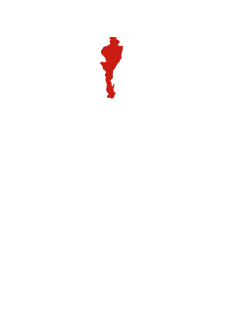
Location: Tamalameque, Cesar
SCHEDULE YOUR VISIT
Calle 3 #8-12 Barrio Aluminio
3145724070
parratambora@gmail.com
@lucianorafael.roblessalas
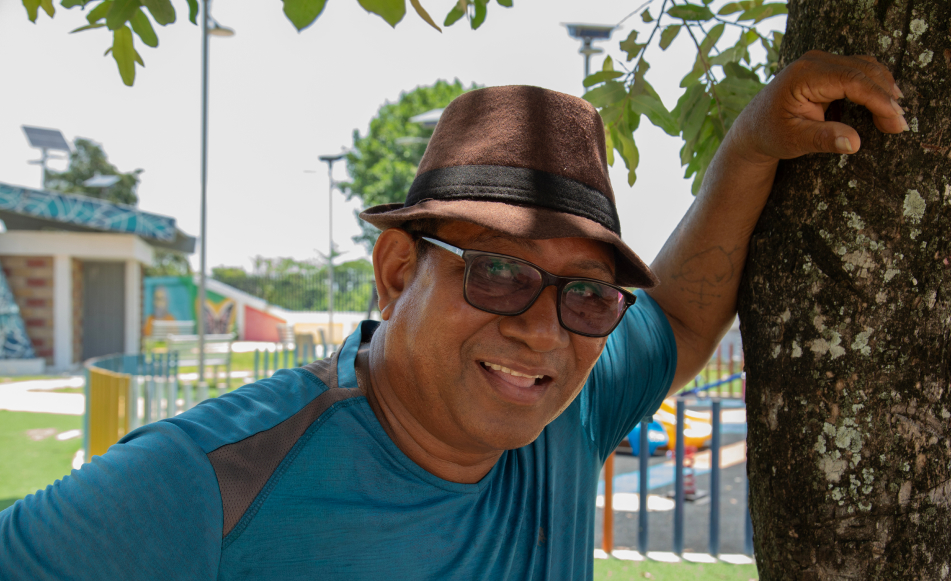
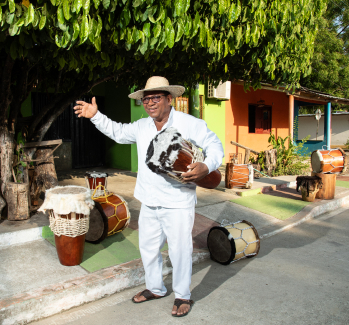
Luciano was born surrounded by tamboras, and he knows it perfectly well. They echoed through his childhood because his grandfather, Cecilio, played them, while his grandmother Marcelina accompanied him singing bullerengues and guachernas. His father, Juan Robles, played them too—and still does, with strength and spirit. So did “the uncle,” the neighbor across the street who shared no blood relation with the family, yet was loved as if he did because he filled their days with rhythm alongside his wife. The soundtrack of Luciano’s childhood was La candela viva, Los pozos brillantes, and Cartagena. And he was lulled to sleep with La pava echá: Yo tenía mi pava echá / zumba que zumba / zumba la pava / con tre’ huevo’e morrocoy / si la pava no me saca/ cojo la pava y me voy, me voy. So naturally, by the age of six, Luciano already belonged to a folkloric group—a fact that now makes him think, because he feels he started late considering his own son began at just three years old. Before long, he was stepping in as a replacement musician and carving out his place in the world of folklore. But singing and playing instruments is one thing. Building them is something entirely different—though the ear he possesses, and his deep understanding of music, have made him an exceptional luthier.
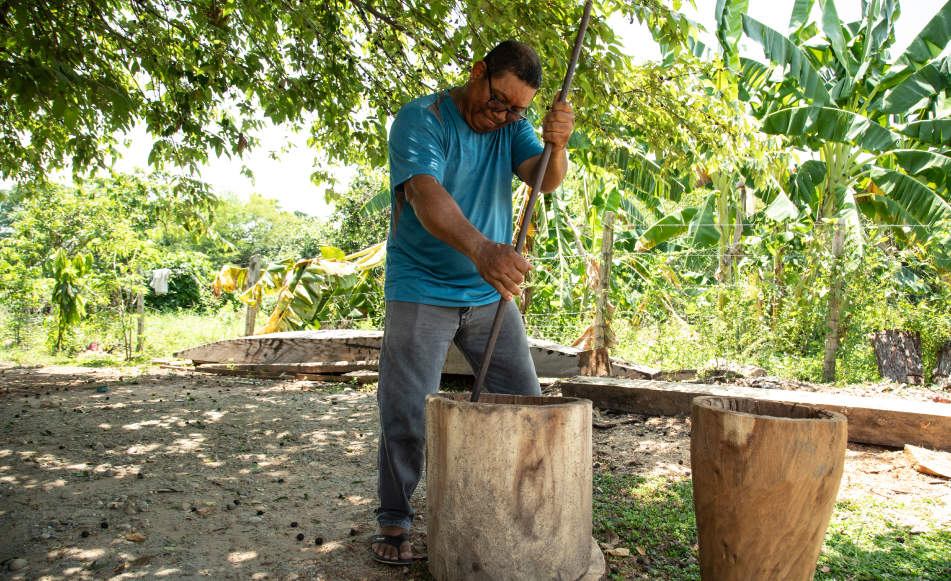
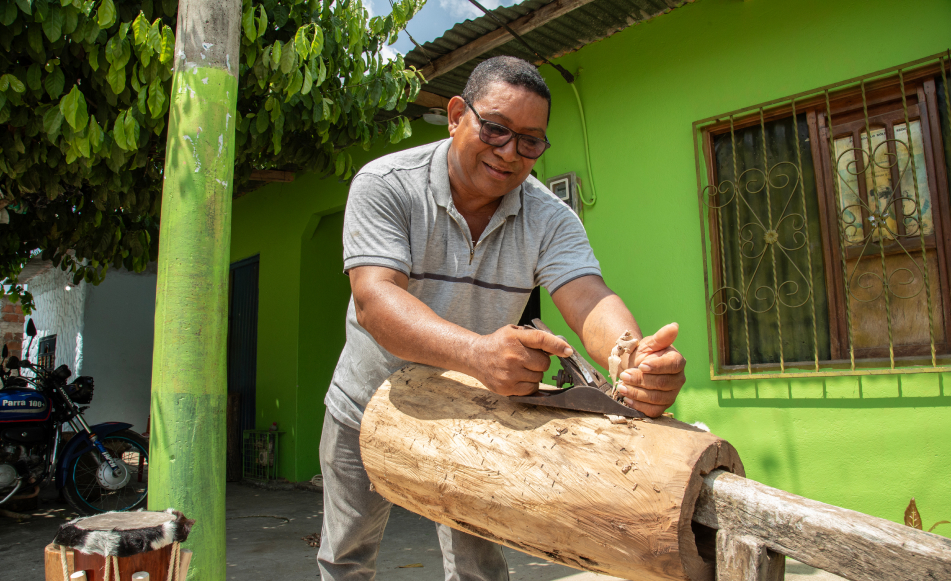
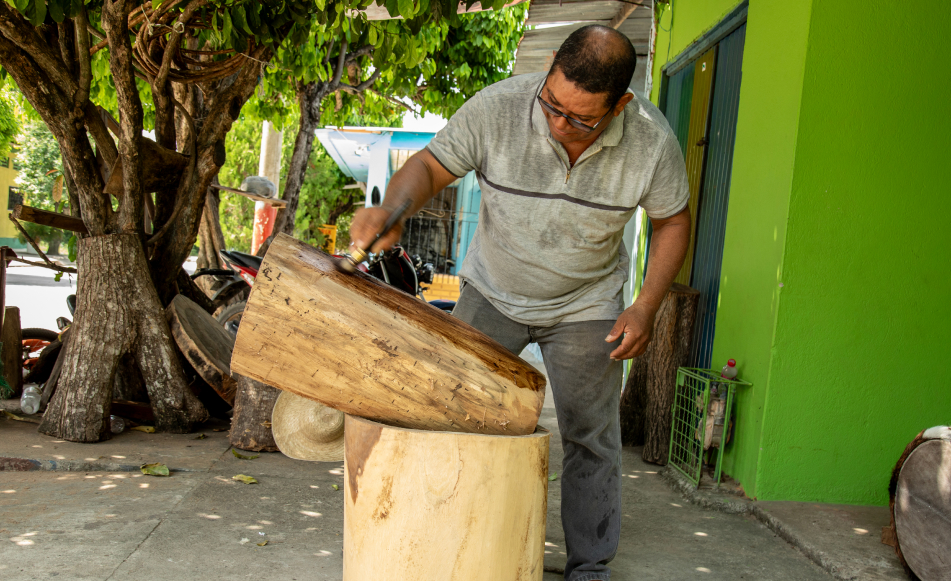
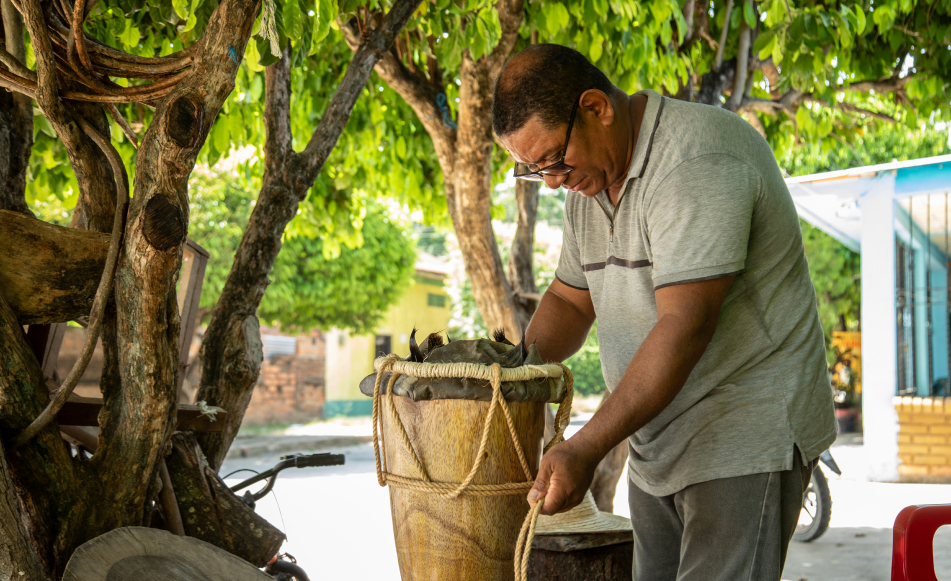
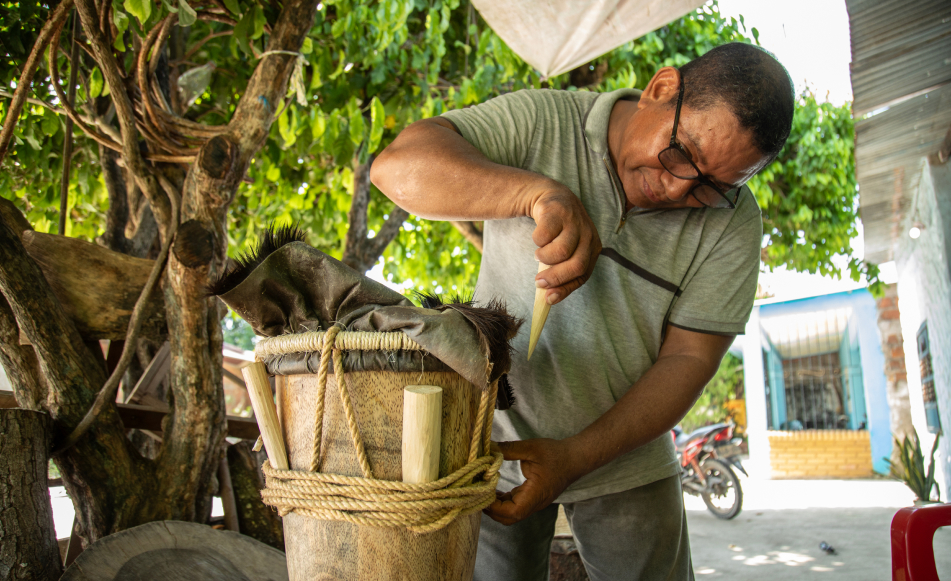
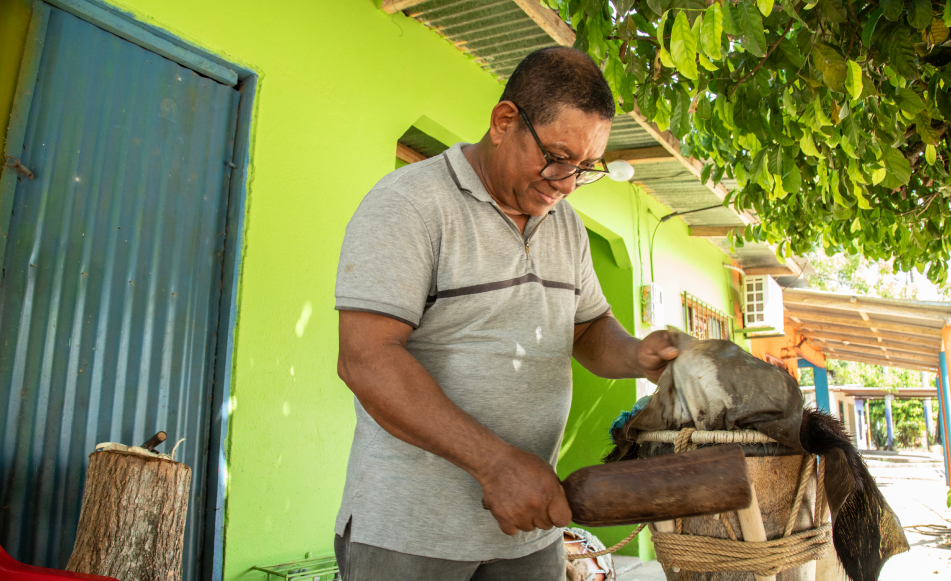
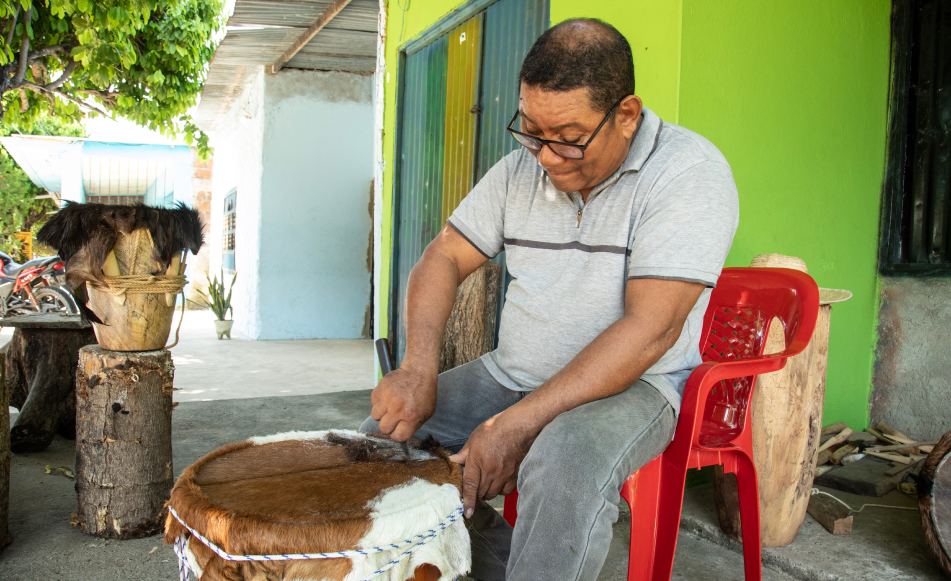
The truth is, no one in his family actually made instruments. He had seen his father and grandfather stretching skins onto drums, and he vividly remembers the fierce struggle of it all: pulling with all their might, only for the leather to snap loose again. They did it less as a craft than out of necessity, because the show had to go on and they were always needed at the festivities of Chimichagua and the surrounding towns. Still, the spark of lutherie—though he did not yet know that was the word for it—was lit in Luciano one day when his tiny musical group received a set of drums he remembers as terribly ugly. He swore he would someday make his own. And Luciano is not someone who makes promises lightly. He remembers taking a piece of wood his father had cut when he was around ten years old and instinctively beginning to hollow it out. Then, around the age of twelve, he went into the forest with the son of the neighborhood carpenter, carrying a massive two-man saw known as a trocero. Together they cut a log from which Luciano dared to make his first drum. He smiles as he quickly points out that he has never cut down a tree for his craft. Instead, people call him when a trunk has fallen, or he visits sawmills to collect leftover wood scraps. Those who know him already understand this, and they let him know whenever usable wood appears.
And so, for love, he moved from Chimichagua to Tamalameque, bringing with him his traveling workshop. On his motorcycle he carries rods, a chainsaw, nails, a wooden compass, a machete, and, of course, an essential packed lunch. He sets up a makeshift shelter in the forest and works the wood blocks there on-site, shaping the drums over however many days are needed. In many ways, it resembles what his father used to do when Luciano and his siblings were children. His father would clear land in the mountainside with nothing but a machete so he could plant crops for survival on land owned by others. With no permanent home, they moved from one plot of land to another, growing their own sustenance. And always celebrating life to the beat of the tambora.
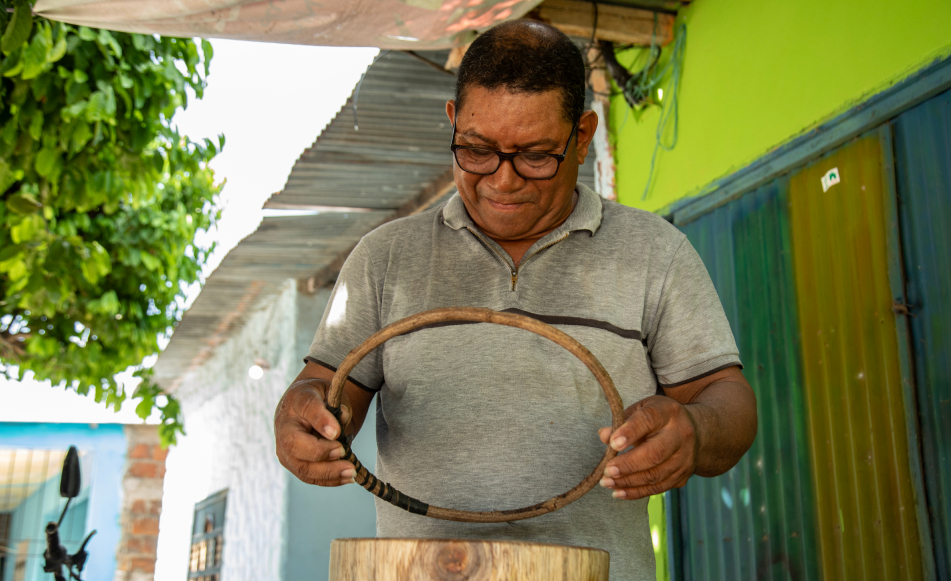
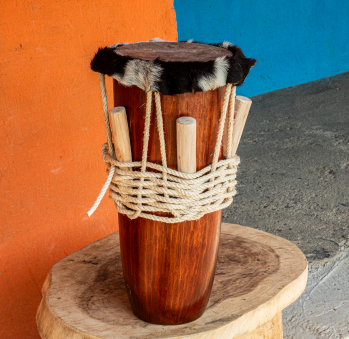
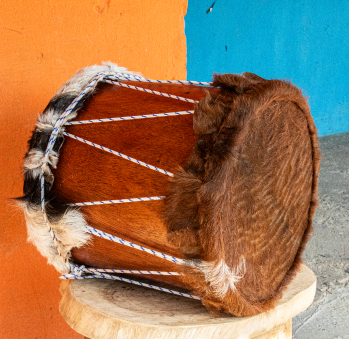
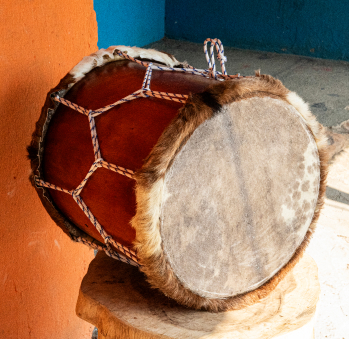
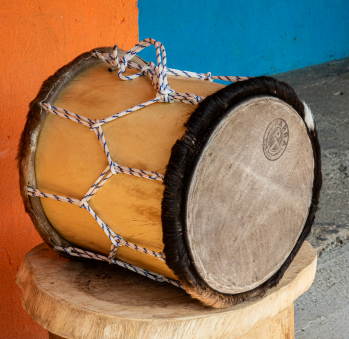
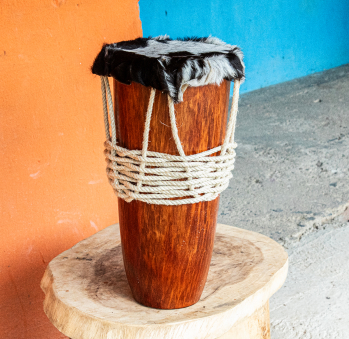
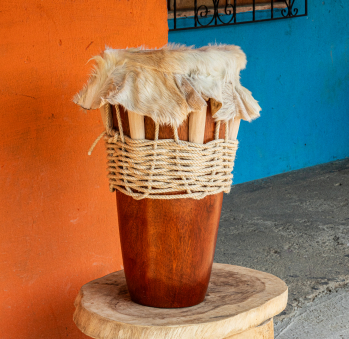
Luciano says the secret to a good drum—the key to making it sound right—lies in the wood. It must be lightweight and fine-grained, like banco, caracolí, orejero, carito, or varieties of ceiba such as lechosa, amarilla, and tolúa or red ceiba. The skin matters too. He uses goat hide from La Guajira and advises against cowhide because, unless the drum is played during the day, the skin loosens at night and falls out of tune. He acknowledges that many musical groups today—especially vallenato bands—use synthetic materials such as X-ray film. While these may produce a decent sound, they will never carry the true flavor of real skin. And flavor—sabor—is inseparable from Luciano. From his hands come tamboras, alegres, llamadores, caja palitía, tamborinas, and even tamboras merengueras that will be played at traditional celebrations all across Colombia. And Luciano himself is part of those celebrations too, as a musician with his group Los Hijos de Chaulo, where his wife Damaris sings, his son plays the drum, and his cousin writes the songs. He also performs with numerous bands in El Banco, San Martín de Loba, and Barranco de Loba, as well as with the municipal band of Tamalameque, where he plays trumpet and clarinet. In short, he is a man who lives by and for music. He knows it. And he enjoys every second of it. Half a century devoted to the craft is proof enough.
Workshop and process
Craft
Artisans along the way




Artisans along the way



No puede copiar contenido de esta página