
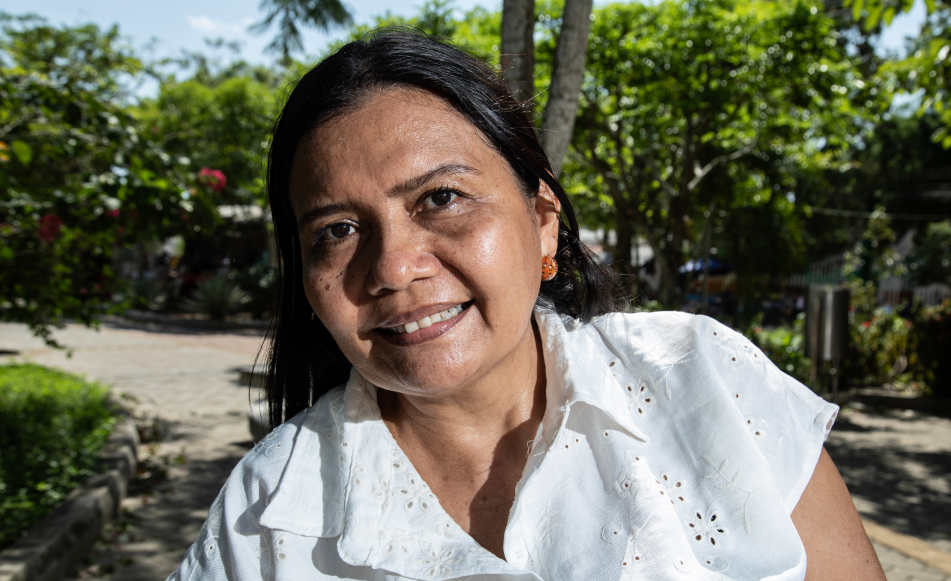
Mirian Caldera
Workshop: Artesanias Mirian
Craft: Weaving
Trail: Sucre Route
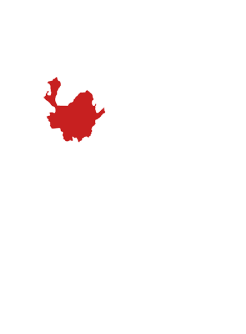
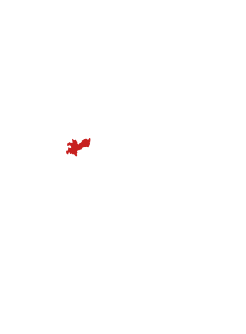
Location: Sampués, Sucre
SCHEDULE YOUR VISIT
Calle 23 # 23 - 135 Calle las Mercedes, Sampués
3136677016
miriancaldera01@gmail.com
@miriampcaldera
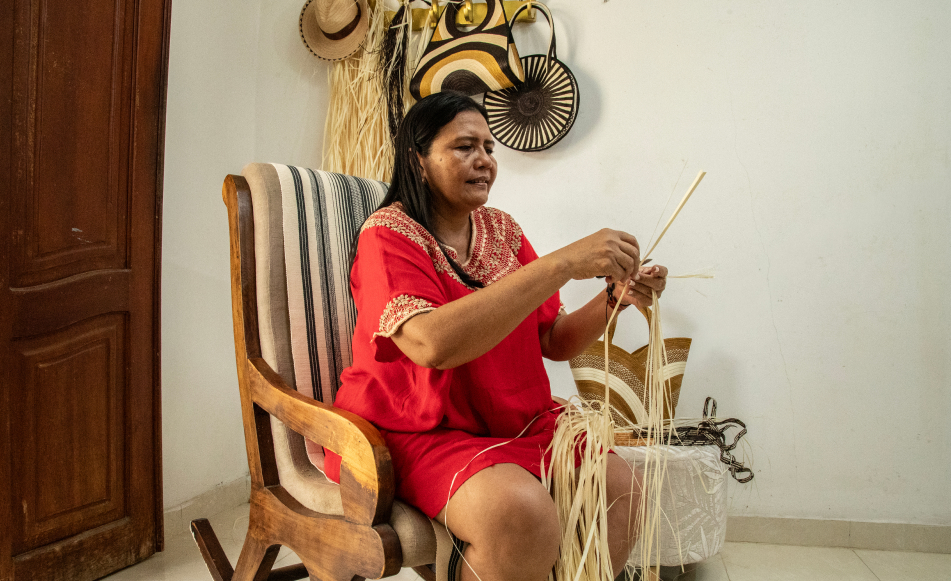
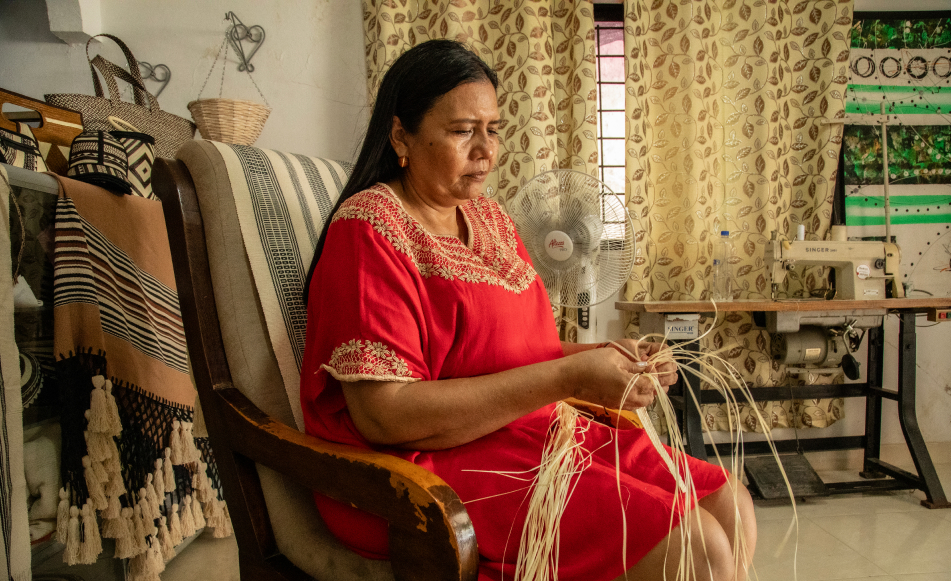
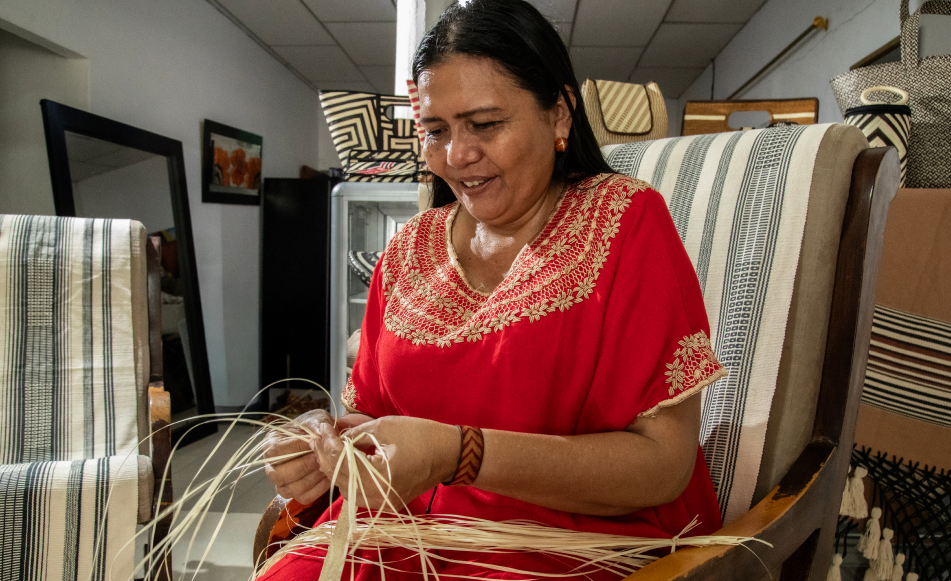
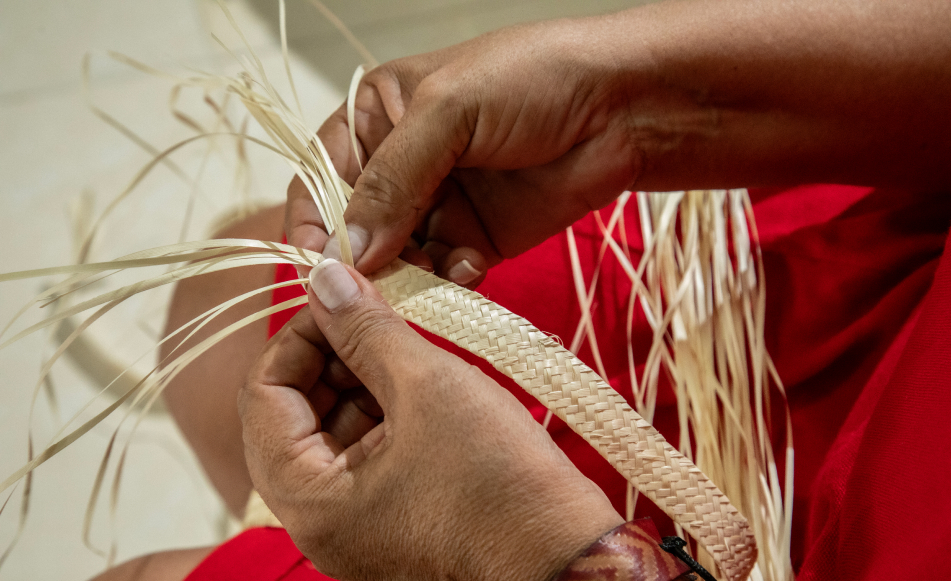
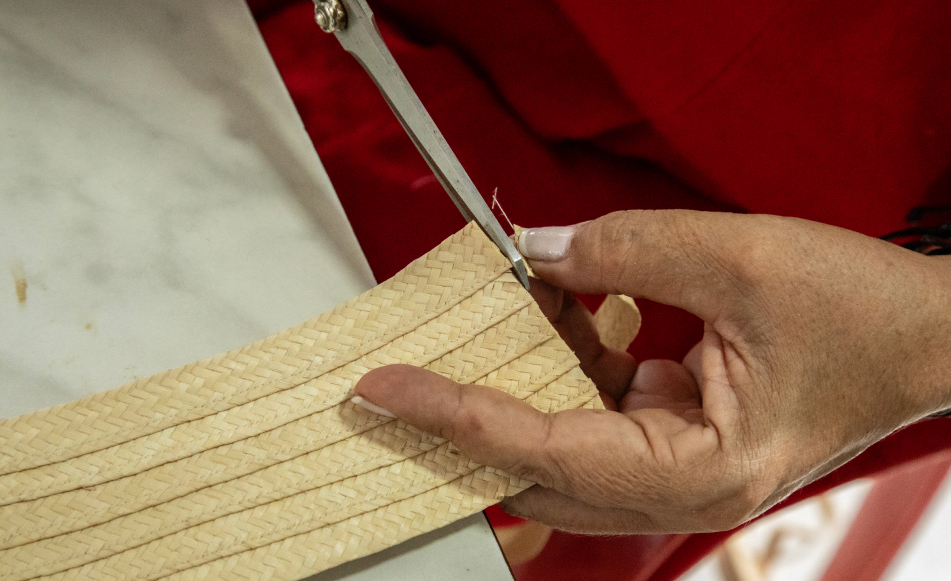
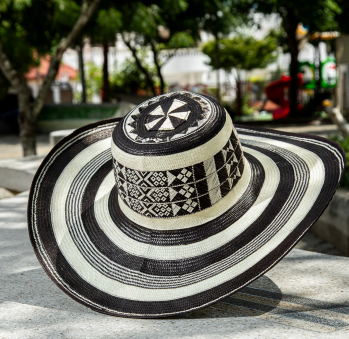
Looking at Mirian Caldera today, it is hard to imagine the difficult years she lived through before life finally granted her the peace that now shines through her quiet confidence and steady presence. She speaks with deep admiration of her grandmother Margarita and her mother, Mariluz—remarkable women who built their homes without men by their side, raising their families through the caña flecha braids they wove for the traditional sombrero vueltiao. Illiterate but extraordinarily resourceful, Grandmother Margarita traveled from village to village collecting the braids woven by local artisans. She bartered them for whatever the women needed—powder, groceries, household essentials—loaded wooden crates onto the back of her donkey, and set off to sell them. Her determination eventually allowed her to own a workshop with seven sewing machines, a sight Mirian remembers vividly from her childhood. Those early years were marked by prosperity. Her family produced the sombrero pacotilla, a more affordable version of the iconic hat that found eager buyers in the Santander region and Colombia’s Coffee Cultural Landscape. But everything collapsed in the early 1980s. The business disappeared almost overnight, and with it went Sampués’ prominence in sombrero vueltiao production, as the tradition gradually shifted across the nearby mountains to Tuchín, in the neighboring department of Córdoba.
Even so, her mother never stopped weaving. She worked tirelessly, yet it was never enough to send Mirian to school. “Don’t worry,” Mirian remembers telling her. “I won’t study. Don’t give it another thought. Let my brothers continue.” And so they did, while she quietly stepped aside. Determined to build a future elsewhere, she left home and found work as a domestic helper in Manizales, caring for children while taking sewing classes whenever she could. One of her employers often told her, “Be strong. Don’t let life push you around. Stay sharp.” Mirian listened carefully. “From every family I worked for, I took the best they had to offer,” she says. “I don’t carry any bitterness. I am who I am today because of everything I learned from them. I didn’t fall into prostitution. I didn’t have children with one man or another. I built myself well.”
She did fall in love, however—with someone who could not stand by her because they came from different social backgrounds. When violence stripped her of her freedom, he was unable to protect her. Suddenly, with a six-month-old daughter in her arms, she found herself facing the greatest challenge of her life: starting over with almost nothing. Anxiety left her paralyzed until a friend suggested she enroll in the free vocational courses offered by SENA, which had recently arrived in Sampués. She didn’t hesitate. She earned certifications in subjects as varied as sandal-making, computer skills, and caña flecha craftsmanship. Ironically, it was the last course—the one she had been least excited about—that revealed her greatest talent. How could it not? After all, weaving was what her family had always done. “I think I was born with it in my DNA,” she says with a smile. “I didn’t learn to braid—I was born already braiding.”
That same year, 2000, the National Sombrero Vueltiao Fair returned to Sampués after its last edition in 1973. She was given the chance to exhibit her work. She doubted herself. She thought her creations looked like mamarrachos—clumsy little things. By the end of the fair, she had sold every single piece. And as she received the money, she recalls. “It was such an emotional moment. That’s when something inside me truly awakened.”
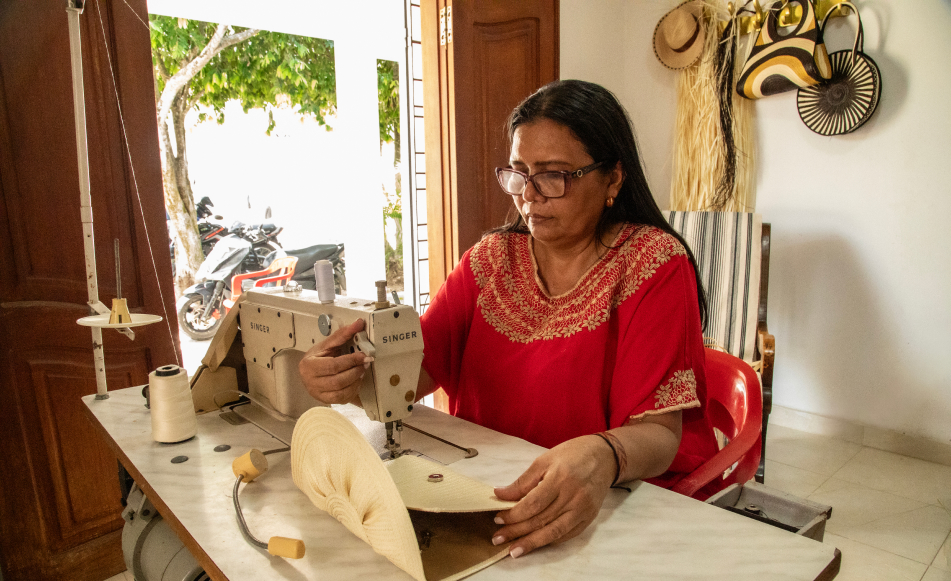
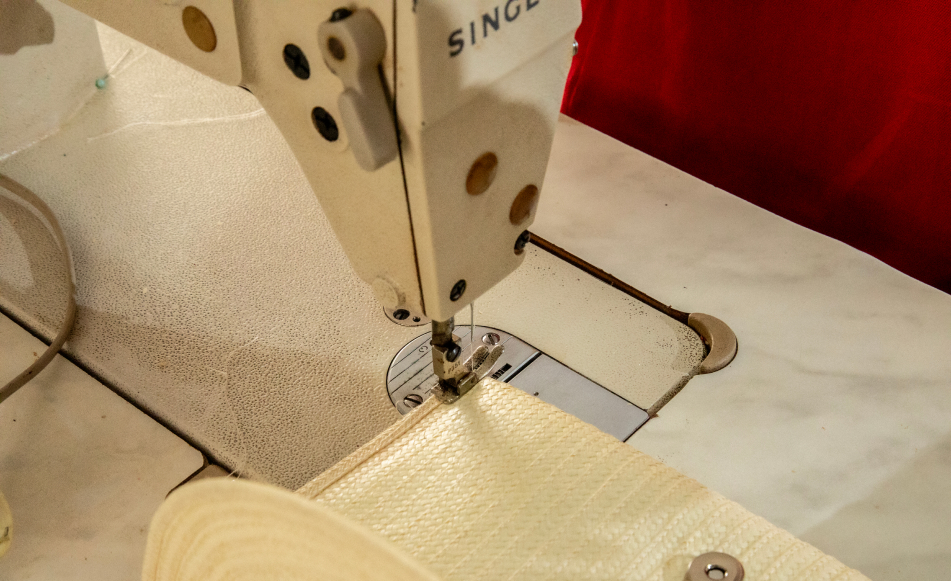
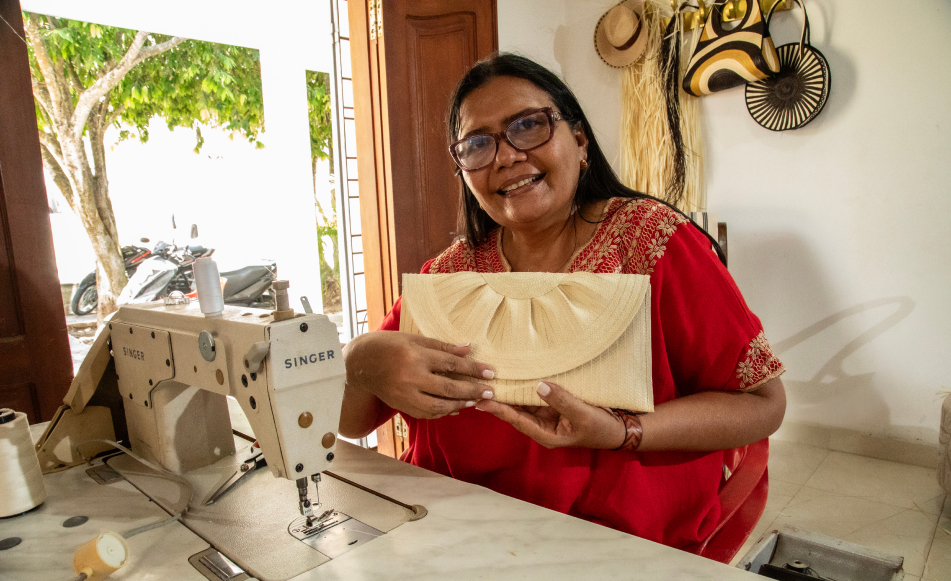
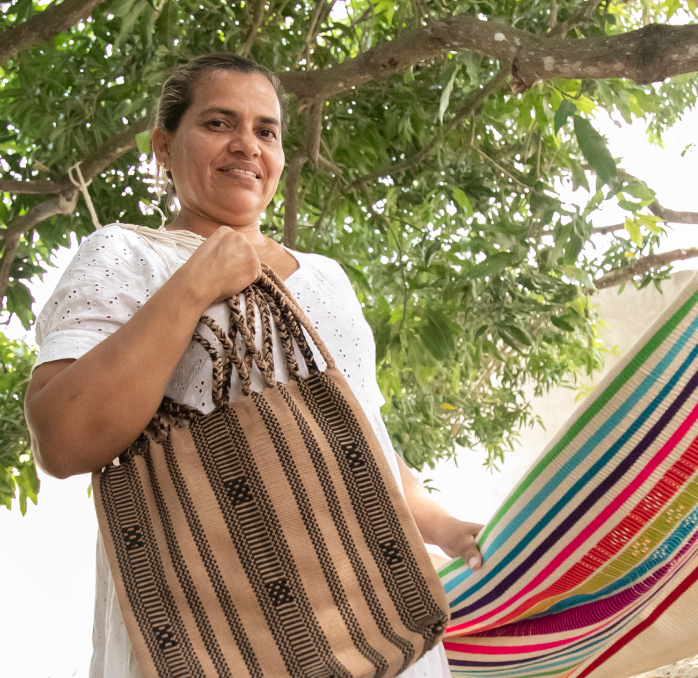
Today, after many years of perseverance, Mirian lives happily in a spacious, light-filled home, working alongside her daughters, Lizette and María Claudia. As if recreating the workshop of her childhood, she now owns around a dozen sewing machines—including an overlock machine, a flat-bed machine, a coverstitch machine, and an edge-binding machine. She dreams that one of her daughters will one day discover the same passion for fashion and design that has always inspired her. In the meantime, knowing how difficult it is to get started, she opens the doors of her home to teach sewing to other women, giving them the opportunity, as she says, “to come here and build a future.” She is already imagining elegant new creations that combine caña flecha with leather, made possible by the latest addition to her workshop. Her mother, two aunts, and a cousin all work alongside her, weaving with the same enthusiasm that has sustained their family for generations. Together, they hope to restore Sampués’ place as the birthplace of the braided caña flecha tradition that made the town famous decades ago. And so, whenever she sits down to weave, she looks around, smiles, and realizes that she is still the same little Zenú girl who inhabits her happiest childhood memories.
Workshop and process
Craft
Artisans along the way
Artisans along the way



No puede copiar contenido de esta página