
Nelsy Diaz y ARDEHIGUE
Workshop: Artesanías y Cestería Margot
Craft: Weaving
Trail: Sucre Route
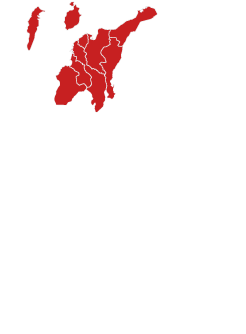
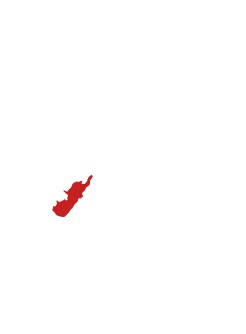
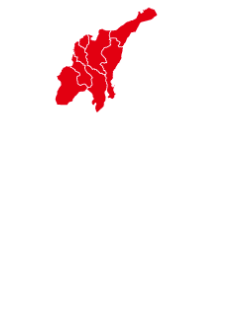
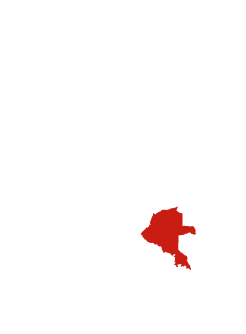
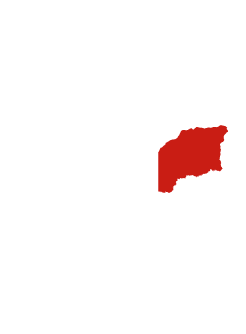
Location: San Onofre, Sucre
SCHEDULE YOUR VISIT
Corregimiento de Higuerón, frente al taller de artesanos, Calle principal
3107037121
nelsymargotdiazherrera@gmail.com
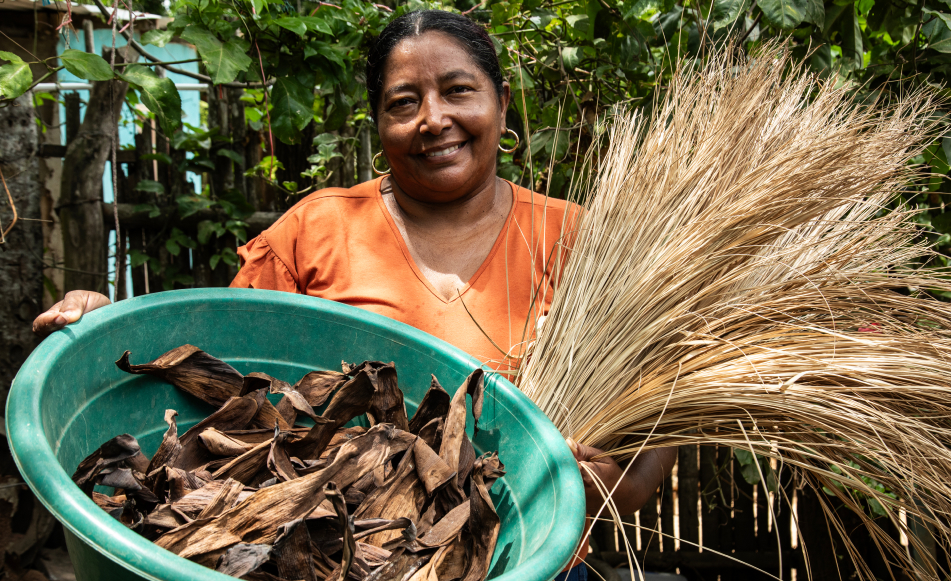
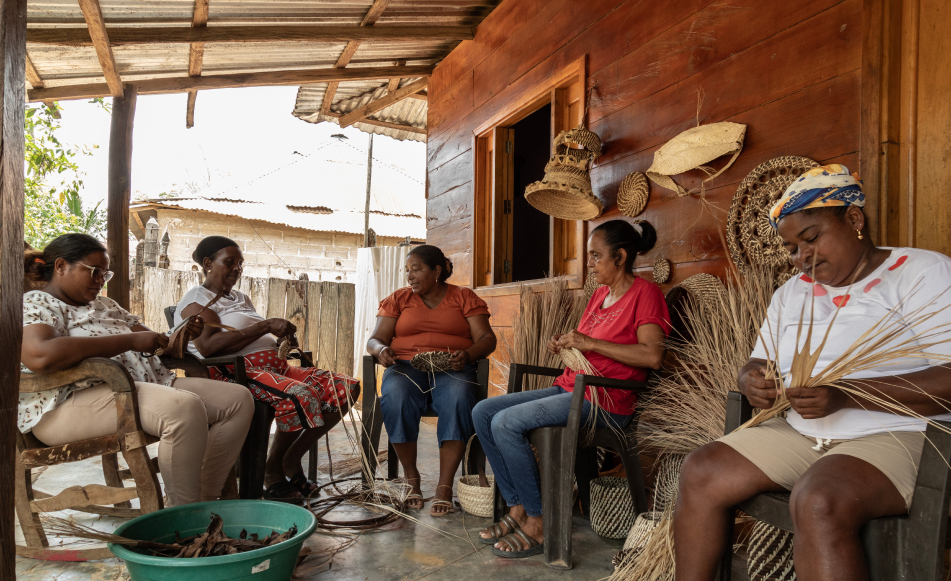
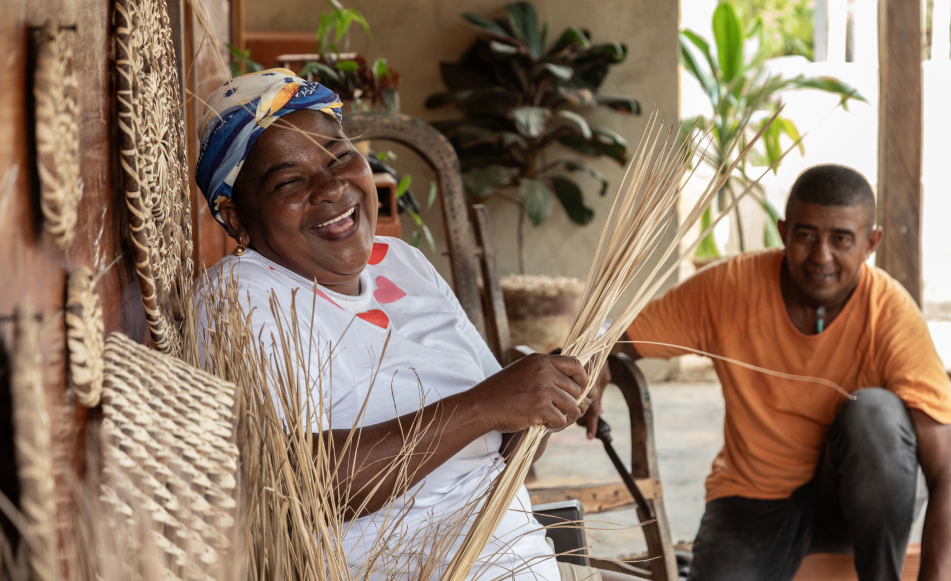
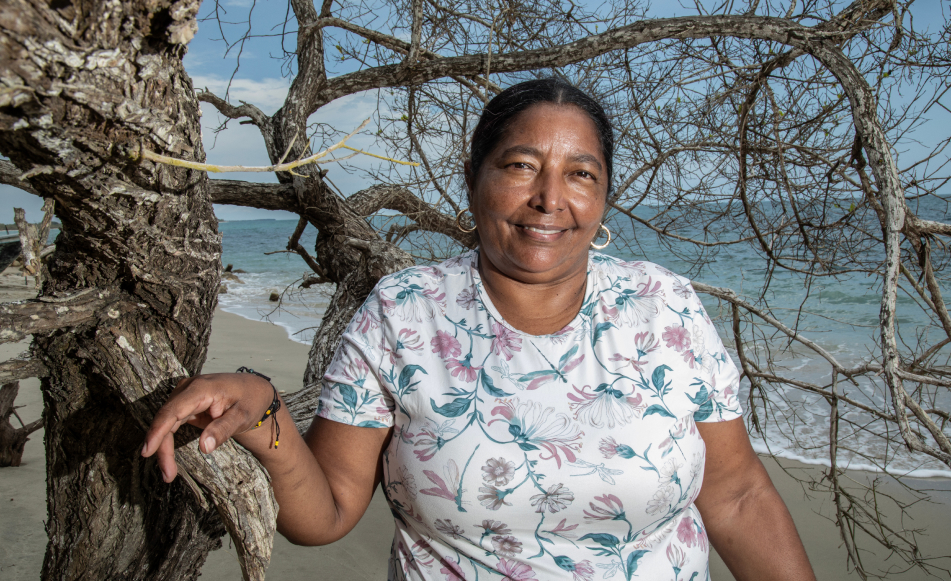
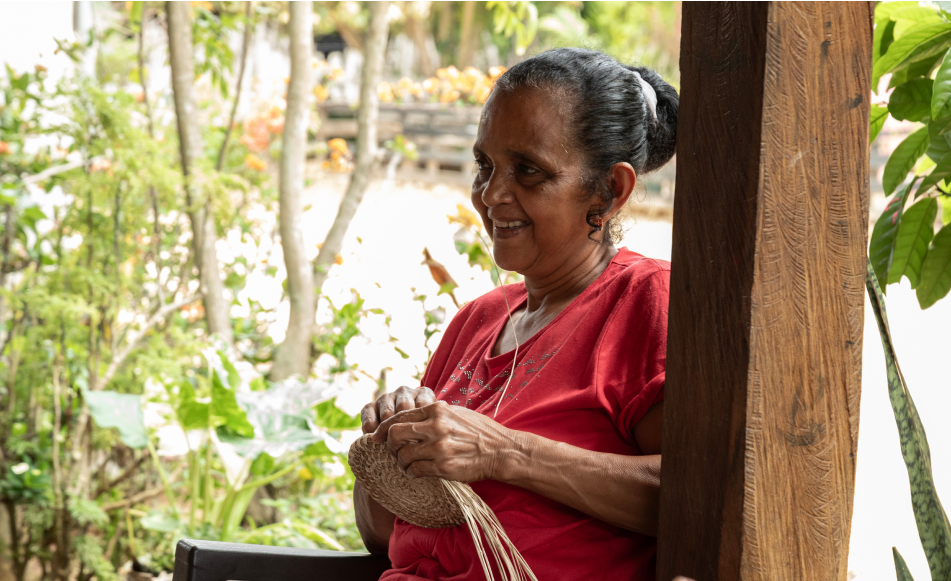
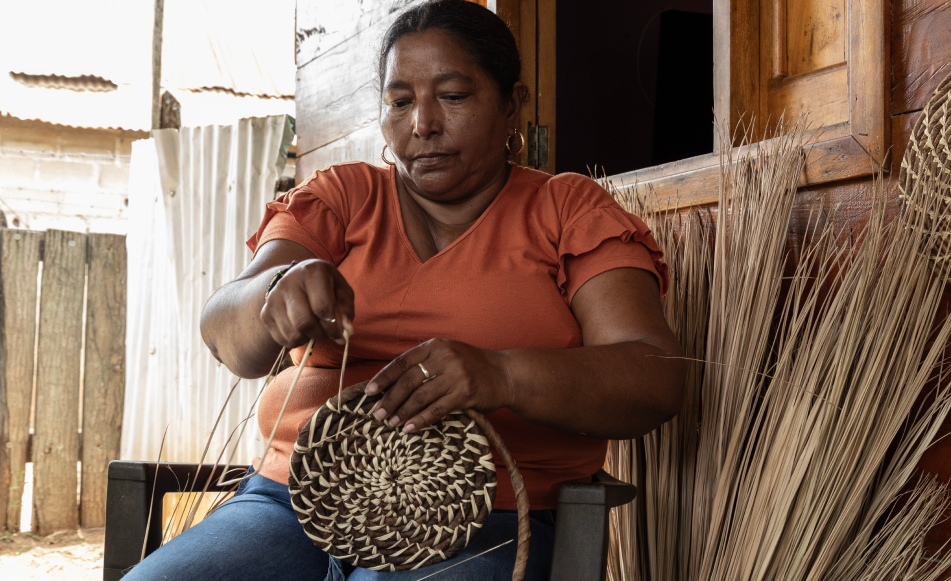
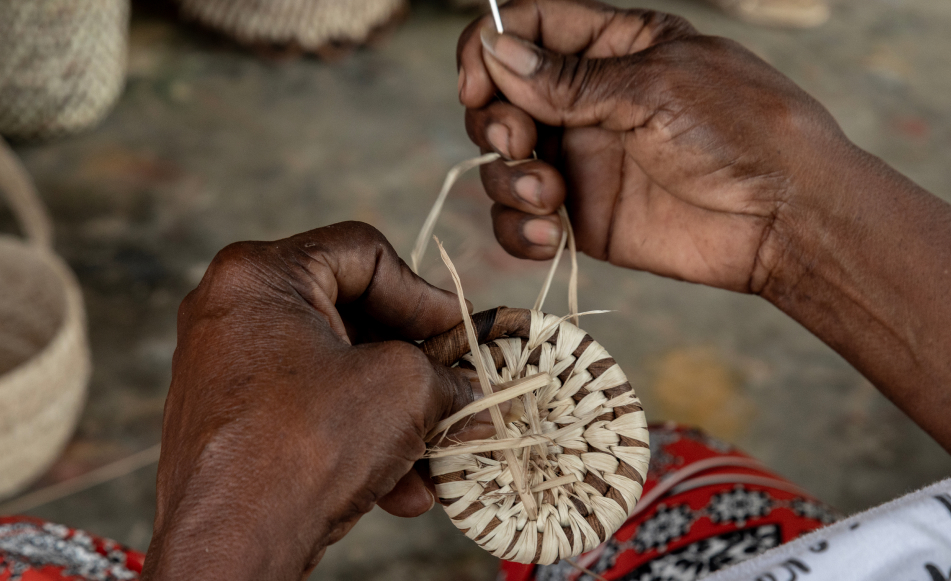
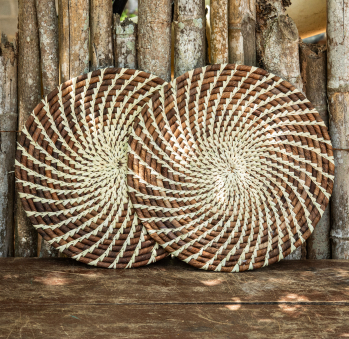
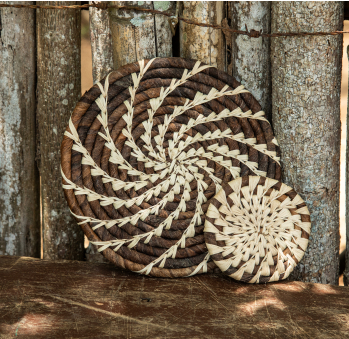
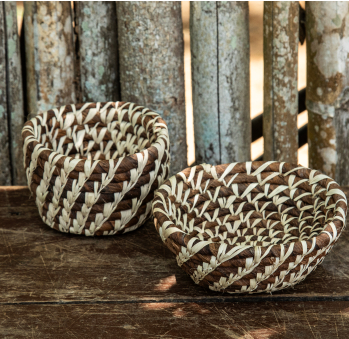
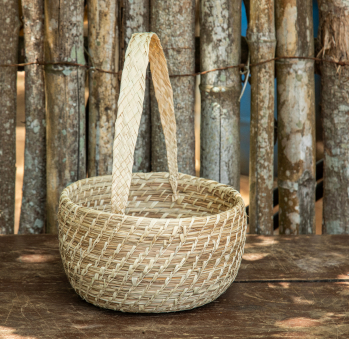
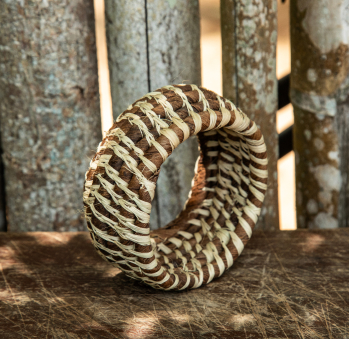
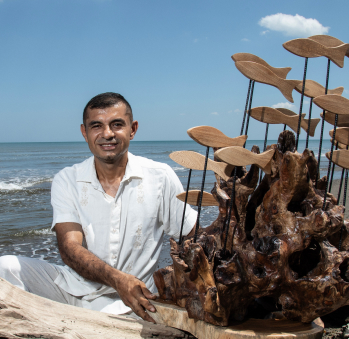
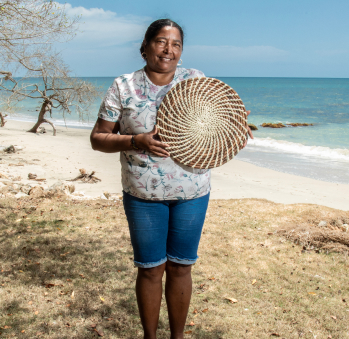
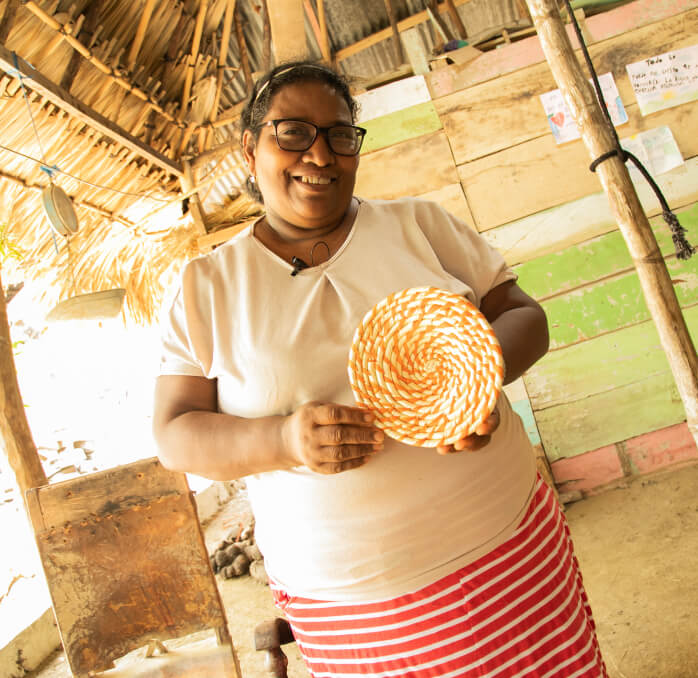
El Higuerón is a small village in the municipality of San Onofre, neighboring the coastal community of Rincón del Mar. Fewer than a thousand people live here, yet its residents proudly consider their town a cradle of artisans. The village is best known for its woodcarvers, but since 2010 a small group of women—including Nelsy Díaz, one of the founders of the El Higuerón Artisans Association (Ardehigue)—have devoted themselves to reviving another of the region’s signature crafts: weaving with iraca palm and dried banana blossom. Using the coiled weaving technique, they create placemats from both fibers that are, quite simply, stunning.
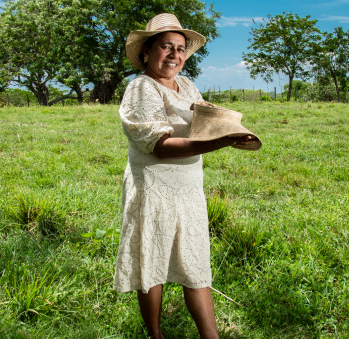
In truth, these women did not inherit an unbroken weaving tradition—they rebuilt it. Nelsy did not learn from her parents, although her grandmother is said to have woven the famous hammocks of Morroa. Perhaps, then, the craft was simply waiting in her blood. She smiles when she recalls that, years later, she became the one who taught her own parents—already well into adulthood—how to weave hammocks using banana fiber. They turned out to be remarkable students. They have since retired from the demanding work, but the flow of knowledge in the opposite direction remains: from daughter to parents. For Nelsy, learning the craft was an unexpected gift. A woman named Meris Beker used to spend her vacations in this extraordinary landscape. She came from Medellín and rented a small house near the beaches of Chichimán, captivated by the beauty of the place. One day, however, she expressed her concern that so many of the village’s women were confined to raising children and depended almost entirely on their husbands. She decided to do something about it. Word spread quickly: any woman interested in learning a trade would receive her wholehearted support. And so it happened. She gathered around thirty women, among them Nelsy and Edelmira—both future founders of Ardehigue—who at the time could never have imagined that craftsmanship would become their profession.
Their training covered several techniques. They learned traditional quilting, creating rugs and mats from fabric scraps, as well as weaving with iraca palm and banana fiber. Like the dedicated patron she was, Meris Beker paid for their transportation to San Onofre, where they received formal instruction and certification. She even brought them bags of fabric remnants so they would always have materials to practice with. Nelsy vividly remembers those first years of the new millennium. She had never considered herself especially crafty as a child, and at first she felt clumsy, convinced she had no natural talent. Little by little, however, her hands found their rhythm. The quilted flowers that once seemed impossible—pieces she had to remake over and over again—gradually became her favorite activity. Still, as much as she loved quilting, completing a single rug took six months. Eventually, she chose to devote herself entirely to iraca weaving, a craft that also came naturally to her.
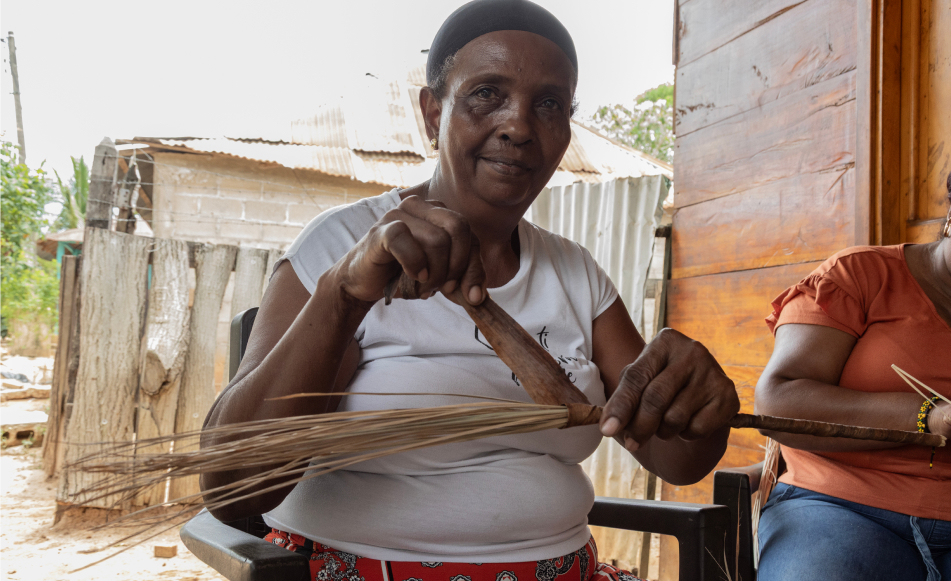
Together with Edelmira, she became an exceptionally dedicated student, growing more passionate about the work while continuing to care for their homes and families. They specialized in making round placemats that combine the textures of iraca palm and banana fiber. Their first dozen sold well. Then came another dozen. Then another. Before long, they realized they were building something lasting. They began by selling their work along the beaches of Rincón del Mar and Chichimán. Later, hotels and the Sanguaré Nature Reserve started displaying their pieces on consignment. For many years tourism sustained their craft, until invitations to participate in artisan fairs began to arrive. Today they have built a loyal clientele that continues to commission their now-famous placemats. They also take great pleasure in welcoming visitors, many of whom arrive at their workshop by bicycle to watch demonstrations of their craft firsthand.
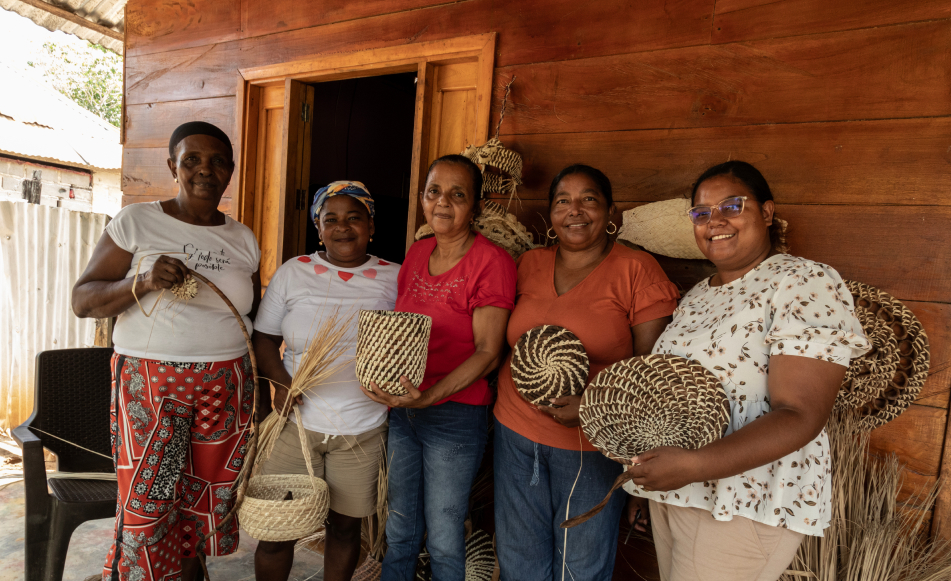
Today, Ardehigue is made up of seventeen artisans. Five are women weavers; the remaining members are woodcarvers. It is now in the hands of Edelmira, Genevis, Olga, Nelsy, and Nelsy’s daughter, Angie Paola, to ensure that this weaving tradition continues to flourish, passing it on to future generations and making this small corner of Sucre a recognized home of iraca craftsmanship.
Workshop and process
Craft
Artisans along the way
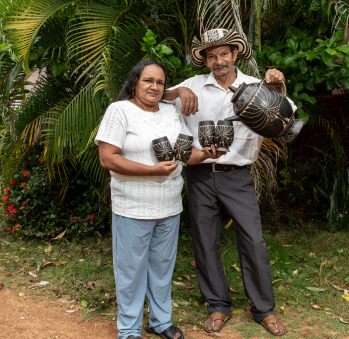
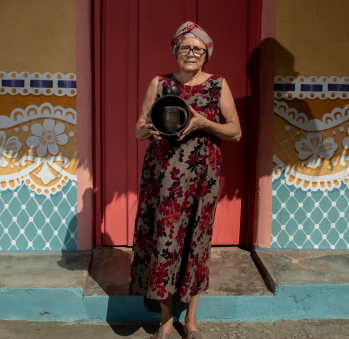
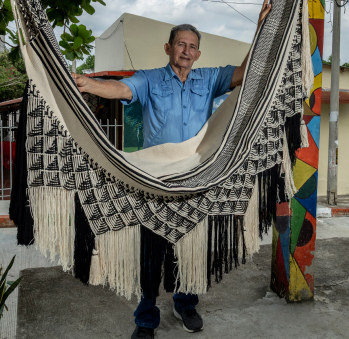
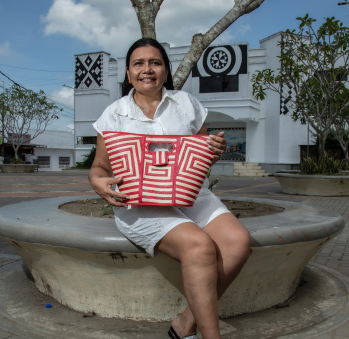
Artisans along the way



No puede copiar contenido de esta página