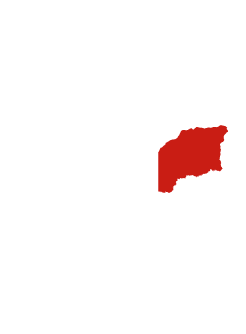

Oriente Route
Back to main route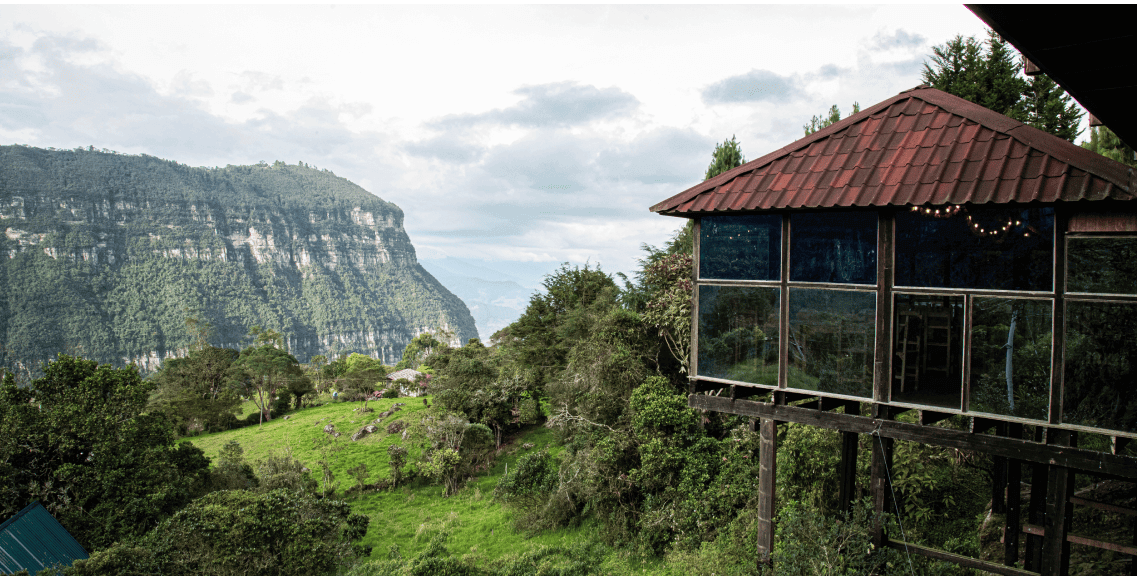
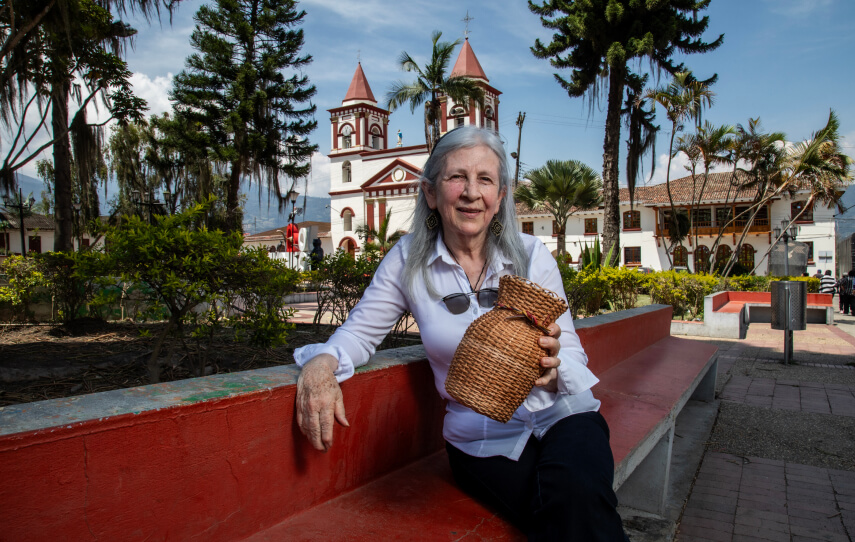
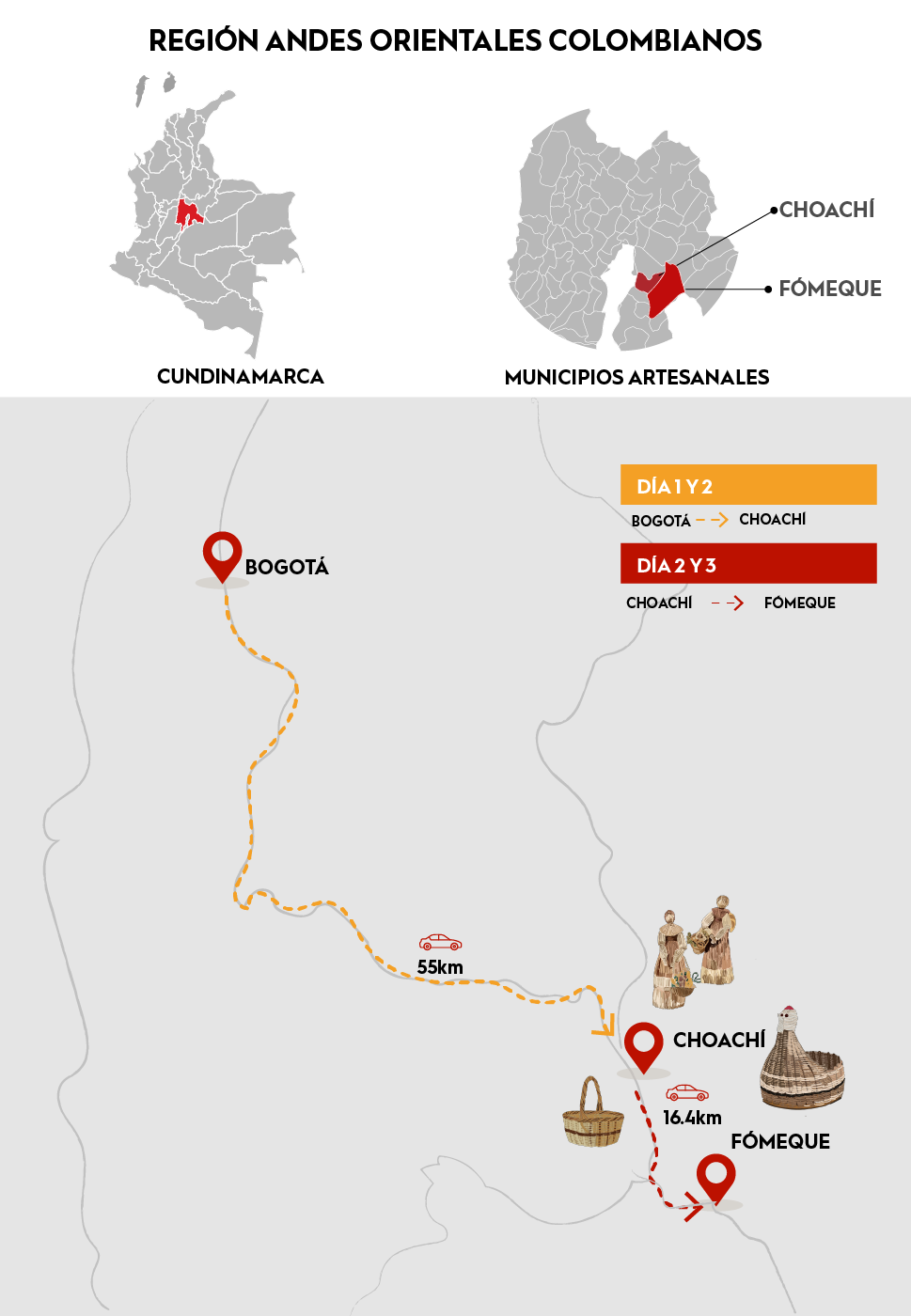
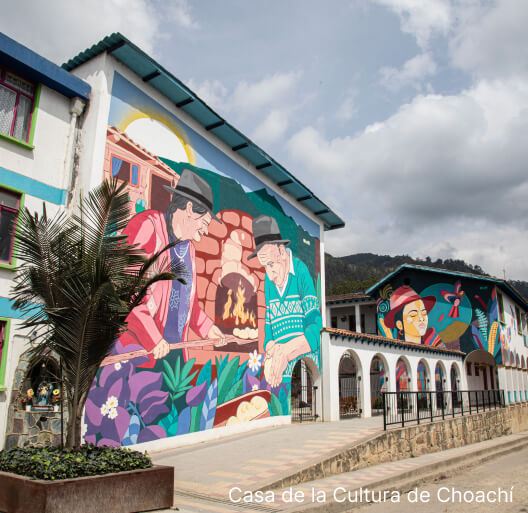
Visiting Choachí and Fómeque has become one of the most appealing weekend plans for people from Bogotá. In fact, many have started moving to these towns, which are warmer than chilly Bogotá, thanks to their location in a deep valley visible from the splendid mountain road that leads there. Leaving through the eastern hills and before reaching La Candelaria via the Circunvalar, you will climb a winding road that is often wrapped in mist and must be driven carefully, as the drop-offs are steep. Along the way, you will pass through Matarredonda Ecological Park, a high-altitude páramo reserve where it is well worth stopping to admire the most beautiful frailejones. Then, after a long stretch through truly paradisiacal scenery, get ready to descend, because the curves will set the pace. But the reward of arriving in Choachí will make it all worthwhile. You will find a town of warm-hearted people, colorful murals, hot springs, and a wonderfully varied and flavorful food scene, from traditional cooking to gastronomic innovation, always with a strong emphasis on local ingredients. You will also find La Chorrera Park, home to the highest stepped waterfall in Colombia—nearly 600 meters of cascading water. Both in the town center and in the surrounding rural areas, we invite you to visit the craftswomen featured in this guide, delightful women with extraordinary talent. But the journey does not end there. About 20 minutes away lies Fómeque, another beautiful town where you must try the sagú rings, indulge in its bakery offerings, and see the wood-fired ovens you can use in the town’s main square. It is also an ecological destination, since it lies at the foot of Chingaza National Natural Park, a natural sanctuary that shelters spectacled bears and white-tailed deer. There, meet the two master craftswomen we introduce here, with whom you will learn about basketry.
Embark on a journey full of history
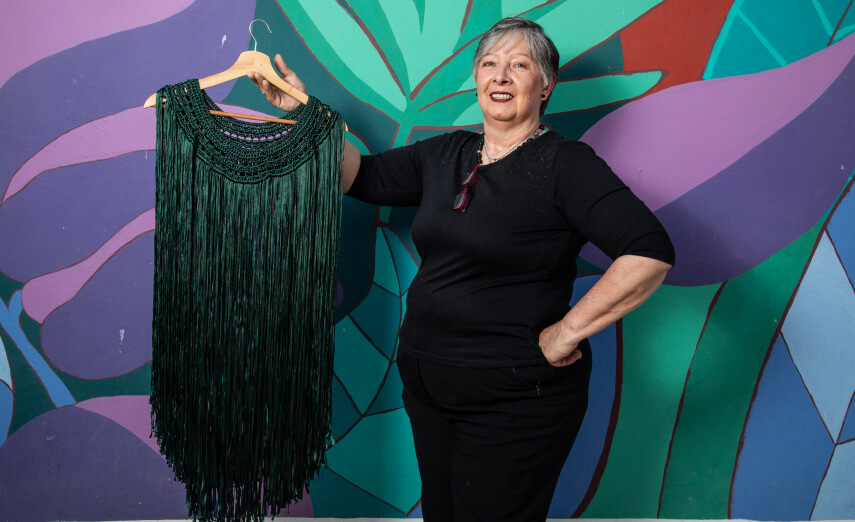
Artisans along the way
Artisans along the way
We recommended this tour
 Recommendations
Schedule the visit in advance with the artisans.
Carry cash.
 Length
3 days
 Physical Complexity
 Transportation
Car or Bus
BOGOTÁ – CHOACHÍ
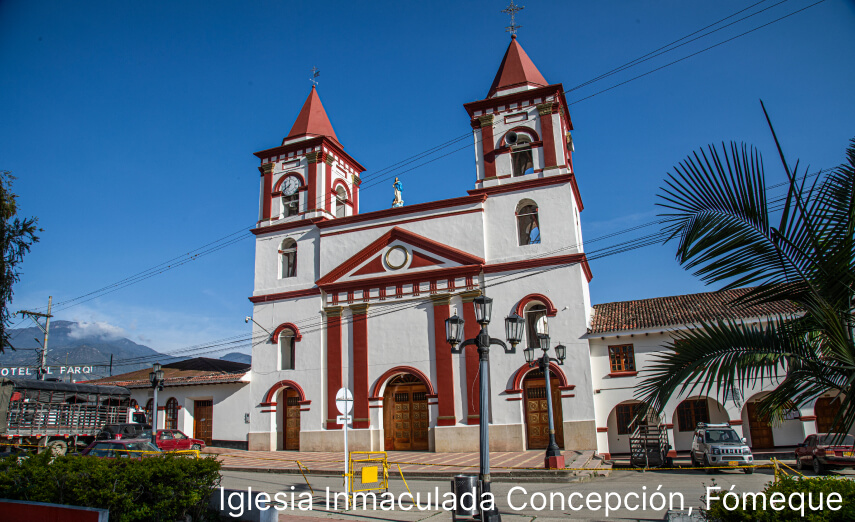
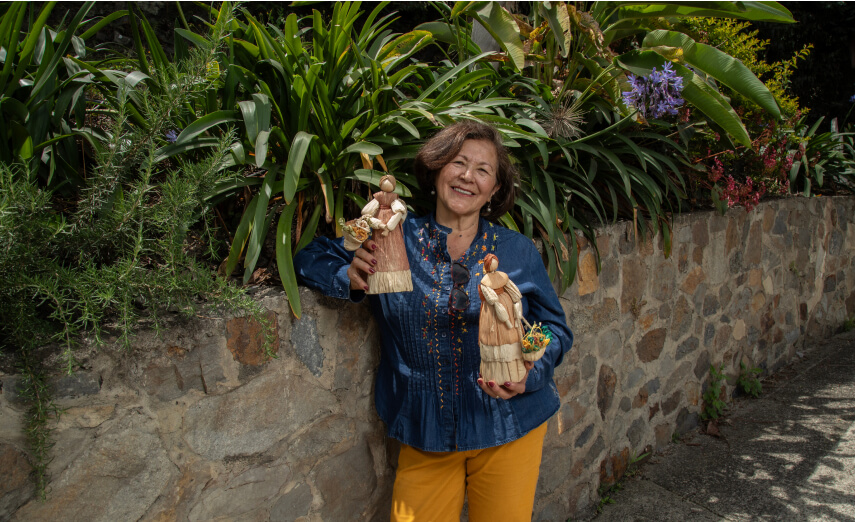
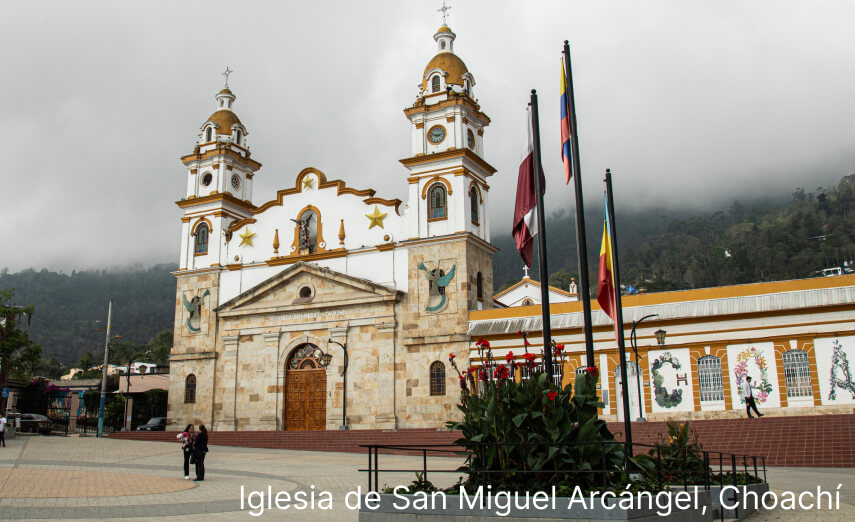
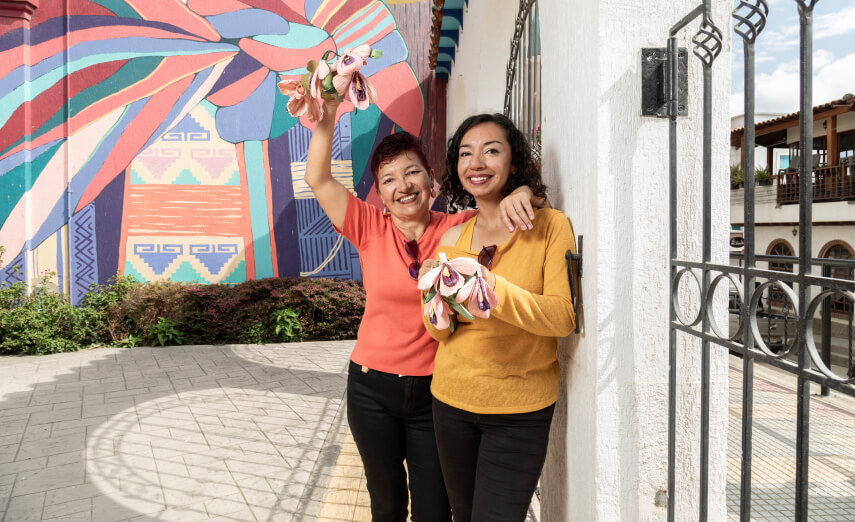
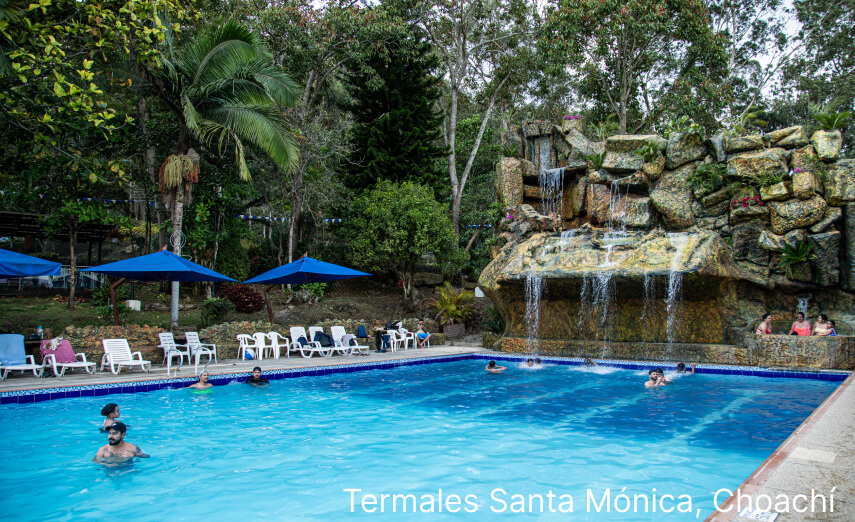
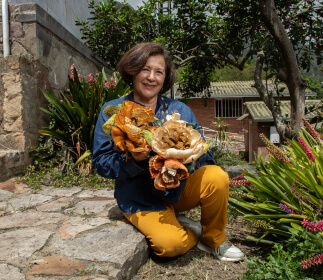
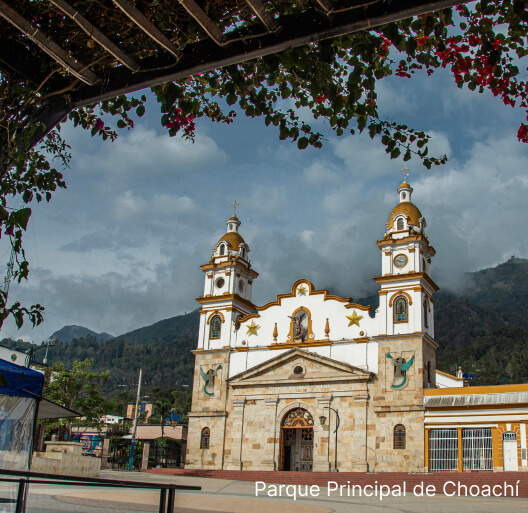
Less than 42 kilometers from Bogotá, about one to one and a half hours by car, lies the town of Choachí, tucked into the Eastern Cordillera in what is known as the Río Blanco Valley, where the Chingaza páramo begins. You will also notice that this is a land of water, since here you will find La Chorrera Adventure Park, with its 590-meter waterfall. Inside the park, ask about El Chiflón Waterfall, and get ready to walk behind its curtain of water. There are also the famous Santa Mónica hot springs, an ideal and highly exclusive place to renew body and soul; you can stay there comfortably and enjoy generous meals. Once in town, take pictures in front of the murals that decorate the house facades, and if you enjoy visiting churches, stop by San Miguel Arcángel Parish and Nuestra Señora de la Candelaria, both of which offer fine examples of colonial architecture and art. Here you will have plenty of options for enjoying excellent food. Explore the section on traditional cuisines and you will be pleasantly surprised by the variety on offer. There is also a good selection of accommodations. Here, we invite you to meet several masters in the making of corn-husk dolls: Miryam Barbosa, Yenni Paola Pardo, and Adela Mora. We also encourage you to visit María Eugenia Rodríguez, a wool weaver, and her group of fellow artisans from Aguadulce Tejeduría.
CHOACHÍ – FÓMEQUE
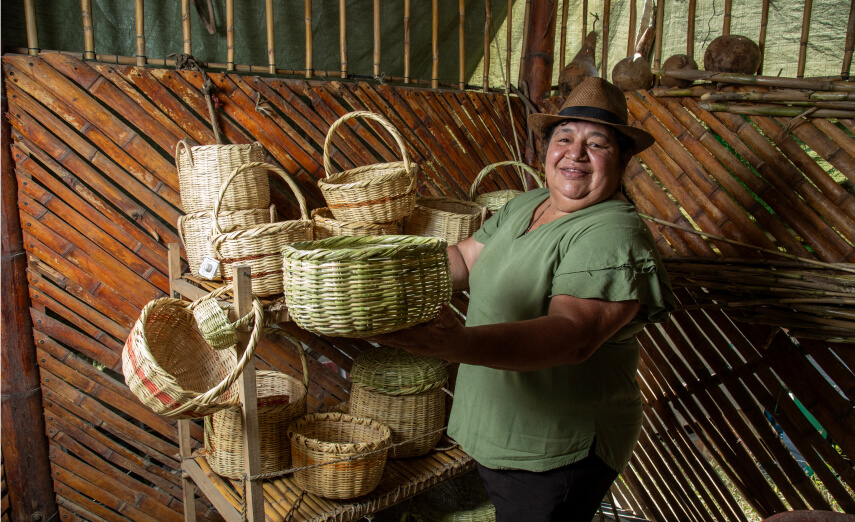
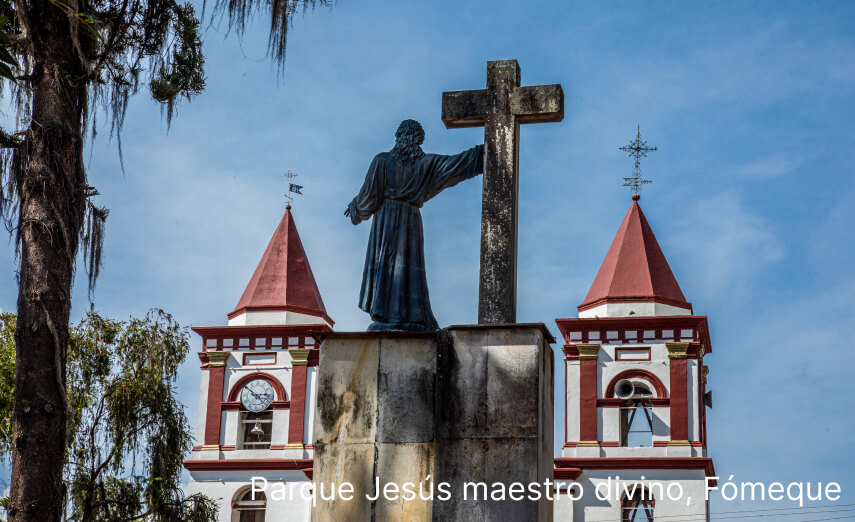
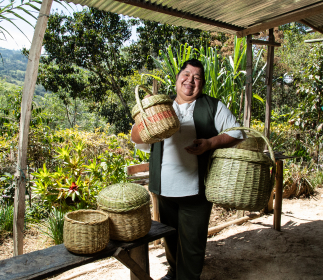
About half an hour from Choachí lies Fómeque, a town that smells of sagú, a tuber that produces what is known as the “white gold” of eastern Cundinamarca and has turned its artisanal baking tradition into a local treasure. Sagú is very similar to the achira of Huila, but it is characteristic of this cluster of towns—Fómeque, Choachí, and Ubaque. Do not leave without trying its sagú rings, paired with a good cup of Café Miel, a local heritage coffee grown and roasted in these lands and widely praised for its acidity and smoothness. In this town, you can plan different ecological hikes and enjoy its impressive mountains; organize an outing to Alto de las Cometas, Alto de las Tres Cruces, or Alto Muscua—you will not regret it. As for our craftswomen, discover chipalo vine weaving with Blanca Inés Romero; do not leave without one of her little hens. And meet Martha Ilma Sabogal, a master basket maker in caña brava. You can spend several rewarding hours with her because, if you visit her farm, you will have the wonderful opportunity not only to watch her at work, but also to see how she manages a circular economy model that was showcased as an example at COP16. And be sure to try her charcoal-grilled peeled-corn arepas.
Traditional cuisine
and typical bites
Provoke yourself
Don't leave without eating this 
On this journey through the mountains, Fómeque gets things started at dawn, when the roosters crow and the ovens are already blazing. Its baking tradition stirs nostalgia, releases dopamine, and whets the appetite; it is the perfect prelude to a getaway. But it is Choachí that takes the lead and rolls out the best lineup: the energy shifts, and the feast begins.
In this picturesque town, just an hour from Bogotá, the table is the living countryside: what is grown, raised, and remembered is served with bold, tempting flavor—the kind that makes you order more, the kind that makes you want to stay. It is a reminder of food’s importance as a source of happiness.
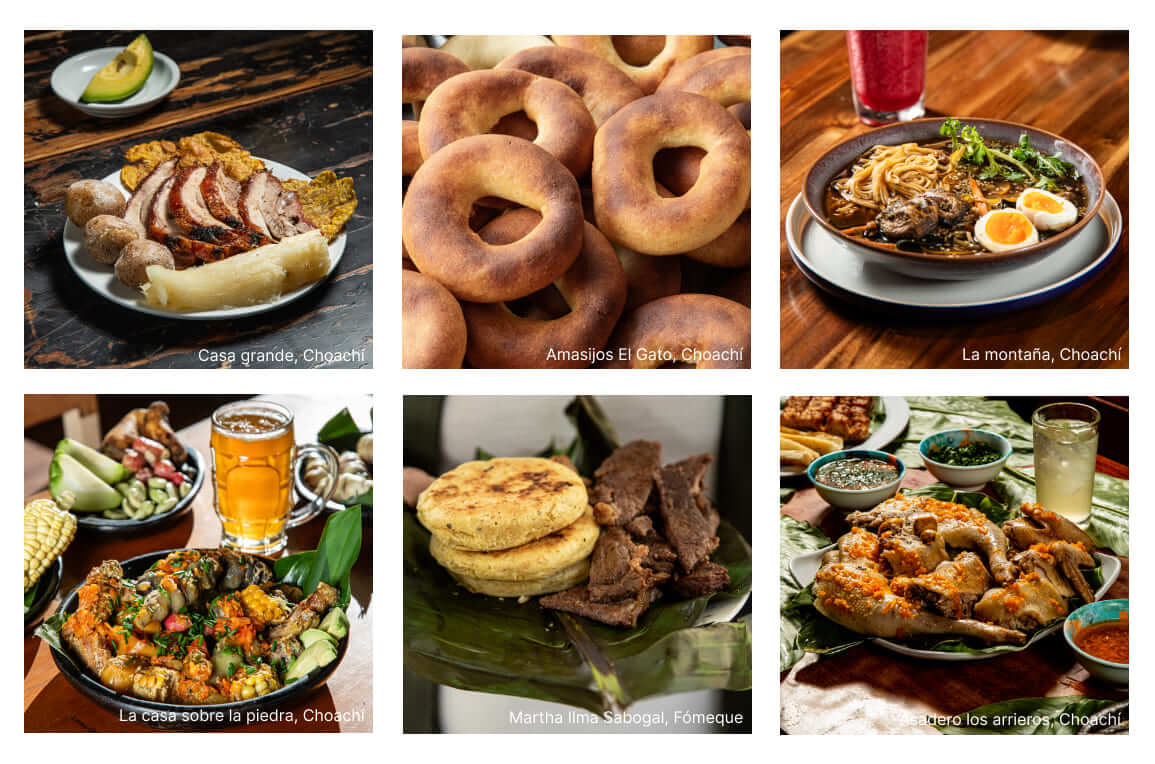
Take note: at Asadero Los Arrieros, that spirit comes through from the very first spoonful. Their homemade soup is a signature dish, bringing together beans, fava beans, corn on the cob, and peas in a thick broth hiding a chopped mixture of beef, giblets, spine, and heart, a combination that gives it character and deep, powerful flavor. It is the kind of soup that comforts and pampers the soul and brings the past rushing back: many diners agree that it tastes like home cooking, like the slow, patient dishes that now survive in only a handful of kitchens. That is precisely why tasting it feels like such a privilege.
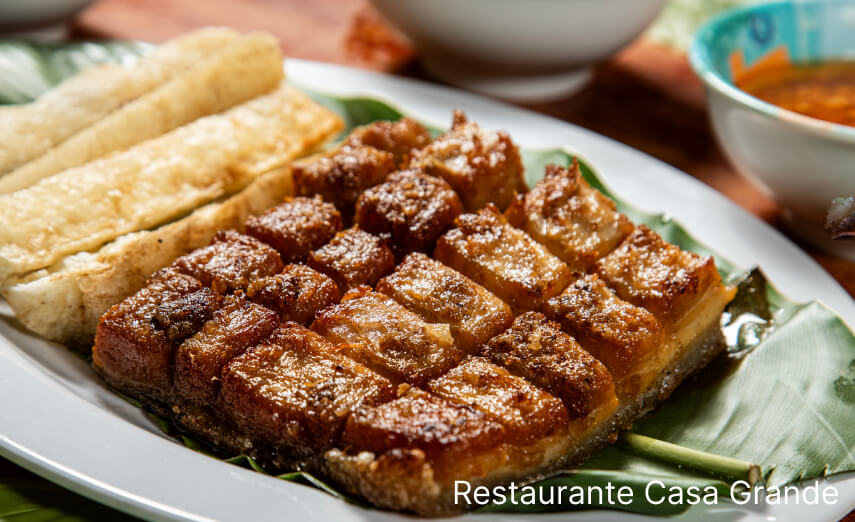
Continuing through the town center, at the corner of Carrera 2 and Calle 4, Casa Grande Picada Típica Artesanal holds another story of endurance. The business was born from the determination of a grandmother from Santander who, after arriving displaced by violence, found in the making of chorizos and morcillas—a sausage made with rice, coagulated blood, spices, and pork fat—a way to support her six children. Today, that legacy lives on in a kitchen where nothing is industrialized and where bay leaves and pennyroyal still perfume the dishes just as they did back then. Their free-range chicken, served with potatoes and cassava, finds its distinctive note in the house hogao, a preparation that remains grandmother Celmira’s great secret and gives the dish both identity and depth.
Another option at the same place is chicharrón cocho, a local version of pork rinds with a soft, gelatinous texture that departs from the usual crunch, and which you can order with cassava or plantain, showing how every corner of this country reinvents familiar recipes with its own signature.
So, among hearty soups, artisanal sausages, and dishes made for sharing, Choachí reveals itself as a destination where eating becomes a way of getting closer to family histories, to displacement transformed into livelihood, and to knowledge still alive in every preparation. And the flavor is second to none.
To lunch we go 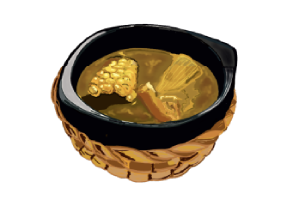
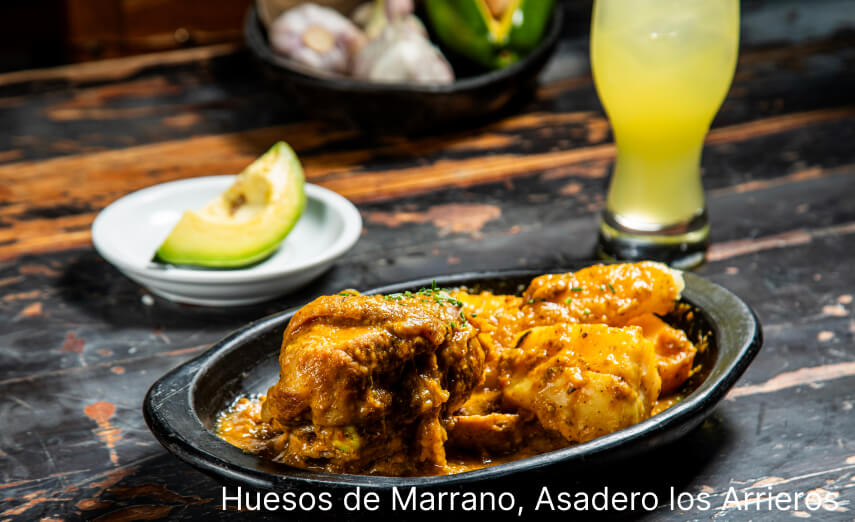
In eastern Cundinamarca, and in Choachí specifically, lunch begins long before anyone sits down at the table. At Asadero Los Arrieros, the show is right out front: skewers loaded with cuts of meat sway gently while the firewood crackles, sings at full volume, and perfumes the air, drawing you in almost by instinct. The panceta keeps its promise with crackling skin turned into pork rinds, then a juicy middle layer holding its generous fat, and finally tender meat that falls apart effortlessly. On Sundays, the stew pot adds its own special call, with pork bones riding alongside potatoes, cassava, arracacha, and rice—a generous combination that, as Marta, the owner, says with a laugh, always finds balance in a salad “to clear the conscience,” a small green gesture that lends its own note to the revelry. Keep in mind that Marta, her family, and her team are there to welcome you in this three-story establishment from Friday through Sunday, as well as on holiday. They absolutely knock it out of the park.
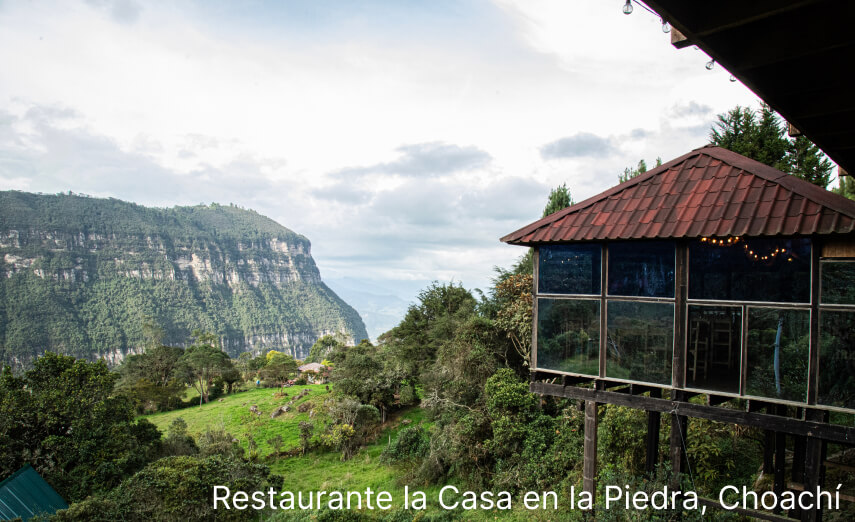
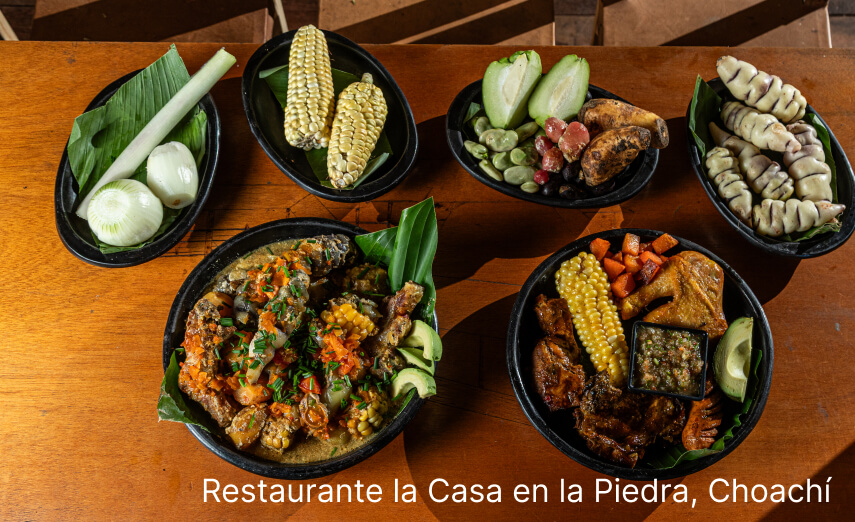
Farther along, at kilometer 23 on the Bogotá–Choachí road, La Casa en la Piedra offers a pause where the table enters into conversation with the landscape. Balconies lined with ferns look out onto a monumental rock and mountains stretching away in silence, while cocido chigüachía takes pride of place, evoking older dishes that once celebrated the arrival of visitors and the meeting of neighboring territories. The version served in this haven of peace brings together cubios, chuguas or ulluco, along with pork and beef, corn on the cob, and, while it simmers slowly, fresh cow’s milk is added, resulting in a warm, lingering dish. Around it, mixed grills and cuts of pork or veal extend the pleasure of the experience for those who prefer lunch to drift into a long, leisurely after-meal conversation.
When your diet, lifestyle, or craving leans toward the garden, La Montaña Restaurante offers a vegetable ramen whose bowl comes generously filled with leek, red cabbage, bell pepper, zucchini, and celery woven into an aromatic broth with soy sauce, ginger, and sesame oil, while the egg—depending on your preference—adds softness and rounds out a vibrant, light preparation that restores your faith in the idea that simplicity, too, can be unforgettable.
If you follow this trail of hearths through Choachí, you will discover that traveling also means—or perhaps above all means—pausing, letting the scent of aromatic herbs and meats guide your steps, and allowing the sound of spoons around the table to become unmistakable proof that the journey here was well worth it.
Flavors to discover and snack on 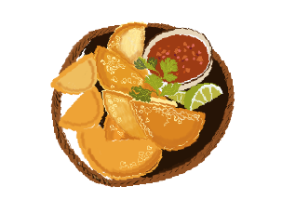
When it comes to the artisanal picada típica, it lands on the table and makes the sensory experience a serious affair: creole potatoes and stewed potatoes, cassava, plantain, morcilla—the beloved blood sausage—chorizo, and different cuts of pork—loin, ribs, and bones—create the dance floor and a full-on celebration at Casa Grande Picada Típica Artesanal.
And once the mood is fully lifted, Choachímilco introduces another beat into your itinerary. The tortilla soup makes its entrance with flavor and texture; the cochinita pibil melts in your mouth at an easy pace and leaves behind a rich, savory trace in every bite; and the mole, a ceremonial recipe, appears as a knowing wink to those who appreciate its complexity. Then comes la piñata—melted cheese with house-made artisanal chorizo—bubbling away without a hint of shyness, calling impatient hands to come running, while the spice sets the tempo before you return to the local procession of flavors.
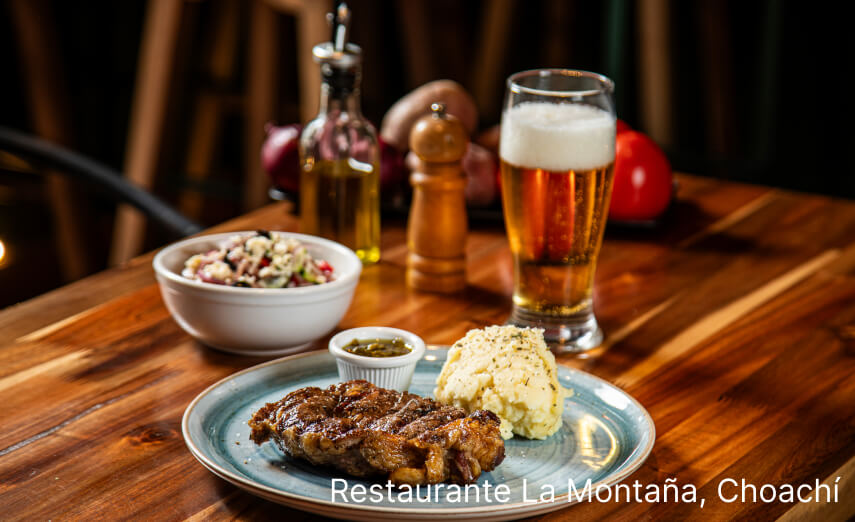
We also want you to write down that at La Montaña Restaurante, the recipes and dishes arise from the creative pulse of Héctor and Germán Cifuentes, two brothers who have spent more than a decade refining a simple yet radical principle: cooking only with what the land provides.
Here, everything is made in-house. Sauces are whisked from scratch, cheeses mature under their watchful eye, and the cured meats preserve the character of the region. Even the meat itself reflects its environment: Normande cattle raised in a cold climate, yielding broad, juicy cuts.
From that living matter emerges the grilled chata, a wide, aged cut that arrives straight from the fire, accompanied by roasted potato wedges or mashed potatoes, and a salad of pickled onion, cucumber, tomato, and oregano. Each dressing brings out new nuances in every bite because it, too, is prepared on-site, with no shortcuts.
Open every day, the restaurant offers a menu with names that echo the cosmology of Colombia’s mountains: eating here is not just about satisfying hunger, but about entering a geography you can literally bite into. Full belly, happy heart.
To sweeten the palate and unmissable drinks 
Indeed, if eating in Choachí is a celebration without protocol, then the sweet course is the pleasurable moment no one wants to miss. This cool-climate town invites you to change registers and follow the trail of all things warm and sweet, of what can be broken apart by hand and leaves behind joyful crumbs, of whatever prolongs the walk and opens the door to new temptations.
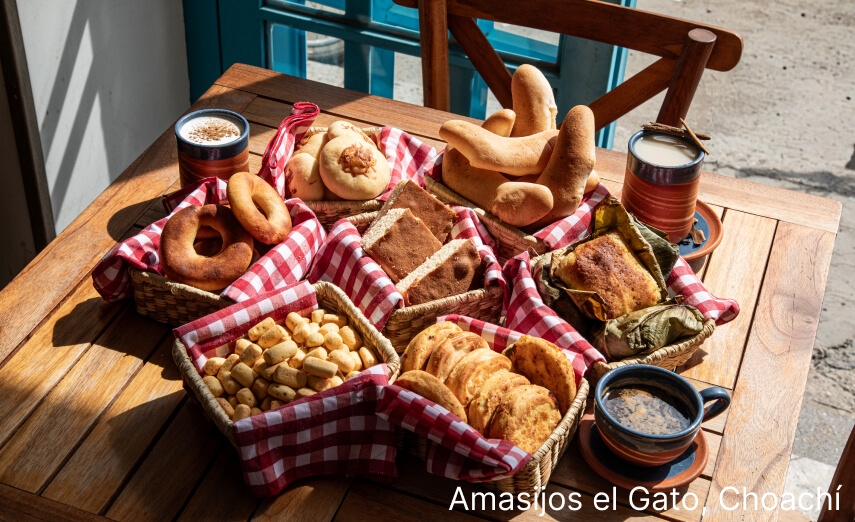
One block east of the main square—or half a block downhill from Banco de Bogotá—you will find Amasijos El Gato, a place that for more than forty years has devoted itself to keeping alive traditional preparations full with corn, sagú, fresh curd cheese, farmhouse butter, and other local ingredients. There, collaboration with rural families sustains a close-knit local economy and, at the same time, preserves the techniques that are kneaded every day into pandeyucas, envueltos, achira biscuits, mantecadas, cakes, and other delicacies.
They also have a branch they call the “way station,” where a whole entourage of women shape peeled-corn arepas and sagú arepas, and every twenty minutes a fresh round comes out, enjoyed to the sound of music and accompanied by masato, chucula—a thick ancestral drink made with cocoa, cloves, cinnamon, and corn flour—homemade yogurt, or coffee grown in the region. Look for it at Carrera 3 #1-37, and go hungry.
Among the facades surrounding the main square, there is an old house painted fuchsia and blue that does not go unnoticed. It is Choachímilco, and here the journey crosses borders without disrupting the rhythm of the outing. The choco flan—half cake, half silky custard layer—moves to a fine beat, and the passion fruit mousse, tropical with a subtle acidity, keeps pace between one toast and the next, asking the afternoon to drift on without anyone checking the clock.
By this point in the journey, at La Montaña Restaurante, true to its essence—“fresh, natural, and delicious”—the adventure finds another tempo in drinks with a local accent that awaken the palate, ask you to slow down, and are savored to the very last drop. The moon lemonade dances to the rhythm of mango, basil, and passion fruit; the sun lemonade sings with coconut, soursop, and cucumber; and both pose for selfies with honey. In the glass, everything feels bright and crystal clear, and the menu gradually confirms that here, the natural world has power in an atmosphere free of excess.
In short, we can only reaffirm that if eating in these streets is a celebration, then the sweet moment is the applause that leaves everyone jumping with joy. Clap, clap!
Recommended sites

Important information for your trip





Pueblo Patrimonio
La Red Turística de Pueblos Patrimonio de Colombia es un programa especial del Ministerio de Comercio, Industria y Turismo, ejecutado por FONTUR, que trabaja con 17 municipios de Colombia que poseen declaratoria de Bien de Interés Cultural (BIC) a nivel nacional para su valoración y proyección mediante el turismo, generando así más oportunidades de desarrollo y sostenibilidad en las comunidades.

La Medalla a la Maestría Artesanal es un galardón que Artesanías de Colombia entrega anualmente, con el cual se hace un reconocimiento a aquellos artesanos, empresas y comunidades artesanales que, contando con una trayectoria destacada, sobresalen a nivel nacional por su excelencia en el oficio así como por preservar el quehacer artesanal.

Denominación de Origen
Es un signo distintivo que identifica productos reconocidos o famosos por tener una calidad o características específicas derivadas esencialmente del lugar de origen y la forma tradicional de extracción, elaboración y producción por parte de sus habitantes. La protección conferida sobre una Denominación de Origen implica que ninguna persona puede identificar con la denominación protegida productos iguales o similares a los amparados, cuando no provengan del verdadero lugar y no cumplan con las características o calidades que le han dado la reputación al producto reconocido. Las Denominaciones de Origen para productos artesanales colombianos que han sido protegidas por la Superintendencia de Industria y Comercio en nuestro país son actualmente 13.



No puede copiar contenido de esta página