
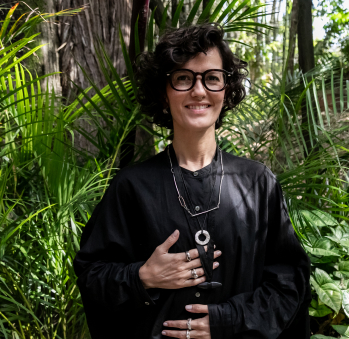
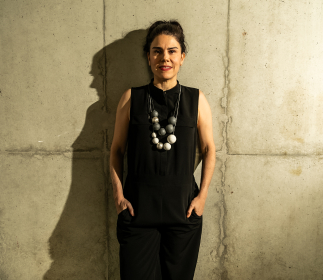
Ana María Jiménez
Workshop: Taller sin Borde
Craft: Jewelry
Trail: Antioquia Route
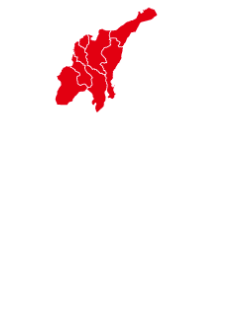
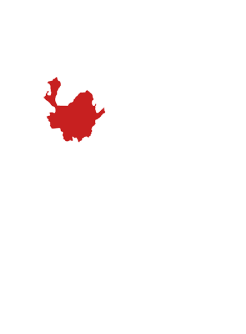
Location: Medellín, Antioquia
SCHEDULE YOUR VISIT
3052279052
tallersinborde@gmail.com
@tallersinborde
@www.tallersinborde.com
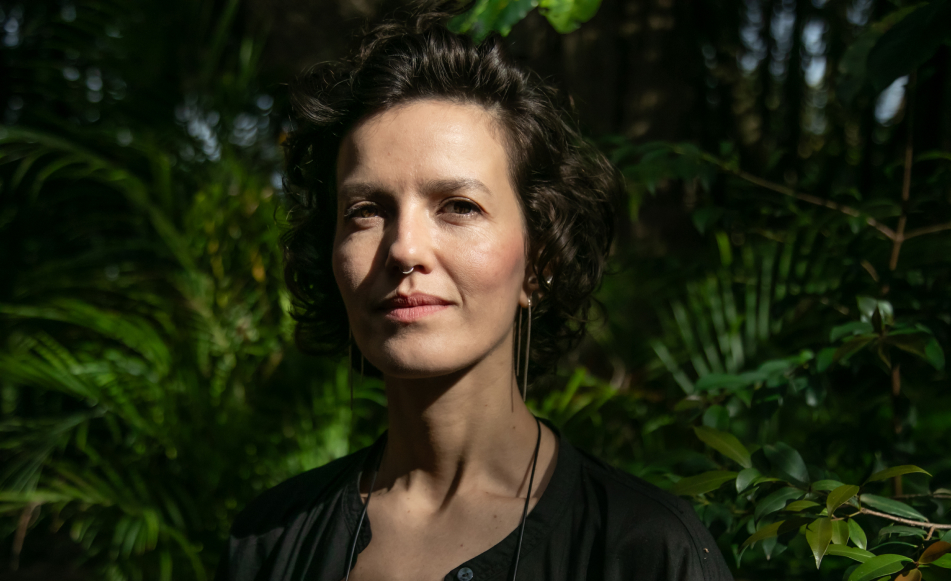
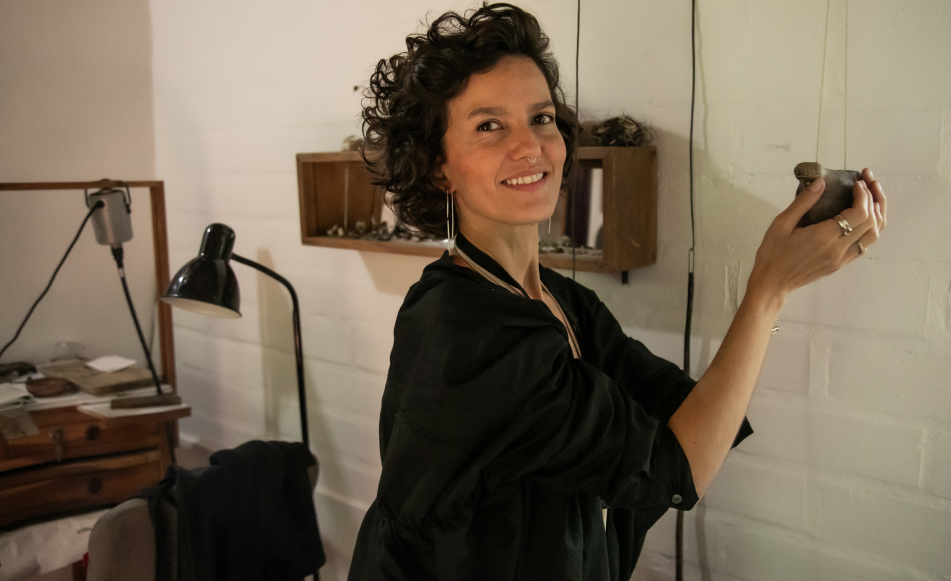
It took many, many experiences for Ana María Jiménez to finally celebrate the idea that not belonging to just one place was the greatest kind of freedom. When people insisted on asking what she did—was she an architect, an art director, a set designer, a producer, a researcher, a jeweler, an artisan?—she simply wanted to say “all of the above.” But at first, it was hard for her to show that having no edges is a source of power, not confusion. Looking back now, though, she realizes it couldn’t have been any other way—and she laughs.
At home, everything was assembled and disassembled; curiosity was a rule, and her mother, writer Ana Ramírez, nurtured her sensitivity as much as she could. She put her in a Waldorf school, where gnomes, stories, and fantasy were daily nourishment, and complemented that education with 15 years of classical piano training that made her hands both wise and strong. She even became a concert pianist, and remembers lengthy Brahms pieces with scores stretching as long as twenty pages.
Her interests were always so broad that when it came time to choose a career, she had three options: Chemical Engineering, Sociology, or Architecture. She chose the last one simply because she fell in love after seeing a family friend drawing architectural plans. But only when she worked for two years in an architecture firm—where, she says, her hands dried out and she had nightmares in which she saw her arms turning into dry branches—did she flee the country and end up in London. She needed a change of air. A different kind of air, she thinks now, that would help her reconnect with herself. She signed up for every course she could find, paying for them with her job at a burger joint, until one day a customer stared at her earrings. After a compliment and a friendly exchange of words, the woman returned and handed her a brochure for a jewelry school: “You have to study there,” she said. Those words became the key to a passion Ana María has never stopped exploring since the previous decade.
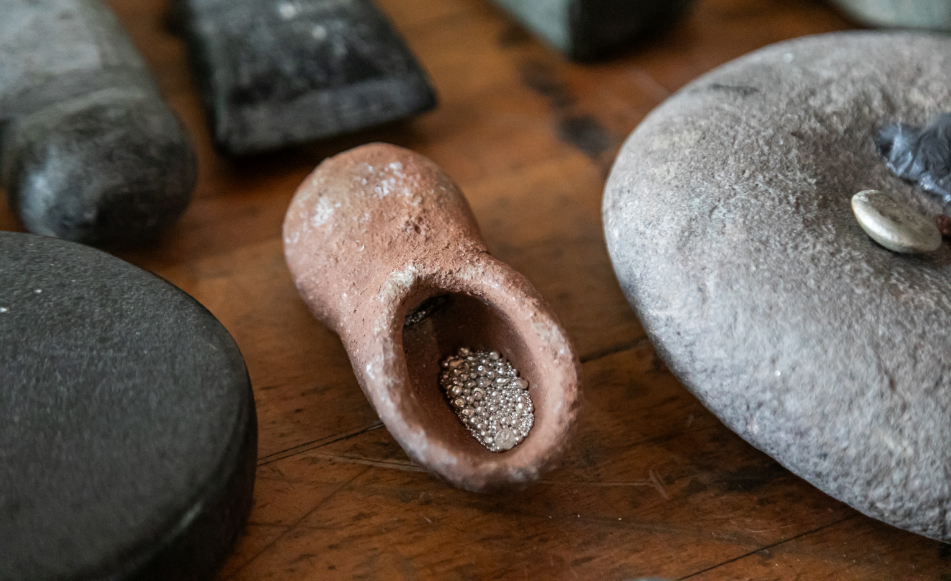
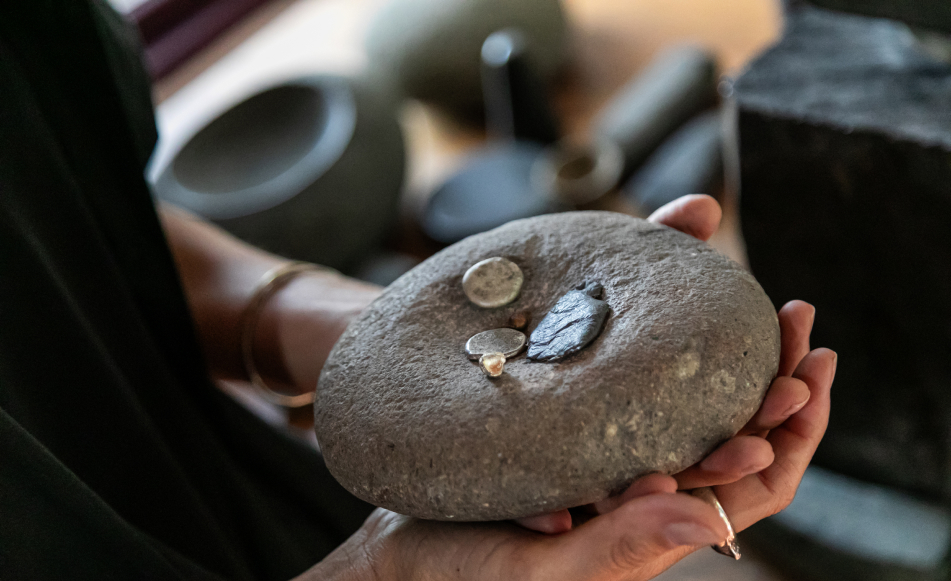
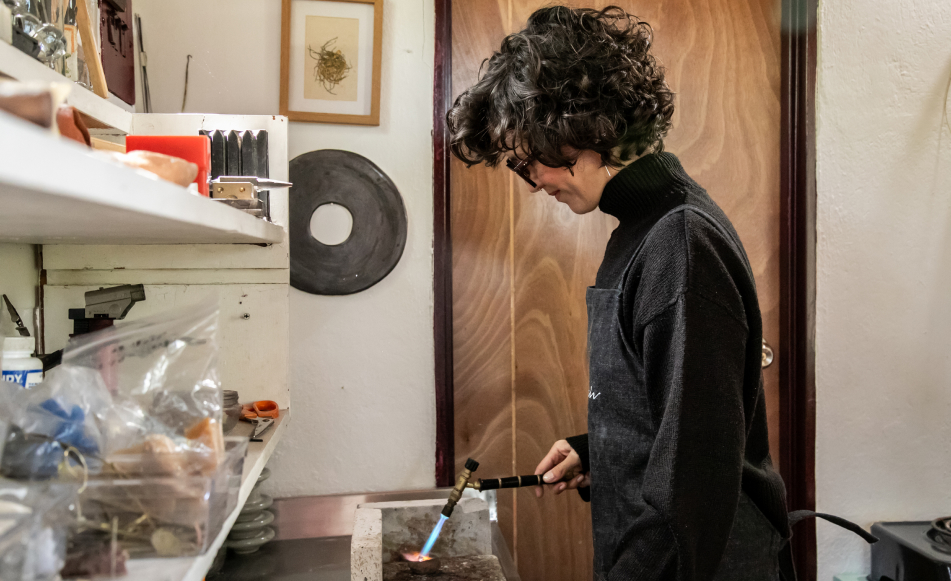
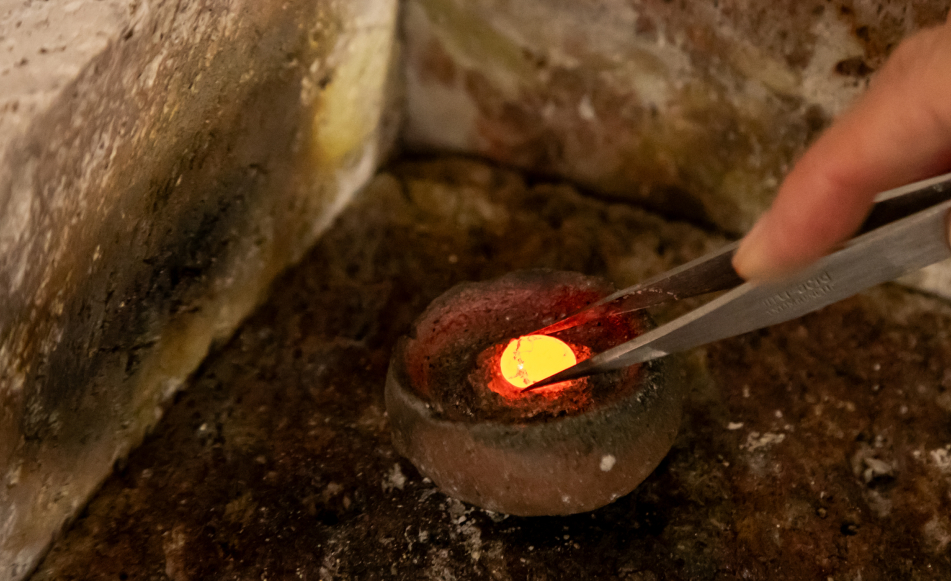
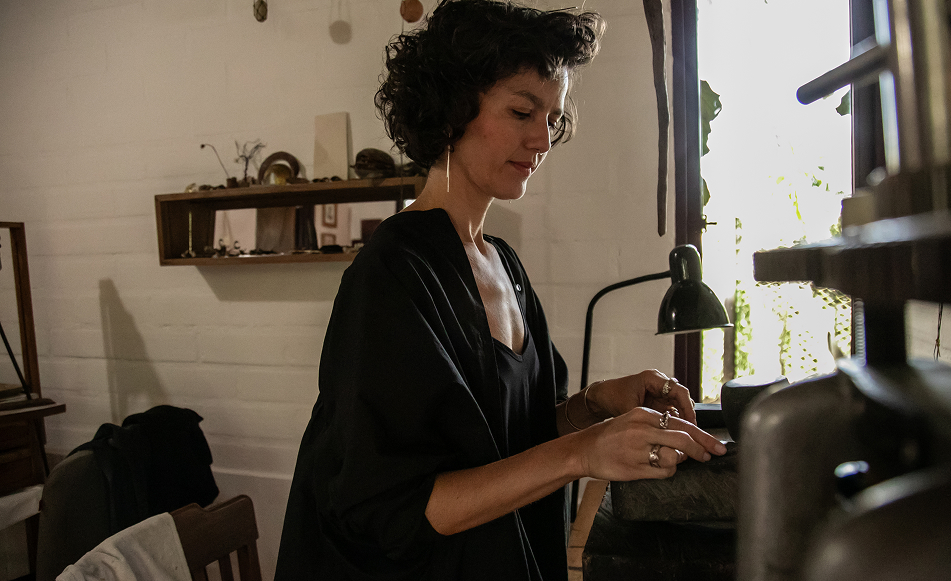
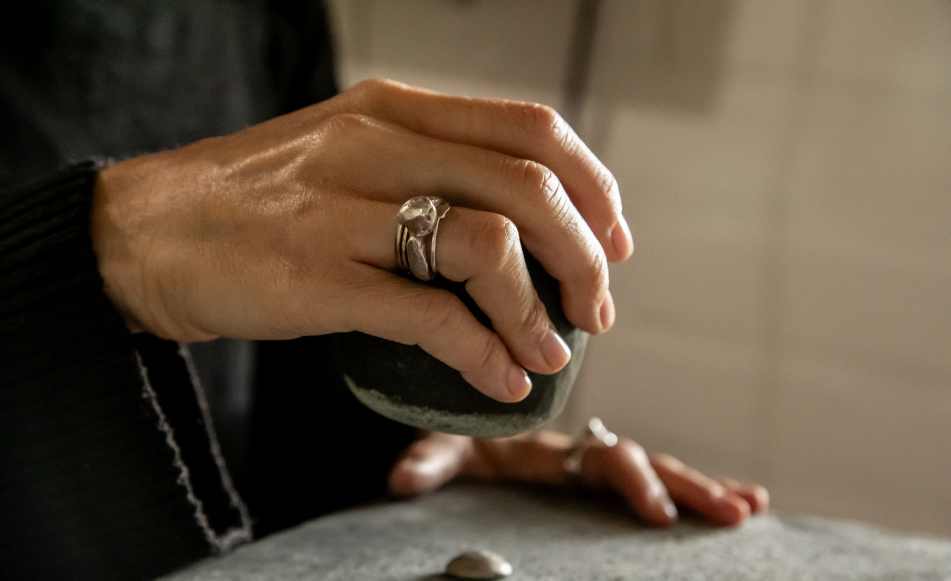
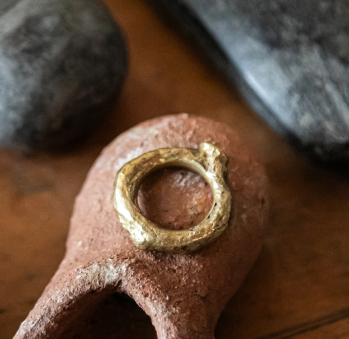
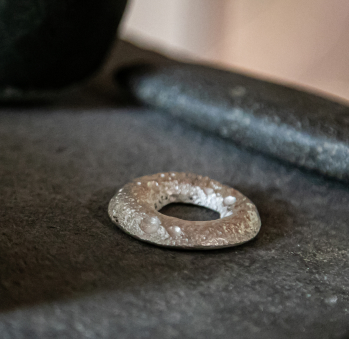
With all this in mind, she returned to Colombia and realized that, unlike jewelry-making in Europe, here artisans do everything: they make the wire, the sheets, and prepare the metals they will later work with. So she apprenticed under different master jewelers—Jaime Díaz, Cristian Quiceno, Nuria Carulla, Sergio Fernández, among others. She knows it was a privilege; they nourished her soul and broadened her world of techniques. Thanks to them, she pursued a Master’s in Fine Arts, from which Taller sin borde—her research and creative jewelry project—was born. Following the concept of “Returning to the process,” she finally named what truly drew her to the craft: understanding ancient techniques and how metals were worked in pre-Hispanic times. She wondered how to hammer with stone tools, how to melt metal without a blowtorch, how to make clay molds for lost-wax casting. At this moment of illumination, however, she had to pause and layer her discoveries to give meaning to everything she was doing.
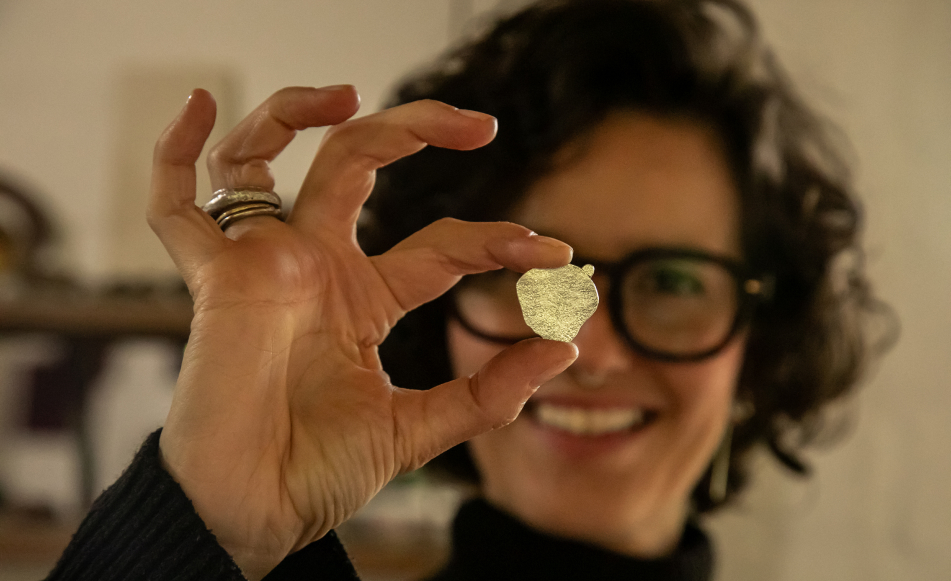
One year was decisive: 2018. She knew this was the path she wanted to follow, but she had convinced herself that making a living from jewelry was impossible. Besides, she was doing very well in architecture and set design. But she fell ill. The body is wise and sends the messages we refuse to understand in any other way. And what lies in the thyroid if not a call to communication and truth? she asked herself, and confronted her own reflection, reminding herself she had unfinished business and had to try. So she dug deeply within—just as others might through yagé ceremonies—and she surrendered to meditation. There, she found her safe space, the one that allowed her to open her heart and fully surrender to the materials she knew were speaking to her. She realized she had found something essential when she began hammering with stone and entered a kind of trance that made her lose track of time. She noticed her posture changed; something was happening inside her—the same feeling she had the night she woke up at dawn to dig a hole and melt metal in the earth. She struggles to explain it; she just wants us to know that there is something alchemical in what she is living, something magical, as if returning to the deep sense these objects carried when Indigenous artisans made them—that entrance into other dimensions that connect us with the core and the spirit, becoming one. And that is exactly where she wants to be. For that reason, when someone wears one of her pieces, they feel they carry an energy as sweet as it is powerful. Perhaps because her work holds the aura of what happens when we finally dare to believe.
Workshop and process
Craft
Artisans along the way
Artisans along the way



No puede copiar contenido de esta página