
Roxana Panchí – WËRAPARA
Workshop: WËRAPARA
Craft: Costume jewelry and Weaving
Trail: Antioquia Route
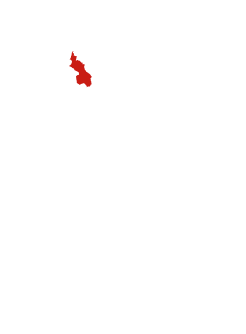
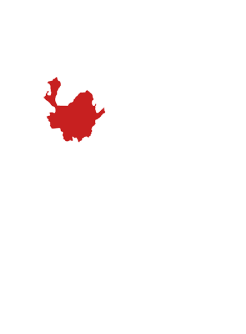
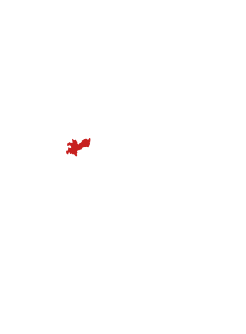
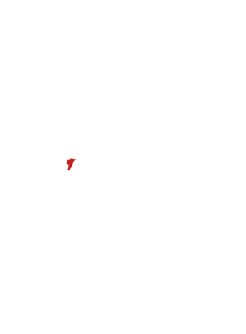
Location: Jardín, Antioquia
SCHEDULE YOUR VISIT
Comunidad Karmata Rúa, Jardín
3113625619
panchigutierrezroxana@gmail.com
@weraparaartesanias
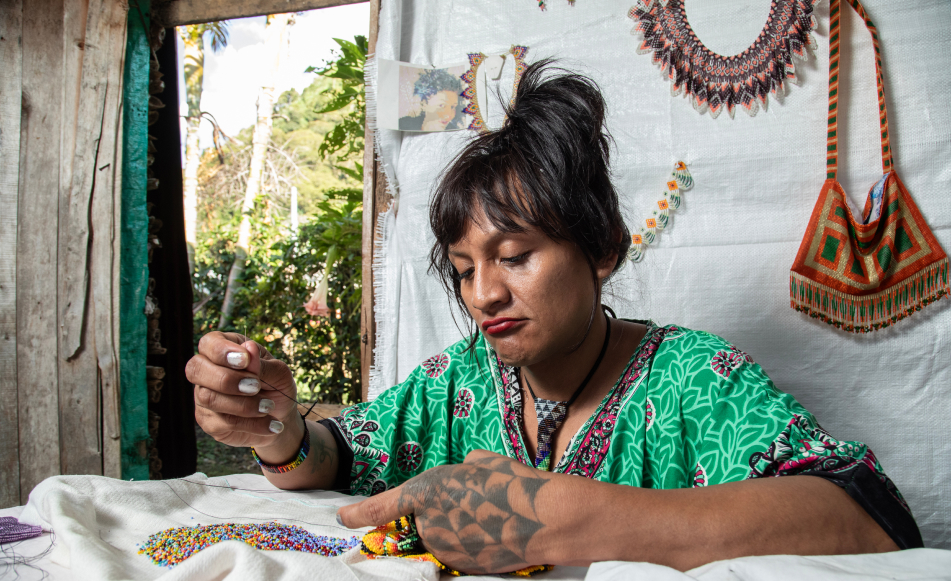
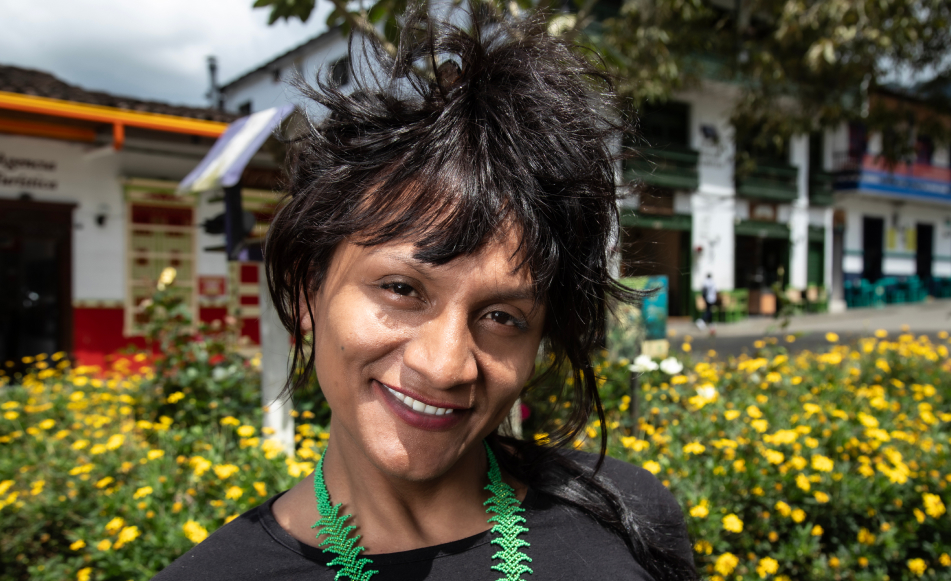
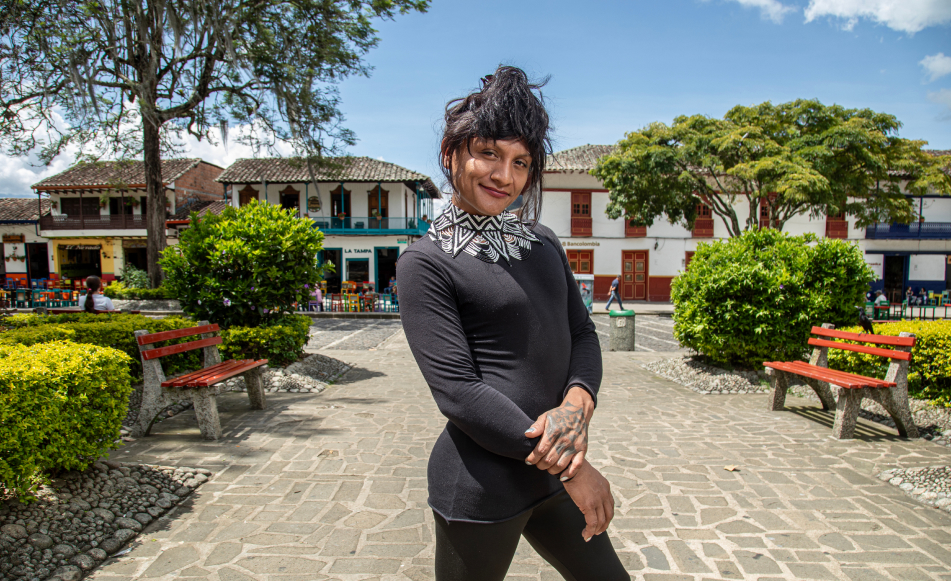
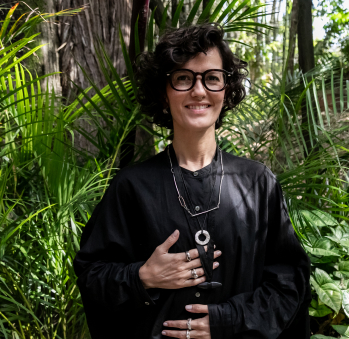
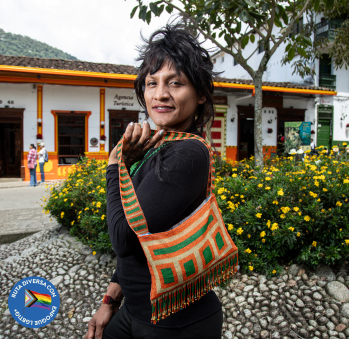
Roxana Panchí says, laughing, that she chose the name Roxana because of the telenovela Amigas y Rivales. She loved that character because “she was the villain,” and she wanted to be that—be bad, she says in a theatrical tone, a pose, almost a game. Because all it takes is listening to her talk about her life and her decisions to know she is not, and never will be. Roxana is an Emberá trans woman. She is a weaver in every sense of the word, for she has done nothing but stitch beadwork bridges that allow her to live and exist in the way she chooses. With her group Wërapara—meaning “trans women” in her language—she represents the diverse artisans of her Indigenous community in Jardín, Antioquia.
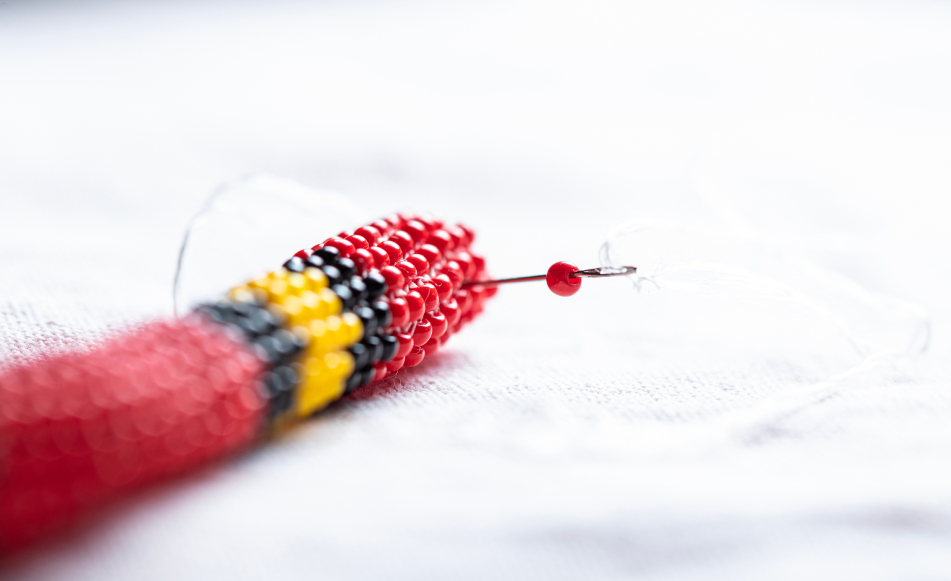
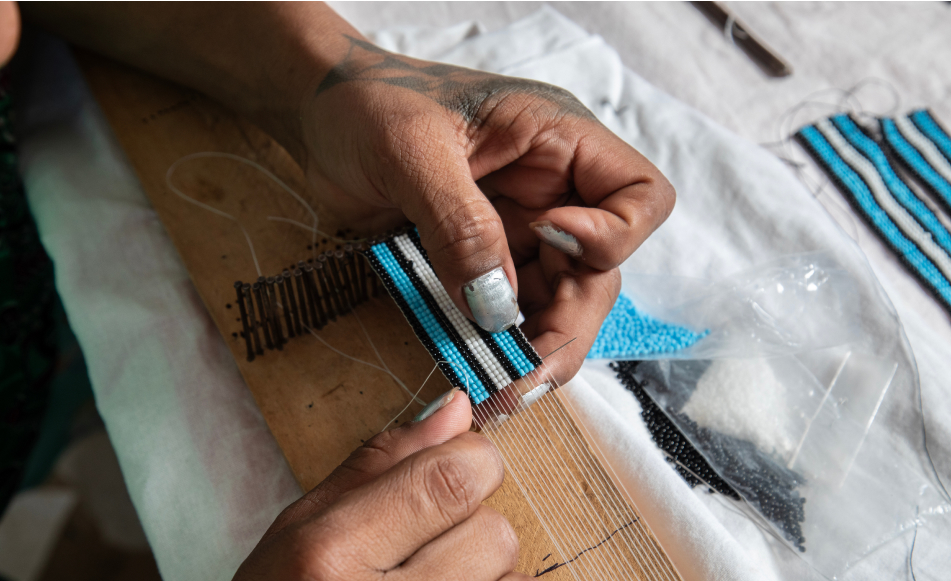
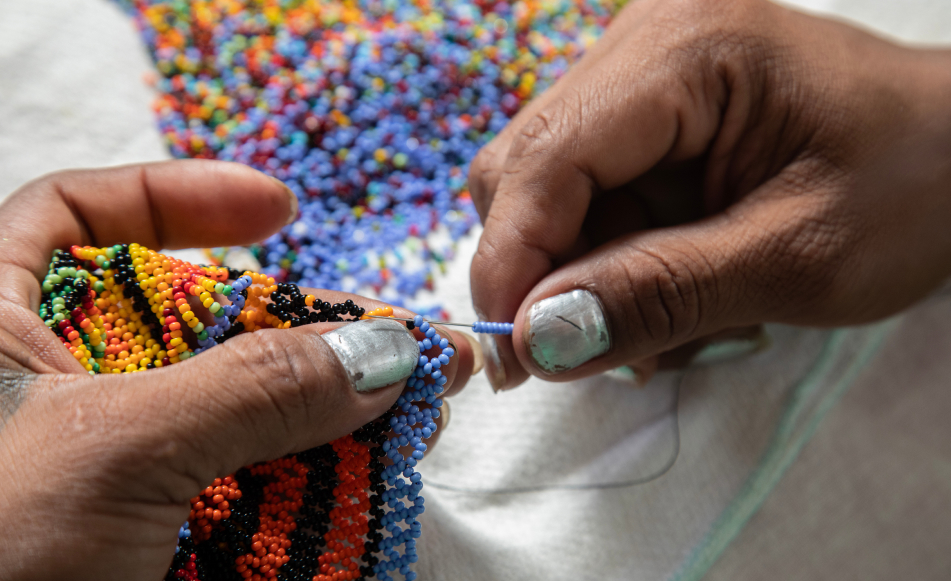
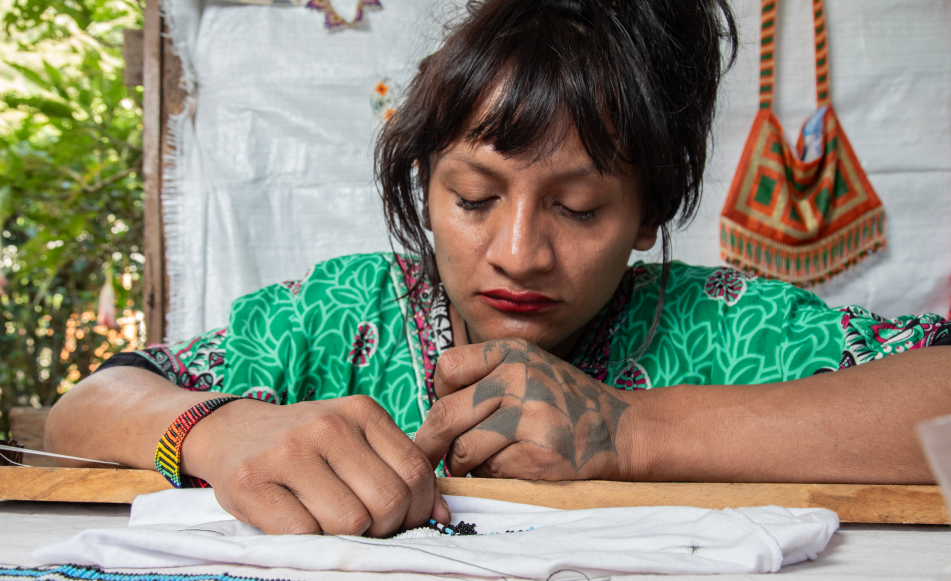
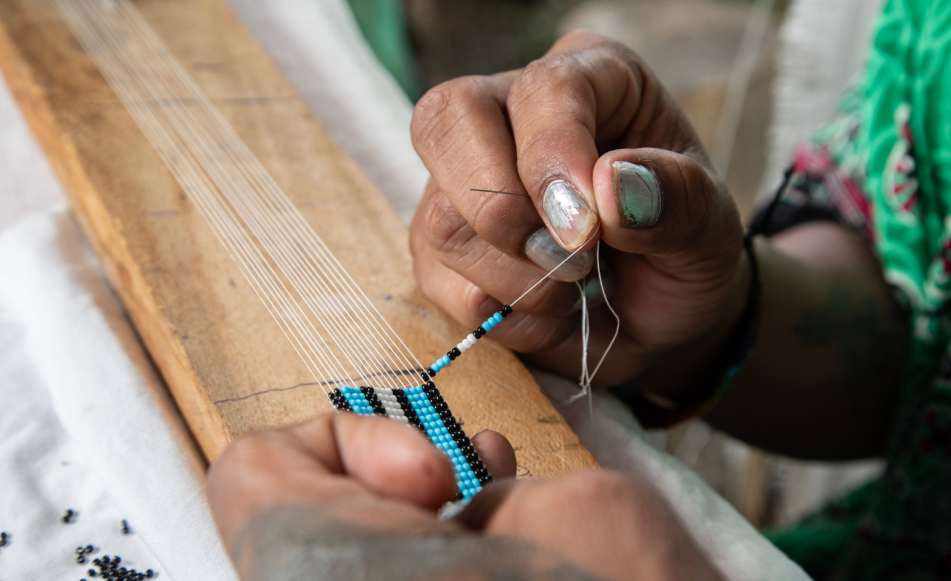
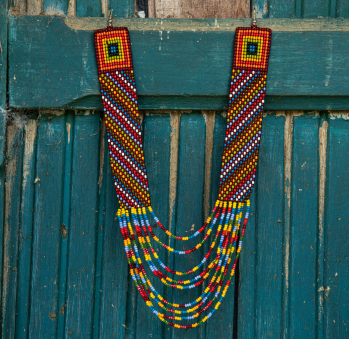
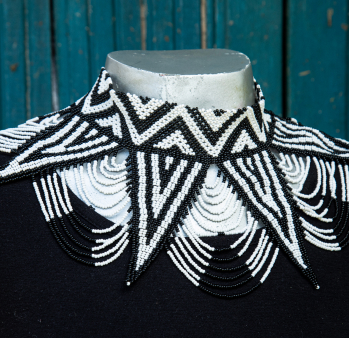
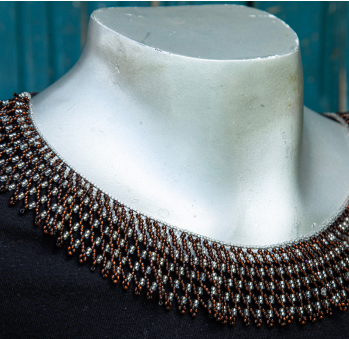
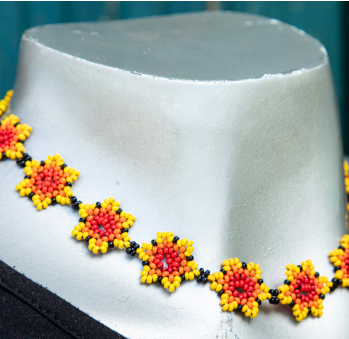
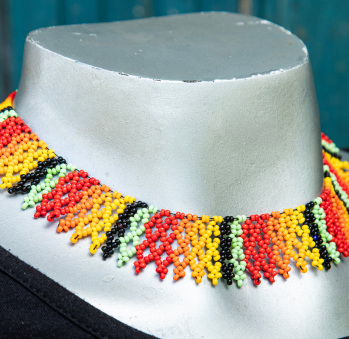
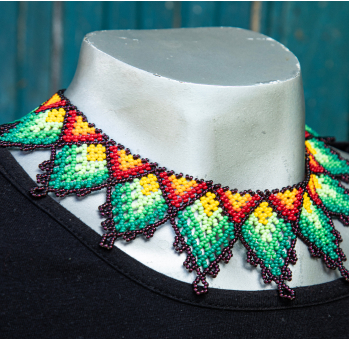
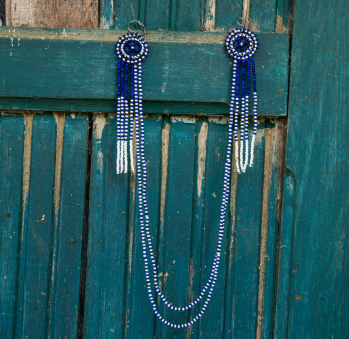
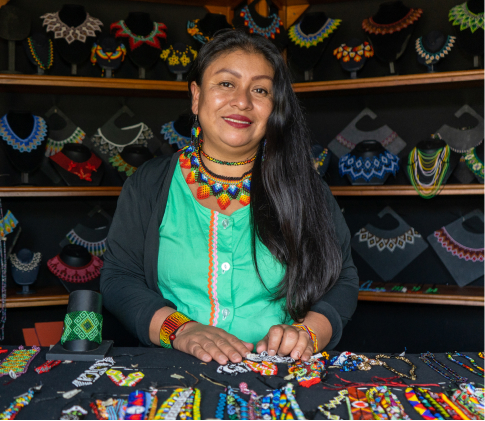
She remembers watching the elderly women sitting and weaving. Her mother, Gilma Rosa, is etched in her memory with her hands always busy. Roxana would sit beside her, absorbed, at six or seven years old, and ask if she could help. She began making earrings and simple things like bracelets, training her hands, because unlike other textile crafts that use looms, she says that in hers “the arts are handled through the hands.” Emberá artisans create sophisticated beadwork necklaces using tiny colored beads with which they design okamás filled with meanings tied to their history and territory. In the Karmata Rúa reservation, in Cristianía, just fifteen minutes from Jardín, these Indigenous women share knowledge that has been passed from generation to generation.
Roxana practiced and practiced with the beads, and by the time she was ten, she could make more complex weavings and color combinations that grew more refined as the years passed. But at thirteen she had to stop to focus on her studies and the work of caring for her four younger siblings; every second she could steal in school for the arts, she used to continue that work she loved doing with her mother. Those were undeniably complex years for her, as she was also confronting all the questions around which identity she wanted to inhabit. She acknowledges she was never “rebellious,” and that seriousness and a mature mind were always her defining traits. Perhaps for that reason, at fourteen she confronted her mother, told her who she was, and began wearing makeup and dressing as the woman she wanted to be—who she was. None of this was easy for anyone, but she had the support of another trans woman, older than her, Pamela, who shared her own journey and gave her the best advice: be strong. And she was—strong enough to untie the knot she had carried in her throat for so long. Roxana knows now that if she had continued hiding, she would have died strangled inside herself.
But if she revealed herself to her family and her community, she too was discovered. Fashion designer Laura Laurens, around 2019, after testing her by asking her for a chest piece that Roxana fused with one of Laura’s garments—an extraordinary result—proposed that they prepare a runway show for London together. That was the beginning of a collaboration that has been not only artistic but empowering, one that has led these artisans to walk the runway themselves. And naturally, their exceptional talent and beauty drew so much attention that they have been interviewed countless times, and even became the subject of a documentary directed by Claudia Fischer titled Wërapara. Fashion has given them purpose.
Fame hasn’t gone to Roxana’s head. She is grateful and knows this opportunity life has given them is precious, though she also knows things are only just beginning. There are six women in the group, but living from craftwork is difficult, and several of them rely on coffee harvesting as a steady source of income during the season. Their true struggle is to build a project that provides physical and economic security. Her dream is to have a workshop on her own land and be able to offer employment to her friends. For this, she embraces the legacy of her grandfather, Luis Virgilio Carupia Panchí, one of the first leaders to reclaim the land where they now live. Her family knows what it means to fight for what you want, and Roxana has become the voice that gives voice to her friends and to so many others. With her fine hand, she polishes their work and teaches them all to weave better each day. She also invokes, in her pieces, those who gave them strength—such as Aníbal Tascón González, another pioneer in the recovery of their land—whom she is currently weaving into a large beadwork piece to honor his contributions. Displaying it is her way of recognizing his value and celebrating it through whoever wears it. It is both her relic and her way of honoring the past.
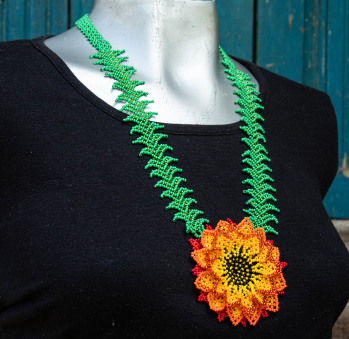
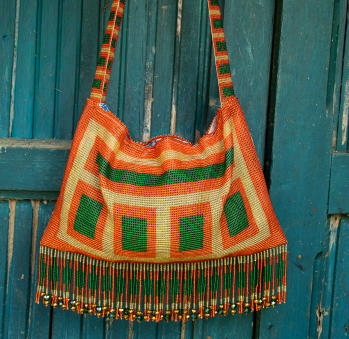
In addition to the portraits she weaves with such dedication, she makes chest pieces, vests, belts, and bags. But none of this—though it is already much—would be as meaningful if these women did not possess the determination that allows them to blend their traditions with what the world of fashion offers. They preserve their knowledge: Alexa sings the ancestral sounds; Marcela is a traditional healer, and Roxana sometimes draws a tiger for her to wear during ceremonies so she can communicate with the jai, the spirits. Gina weaves, and Jaima Nicole works with wool. They all want to be artisans, and undoubtedly, they already are—just as decisively as they are themselves. Now you have one more reason to visit Jardín, that beautiful town that also shelters these fashion artisans who shine as brightly as their beads.
Workshop and process

Craft
Artisans along the way
Artisans along the way



No puede copiar contenido de esta página