
Laureano Melo
Workshop: Laurearte
Craft: Pottery and Ceramics
Trail: Ráquira - Chiquinquirá Route
Location: Ráquira, Boyacá

SCHEDULE YOUR VISIT
Carrera 2 # 7-23 Ráquira, Boyacá
3102197247
@laurearte_artesanias
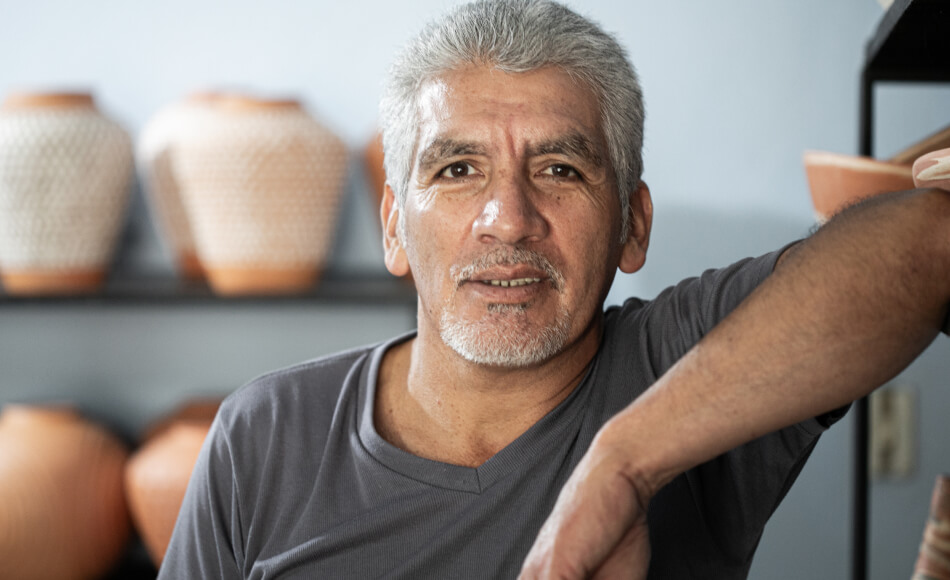
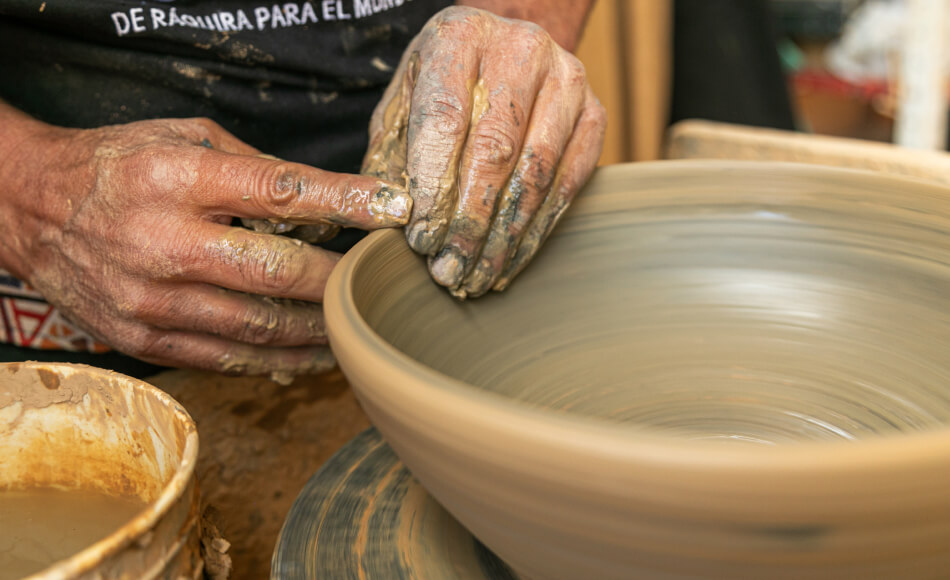
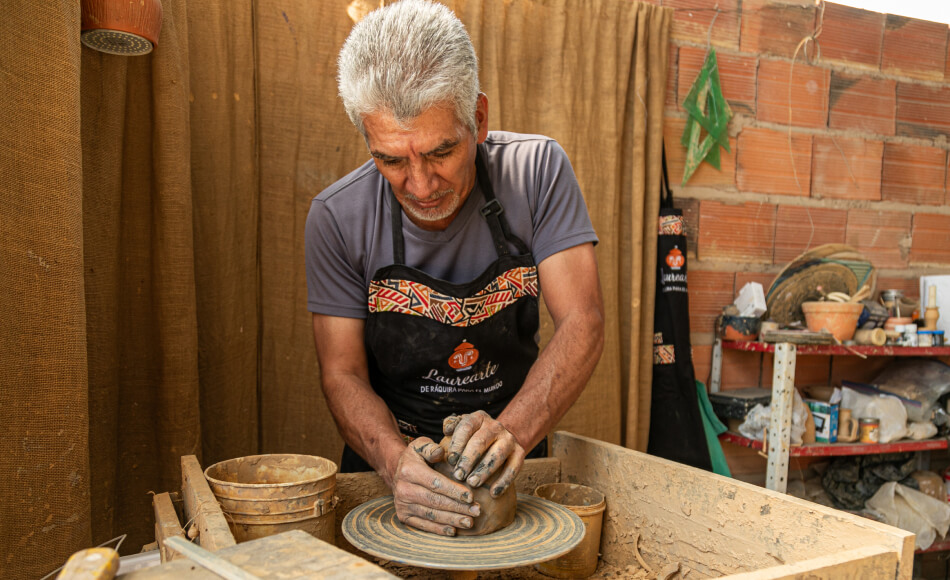
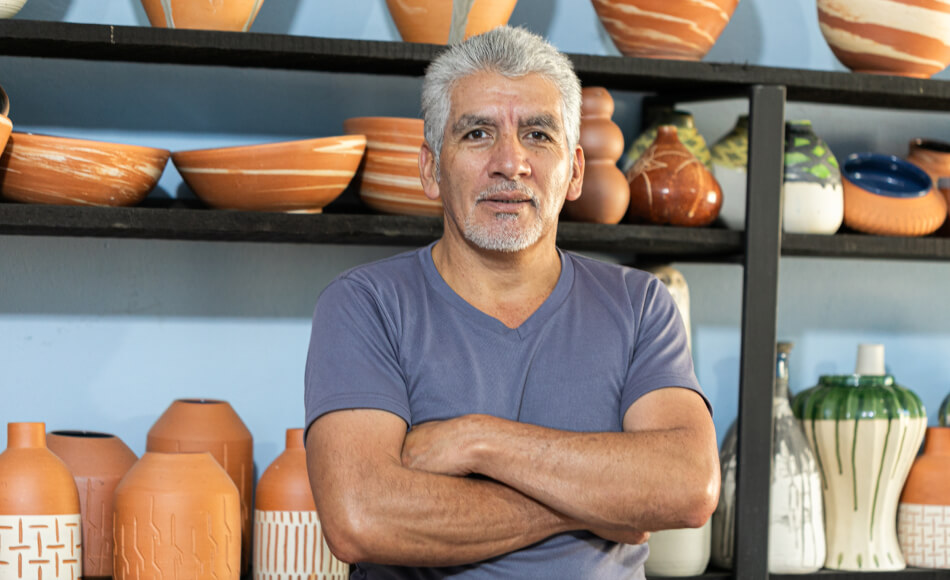
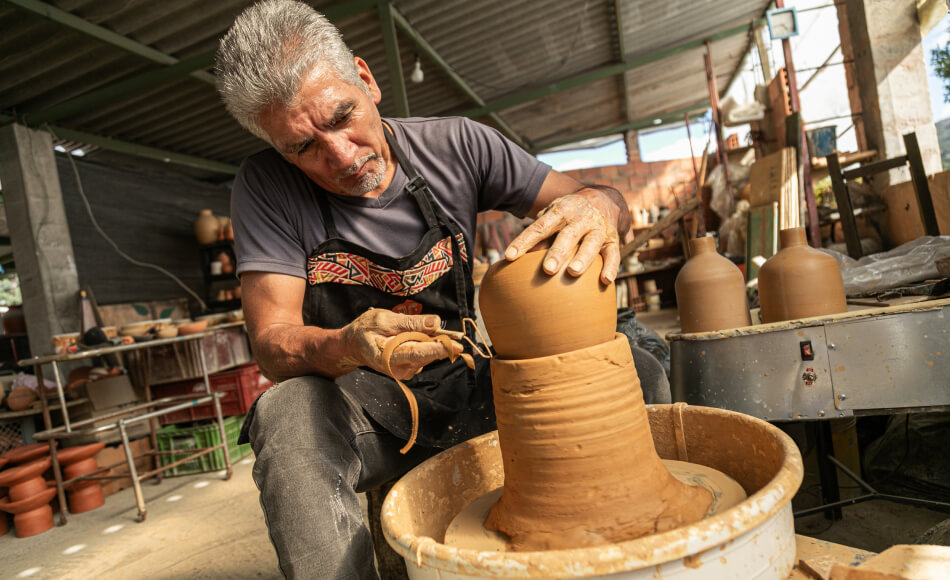
Since the most exhausting chores were always assigned by older siblings to the younger ones, Laureano found that his only escape from unwanted tasks was to become very skilled at making the nativity figurines his mother sold. What he wanted to escape was the entire process of preparing the clay—from extracting it from the mine to making it clean and workable. This involved drying it, pounding it, grinding it, and softening it into powder—all done with his feet—before starting the process over again to make it as pliable as possible. He had to repeat this process many times when he was just eight years old, being the second youngest of thirteen. Making “chorotes” was what supported his mother, María Elvia, his hero—a woman who worked tirelessly until she was 94, strong as a beam, and able to support her family with her own hands.
When Laureano was only a year and a half old, his father passed away, leaving his mother six months pregnant. As you can imagine, it was not an easy life for this family, particularly for a strong woman who, despite the circumstances, never let her children go hungry. Life was very tough, like when his mother rented a small house to move out of her widowed mother’s home, but with all thirteen of them living there, they simply didn’t fit. Four of them had to move to a room across the street. From a young age, all the children helped with the family business, which their father had established and which became one of the first craft shops in Ráquira. Laureano remembers making small flower pots and every kind of clay object non-stop. They were also among the first to use a treadle wheel, and Laureano had to power it for six hours straight. Their business was doing well, but it was physically demanding. They innovated with nativity scenes and later with mobiles, which became a staple in all craft shops. They initially joined these with nylon, which easily got entangled, but later switched to using string.
At just 14, with a wealth of wisdom and talent in his hands, he ventured to Bogotá with two of his brothers, Fabio and Camilo. (It’s worth noting that all the siblings’ names were chosen in homage to historical figures: Laureano after Laureano Gómez, John after J.F. Kennedy, Camilo after Camilo Torres, and so on.) They moved to the capital to pursue a life as artisans. They had previously visited with their mother to offer their products directly to traditional craft stores like El Balay and El Zaque, trying to bypass intermediaries. Settling in the El Quirigua neighborhood, they managed to stay for two years, but not without enduring those first months of the year without work or orders, so they also taught classes. Eventually, they returned to Ráquira.
Back in his hometown, Laureano appreciated what he had endured in the capital, including the bullying at school where they called him “campeche.” He quickly realized the pride in being a country person and says it would be an honor to be a campesino for the grit it takes to start the day at 3 a.m. and having milked and prepared everything by 6 a.m. while others are hardly opening their eyes. In Ráquira, with just his mother and his sister Leonor, he continued the family business until he married and became independent. He laughs remembering how absurd it seemed that his siblings married so young, and he swore he’d do everything to be as free as possible… until he fell in love at 18. Today, he speaks of his family with pride and is delighted to see one of his granddaughters excited about working with the wheel.
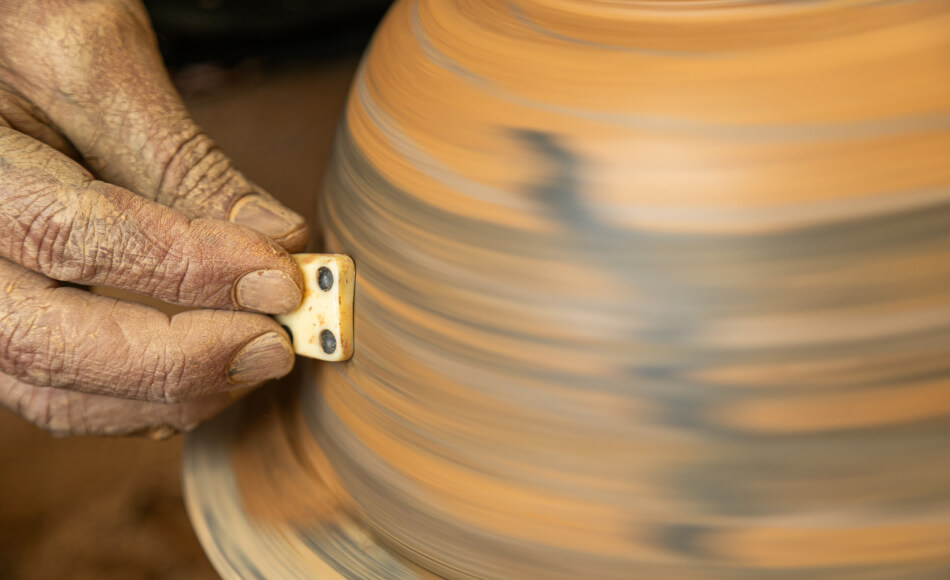
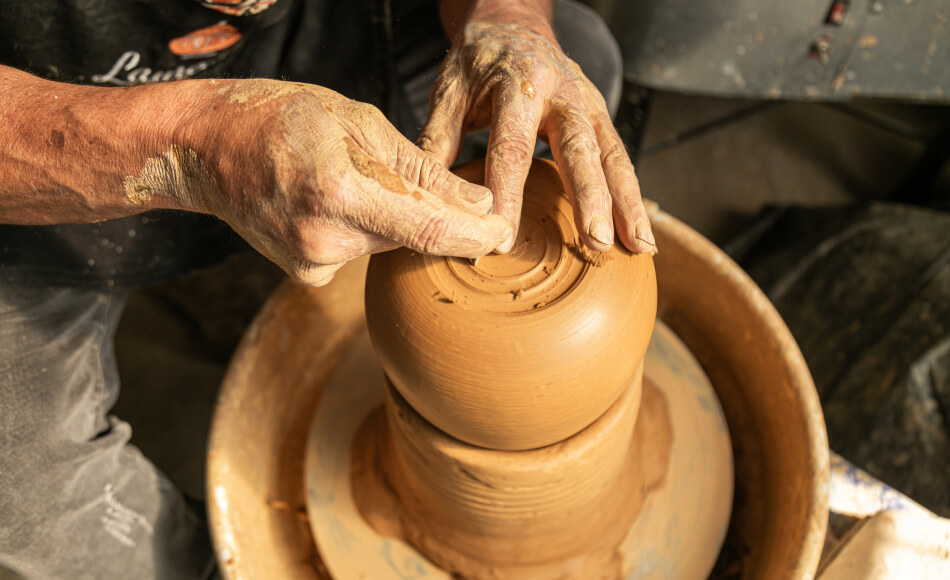
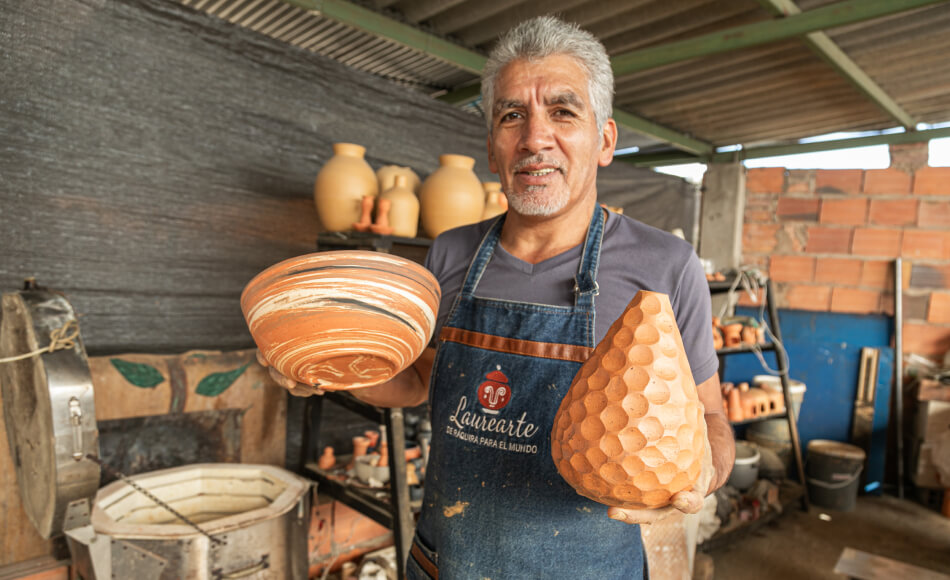
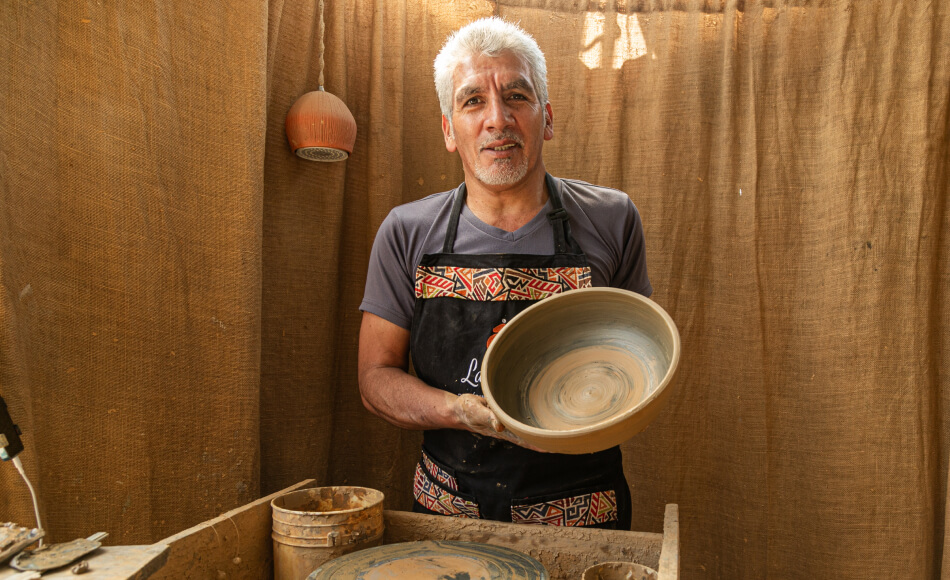
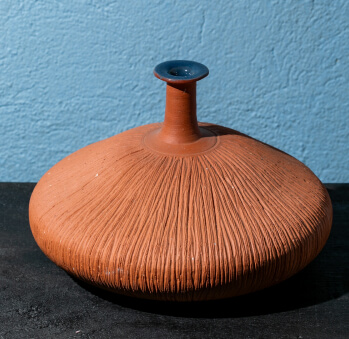
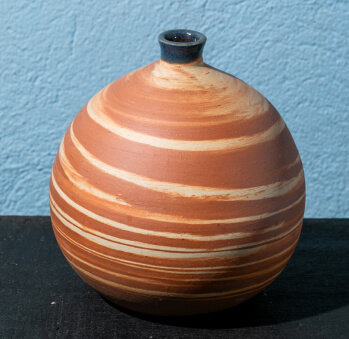
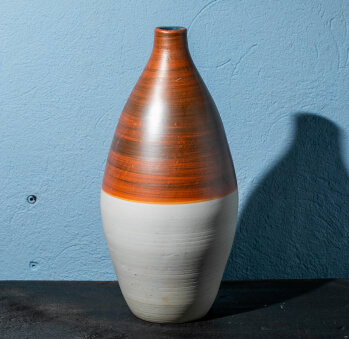
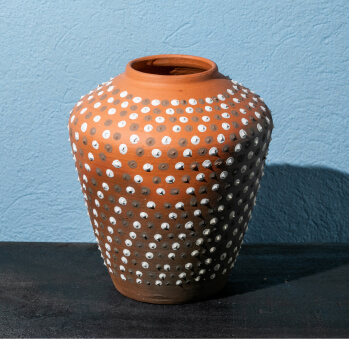
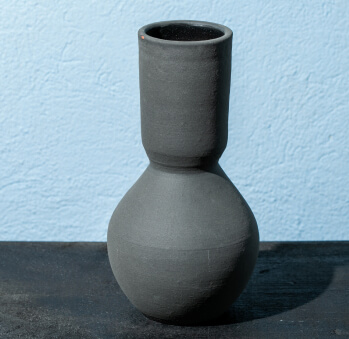
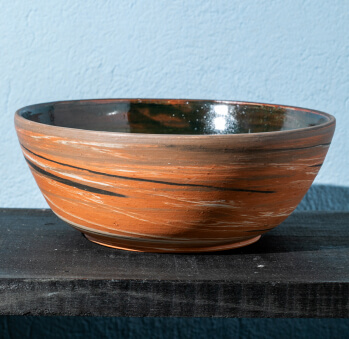
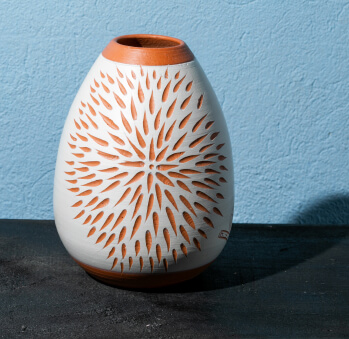
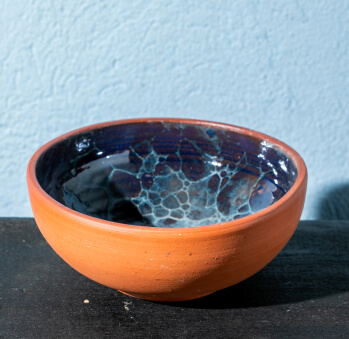
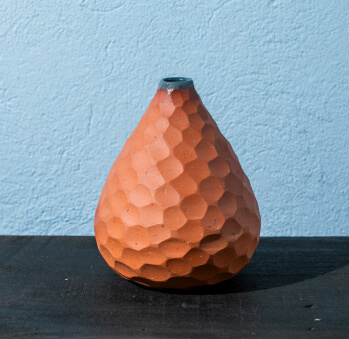
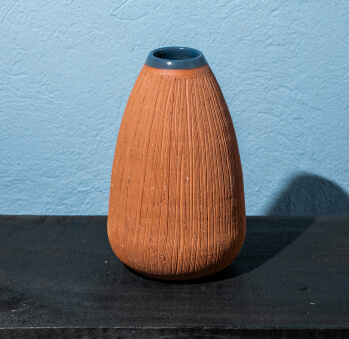
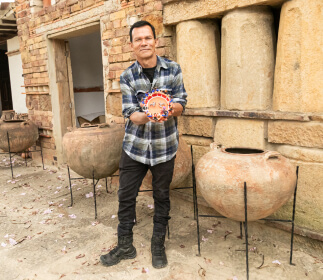
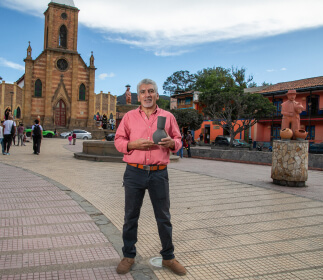
His meticulous and dedicated work has earned him the Contemporary Craftsmanship Mastery Medal. His skill in mixing clays and handling glazes fills him with pride. He shows off a magnificent solitary vase with an immense belly, an achievement that only the masters of pottery can make so thin without collapsing or sagging. He knows he has achieved this only after a deep breath, feeling that all this knowledge is owed to his mother.
Workshop and process
Craft
Artisans along the way
Artisans along the way



No puede copiar contenido de esta página