
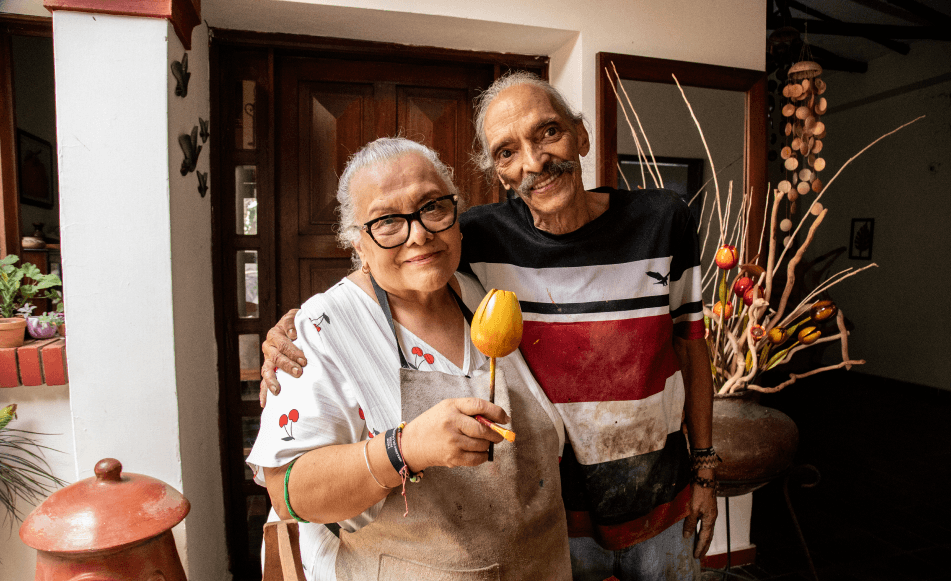
Luis Hernando Leiva
Workshop: Artesanías Pin
Craft: Woodwork
Trail: Huila Route
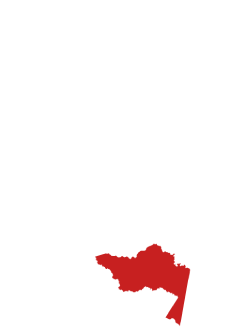
Location: Gigante, Huila
SCHEDULE YOUR VISIT
Cra 7 #2-64, Gigante
3118306470
luishleyva@gmail.com
@artesaniaspin
@p/Artesanias-Pin-100063466541728
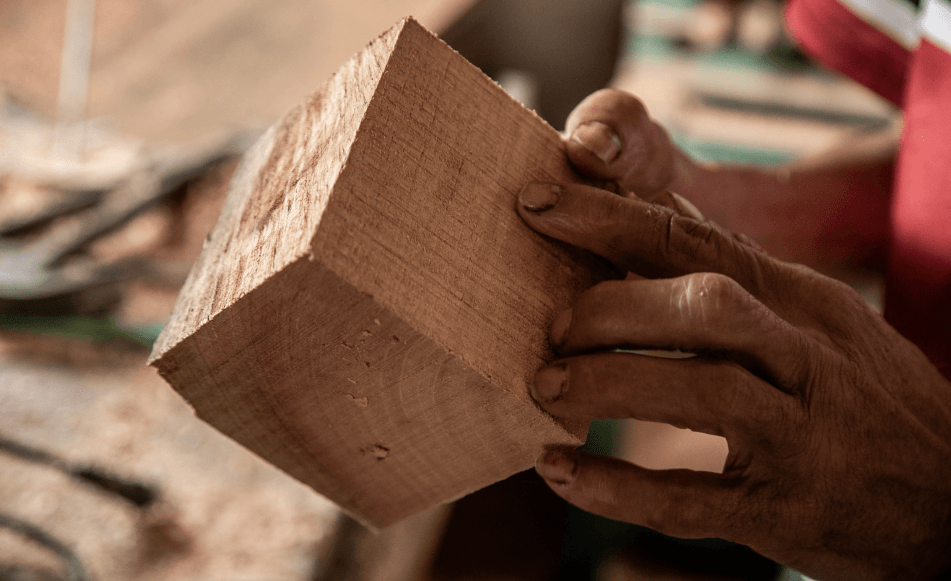
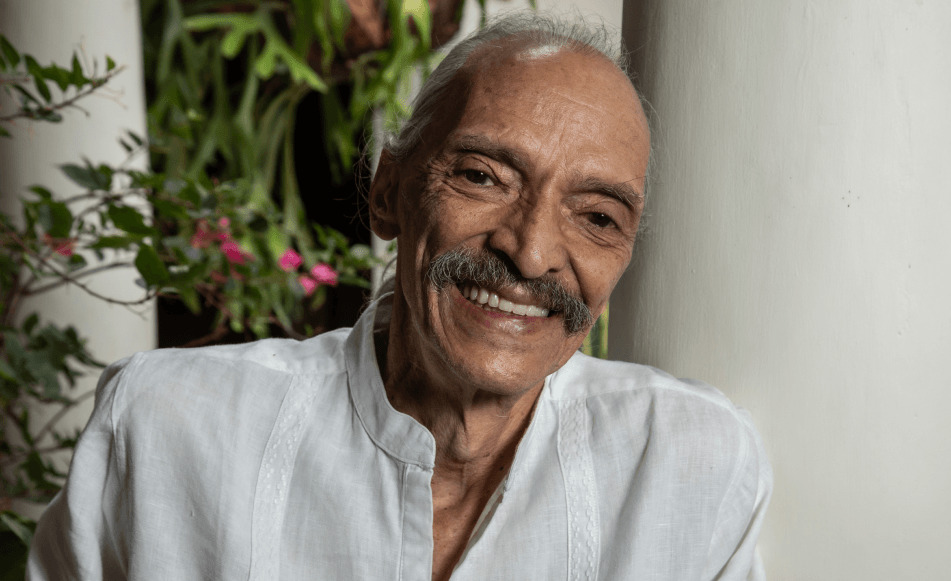
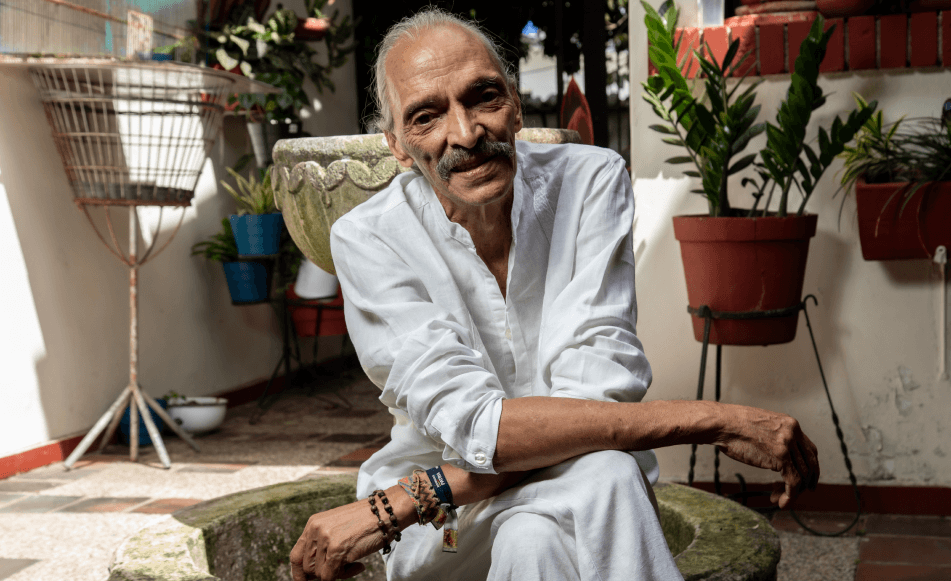
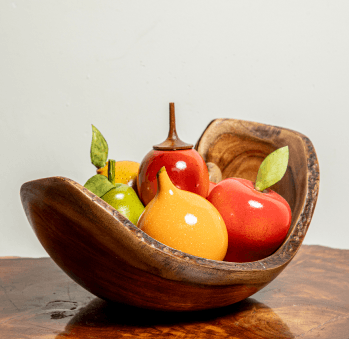
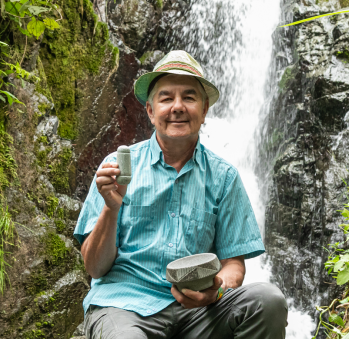
Everyone calls Luis Hernando Leiva “Pin,” and that is the name people use whenever a tree falls or a root is unearthed in the rural areas surrounding Gigante. They call him because they know he will transform that wood into beautiful objects, such as the countless carved fruits he made from the leftover pieces of the huesito wood columns removed during the restoration of San Antonio de Padua Church in his town, or the tables and turned wooden pieces he crafted from the trunks of iguá, pink cedar, dinde, matarratón, and raspayuco trees that were felled to make way for the new paved highway.
His story as an artisan is full of unusual moments. He tells us that he learned woodturning by listening to his teacher give him instructions over the telephone, and that although he later tried to teach one of his uncles how to use the lathe, his uncle’s wooden apples always came out square. That is why Pin knows this is not a craft for every pair of hands, though it took him years to understand that. Before devoting himself fully to the trade, he had a career in engineering, and the first material he worked with as an artisan was pauche wood. Pin traces the origin of his love for making things by hand back to his teenage years, when he helped his mother with her event decorating business. Together they took on every kind of project, making angels for Christmas, crosses for First Communion celebrations, and delivering flowers all over town. Of course, when he graduated from high school, he would have loved to study a design career, but at the time there was an unspoken expectation that successful students should choose careers such as engineering, law, or medicine. That decision still needed more time to mature within him. Besides, he was good at mathematics, so engineering seemed like the natural choice.
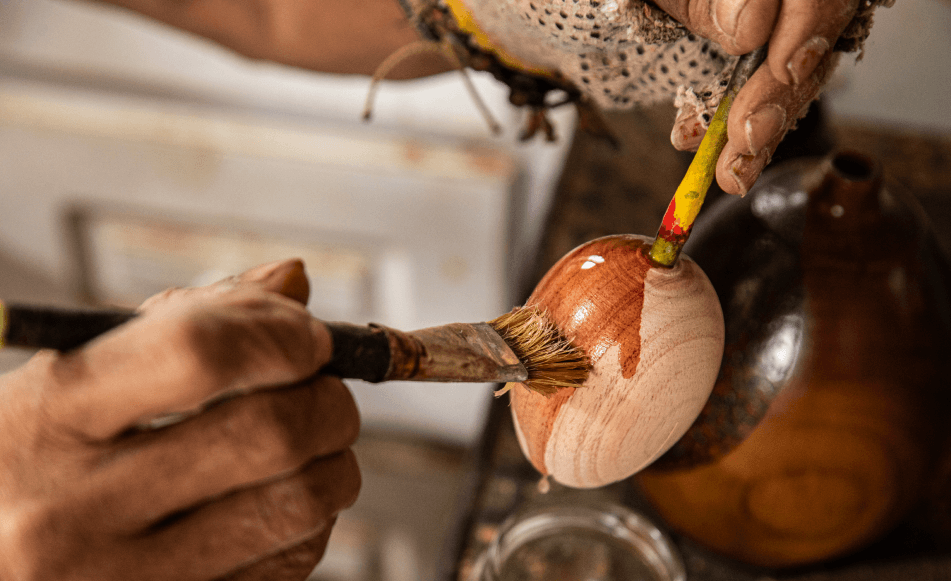
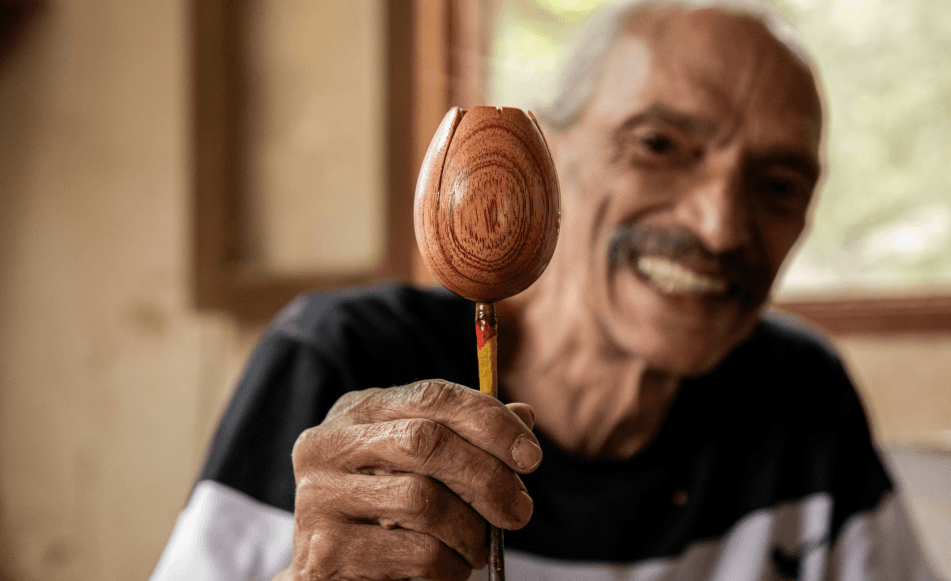
Life has curious ways of unfolding because, in the end, engineering was what brought him to Gigante to work on a road paving project. It was there that he met his wife, decided to stay, left engineering behind, and began carving tulips from pauche. This remarkably soft wood comes from the center of the branches of a tree that grows in the mountains and is often compared to Styrofoam because of its texture. It was also through pauche that he met his master, José Orlando Cortés. Pin had begun traveling to craft fairs to sell his carved flower bouquets when someone suggested that he stop painting them with vinyl paint because, they were right, the finish did not do them justice. They advised him to call an artisan from Neiva. He managed to get José Orlando’s phone number, called him, and immediately experienced his generosity. Without even knowing who Pin was, José Orlando shared his recipe for finishing the flowers. Thus began a friendship that would become fundamental to his craft. They would later travel together to fairs, and even set up a small room where the children of both families could nap during the long exhibition days they spent working side by side.
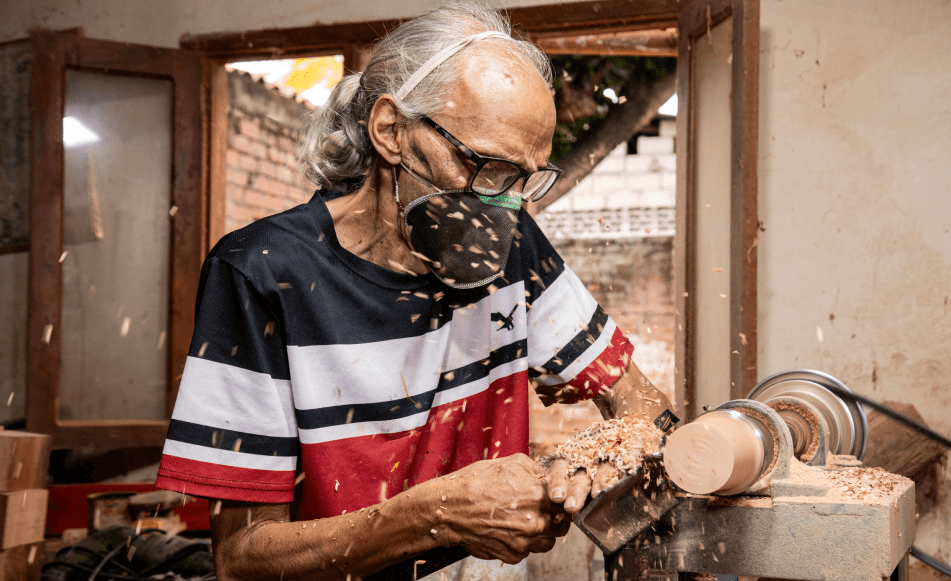
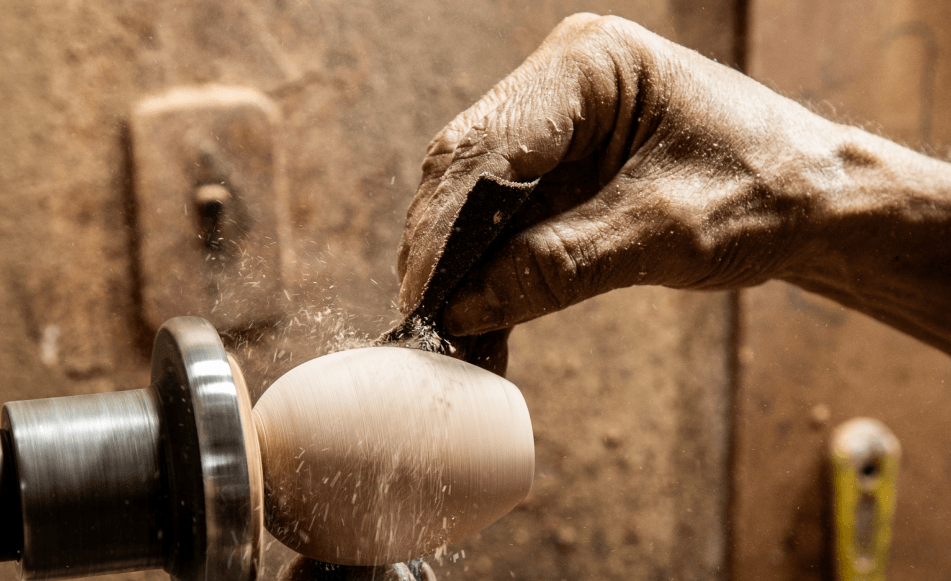
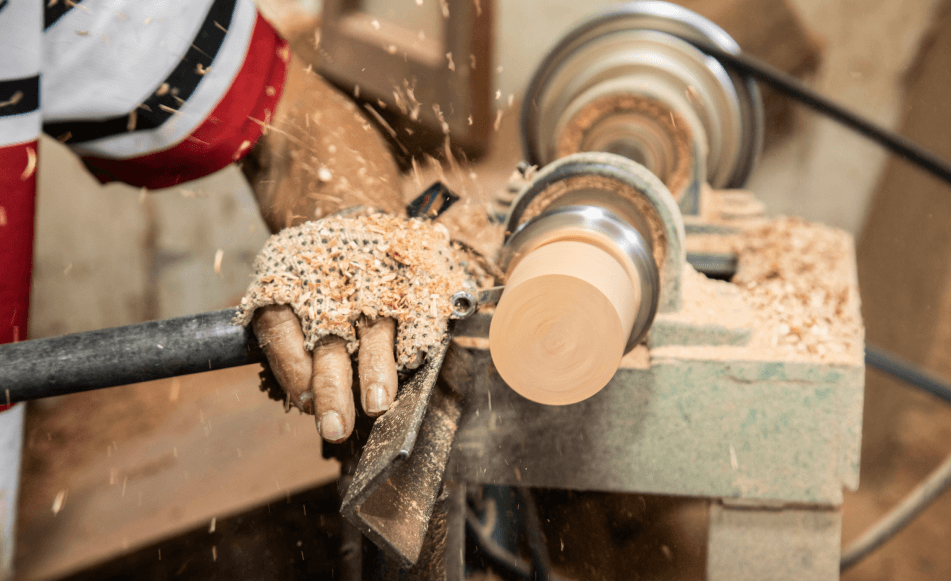
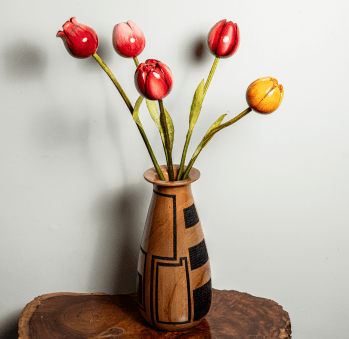
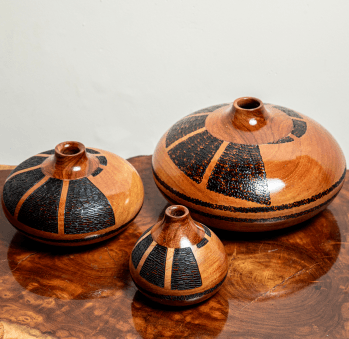
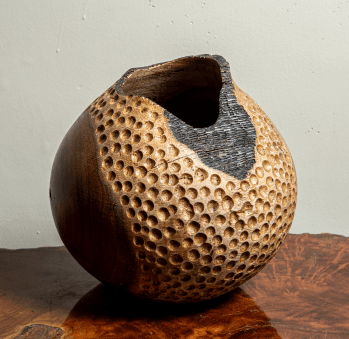
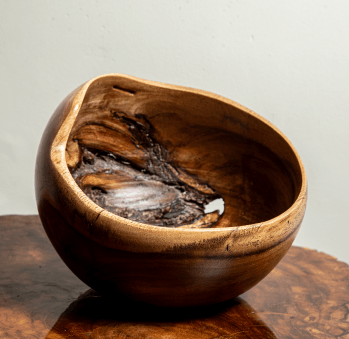
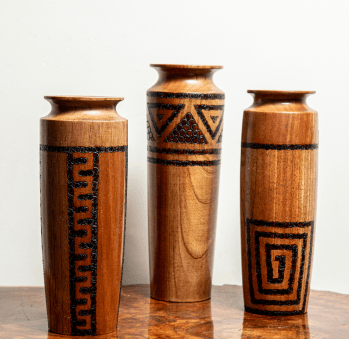
It was José Orlando who taught Pin how to turn wood more than fifteen years ago, giving him instructions solely by voice over the phone from Neiva. He also taught him how to build his own lathe. Pin had asked for his help after it became impossible to travel into the mountains to collect pauche, which had fallen under guerrilla control, forcing him to try something new. “How do I tighten the wood onto the lathe?” he would ask. “Listen to this noise the machine is making,” he would say, and his friend always knew exactly how to solve the problem. This new craft was slower, requiring at least one full day to turn a vase or bowl, and another day for a second turning after the wood had dried a little more. But Pin realized he had, quite literally, the right wood for the job, and he stayed with it, gradually equipping his workshop and earning the reputation he now enjoys throughout Gigante. He has also given back a little of the generosity he once received by training Rubén Mosquera, his apprentice, who still works as a woodturner today and was the only person willing to try out the very first lathe Pin built, the one with the noisy screws. Of course, he still makes the flowers that first welcomed him into the world of craftsmanship. The only difference is that wooden flowers weigh more than those made from pauche, so they require a wooden vase to support them—the perfect excuse to keep creating.
Workshop and process
Craft
Artisans along the way

Artisans along the way



No puede copiar contenido de esta página