
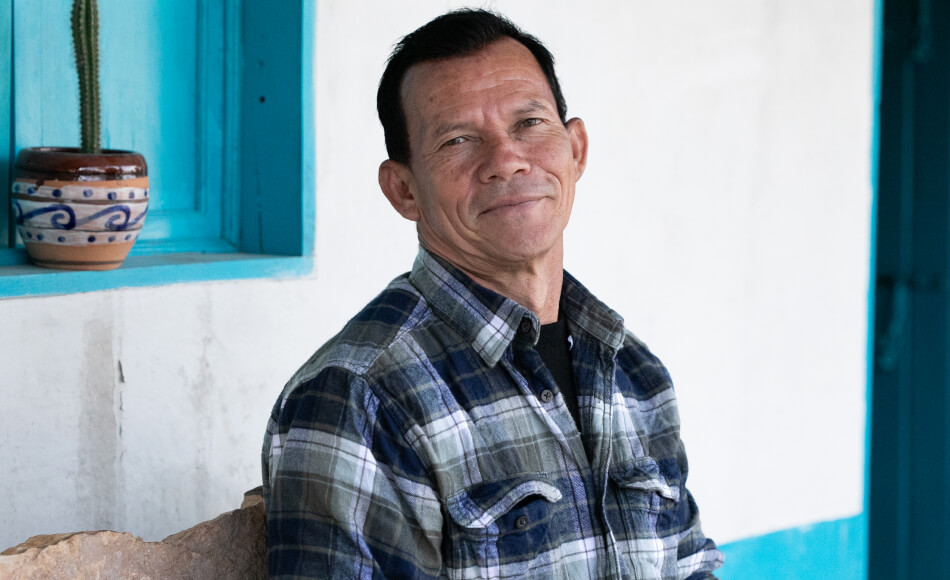
Saúl Valero
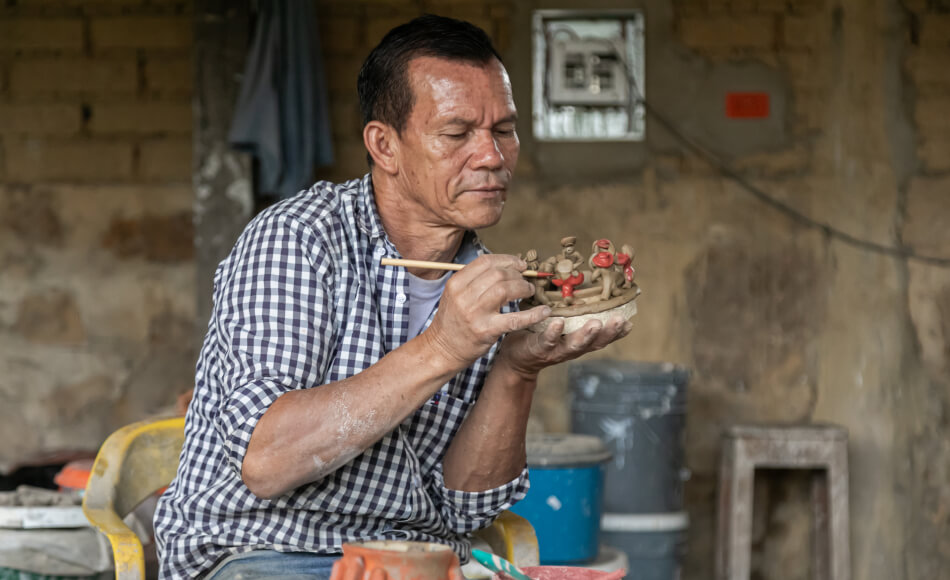
Workshop: Taller plaza de toros Saul Valero
Craft: Pottery and Ceramics
Trail: Ráquira - Chiquinquirá Route
Location: Ráquira, Boyacá
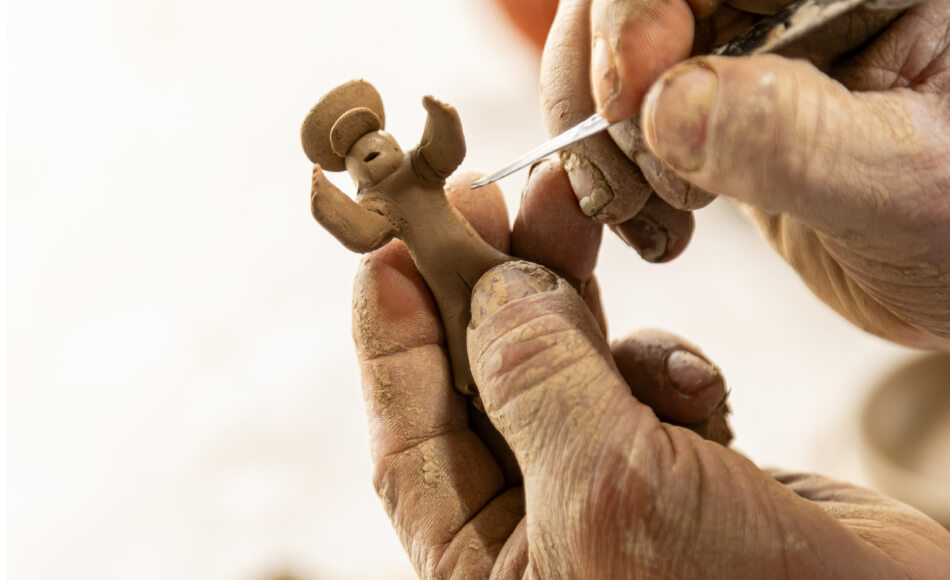
For Saúl, the craft began in childhood. Literally, because by the age of eight, his hands revealed a hidden talent. But before we get to that, we need to talk about his origins. His grandparents’ farm in Ollerías provided clay, and every handful was sold to support the family. So, when people saw him playing with the clay, it meant a scolding with a corn stalk—an experience he still remembers with nostalgia, as it left a mark on his skin. But when passion is in your blood, no scolding can stop it, so Saúl, on his way to school, noticed that his espadrilles were getting covered in clay. From there, he started taking the little bits of wet earth stuck to his soles and making small figures. His inspiration? The rural scenes of Ráquira that captivated him—cows, donkeys, roosters, and hens pecking at corn…
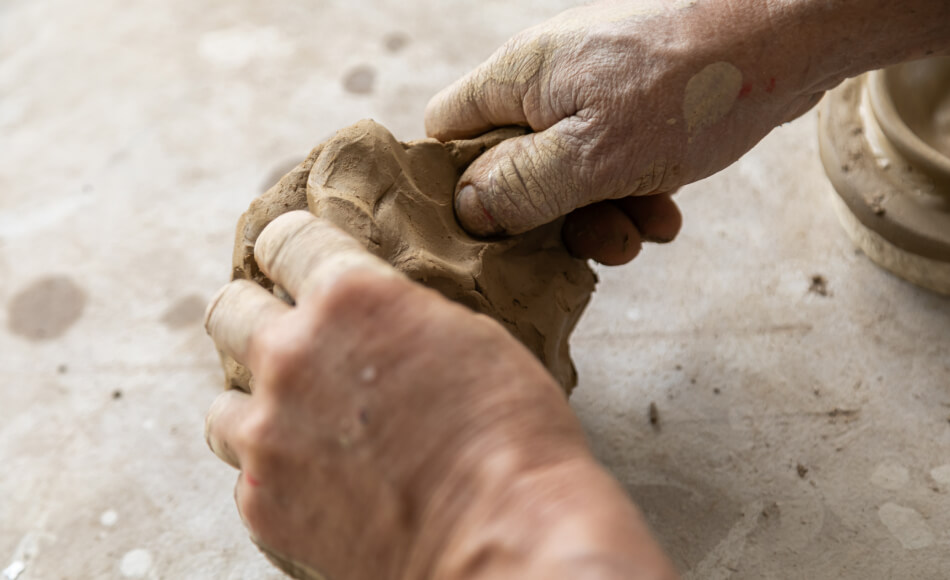
He could spend hours watching his grandfather Pablo Emilio’s bulls, observing their heavy movements and how they charged at anyone who bothered them. He also recalls the day a young bull was born and how all he wanted was to pet its furry little head. But Don Pablo scolded him, warning that touching it like that would “make it aggressive.” Saúl, however, turned the bull’s fierce headbutt into an example of the plasticity he would apply to his clay pieces. Remarkably, it all came from intuition, and he proudly calls himself an empirical artist. Today, when he talks about his childhood, he is filled with gratitude for everything he experienced. He knows it was tough—preparing the clay for molding was an exhausting task. He would watch his grandmother Magdalena spread out a plastic sheet or blanket, use a hoe to extract clay from the mine, then spread it out, beat it with a stick, chop it with the hoe, spread it again, and repeat the process, but this time with her feet, much like stomping grapes for wine. Just describing it shows how laborious it was; there was no way to waste it. And that explains the stern character of his grandparents—despite working with a material as soft as clay, they had no softness themselves, only exhaustion and necessity behind their craft.
Saúl, however, looked beyond duty. He couldn’t help but capture the images he observed with such attention and curiosity. To avoid being scolded, he would leave his little creations drying on a railing overlooking the farm’s access road. He was surprised when a man began to collect and admire the figurines, eventually seeking out their creator. A creator who turned out to be a child. The man, an accomplice, encouraged him to keep adding pieces to the pole until one day he mentioned a local craft competition and wanted to enter his figurines. Saúl was only concerned about the punishment… but he agreed and submitted his work to the scrutiny of other local artisans, who mocked his childish boldness. Yet, the justice of creativity rewarded him, and that’s how his career began. Not without first having to navigate producing his art without his grandparents catching him idling…
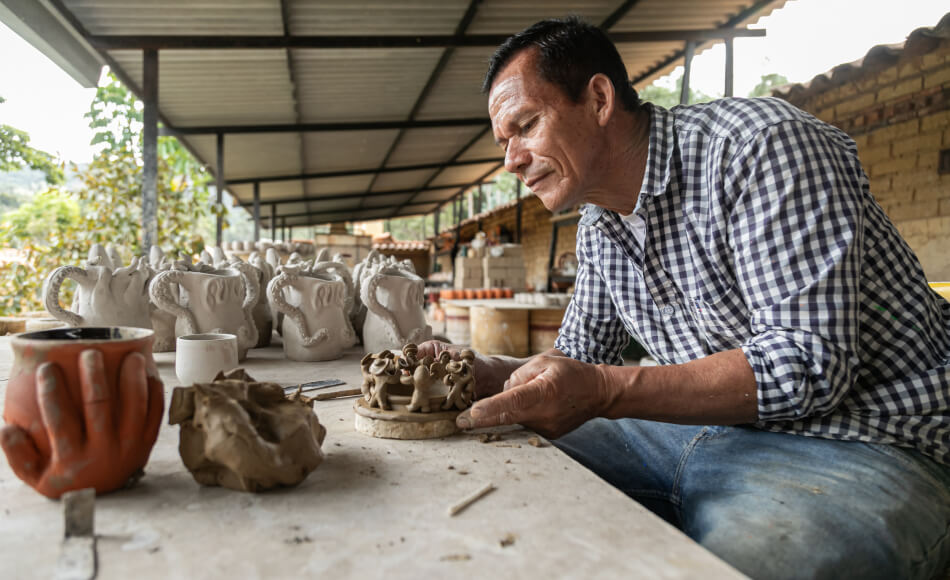
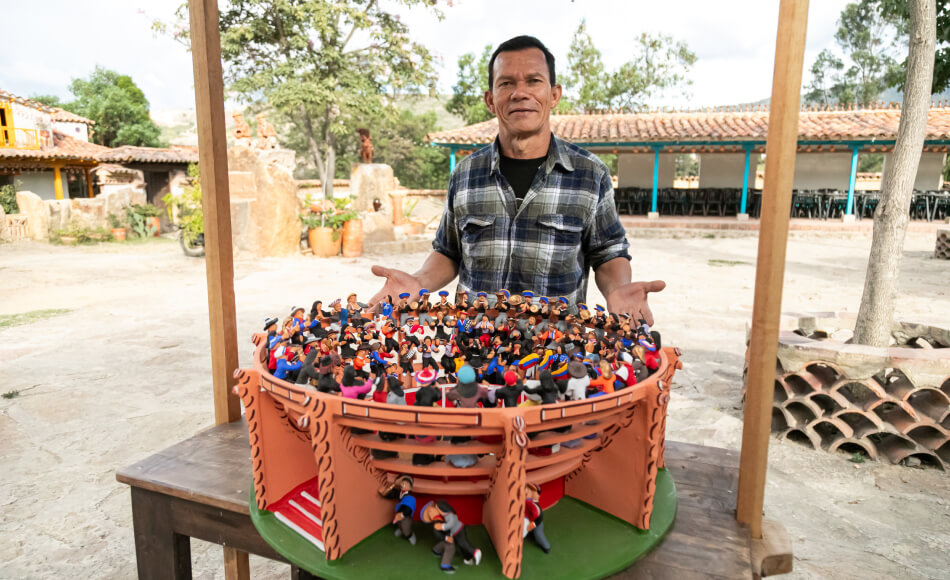
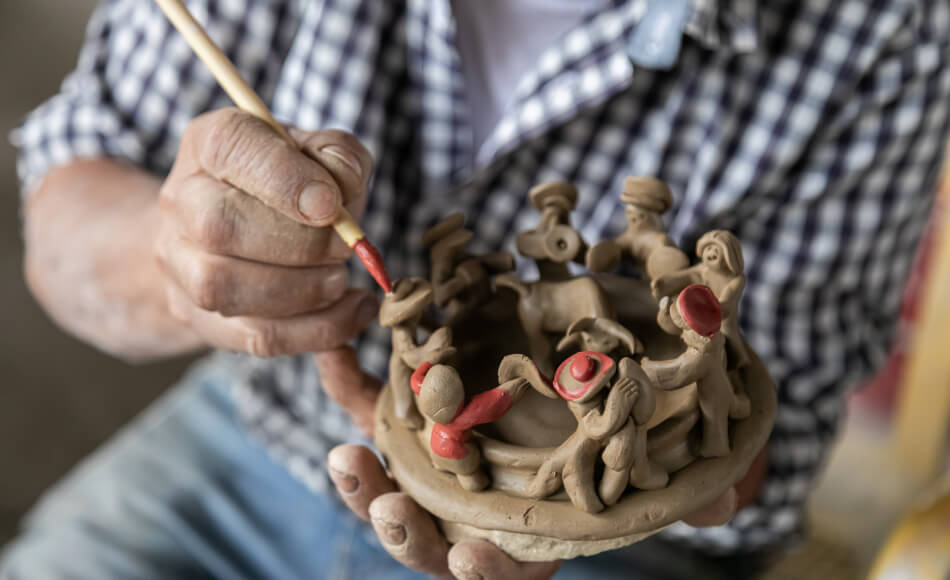
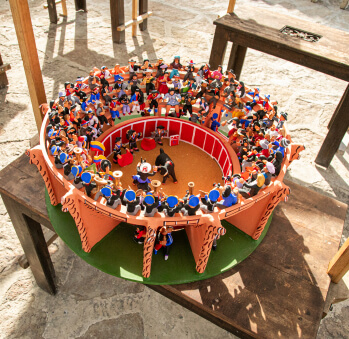
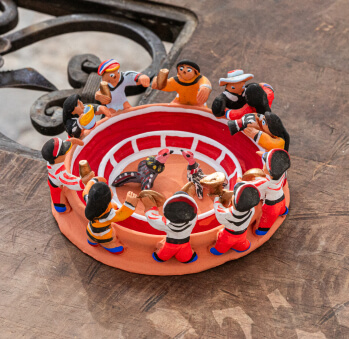
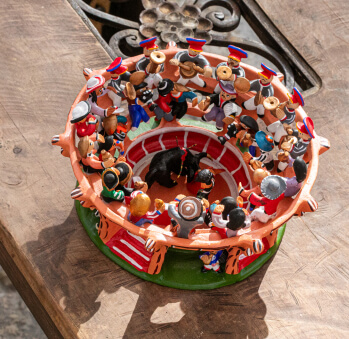
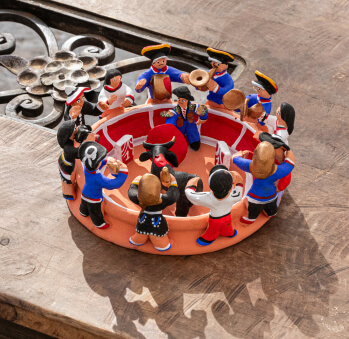
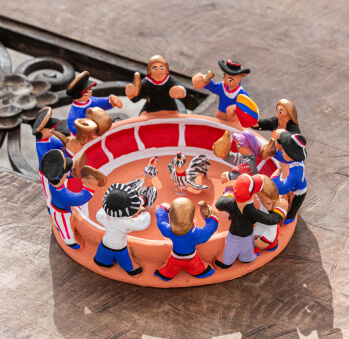
He had to hide a lot to practice enough and become the master he is today. His figures evolved from a curiosity to an icon of Ráquira. The donkey carrying pots, a piece now decorating the town’s main square, was once a vision he had and brought to life, creating an identity. Similarly, his bullfighting scenes, where everything happens—besides the bullfight, there’s a drunken man urinating around or a couple of lovebirds sharing kisses—reflect his mischievous gaze and words. He says, as if anyone would doubt it, that he has never been to a bullfight; everything he creates is from his imagination, inspired by the rural images he cherishes. This has allowed him to elevate his town and represent it on many global stages as the Master he has become. As he recounts his journey, he can’t help but swallow hard, and sometimes a tear slips out, remembering how he dared to break the cycle of poverty from his ancestors and, with his hands, envisioned a different path for his family. And indeed, he succeeded.
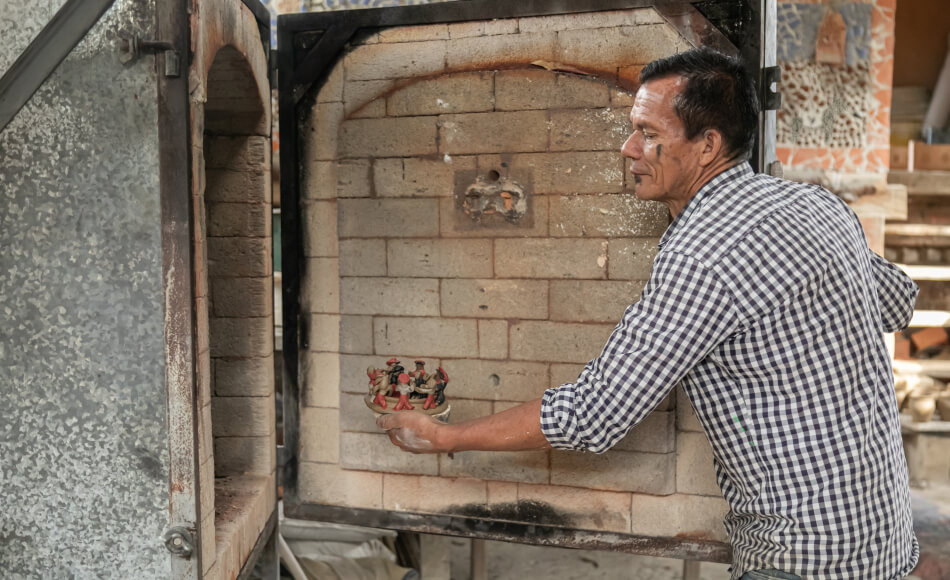
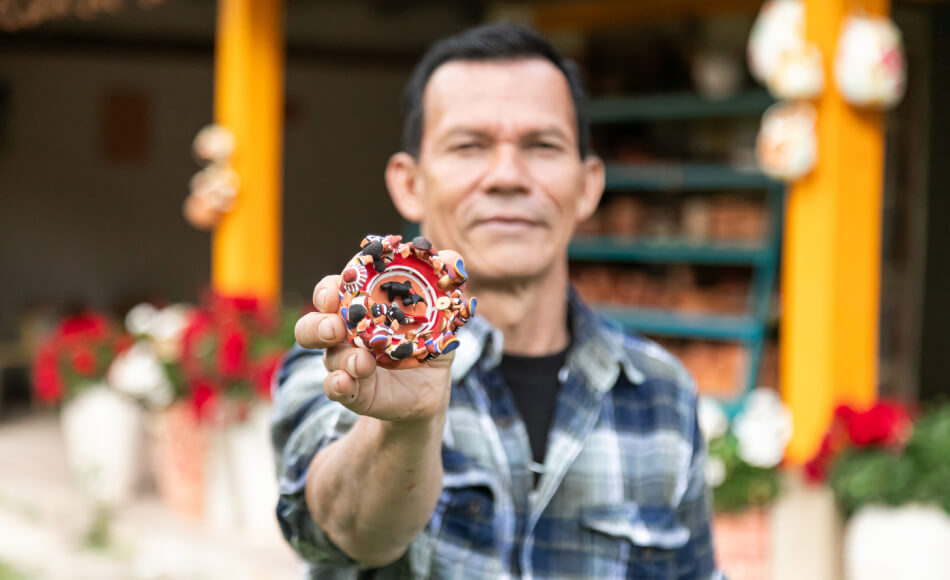
Workshop and process
Craft
Artisans along the way
Artisans along the way



No puede copiar contenido de esta página