
































Ángela Pérez
Workshop: Guarnielería La Corinta
Craft: Leatherwork
Trail: Antioquia Route
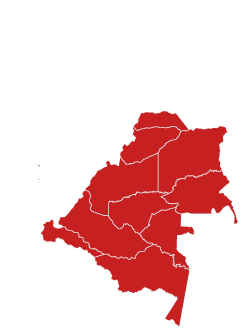
Location: San Pedro de los Milagros, Antioquia
SCHEDULE YOUR VISIT
Calle 52 # 49b - 48, Barrio El Hoyito, tercer piso.
3104248194
angelacorinta@hotmail.com
@lacorintacarrieles
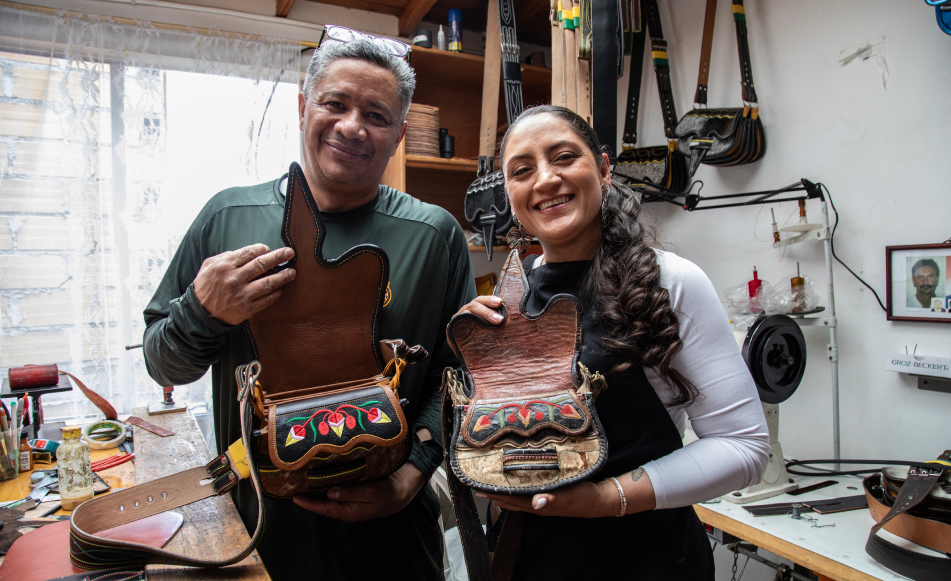
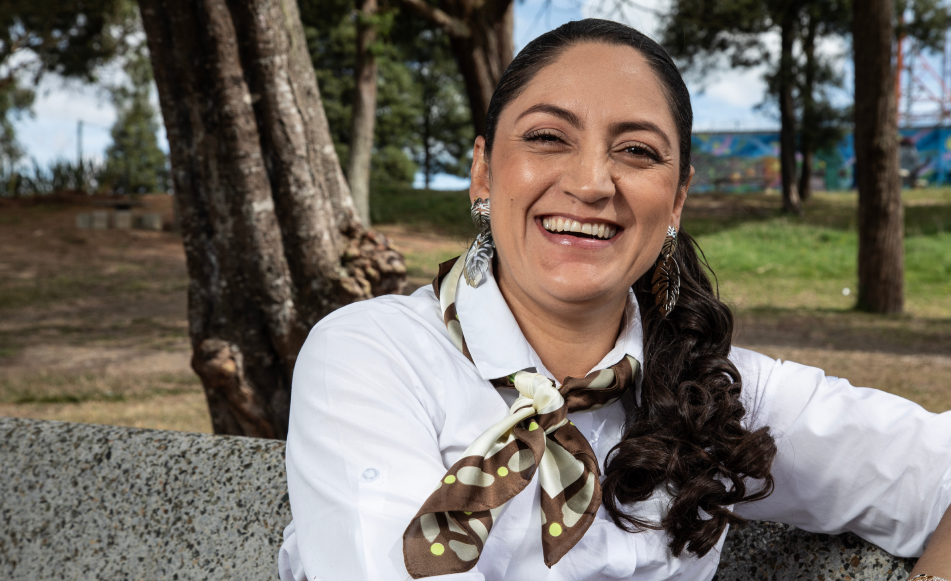
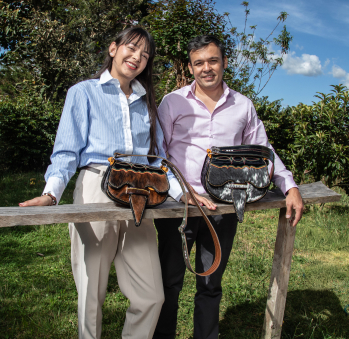
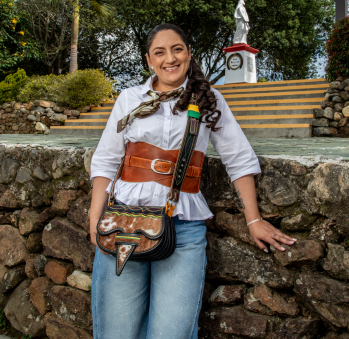
Spending time with Ángela Pérez is a delight. Before long, you find yourself laughing alongside her, carried away by her infectious sense of humor and boundless enthusiasm. She is a passionate ambassador for her hometown of San Pedro de los Milagros, proudly celebrating its rolling landscapes, its deep religious traditions, its cattle-ranching heritage, its people, and, above all, its craftsmanship. Ángela is one of the first women in the town to dedicate herself to making guarnieles—the traditional leather satchels known as carrieles—and she has embraced the mission of reviving the distinctive San Pedreño carriel, once an emblem of the municipality and now experiencing a remarkable resurgence thanks to the determination of local authorities. Curiously, the artisan who first rescued this forgotten tradition was not from San Pedro at all, but from Jericó: the renowned leatherworker Rubén Agudelo. Ángela thanks him openly, convinced that without his guidance they would not be where they are today.
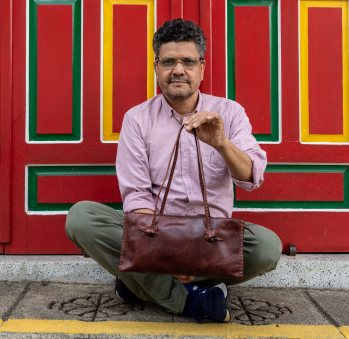
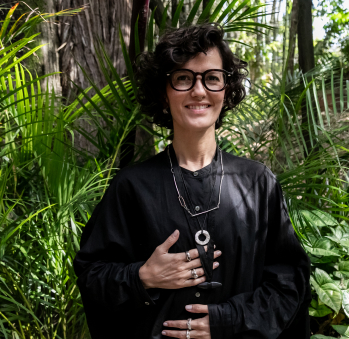
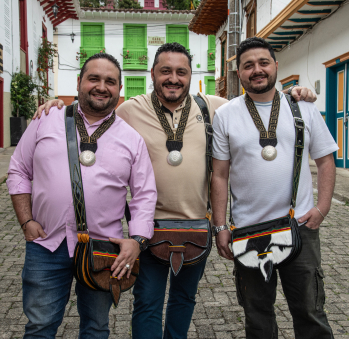
The revival of the San Pedreño carriel, however, is no miracle—even in a town famous for miracles. Rather, it forms part of a broader movement that led to the declaration of the Antioquian carriel as National Cultural Heritage in 2021. That initiative was spearheaded by Rubén Agudelo’s nephews—Santiago, Juan Sebastián, and Saulo Agudelo—lawyers and artisans who painstakingly gathered historical documentation and codified the traditional methods of crafting this deeply rooted regional object. Their work also secured a Designation of Origin in 2025, helping safeguard this important cultural tradition. In that context, it was only a matter of time before the San Pedreño carriel itself attracted renewed attention.
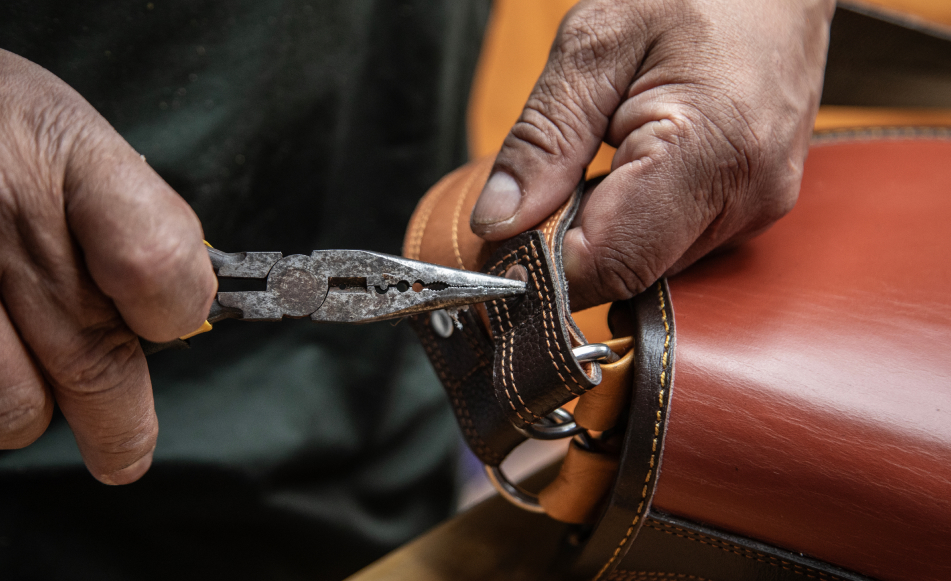
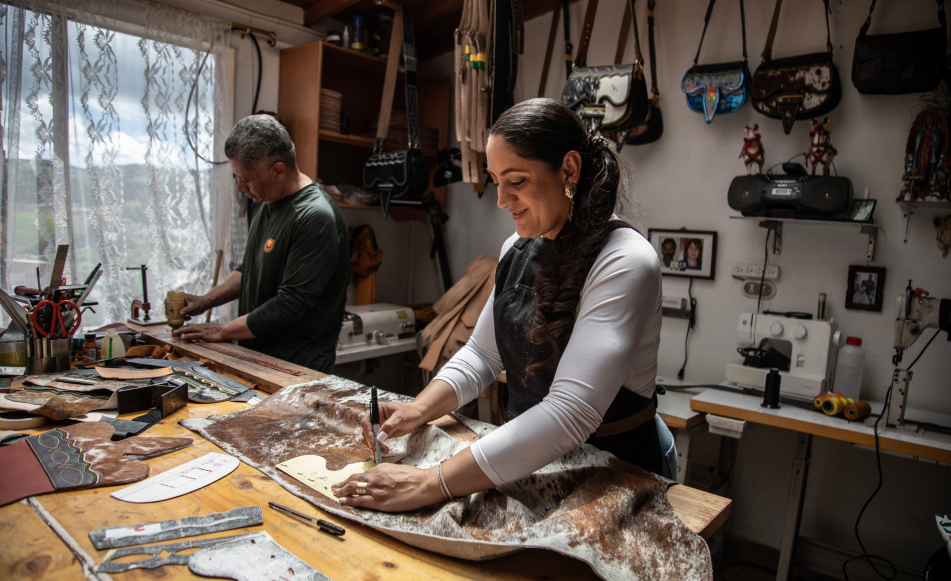
Ángela knows she is living through a unique moment. She recognizes that she is in the right place at the right time. Not only did she learn directly from Rubén Agudelo when he came to San Pedro to present his research on the local style of carriel, but she also rediscovered among her family’s belongings the satchel that had belonged to her great-grandfather. Made from otter hide, it has lost much of its original leather after nearly two centuries, yet it remains her greatest source of inspiration and the object that encouraged her to devote herself fully to this craft. Her journey into leatherworking began in 2013, when SENA offered leathercraft courses in the town. She initially earned her living making belts, handbags, and wallets, but everything changed when she realized she could dedicate herself to reviving an object so closely tied to her own community’s identity.
Historical records indicate that the oldest documented San Pedreño carrieles date back to the mid-nineteenth century. Her great-grandfather Milagros’s satchel is believed to be around 170 years old. For generations, only one family—the Piedrahitas—preserved the tradition in the town. The last master artisan among them, Luis Piedrahita, passed away several years ago. One of his assistants, Luis Alfonso Muñoz, who is now nearly a hundred years old, continued making the bags until 2008. After that, the chain of transmission was broken.
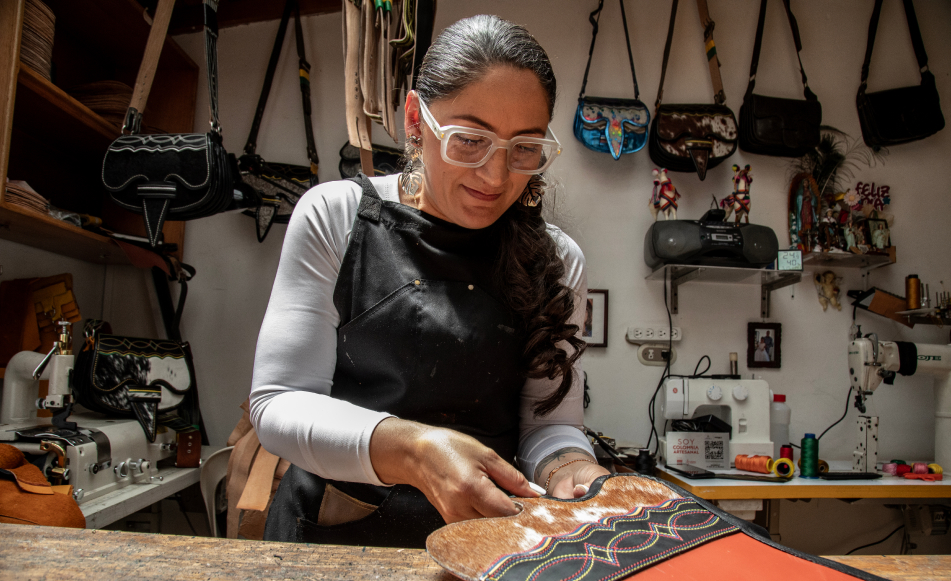
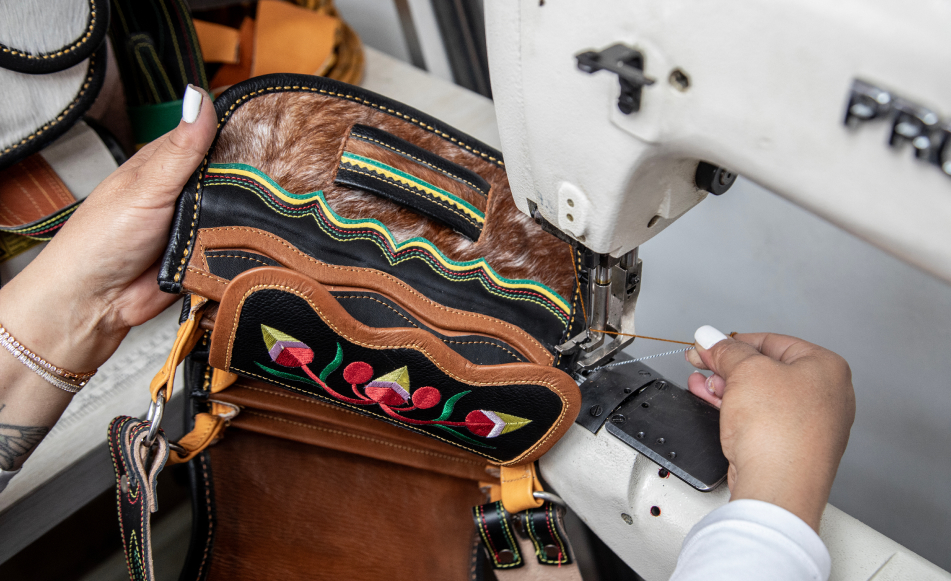
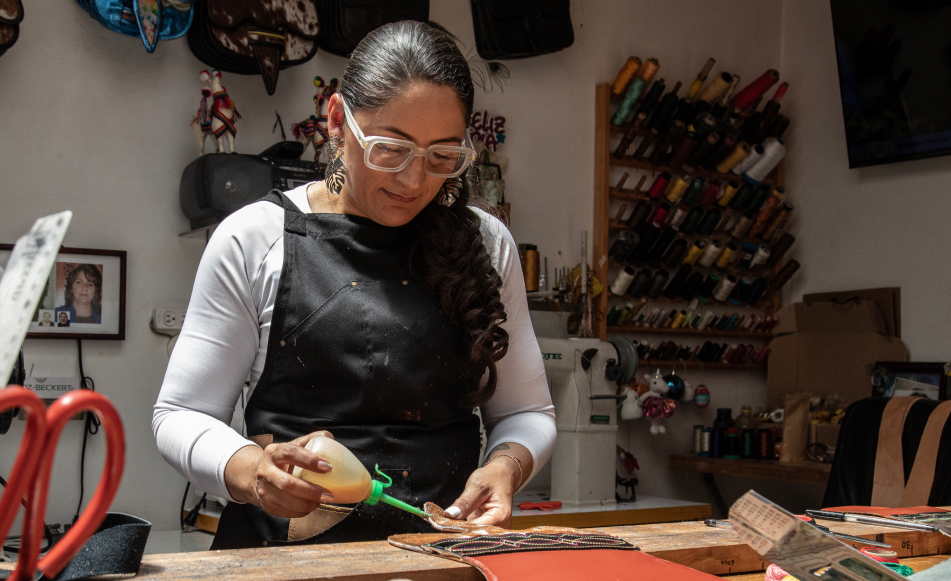
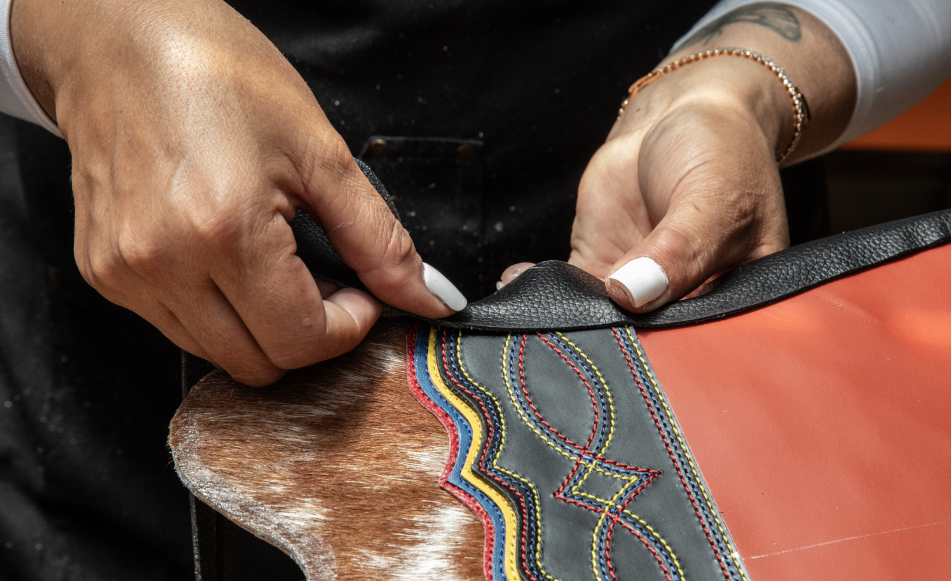
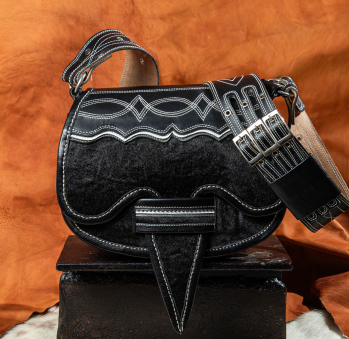
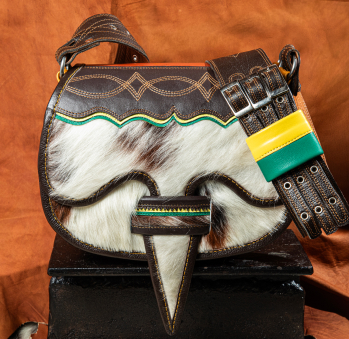
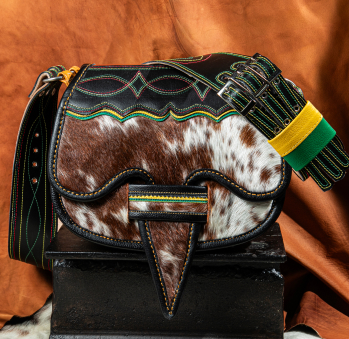
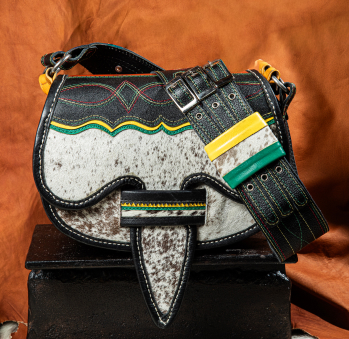
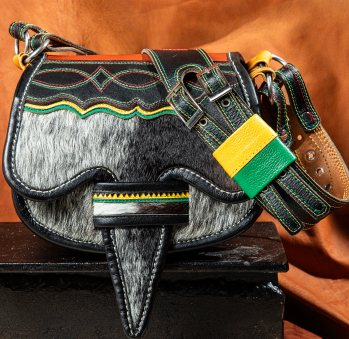
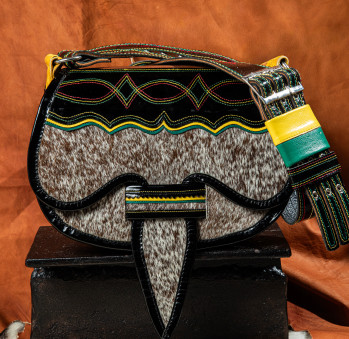
What distinguishes the San Pedreño carriel is its softer, more rounded silhouette compared to the Jericó version, as well as the embroidered floral or fruit motif decorating the opening compartment, known locally as the mora. Despite having little direct instruction about its construction, Ángela carefully studied her great-grandfather’s bag. Armed with paper and pencil, she traced every measurement and every decorative detail until she recreated its pattern. Her joy was immense when Rubén Agudelo himself approved her reconstruction. That first carriel later earned municipal recognition, and today it hangs proudly in her workshop alongside the awards it received.
She hopes to become another cultural reference for San Pedro de los Milagros, a town whose very name celebrates miracles. Originally called San Pedro de Guamurú, it became an important pilgrimage site after local legend told of traveling merchants whose statue of Christ suddenly became so heavy that they could no longer carry it through the surrounding mountains. Believing the place had been divinely chosen, the community built a sanctuary for the Señor de los Milagros, now visited each year by countless pilgrims seeking healing, especially during the annual celebration held from April 24 to May 3.
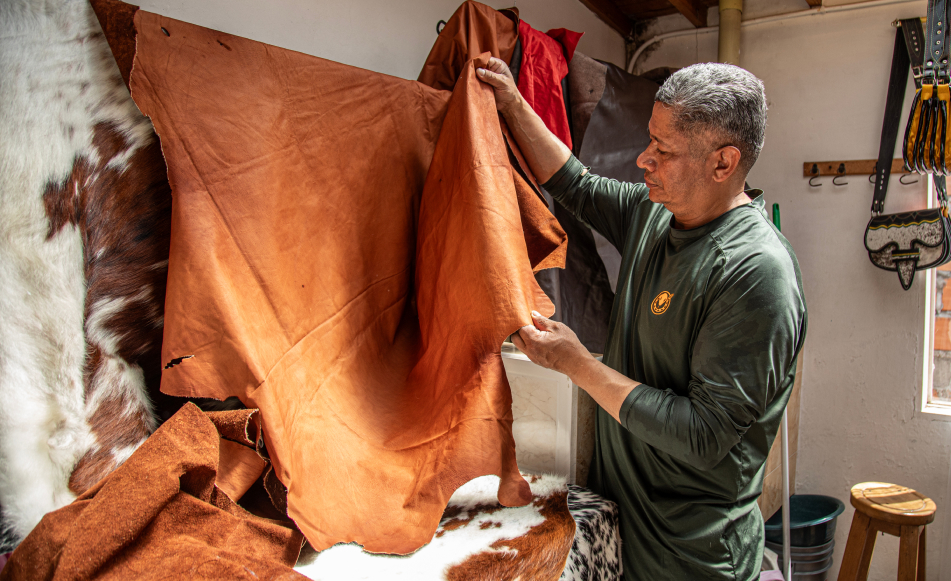
Ángela knows she possesses everything she needs to become a master artisan. She also knows that, despite the promising beginning of her career and the recognition she has already received, she still has much to learn before reaching the mastery of the Agudelo family, whose generations have devoted themselves to leatherwork. Even so, her path is a promising one. That progress has been made possible through her unwavering commitment to the craft and through the support of her husband, Orlando, who first encouraged her to pursue the best possible training and now works beside her in the workshop, happily taking instruction from his wife as they build their future together. It is, in its own way, a miracle well worth discovering.
Workshop and process
Craft
Artisans along the way



Artisans along the way



No puede copiar contenido de esta página