
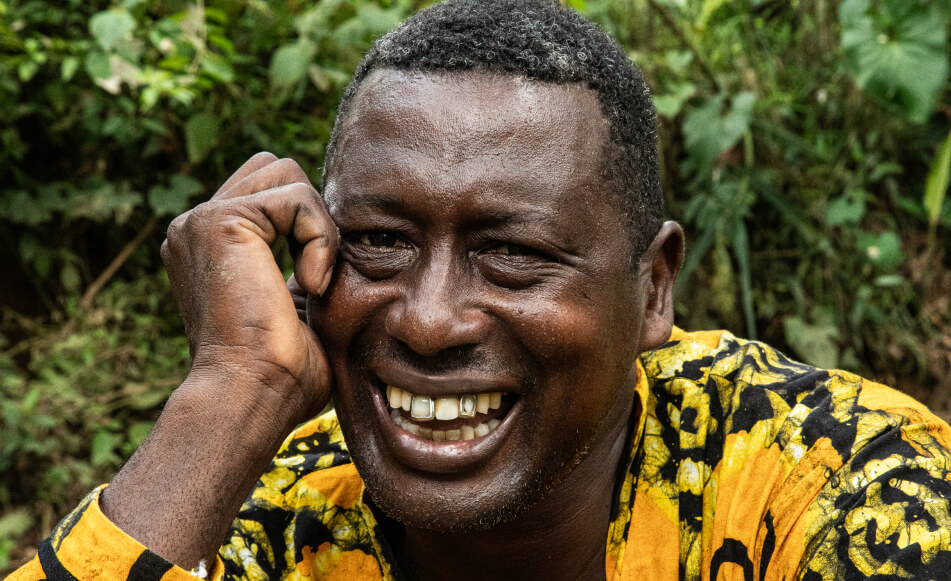
Bayron Asprilla
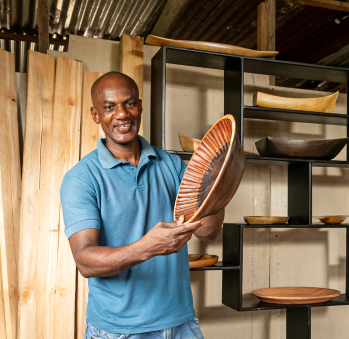
Workshop: Artes Bayron
Craft: Woodwork
Trail: Choco Route
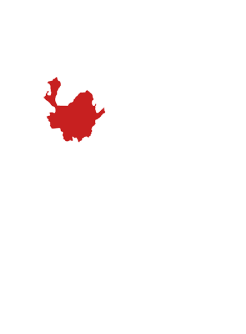
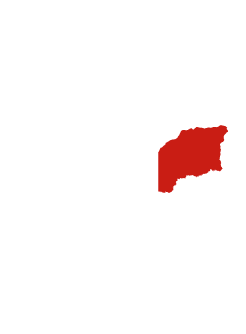
Location: Istmina, Chocó
SCHEDULE YOUR VISIT
Barrio Independencia Valdés Calle 2 #2-32. Frente a la Terminal.
3148636777
artesbayron@hotmail.com
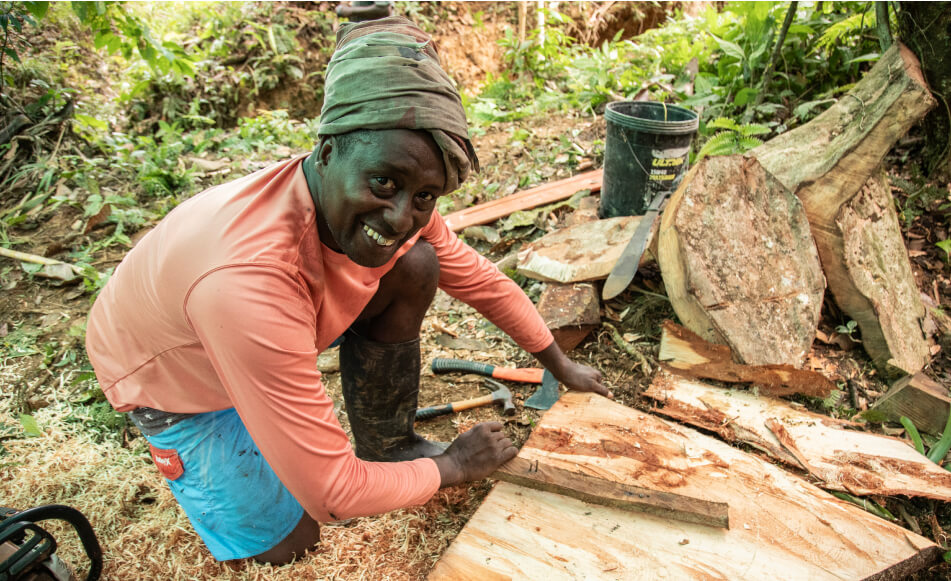
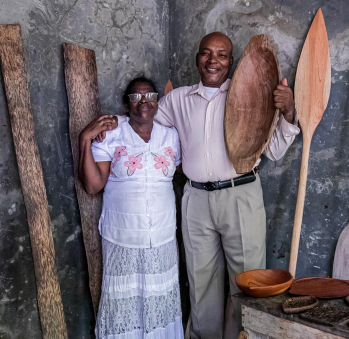
For Bayron Asprilla, it all began with a disappointment: how hard he found the world of artisanal mining. He had been immersed in it since birth—his family tells him that as soon as his mother finished her postpartum recovery, she took him along, cradle and all, to accompany her in the mines of their hometown, Istmina. But by the age of thirteen, Bayron had grown tired of how difficult it was to extract gold and all the effort it took to sell it at a fair price. So he made a declaration: “Mom, Dad, I’m not going back to the mine—find me something else to do.”
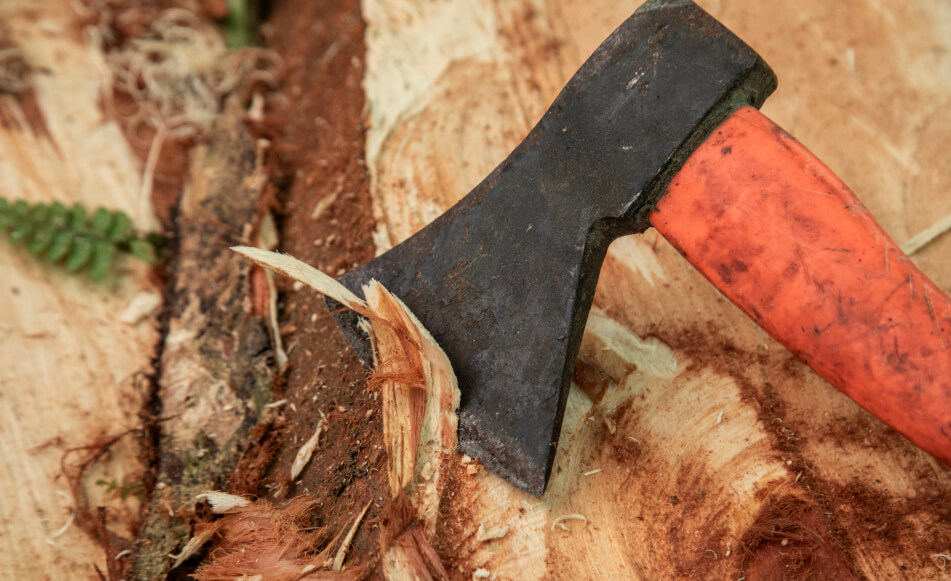
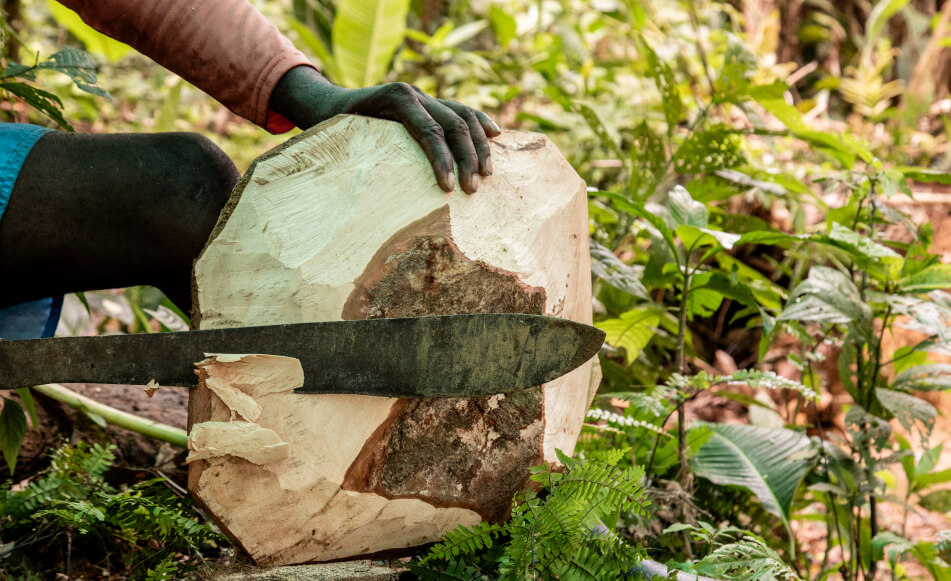
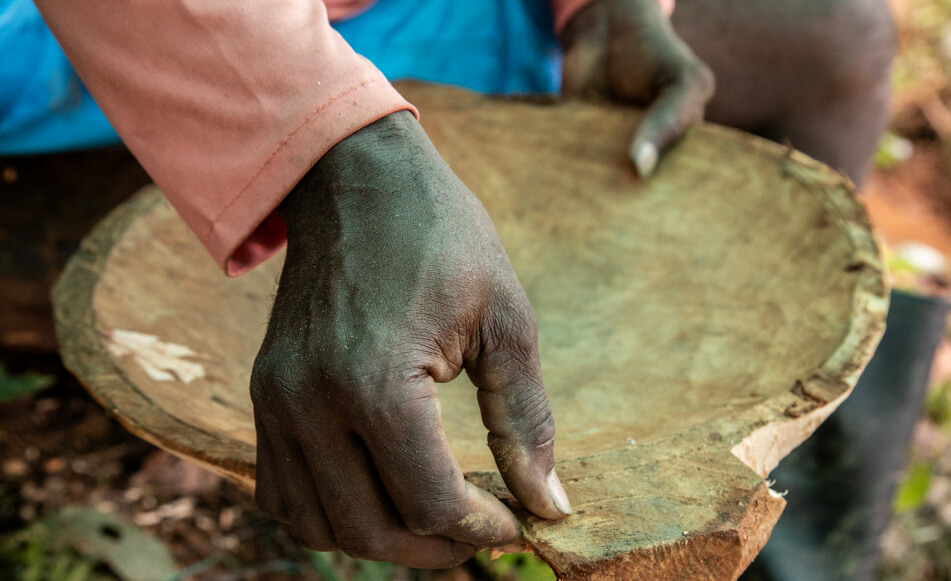
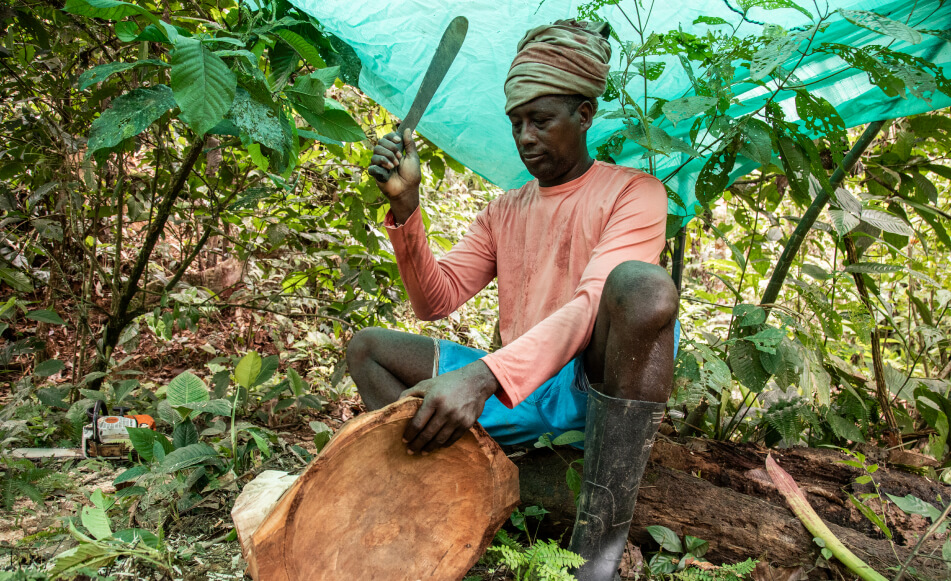
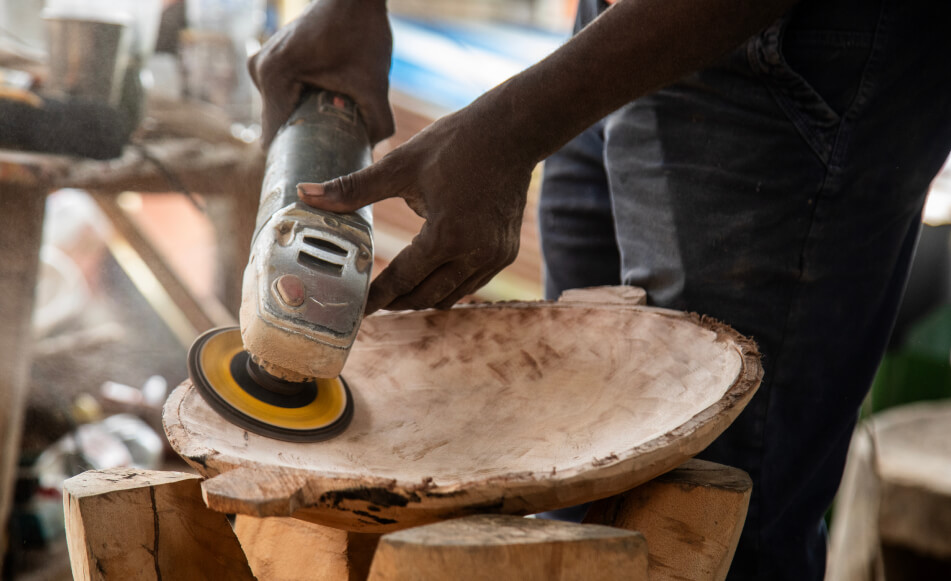
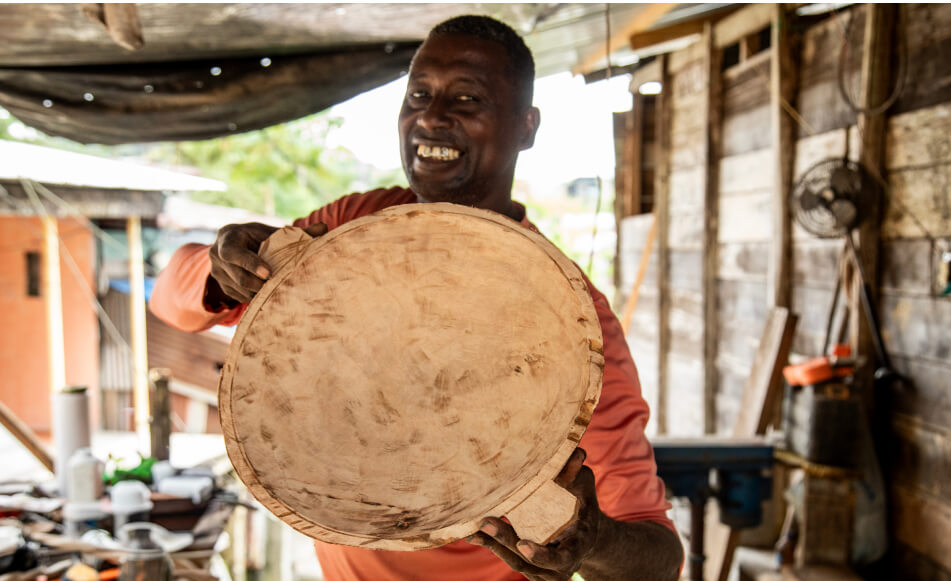
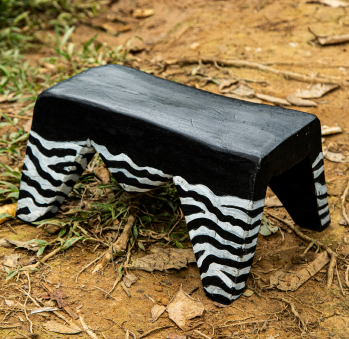
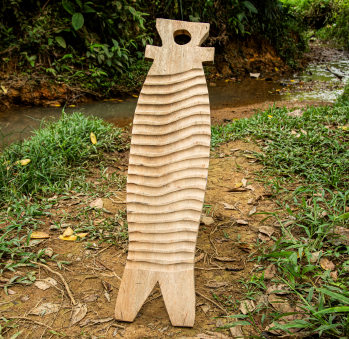
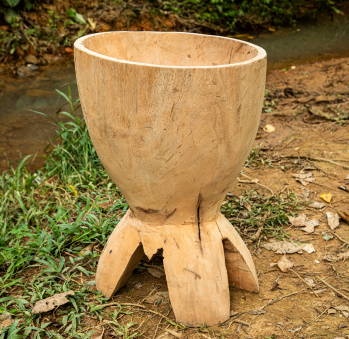
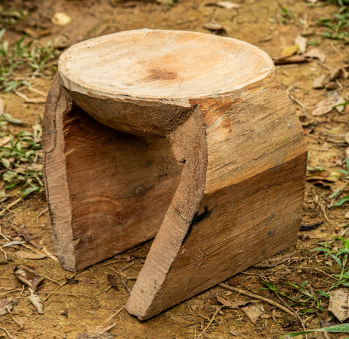
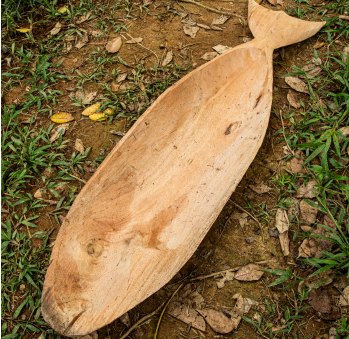
Of course, there were plenty of other things to do: making bateas (gold pans) and horn-shaped tools for gold extraction, macanas, paddles, benches to keep from getting soaked while traveling by canoe—and even the canoes themselves. All of that became his work after turning his back on the family trade. And since he was already being rebellious, they put him to work not just making tools for his parents, but for neighbors too. If anyone in town needed help carving a canoe, Bayron was sent off to “put in the work.”
What he learned out of sheer defiance, he later refined at the school where he completed his secondary education, rotating through workshops in carpentry, construction, tailoring, and dressmaking. By then, he also knew how to make chopping boards and hollow out logs to create pilones. At the same time that he was honing his woodworking skills, Bayron nurtured another dream: becoming a footballer. But he fractured his tibia and fibula around the same time his first child was born—a pivotal moment that forced him to decide what path to follow.
Craftsmanship had already begun to call to him, and by chance, two men arrived in town who made baskets from fern and vine—materials Bayron knew how to find deep in the forest. He asked and asked them to teach him, and although they weren’t entirely generous with their knowledge—holding back parts of the process—he didn’t give up. When he looks back on those years, he’s convinced that “when you really want something, you achieve it—and that achievement can only bring joy. So you don’t just make one basket, you make a million.” He still recalls, with the same excitement, the day he earned his first 17,000 pesos through his craft and realized he had found his calling. It was 1987.
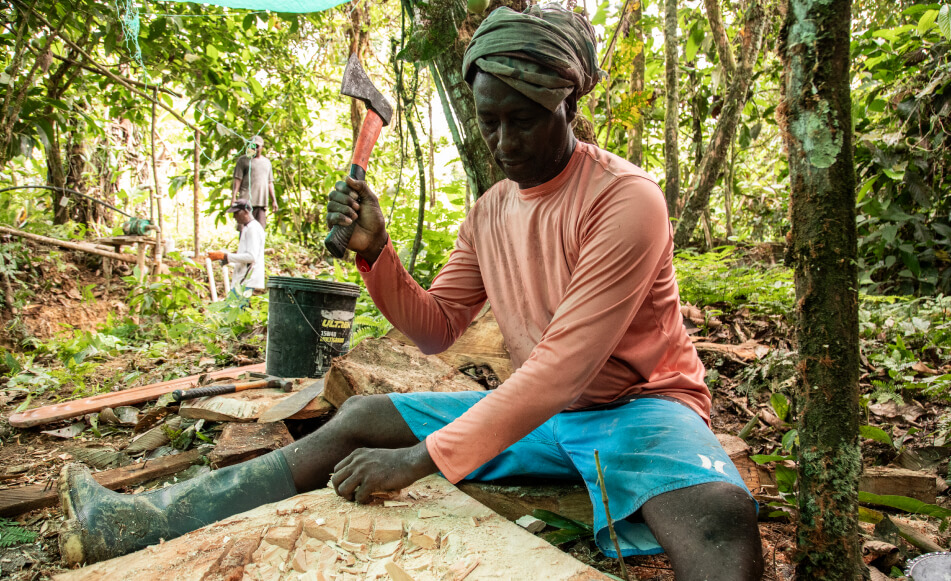
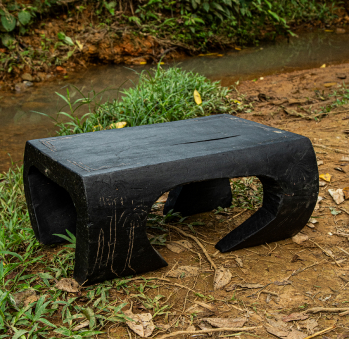
From then on, he continued weaving baskets from fern and vine until a local jeweler recognized his talent and asked him to build a piece of furniture he had seen in a magazine. The jeweler was right—Bayron found the perfect casaco tree in the forest, one with naturally branching forms, and cut it in such a way that the chairs and table emerged whole from the wood. That project earned him 400,000 pesos. It was then that he understood that nature provides—you just have to learn to see the forms within it. Naturally, he asked to keep the magazine so he could continue discovering beds, armchairs, and dining sets hidden in fallen logs or discarded timber.
Since then, he has continued creating with whatever the San Juan River brings his way—and always celebrating, always. That sense of joy that awakened in him more than thirty years ago, when he realized he could make a living doing what he loves, is still very much alive. That’s why he invites visitors to spend a day with him, venturing into the jungle that has supplied his materials all these years. You can spend the night in Istmina—known not only for its lodging options but also for its remarkable cuisine—and wake at dawn to catch glimpses of agoutis, armadillos, and pacas returning to their burrows. You’ll hear toucans, yellow-chested birds, blackbirds, and pichíes as they begin their day with the sunrise. All of this leads to Bayron’s workshop, nestled within lush vegetation, where you can watch him at work and enjoy a traditional breakfast—complete, of course, with a small sip of curao’ or pipilongo.
Workshop and process
Craft
Artisans along the way




Artisans along the way



No puede copiar contenido de esta página