
Edwin Serna
Workshop: Taller Eserna Luthiers
Craft: Musical instruments
Trail: Antioquia Route
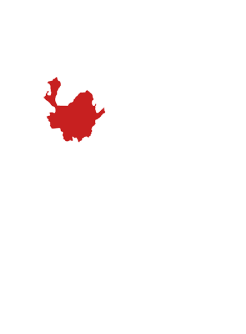
Location: Caldas, Antioquia
SCHEDULE YOUR VISIT
Calle 128 sur #40-59, Caldas (taller) Escuela en la Casa de la Cultura de Caldas
3124248194
esernaluthiers@gmail.com
@esernaluthiers
@eserna.luthiersehijos
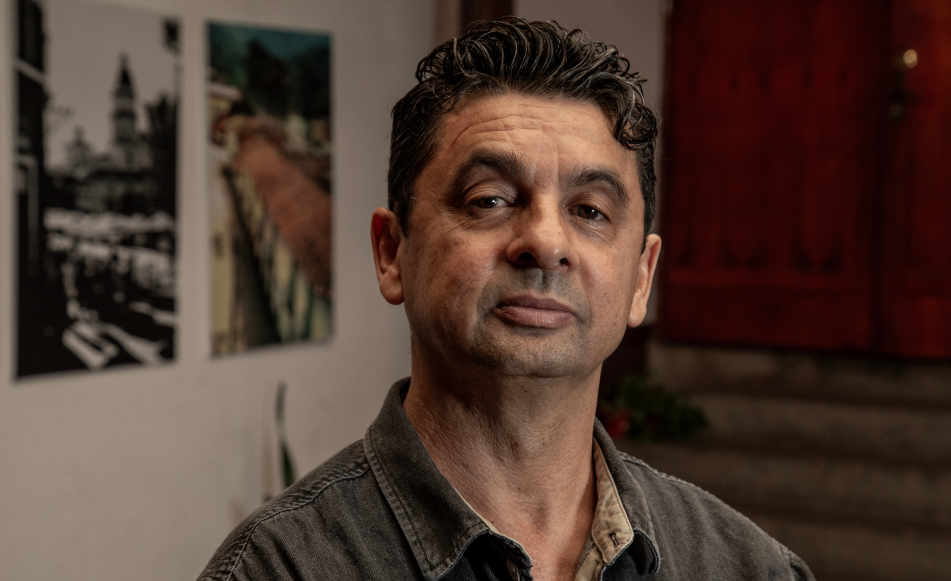
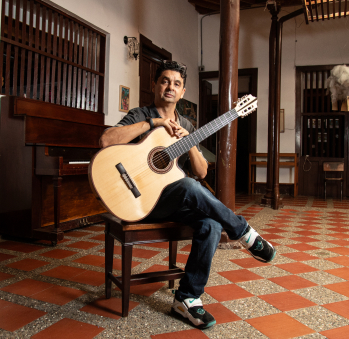
Edwin Serna’s life is almost impossible to believe. Or perhaps quite the opposite, since faith has shaped nearly every chapter of it. It begins with his father, Egidio Serna, who owned a musical instrument workshop and recorded albums of Colombian music back in the 1960s. When Edwin was five years old, his father suffered a devastating accident that left him paralyzed from the waist down. As difficult as it was, it did not stop him from building instruments, nor from eventually working alongside his son many years later. If faith can move mountains, this part of the story surely proves it. The Church also played a defining role in young Edwin’s life. In the midst of such a profound family tragedy, it welcomed him as an altar server and educated him through catechism. He vividly remembers those childhood years, singing and playing music in the many activities organized by the parish. They allowed him to smile again, to meet people, and to grow through youth groups. In fact, they also helped him escape the violence that swept through Antioquia in the early 1980s. Music carries him back to those days, and he smiles as he remembers performing with his guitar at the Antioquia le Canta a Colombia festival in Ituango.
The guitar, in particular, captured his heart. He had watched his father both play and build guitars, and from a very young age he learned how they worked and how to repair them. It therefore came naturally for his parents to nominate him, at the age of ten, for a scholarship at the Yarumal Mission Institute, a Jesuit seminary that educated boys while preparing them for the priesthood. He earned the scholarship. Looking back, he knows it was the best opportunity his parents could have given him, given how difficult life at home had become. There, his world expanded. The Jesuit spirit introduced him to classmates from Bolivia and Ecuador, as well as one of his closest friends, who came from Leticia in the Colombian Amazon. In class they studied cultures from around the world, and he became fascinated by Africa. The seminary became his window onto knowledge, one that made no distinction between the sciences and the humanities. He was able to cultivate the love of music he already carried within him, while also discovering a passion for mathematics, especially because the seminary had some of the first computers available for educational use in Colombia. He speaks of those years with profound gratitude.
The seminary’s mission was to prepare missionary priests, and practical trades were considered an essential part of that education. They learned carpentry so they could build roofs, bridges, or indigenous communal houses wherever their missions might take them, as well as how to install small water systems. They were taught everything, even basic paramedic skills, so that future priests could contribute meaningfully to the communities they would serve. They were intense years of learning, until the time came for him to decide his future. Fortunately, one of the priests told him that those with a true vocation for music rarely became missionaries. That turned out to be exactly his case.
He married, had children, and eventually studied engineering. His path drifted away from the arts, and professionally he did very well. But then another tragedy struck: he was kidnapped. He remembers the dates with perfect clarity—from March 11, 2002, until July 4, 2004, when Colombia’s anti-kidnapping task force, the GAULA, rescued him. He prefers not to speak about those years, saying they left him with absolutely nothing. Except cancer. It was then that music returned to save him once again. “What did you come into this world to do?” his father asked him. If there was anyone who had managed to restore meaning to his life, it was him. So Edwin embraced his father’s idea of opening a guitar workshop together. Enthusiasm slowly returned, and he also reopened a recording studio. That was nearly fifteen years ago.
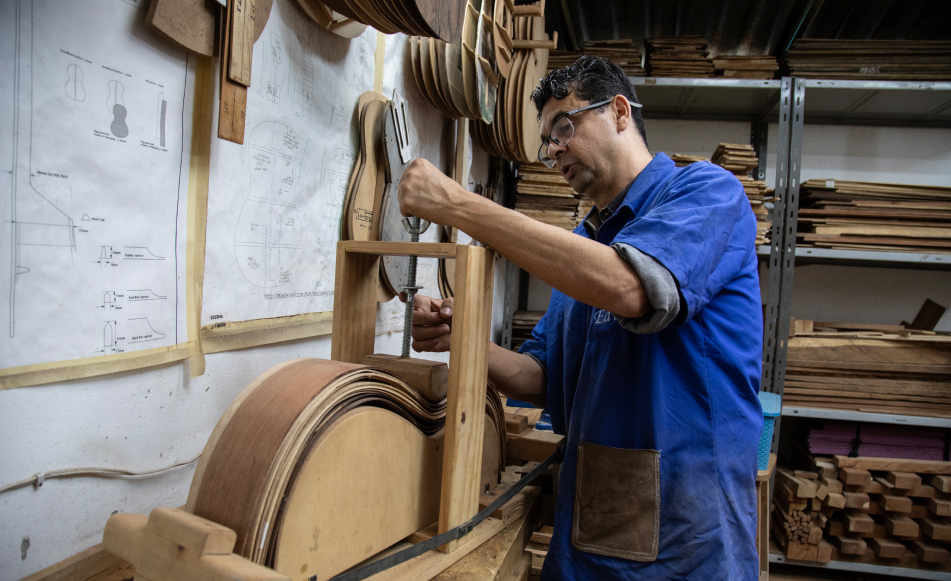
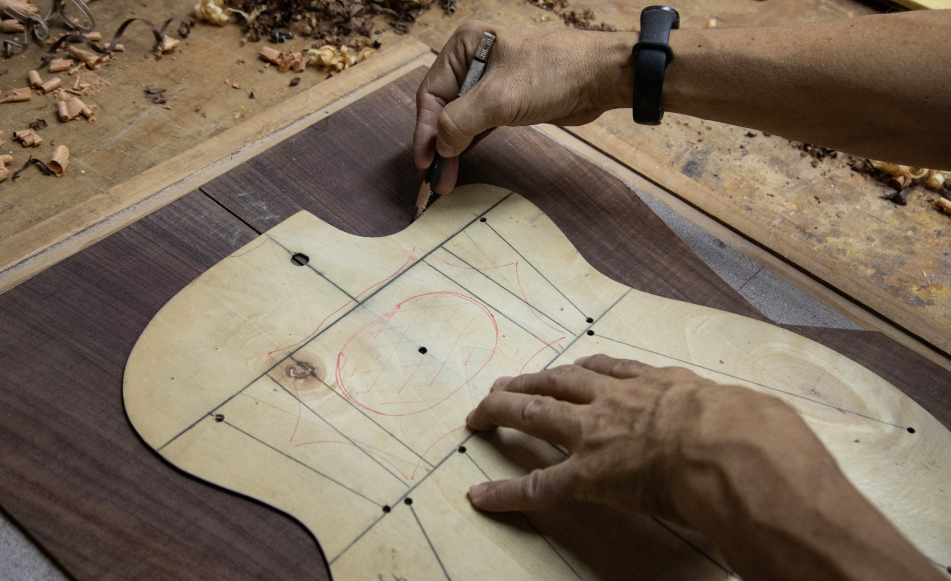
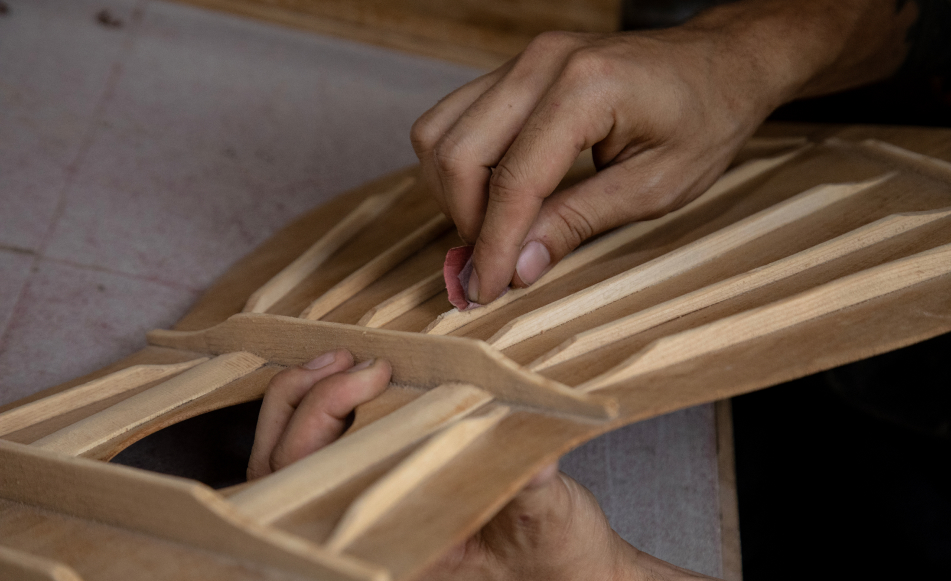
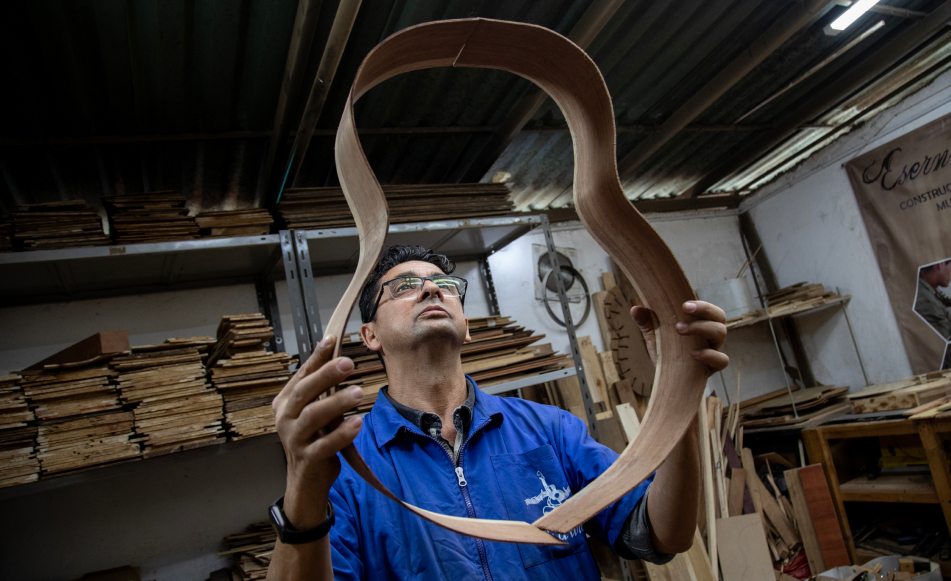
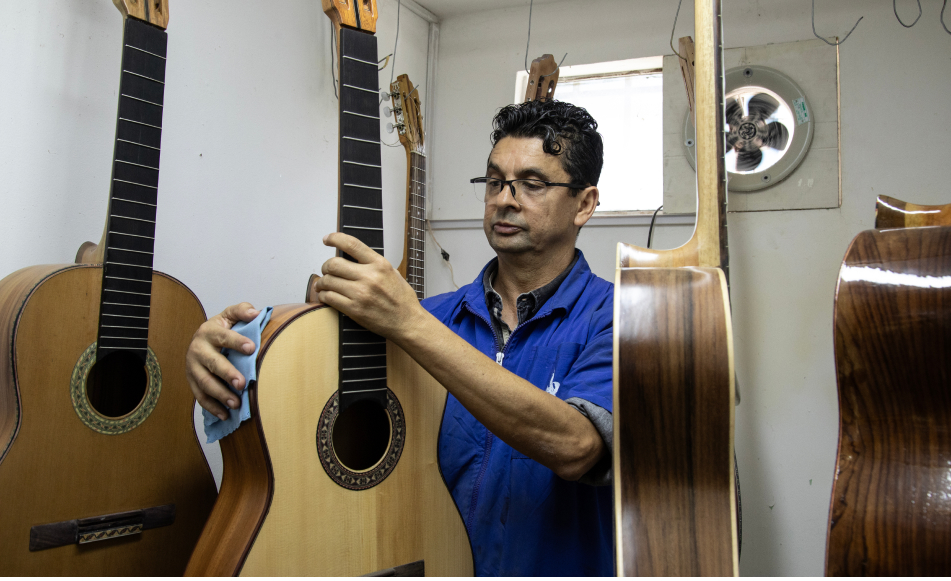
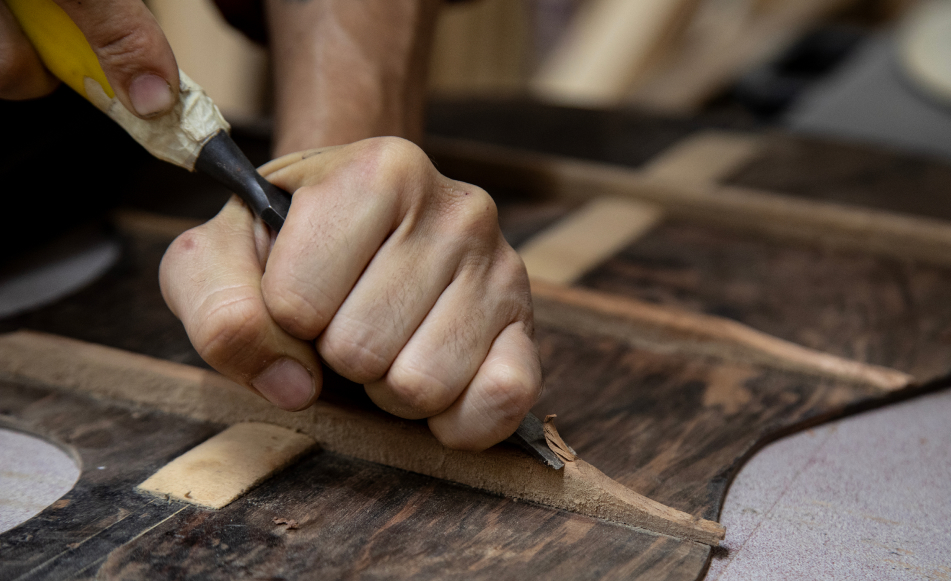
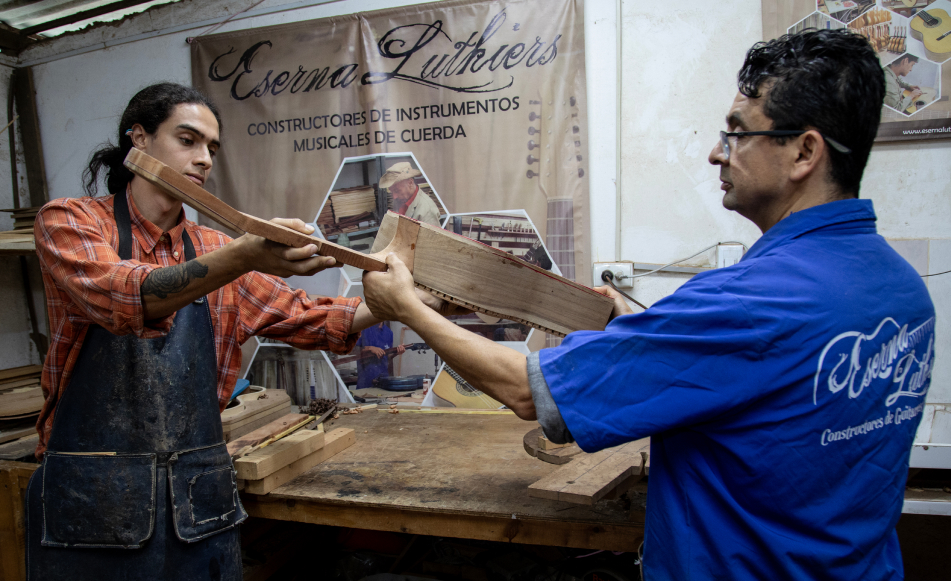
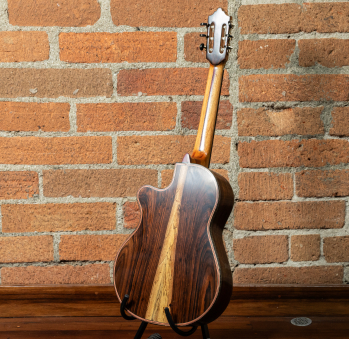
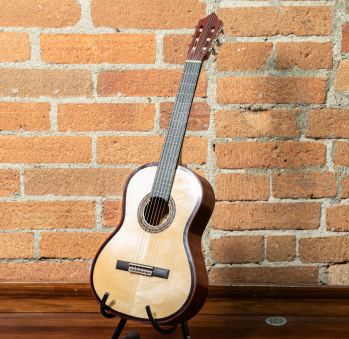
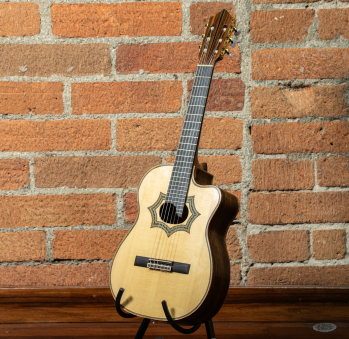
The guitar workshop continued to grow—not only in the number of people involved, but also in its ambitions. The opportunity he had enjoyed to study with outstanding teachers, to travel, and to experience excellence set the standard he wanted to follow. He decided he would build guitars using the finest materials the market could offer in order to compete internationally. He would also teach his luthiers to work with exceptional woods such as Madagascar and Indian rosewood, sycamore from thirty-seven different countries, flamed maple, and ebony from Cameroon. He says none of his students has ever ruined a piece of material, and he questions why people assume beginners should practice only with inexpensive instruments before graduating to better ones later in life. He rejects that idea completely. His philosophy is that people should train with the very best from the beginning. Just as he did when he was that scholarship student.
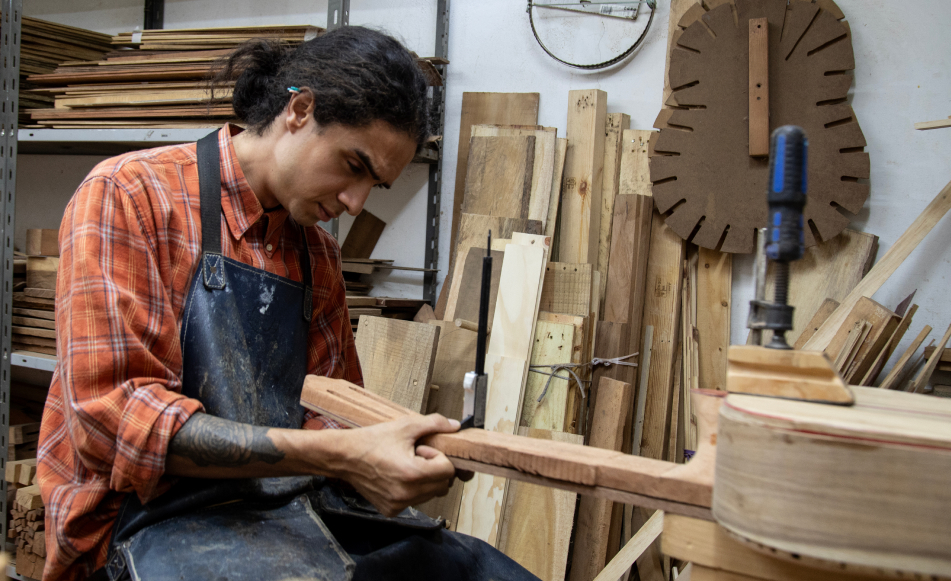
Today, in addition to running his guitar workshop, Edwin has established the first public lutherie workshop at the House of Culture in the municipality of Caldas, where nearly 150 students are currently enrolled. Its impact has been so significant that ten additional lutherie workshops have since opened throughout the municipality. As if that were not enough, he now shares his knowledge at the newly established School Workshop in Jericó, where he teaches every Wednesday. He is a tireless man, driven by the spirit of service he learned during his years in the seminary. Giving the very best of himself remains his mission. Though he never became a priest, that vocation for serving others found its fullest expression through art.
Workshop and process
Craft
Artisans along the way

Artisans along the way



No puede copiar contenido de esta página