
Familia Arbeláez Hoyos
Workshop: Cerámicas Carmesí
Craft: Ceramics
Trail: Antioquia Route
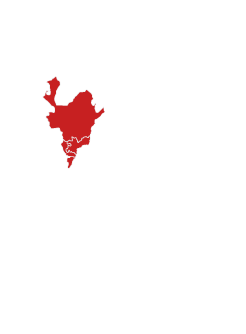
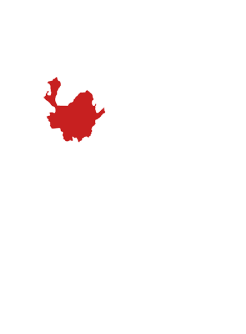
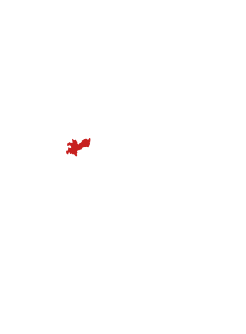
Location: El Carmen de Viboral, Antioquia
SCHEDULE YOUR VISIT
Cra 31 #38-71, Carmen de Viboral
3104878113
info@carmesi.co
@carmesi.co
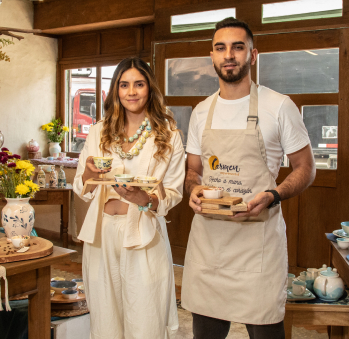
The year 1997 is especially significant for Juliana Quintero. Not only was she born that year, but it was also the year when several ceramic factories in Carmen de Viboral went bankrupt and closed their doors after decades devoted to producing tableware. Those were the difficult years of the 1990s, when Antioquia was hit hard by the armed conflict, which drove away both peace and prosperity. One of the companies that disappeared was the iconic Continental factory, owned by Alfonso Betancur, where Juliana’s mother and aunts worked as ceramic decorators. They had all inherited their knowledge from their grandmother, Doña Ninfa, herself a ceramic artisan. So although Juliana never witnessed the golden age of the local ceramic industry in the 1970s and 1980s, when dozens of workshops thrived throughout this celebrated Antioquian town, she grew up surrounded by stories of clay and by the memories of a family whose life had always revolved around ceramics.
The story of Carmesí, the flourishing family workshop they run today in Carmen de Viboral, was born almost providentially during the pandemic of 2020. Juliana had moved to Medellín to study Foreign Language Education, and like everyone else, found herself confined within the four walls of her home. It was there that she revived a dream that had been quietly growing inside her for years: opening a ceramics workshop with her family. If it wasn’t going to happen in the year that changed the world and made everyone wonder what truly meaningful thing they could do with their lives, then when would it? Although she already had a stable job in her profession—something she remains deeply grateful for, since it allowed her to support both herself and her family—her husband, Alejandro, encouraged her to embrace this family venture. Together, they bought their first kiln.
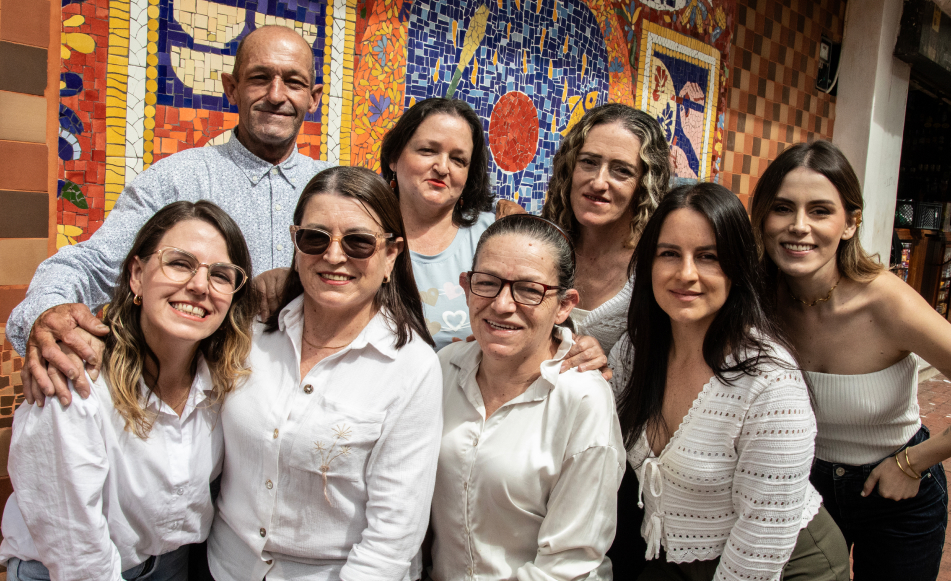
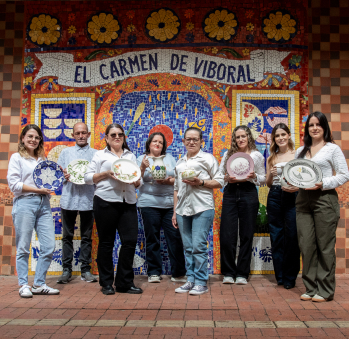
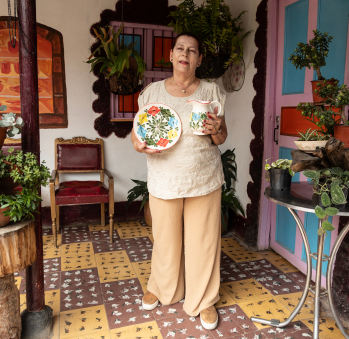
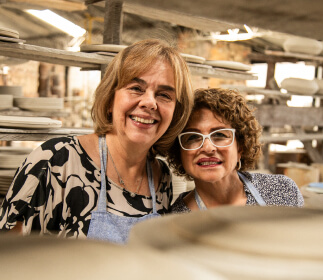
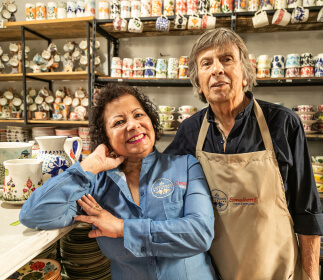
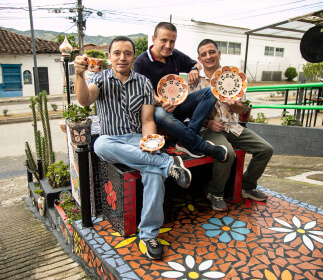
Juliana’s enthusiasm soon became contagious. Trips back to Carmen became more frequent, and there, gathered around the family table, they began imagining what their own workshop could become. They discussed what kinds of pieces they wanted to make, which colors to use, and what decorative motifs they could create. Those conversations filled countless family gatherings as everyone became excited by the idea of building a business together. The women already carried the craft in their hands. Having spent years decorating ceramics, they knew the celebrated painted patterns that had earned Carmen de Viboral ceramics their Designation of Origin. In fact, Juliana’s mother, Doña Nancy, continued working at another ceramic factory until August 2020, when she finally realized that her daughter’s dream had everything it needed to succeed. Soon her sisters Adriana and Ángela joined the venture, followed by other members of the family: Sandra and María Eugenia, who had devoted their lives to homemaking and eagerly set out to learn every step of the process, as well as Juliana’s sister Alejandra, her cousins Jorge Andrés and Leidy, and her uncle Óscar.
Everything unfolded like one of the flowers that has made Carmen de Viboral ceramics so famous. At first, the workshop occupied a modest four-by-four-meter patio behind her parents’ house, but before long the space became too small. Juliana eventually rented another house for her parents so that the family home could be dedicated entirely to the workshop. Later, while searching for a storefront to sell their first pieces, she happened upon the perfect place in the town center: a property with two houses and a commercial space—exactly what they needed. It could not have been more ideal. Still, good fortune alone does not explain their success. Much of Carmesí’s rapid growth came because Juliana embraced digital commerce at a time when very few workshops in Carmen had done so. They became one of the first ceramic studios in town to market and sell their work online. At a moment when people everywhere were redecorating their homes without being able to leave them, that decision proved essential.
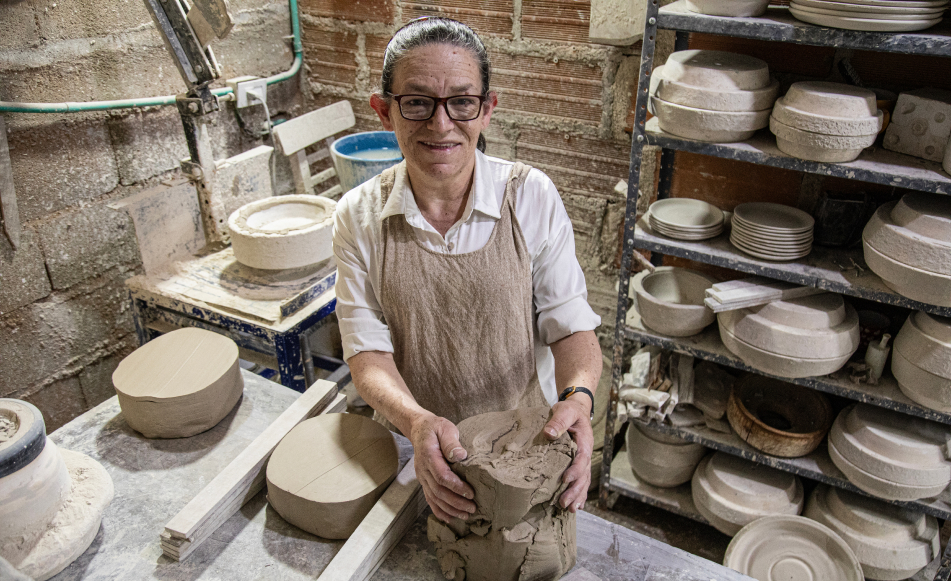
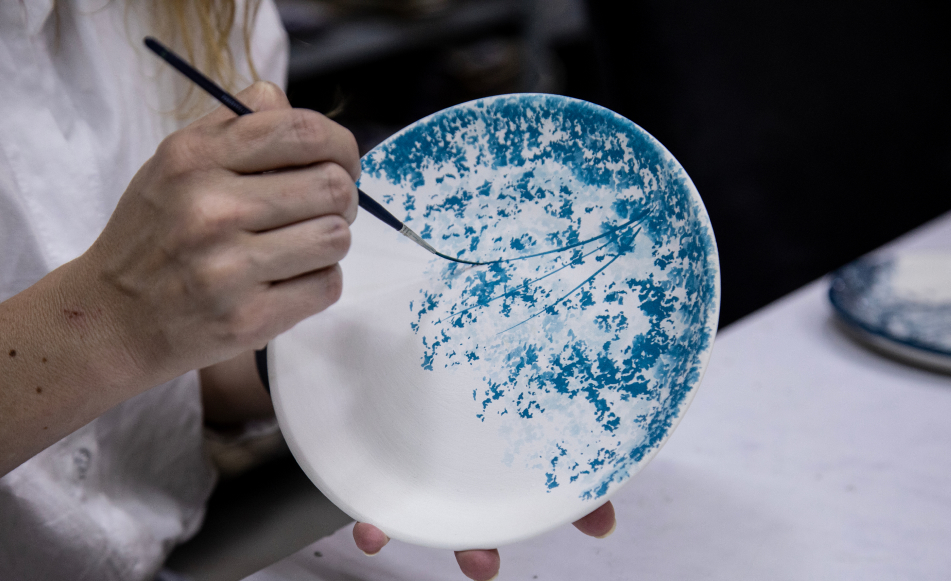
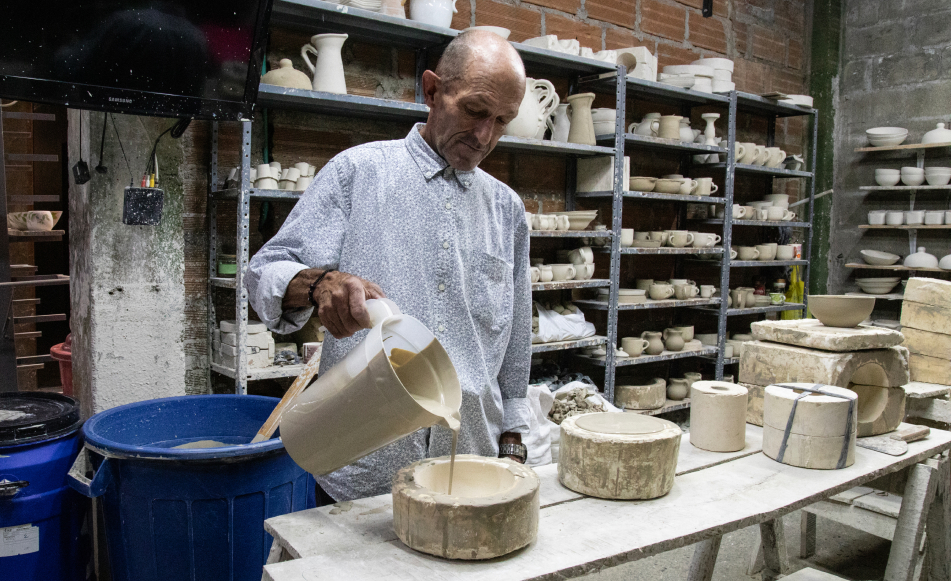
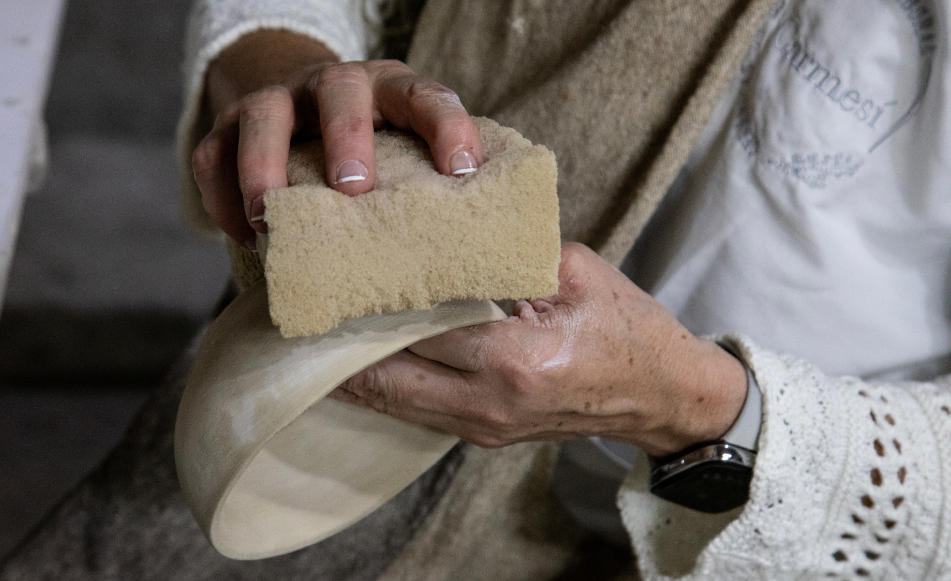
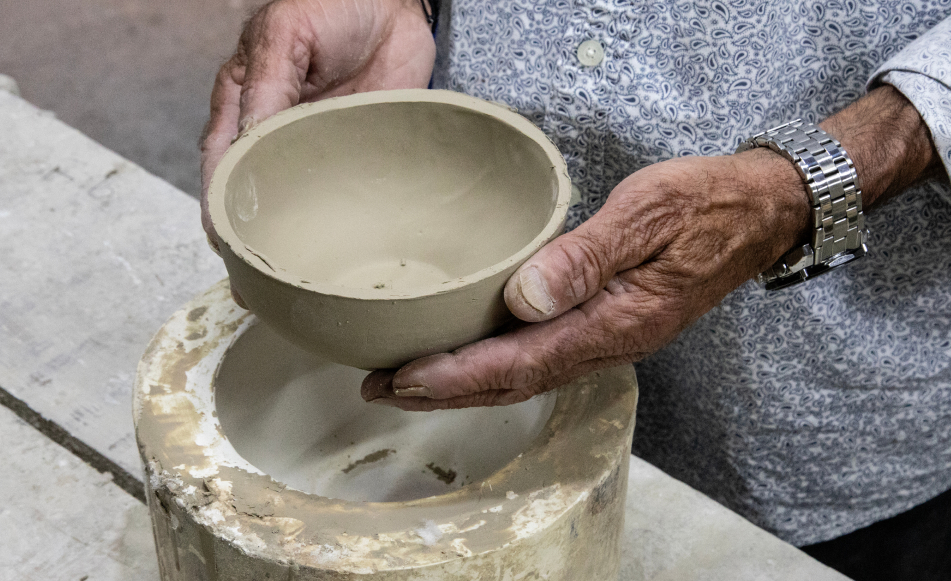
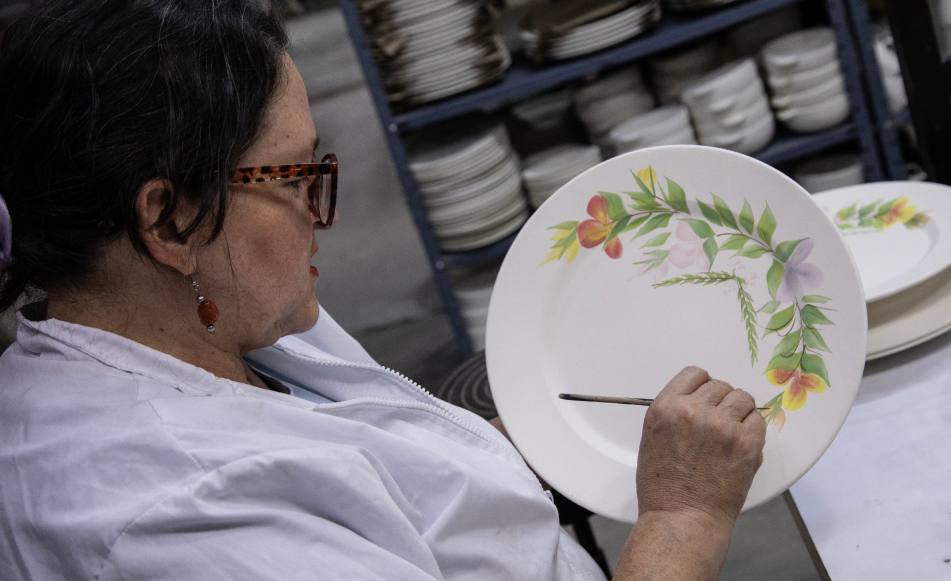
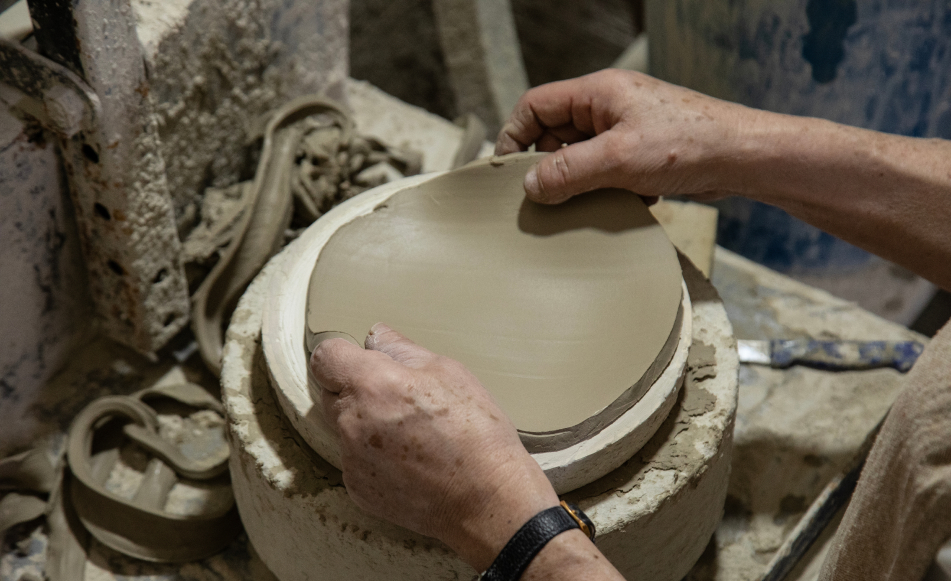
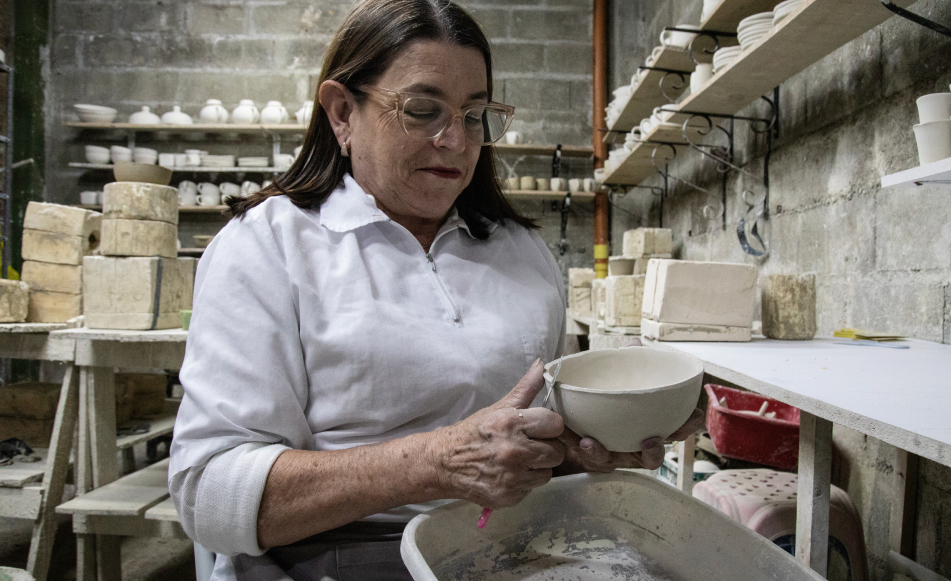
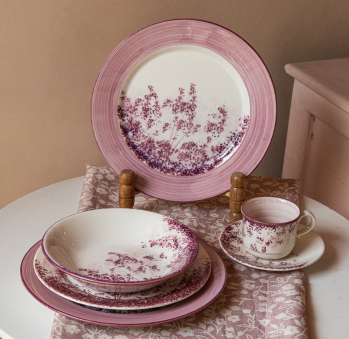
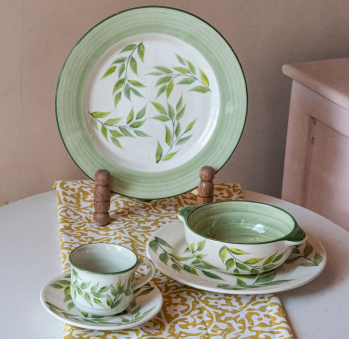
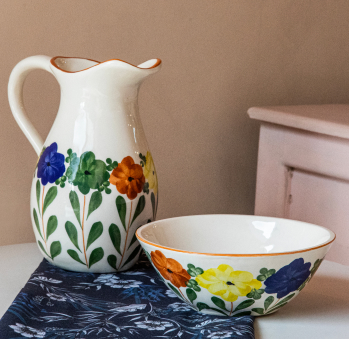
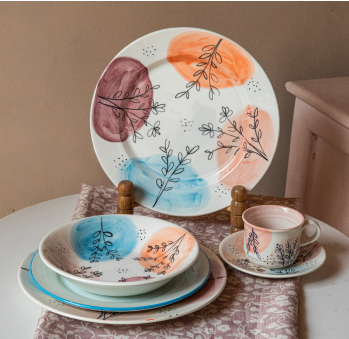
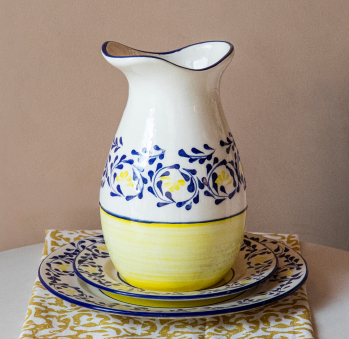
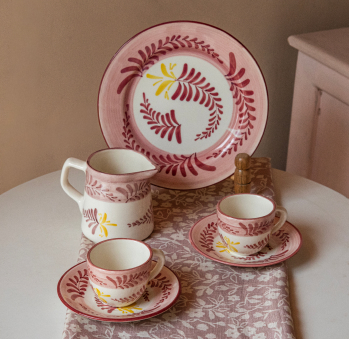
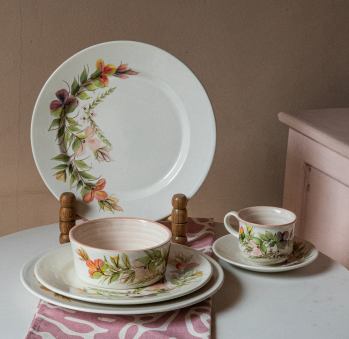
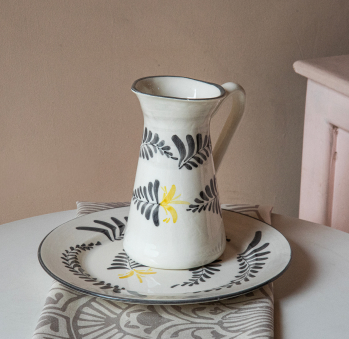
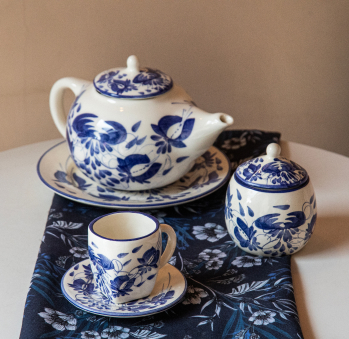
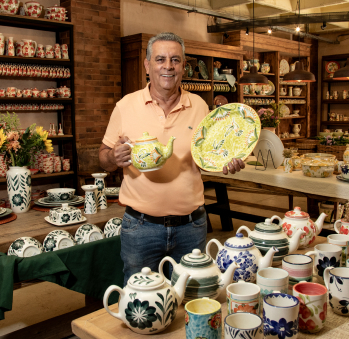
This is how the post-pandemic years have unfolded. Juliana eventually left her teaching position at a language institute to devote herself entirely to managing the family business, while the workshop has continued to evolve in response to changing markets. She admits that her first instinct was to produce tableware without the traditional decorative motifs of Carmen de Viboral. But research, experience, and artisan fairs gradually convinced her that this was not necessarily the best path. In the end, people who seek out ceramics from Carmen de Viboral are looking for a recognizable identity. So, drawing on the mastery her mother and aunts had of the traditional patterns, they began painting them once again, introducing subtle variations—much like variations on a musical theme. If, for example, a traditional design places flowers around the rim of a plate, they might paint them in its center instead. In this way they continue exploring symmetry, beauty, and color, while making the most of each family member’s particular talents. Ángela has mastered the Mayoral pattern, while Adriana’s more naturalistic style makes her especially gifted at painting flowers. Leidy has developed many of Carmesí’s original designs, and together they even recreated one based on the work of their grandmother Ninfa, who started this family story. Jorge Andrés and Óscar oversee the technical side of production, handling mold making, slip casting, wheel work, and firing. Nancy, Juliana’s mother, is also exceptionally skilled at creating molds.
Juliana still lives in Medellín, but she travels to the workshop several times each week and, just as she did at the beginning, keeps the entire business in her head. Back then, everything existed only as a dream. Today she can proudly say that she has revived a craft that had always run through her family’s veins and helped build a workshop that proudly bears the Arbeláez name—a workshop now known simply as Carmesí.
Workshop and process
Craft
Artisans along the way

Artisans along the way



No puede copiar contenido de esta página