




























Nelson Zuluaga
Workshop: Taller Renacer
Craft: Ceramics
Trail: Antioquia Route
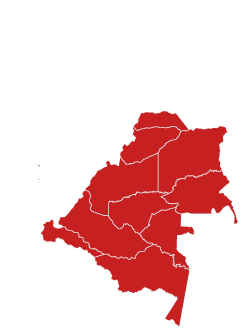
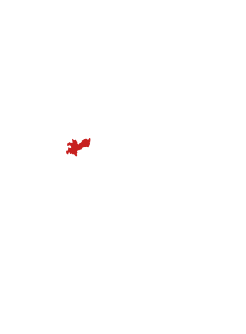
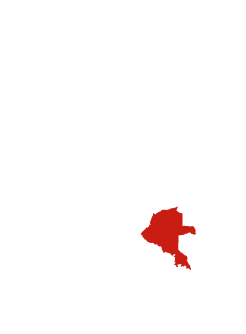
Location: El Carmen de Viboral, Antioquia
SCHEDULE YOUR VISIT
Cra 31 #41a-04
3052415572
comercial@ceramicarenacer.com
@ceramicasrenacer
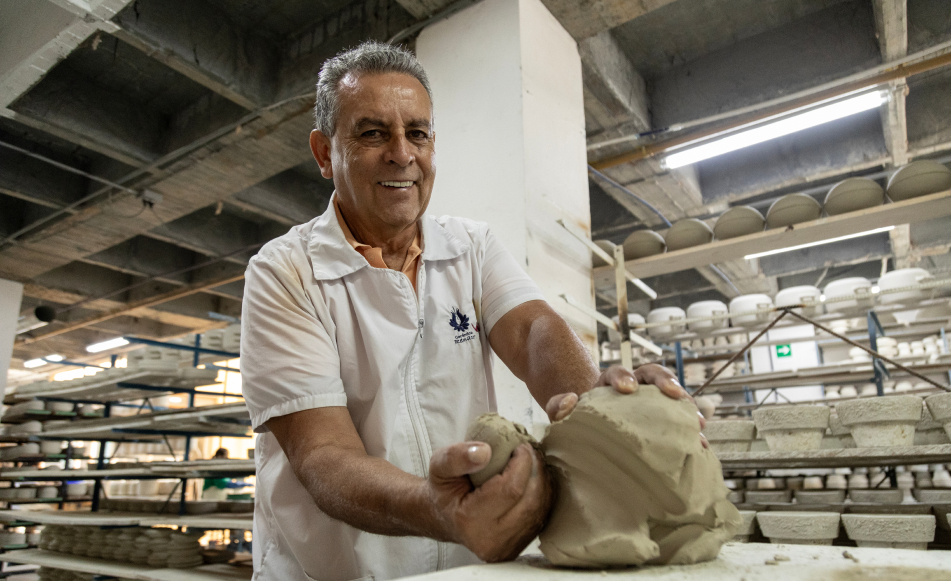
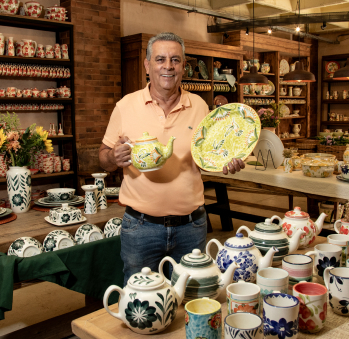
Nelson Zuluaga named his workshop Renacer—Rebirth—because that is exactly what happened in Carmen de Viboral. Although the town had been a major center of ceramic production throughout the twentieth century, home to more than thirty important workshops, especially during the 1970s, the 1990s brought hardships that brought them all to their knees. Trade liberalization, free trade agreements, and the brutal violence that Colombia—and Antioquia in particular—endured dealt a devastating blow to the region’s ceramic tradition. Zuluaga, who had grown up surrounded by clay—his parents both worked in the industry, and he himself started at the iconic Cerámicas Continental when he was just fourteen—witnessed firsthand both the rise and the collapse of an entire town’s economy. In 1997, the ground disappeared beneath his feet. Married and the father of three children, he suddenly had to find a way to support his family. But before Renacer, it is worth telling how he found his way into ceramics in the first place.
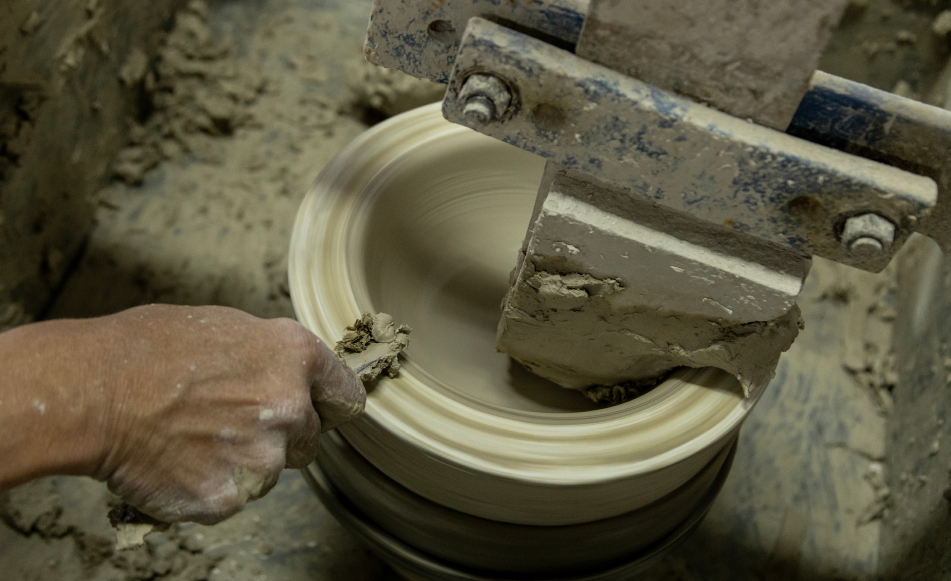
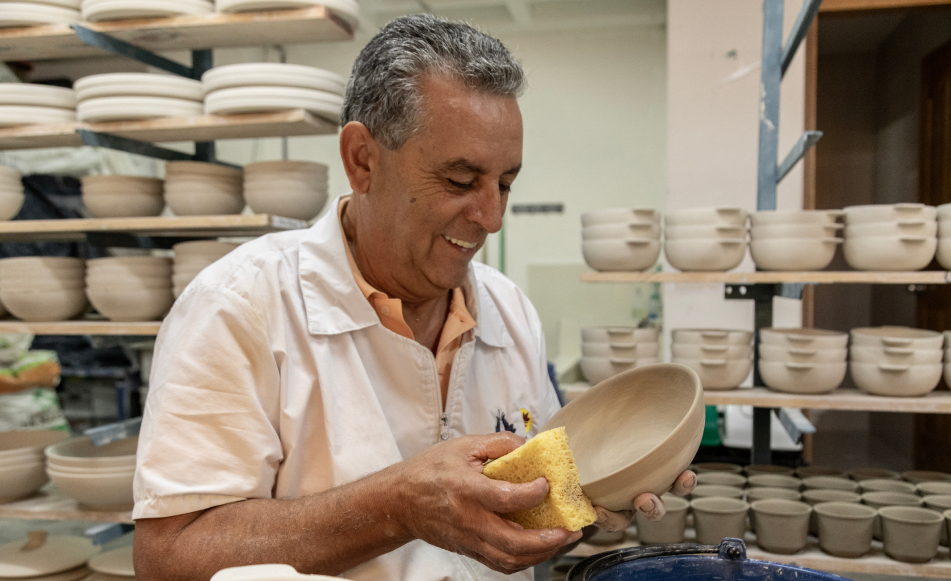
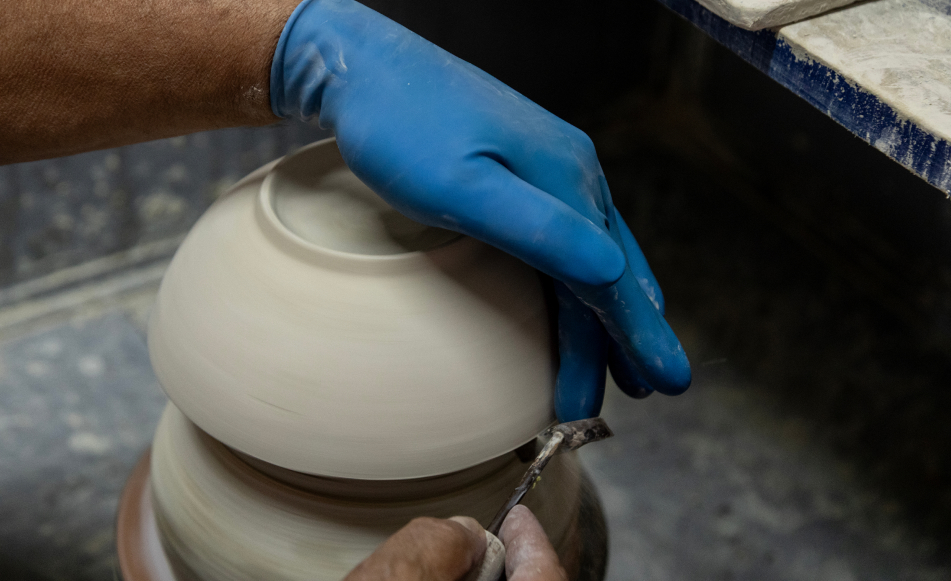
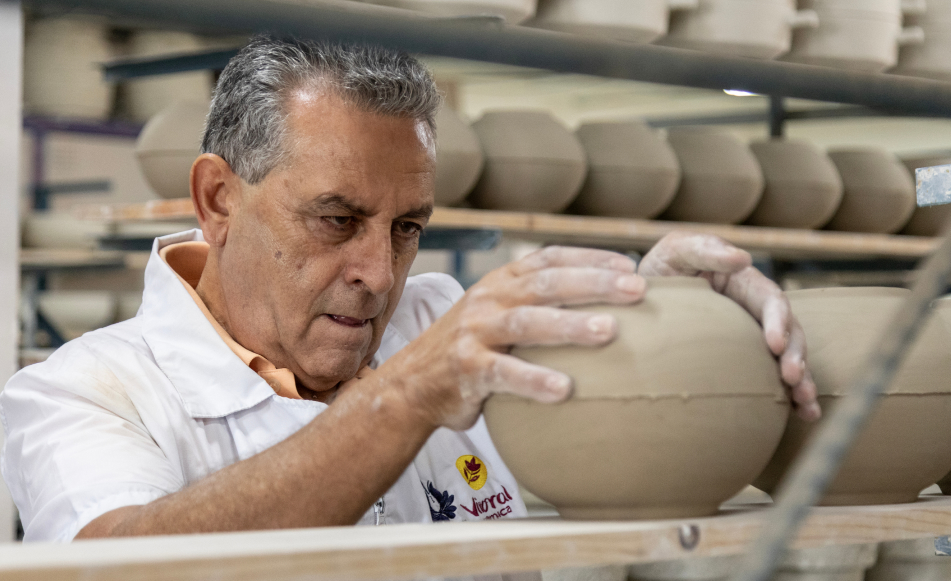
Although his hands had known ceramic processes since childhood, that was not what led him to work at Carmen’s leading pottery factory. It was soccer. He played in the regional intermunicipal championship, and Cerámicas Continental recruited four players to strengthen the factory’s team. Nelson was one of them. Playing as a midfielder, he helped the team win match after match. The owners of the factory, the Betancur family, saw not only his talent on the field but also his potential as an artisan, and they offered him a job. He worked his way through nearly every position until he became quality control supervisor. Yet what he loved most was the forming department—preparing the clay bodies, shaping the pieces, refining them, and firing the bisque. In fact, when he was a boy learning from his father on weekends, that had already been his favorite task: making the refractory boxes, the kiln setters used to hold the pottery during firing. “Put me anywhere except behind a desk,” he says with a smile, convinced that he will always belong on the factory floor.
So, driven by that conviction and by the urgent need to provide for his family, he asked himself why he should stop doing what had always run through his veins. That was how he decided to start his own business, something he had never imagined for himself. The beginning was incredibly difficult. In 1998, he started manufacturing ceramic products, though not traditional handcrafted wares but industrial utility pieces such as threaded lamp sockets. It was a disaster. The products were neither truly artisanal nor industrial enough, which meant he found himself competing against enormous factories. Unsurprisingly, the business failed. But he persevered because, as his children like to say, Nelson Zuluaga is not someone who gives up. He will do whatever it takes to see an idea through. Five years of relentless effort passed before salvation arrived in the form of an order for 12,000 tabletop sets, each consisting of eight ceramic pieces, including salt shakers and other accessories. That commission became the foundation stone of Renacer. Yet life has a way of testing those who refuse to surrender. The next challenge came in the form of a fire on the Feast of the Holy Cross, with six kilns blazing and twelve gas cylinders on site. As chaotic as one might imagine, it was another trial they managed to overcome.
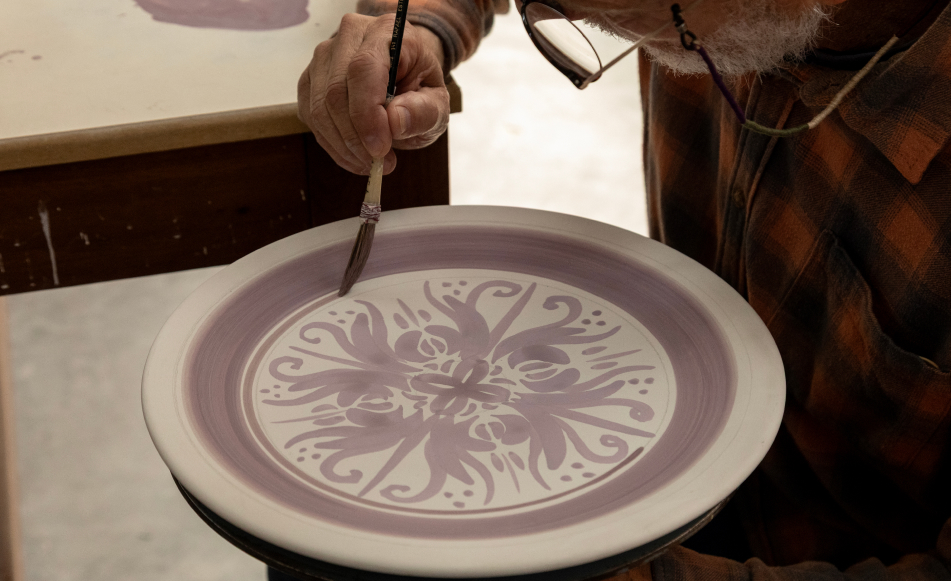
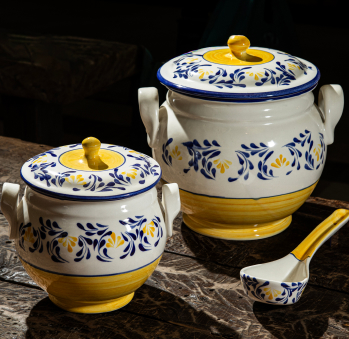
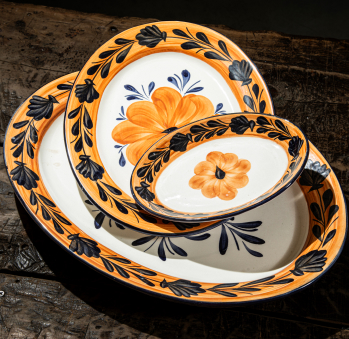
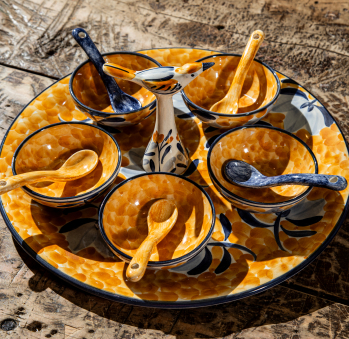
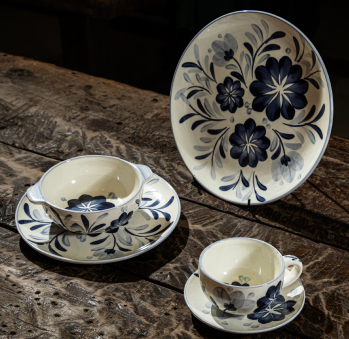
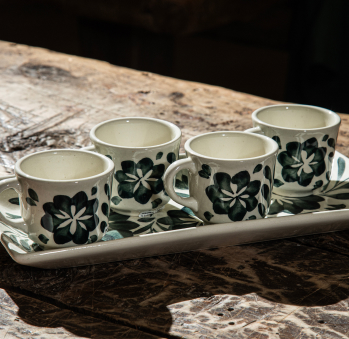
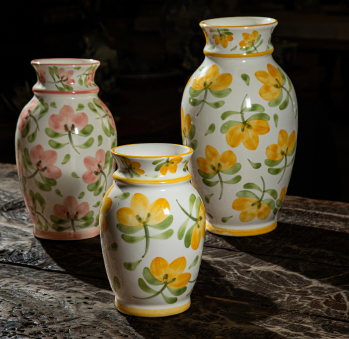
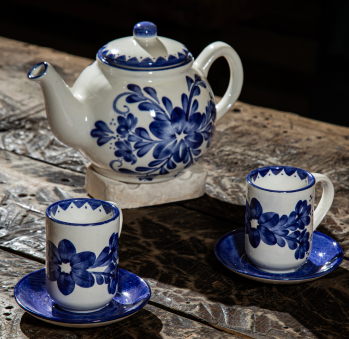
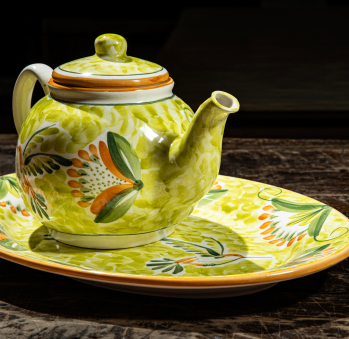
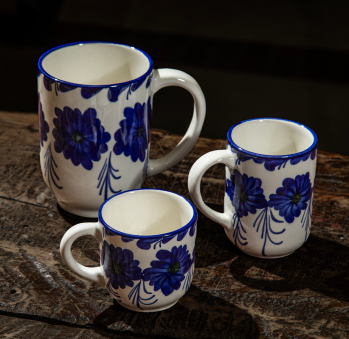
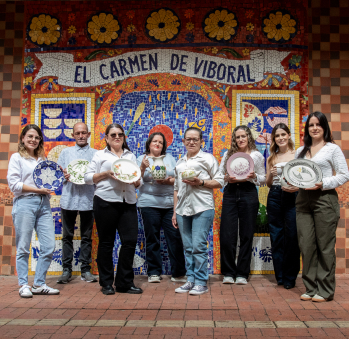
Zuluaga remembers having to hire fifty people to fulfill that order. It was the opportunity that finally allowed him to think bigger—to imagine producing not just replacement pieces but complete dinnerware collections and decorative ceramics of his own. After all, he knew the ceramic industry inside and out and understood exactly how every artisan in Carmen worked. As word spread about the possibilities opening up through Renacer, the workshop began to establish its own identity. Although he knew many of the decorators who mastered Carmen’s traditional decorative patterns—the Florelba, his personal favorite, among them—he felt that creating something truly distinctive required the vision of an artist. And what an artist he found. He invited master artist José Ignacio Vélez Puerta to work alongside him, and Vélez, a proud son of Carmen de Viboral, devoted himself to imagining what they would call the “Renaissance.” Ever since, Vélez has reinterpreted the town’s remarkable ceramic tradition by introducing subtle innovations and fresh variations while always preserving its essential character.
Now, nearly thirty years after taking the leap into entrepreneurship, the family has expanded far beyond Renacer, which has become one of the landmark ceramic workshops of Carmen de Viboral. Together they also founded Viboral Cerámicas and Carmen Experimental. Alejandro, one of Nelson’s sons, works alongside him at Renacer, while his other two children, Érica and Sergio, established their own experimental studio, embracing contemporary design while remaining rooted in the ceramic identity of Carmen. Always eager to explore new markets, Nelson welcomed an Italian visitor before the pandemic: Romano Rampini, who was searching for artisans capable of producing work for the European market. They partnered together and began experimenting with overglaze decoration, unlike the underglaze technique traditionally used in Carmen. The collaboration proved extraordinary. They learned an enormous amount, but the arrival of COVID-19 brought the exchange to an abrupt halt. The desire to continue innovating, however, lived on through Érica and Sergio. They have carried forward the Zuluaga legacy, constantly expanding it with new techniques, new ideas, and new possibilities. But that is another story.
Workshop and process

Craft
Artisans along the way








Artisans along the way



No puede copiar contenido de esta página