
Adier Ortega
Workshop: ArteSan
Craft: Weaving
Trail: Cordoba Route
Location: Lorica, Córdoba
SCHEDULE YOUR VISIT
San Nicolas de Bari, frente al Parque Principal, al lado de la tienda
3143479198
adier4397@gmail.com
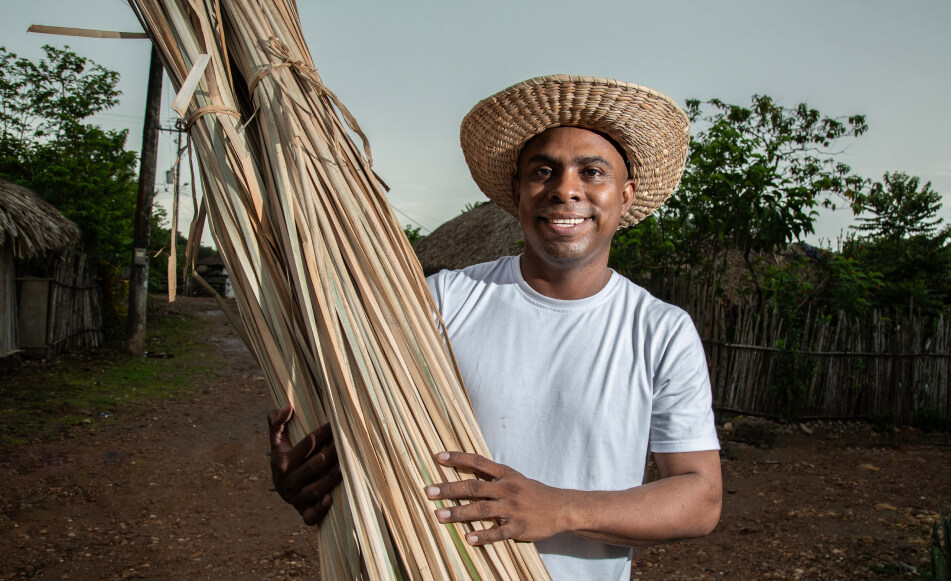
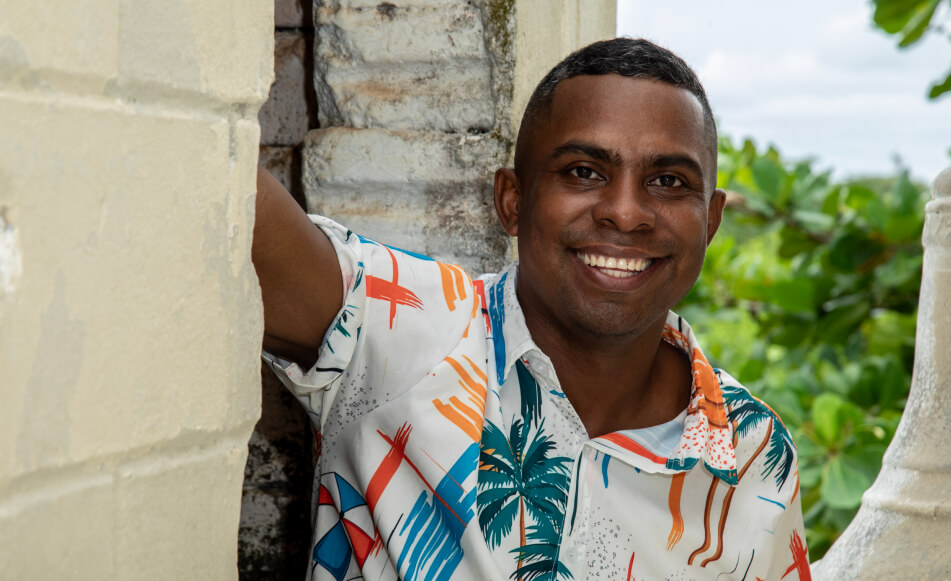
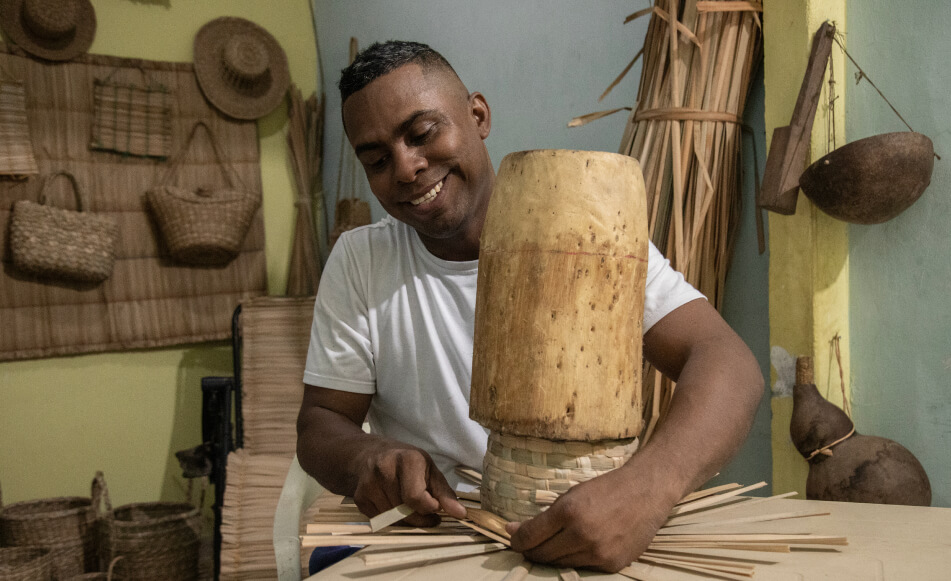
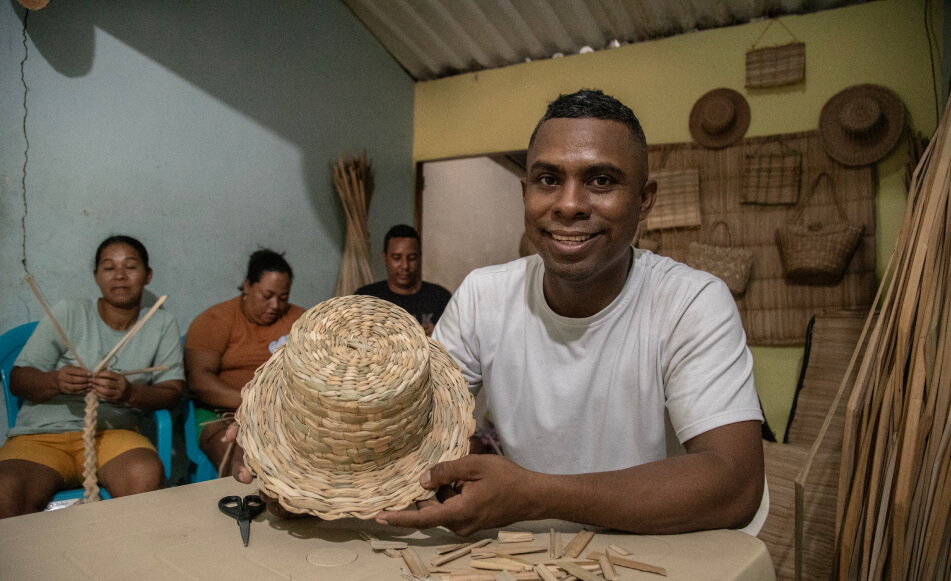
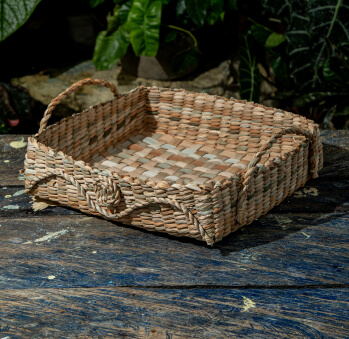
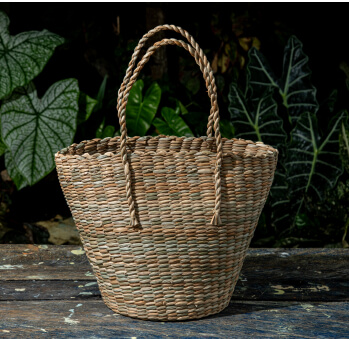
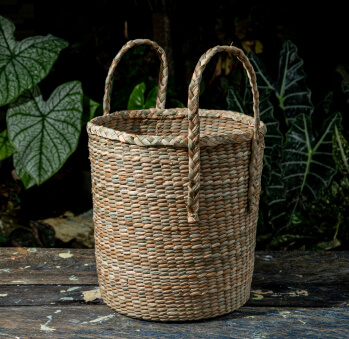
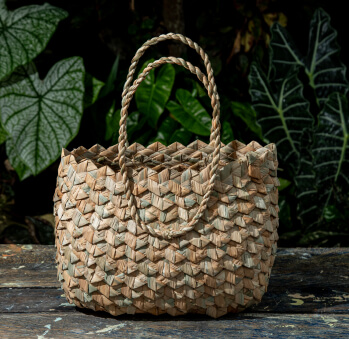
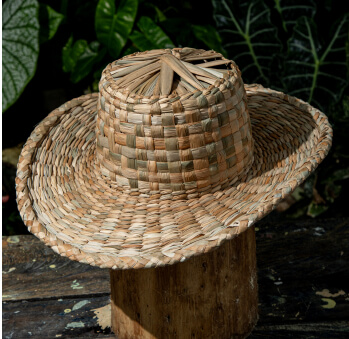
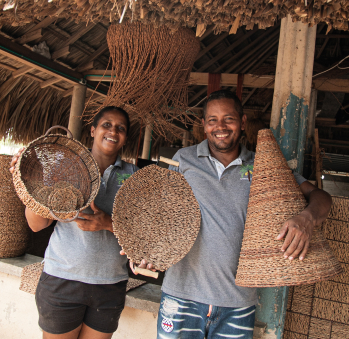
Adier Ortega comes from a family of sleeping mat makers known as esteras and petates. That is what the old craft of gathering bundles of enea leaves and knotting them together, one after another until completing the full length of the mats people slept on long before mattresses existed, is called. This family of weavers lives on the banks of the Sinú River, in San Nicolás de Bari, a town older than its neighboring Lorica, and the tradition of working with enea is so deeply rooted that every Holy Week the Festival of the Mat is celebrated, from Holy Thursday through Easter Sunday. Yet although around thirty percent of the people of San Nicolás de Bari know how to knot enea, very few still devote themselves entirely to the craft. What fifty years ago provided work for so many families in the town now depends on just two: Adier’s family and that of their neighbors. In the Ortega family’s case, their repertoire now also includes baskets, hats, and bags.
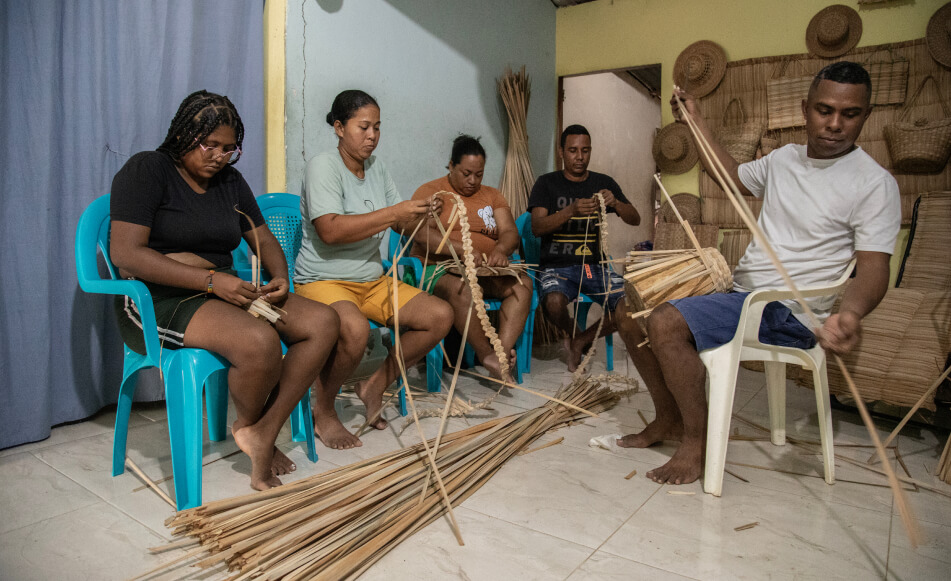
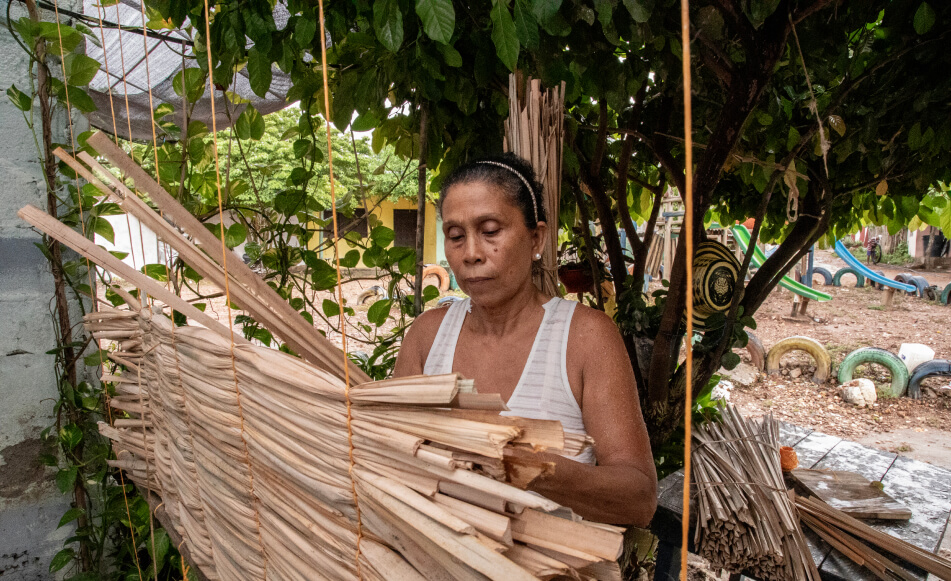
The craft is so old that no one knows who first thought of cutting enea from the edges of the marshes, drying it in the sun, and tying it together with the help of a wooden frame. It has become so inseparable from family life that Adier’s grandfather spoke of watching his own mother making mats, and Adier himself feels that he “was born with it.” There is no before and after when it comes to the wooden frame strung with cord, as large as a mat itself, that has been part of the household since his grandparents’ generation. On the hottest days it hangs from a beam in the patio, where the family gathers to work.
What he does remember clearly are the lessons his grandfather Abraham taught him when they went to harvest enea. Adier vividly recalls those collecting trips with him and explains that the first thing was to put on long trousers and tie them tightly around the shoes so the leeches would not crawl inside. Then they would cut the enea and leave it right there to dry, resting on the other plants along the marsh’s edge. Since the plant is full of water, there is no point in carrying it home freshly cut because it weighs three times as much. So after eight days of sunshine, they would return for it. They tied it into bundles and carried it by donkey, canoe, and on their shoulders back home, where his grandmother Erlinda sorted it and transformed it into sleeping mats using the ever-present wooden frame hanging from the patio beam. In those days, each mat sold for 500 pesos, although traders resold them for 7,000.
But enea no longer grows in San Nicolás de Bari. Today it has to be purchased already harvested in Lorica, though there was once a time when all one had to do was walk to the marshlands surrounding the Sinú River to gather it. That was before landowners began burning the enea because they considered it invasive, clearing the land to create more pasture for cattle. Without their raw material, many artisans gradually turned to fishing and farming because, in truth, weaving a single mat requires an enormous amount of enea—a full bundle, nothing less. Now that it has disappeared, even collecting its seeds and trying to replant it has failed. It grows wherever it wants… and wherever it can.
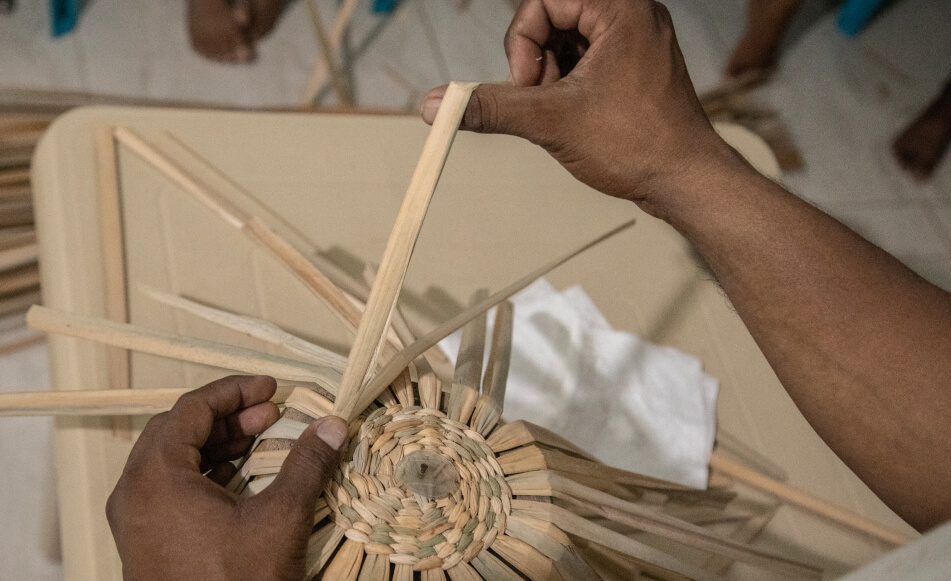
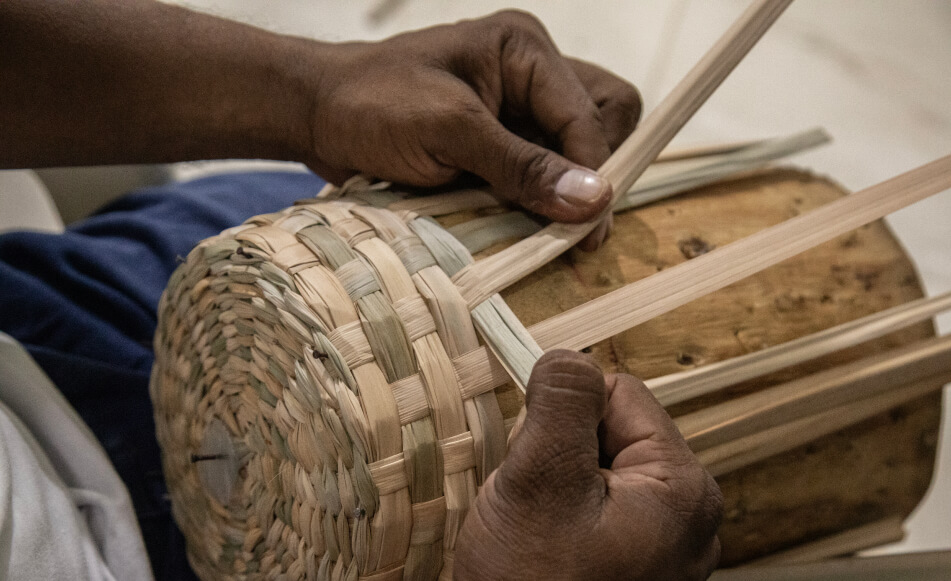
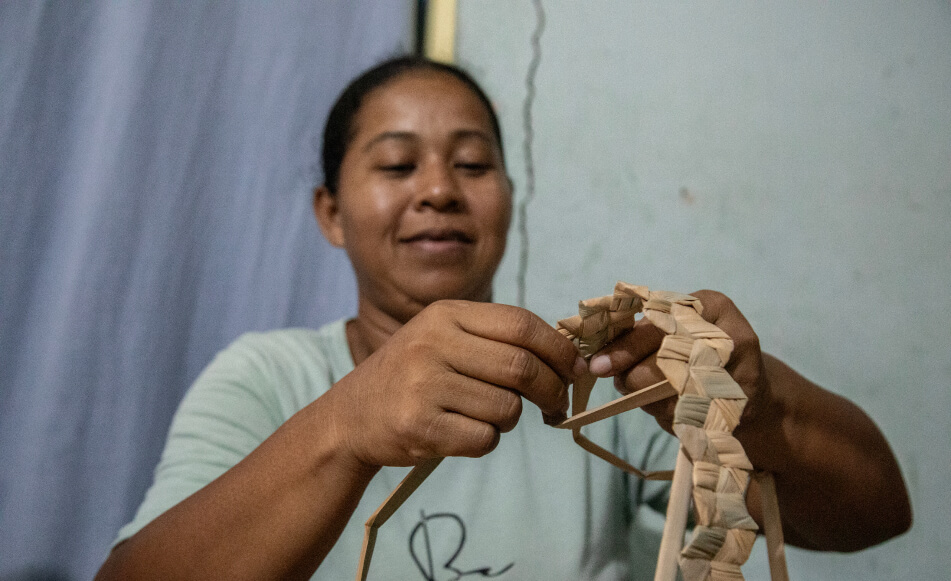
He also remembers when instructors from SENA and the Artisan Network came to the village in the late 1990s to teach them how to make more than just mats. He was twelve years old when he watched master artisans from San Andrés de Sotavento, Rabolargo, and Mompox teach his parents and grandparents basketry and the weaving of hats made entirely from enea and finished with thread around the brim. The family gained new techniques that allowed them to create woven pieces using much less raw material, and that helped keep the craft alive. If one bundle of enea yielded only a single mat, that very same bundle could produce ten hats or ten bags—beautifully soft pieces. And so they continued weaving, balancing the craft with other occupations such as fishing or Adier’s work as a store cashier, gathering together to weave in the afternoons. Adier’s parents, his brother, his sister-in-law, and Adier himself all work side by side. Together they never forget the plant that generation after generation of Ortega hands has shaped, always dampening it first so that it will bend without breaking.
Workshop and process
Craft
Artisans along the way

Artisans along the way



No puede copiar contenido de esta página