
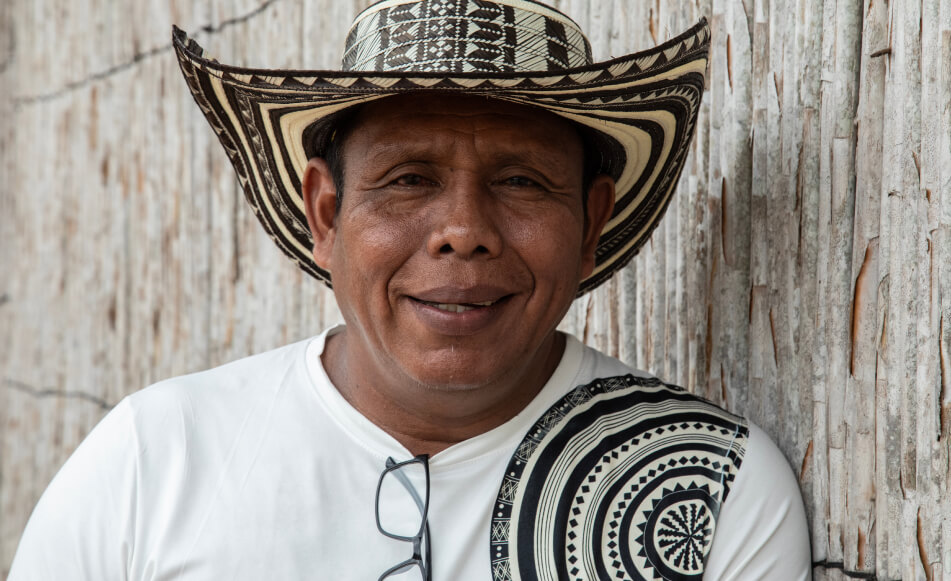
Rangel Antonio Benítez
Taller: La Casa del Artesano
Oficio: Tejeduría
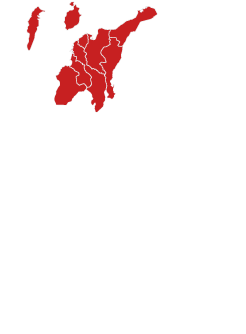
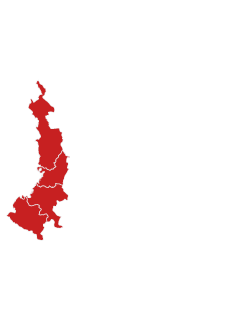
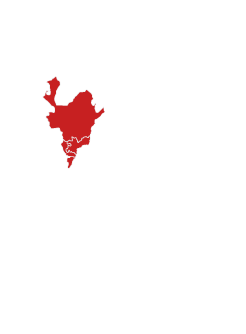
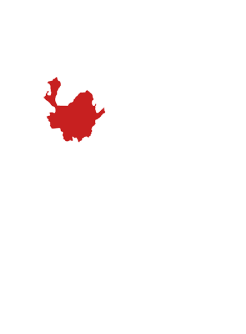
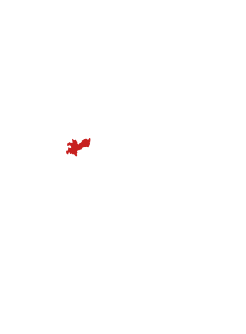
Ruta: Ruta Córdoba
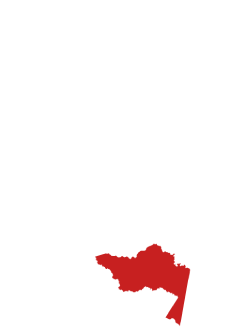
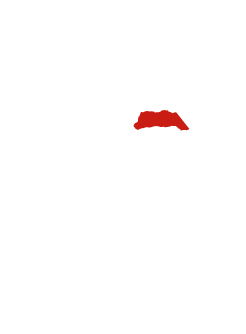
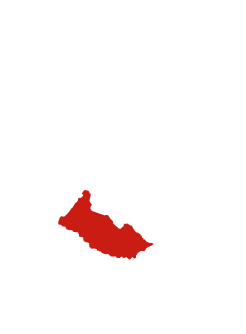
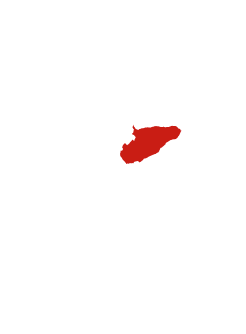
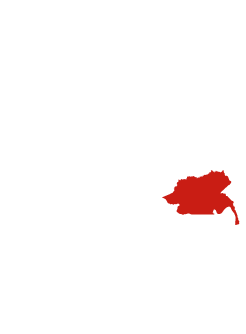
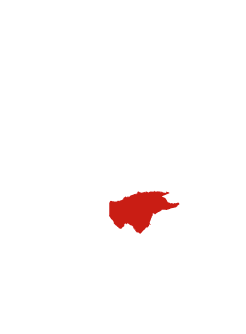
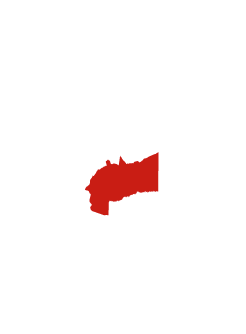
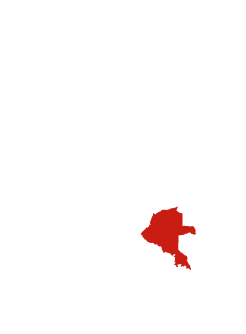
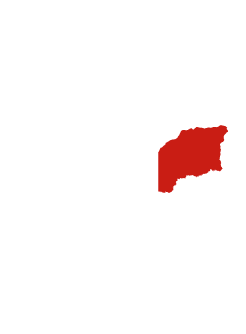
Ubicación: Tuchín, Córdoba
AGENDA TU VISITA
Comunidad del Porvenir, Plaza Principal o Casa de Gobierno Propio
3217508045
rangelbenitezruiz@gmail.com
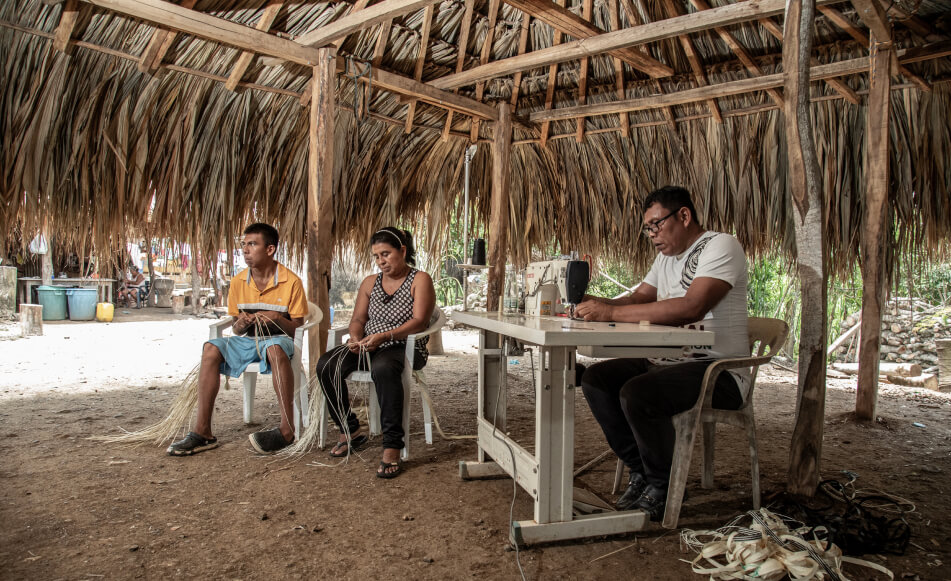
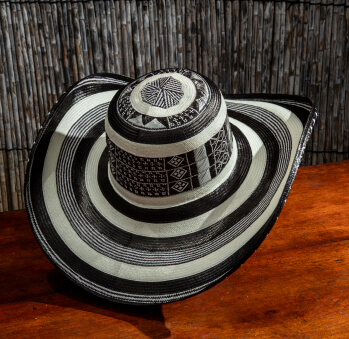
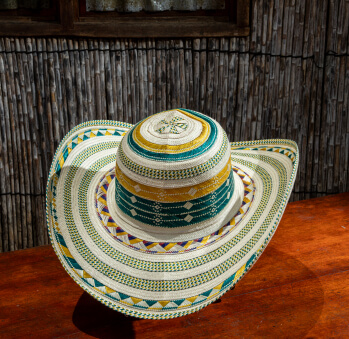
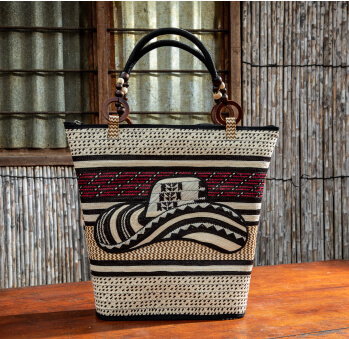
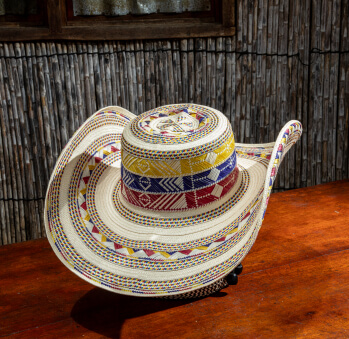
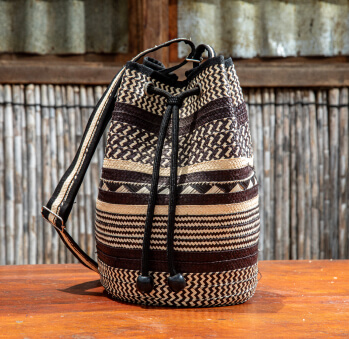
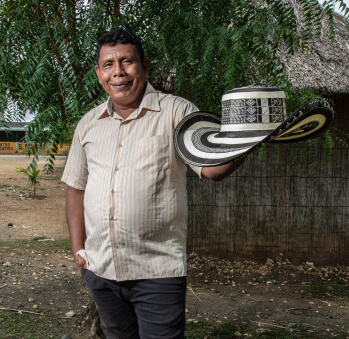
Entre una generación y la siguiente cambian los tiempos, y parecería que cambian aún más cuando se trata de generaciones de artesanos. Hace treinta años, cuando Rangel Antonio era pequeño, no le habría cabido en la cabeza el no trenzar para estar frente a una pantalla de teléfono, como les sucede a los niños de hoy. Es que para él era tan natural… La caña flecha, esa fibra que ha hecho famoso al sombrero vueltiao, ha hecho parte de las vidas de todos quienes viven en los resguardos zenú de Sucre y Córdoba, pues está en la base de su economía. Muchos empezaron a trenzarla desde que eran tan pequeños, que es como si hubieran nacido aprendidos. Pero a pesar de que hoy en día se les sigue enseñando a los niños a hacerlo, las dinámicas de la vida cotidiana llena de pantallas y de nuevas aspiraciones alejadas del trabajar con las manos, impiden que se dediquen de lleno al oficio. Por eso la preocupación de Rangel Antonio por encontrar nuevas formas de enseñar y acercarse a la artesanía.
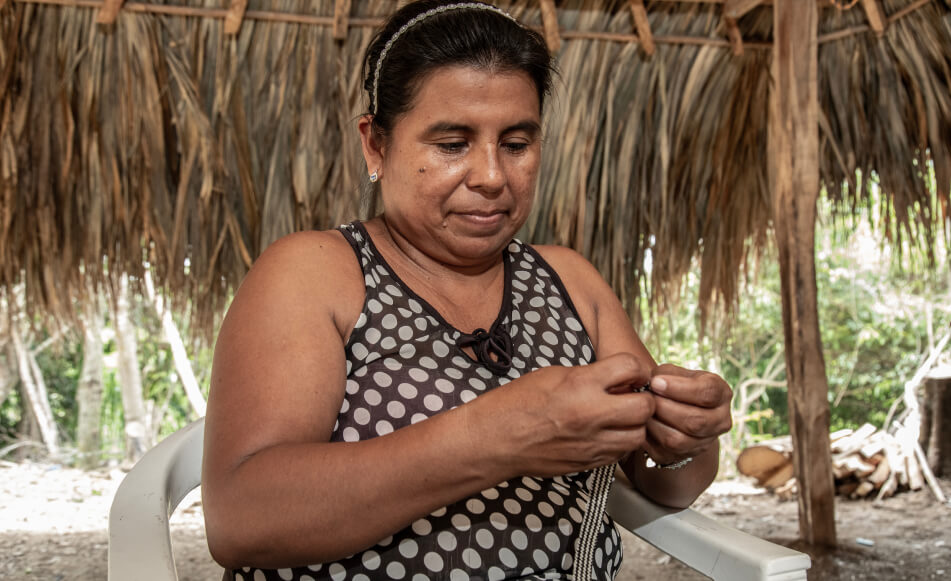
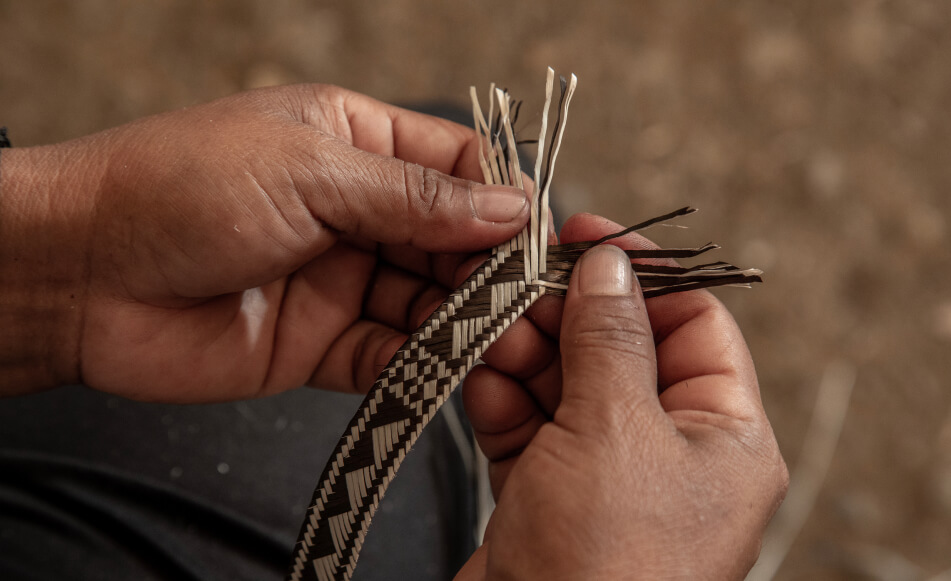
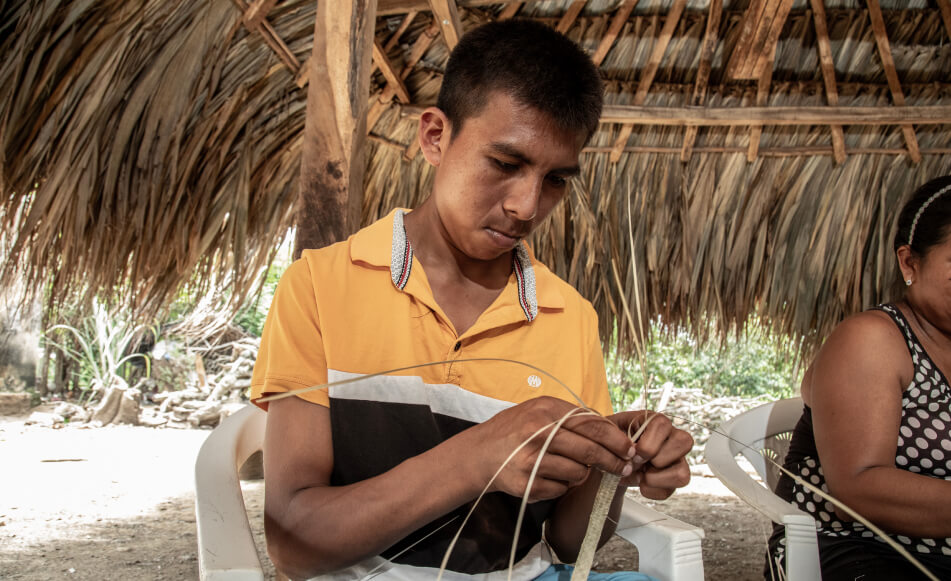
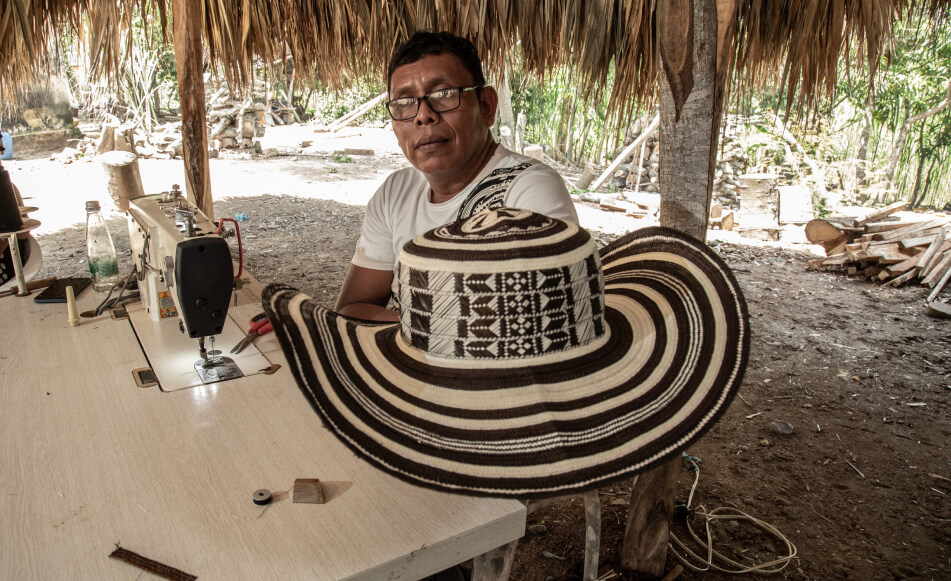
En su caso, la infancia estuvo atada al oficio. Sus padres, Georgina Ruiz y Carlos Benítez le enseñaron a trenzar, al igual que a sus tres hermanas menores. Las primeras lecciones no fueron con caña flecha sino con hojas de plátano o de popocho, a las que les clavaba la uñita para dividirlas en fibras y empezar a ensayar el pasar una por encima de la otra hasta hacerse un ribete básico de 7 pares, la cinta que adorna la copa de todos sus sombreros. Luego vinieron nuevos tejidos de nombres sonoros: el barriga e’ lobo de 7 pares, el corazoncito de 9 pares, el granito de arroz y el galillo e’ vaca. Cada sombrero pasaba por las manos de toda la familia. El padre lo empezaba haciendo la plantilla, luego la madre tejía la encopadura y acompañaba a los hijos a coser el ala. Terminaban cuando le amarraban el ribete a la copa. Así, Rangel y sus hermanas aprendieron de la cadena del sombrero y de cómo, gracias a él, había plata para sus gastos, el refrigerio o los cuadernos del colegio. A los diez, ya todos eran capaces de hacer cualquier parte del sombrero.
Lo mismo ha hecho él con sus propios hijos. Son cinco en la casa y lo hacen como bien saben las familias cordobesas: la plantilla la hace el padre, la copa la madre, el ala y el ribete los hijos: un sombrero al día. Aunque ahora, si se sientan a trenzar de noche, es bajo un bombillo, porque en sus tiempos, se reunían después de cenar hasta las diez de la noche alrededor de la luz de un mechón, sentados en círculo en una banqueta, y la cara les quedaba tiznada por el humo de la mecha. Trenzaban también antes de entrar al colegio y apenas regresaban a la casa, con lo que les quedaban libres las tardes para salir a jugar.
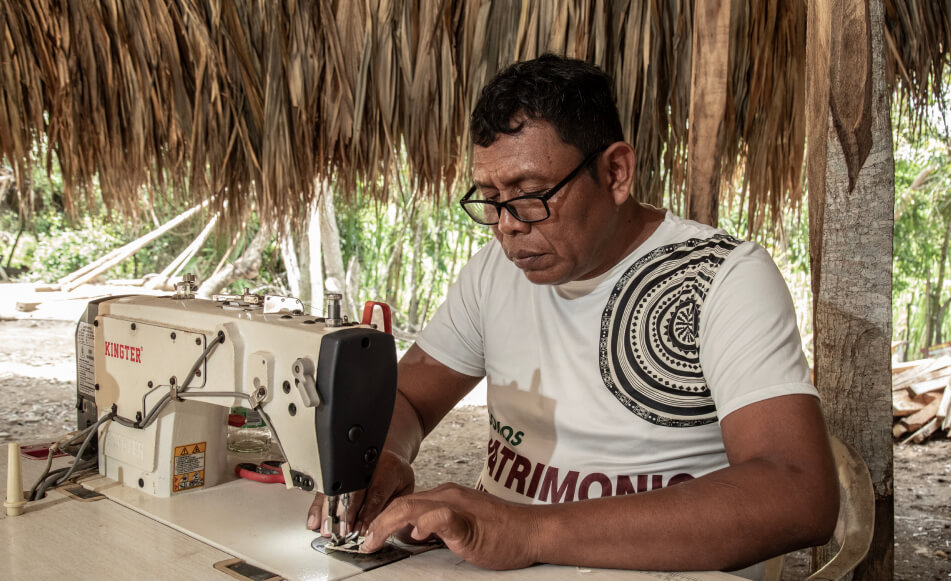
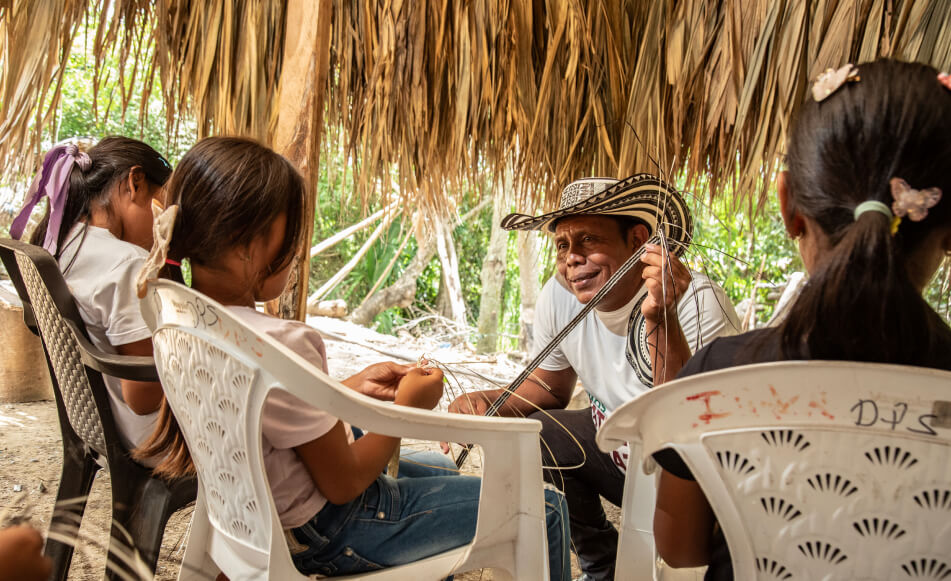
No olvidemos que Rangel Antonio es un artesano a quien no solo le preocupa ofrecer un buen sombrero vueltiao, sino que el conocimiento de su tejido se siga transmitiendo entre su pueblo. Lo atraviesa la pregunta sobre cómo llegarle a los niños, que son el futuro del oficio, y también sobre cómo darlo a conocer al resto del mundo. Por eso se ha convertido en un líder, no solo artesanal sino espiritual, y se reúne con los cincuenta niños que está formando en su comunidad cada ocho días. Y claro, está en manos de cada familia el seguirlos formando en la casa.
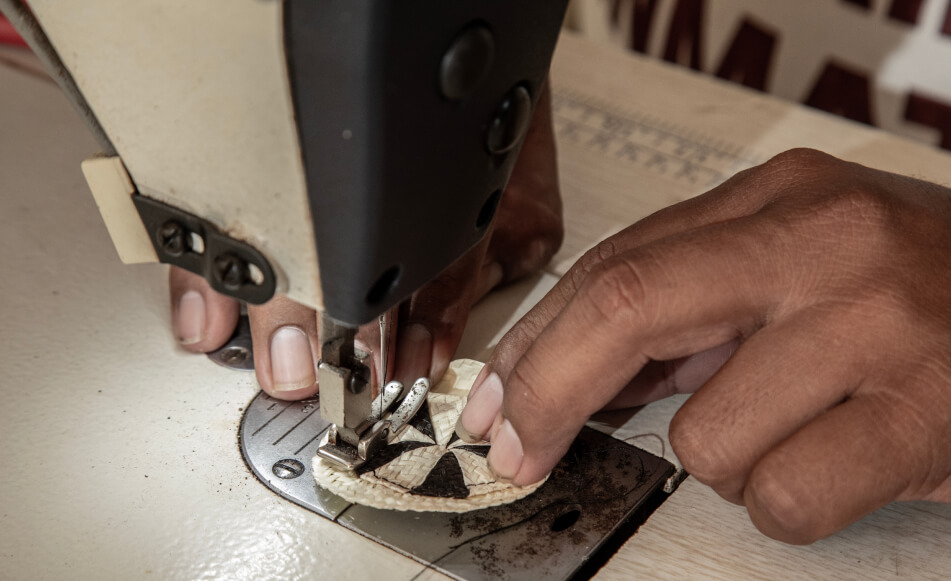
En esta historia, hubo un año muy importante para la comunidad de El Porvenir y para Rangel como líder allí: el 2022, cuando 14 familias decidieron asociarse para buscar cómo mover sus sombreros. Fue su año de la suerte, pues se asociaron, asistieron a su primera feria, se asesoraron para diseñar la Ruta del Sombrero Vueltiao’, y ese mismo año les llegó una propuesta para recibir a los turistas de los cruceros de National Geographic: se trata de expediciones enfocadas en la naturaleza, la historia y la conservación de los destinos que visita por todo el mundo y que, además, han creado alianzas con las comunidades locales para apoyar sus economías. Por eso, desde los primeros viajes del crucero por el caribe colombiano en 2022, en El Porvenir les muestran a los viajeros cómo se corta y desbarita una caña para quedarse sólo con la nervadura de la hoja, cómo se raspa, ripia y tintura con barro, y finalmente, cómo se trenza y cose.
Este artesano, que ha estado tejiendo desde que tiene cuatro años, ha sido y es un guía incomparable para quienes quieren conocer más de este proceso, pues sabe que todo lo que son es gracias a esa fibra, y se llena de orgullo al recordar que el trenzado zenú está declarado como Patrimonio Cultural Inmaterial de la nación. Cada vez que comparte su proceso, recuerda a sus abuelos, a todos los que vinieron antes y ya no están, y se llena de fuerzas, pues sabe que ese amor por el sombrero que es su diario vivir, su alimento y su vida, seguirá latiendo en él y las próximas generaciones, sin importar el esfuerzo que requiera.
Taller y proceso
Artesanías
Artesanos de la ruta

Artesanos de la ruta



No puede copiar contenido de esta página