






Alex Castilla
Workshop: AOC Wood and Leather
Craft: Leatherwork
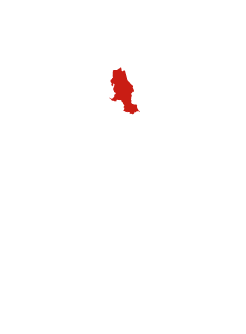
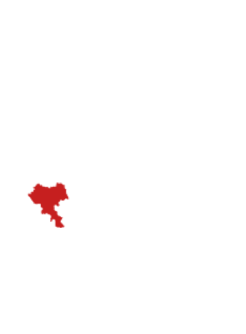
Trail: Cordoba Route
Location: Montería, Córdoba
SCHEDULE YOUR VISIT
Av 1 entre calles 36 y 37, Centro Cultural Guillermo Valencia Salgado, local 43
3202632099
woodandleatheraoc@gmail.com
@aocwoodandleather
@woodandleatheraoc
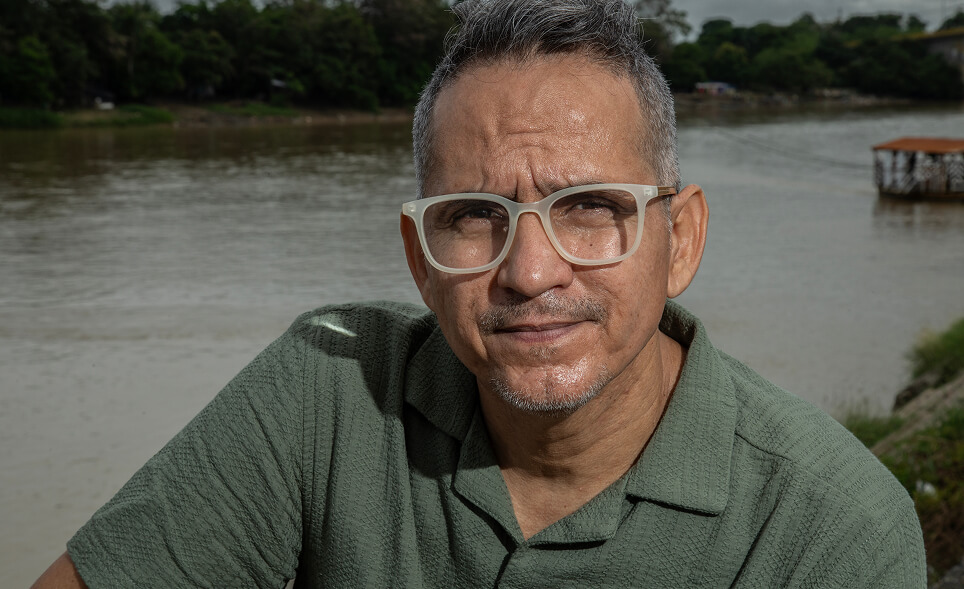
More than thirty years ago, Álex Castilla stepped into a leather workshop for the first time. It was the shoe factory where he began working at the age of thirteen, following a friend’s recommendation, in his hometown of Cúcuta. It was not the life he had imagined for himself, and surely his story would have unfolded differently had he not been forced to leave home at eleven, abandon school, and start looking for work so early. But circumstances left him no choice after the death of his aunt by marriage, Alicia, the woman who had raised him, and he decided not to remain in the care of his uncle. So, still a child, he set out on his own and was compelled to grow up far too soon. The road remained difficult for many years, until he finally found both the time and the peace of mind to create, to open his own leather workshop, and return to the very craft that had first come into his life during those challenging years.
A great deal happened between that first encounter with leather and the life he leads today as an artisan. The story goes like this: Álex lost his father when he was four, and that was when Alicia took him in. She was the matriarch of the household, the one who gathered the whole family to prepare tamales and mute, the traditional soup they sold on weekends. He vividly remembers how the work was divided: one person placed the filling on the plantain leaf, another wrapped everything in a bijao leaf, another tied each tamal with string, and he made a bed of plantain leaves at the bottom of the large pot so they could steam properly. He also remembers the arepas de maíz pelado, that delicious specialty from Santander made by boiling corn with ash before grinding it together with cassava and pork cracklings. His job was to collect ash from homes with wood-burning stoves, boil the corn in a large pot, and replace the water every other day to keep it from fermenting. The result was irresistibly thin, oversized arepas. There was so much creativity devoted to food, something Álex naturally absorbed and still draws upon today. He also remembers the colored pencils of his cousin Magaly, her drawings of the Pink Panther and Inspector, and the early dream of studying at the School of Fine Arts. Then Alicia passed away, and that creative dream faded with her.
So he ventured out into the world. His first job was cleaning boarding houses. Looking back, he says that God rescues people little by little, because life gradually began to improve. At the shoe factory, he learned assembly, skiving, and cutting, the part he enjoyed most because it felt like playing Tetris, arranging the patterns across the hides to make the most efficient use of every piece of leather. By seventeen he had already become head cutter, but at that age no one took him seriously, so he left. What followed were years and years of traveling across Colombia selling books, encyclopedias, and software. He discovered he had a real talent for sales, which took him as far south as the Amazon, across all of Antioquia and Nariño, and even to Tulcán, Ecuador. Later, during a sales trip to Chocó, he realized just how exhausted he had become and decided to shift into selling cars instead.
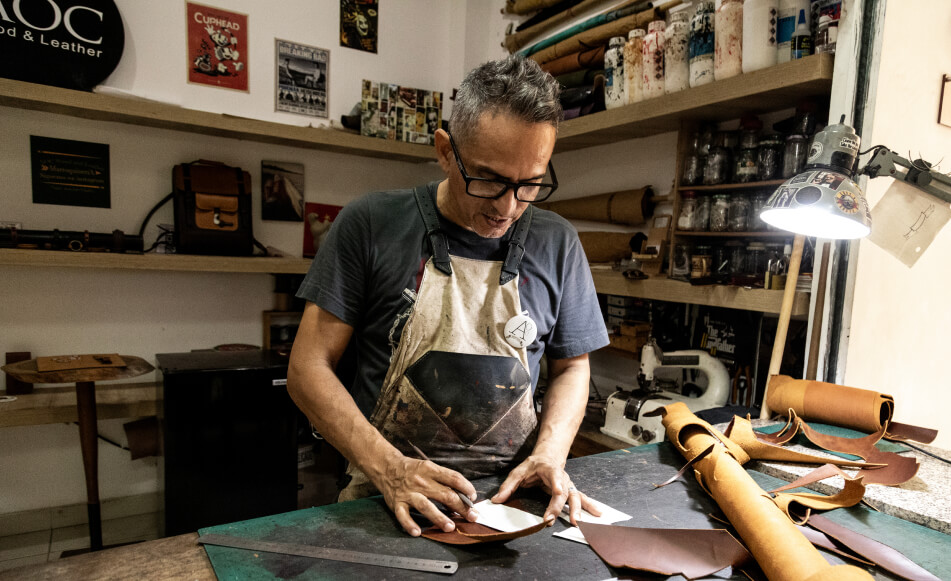
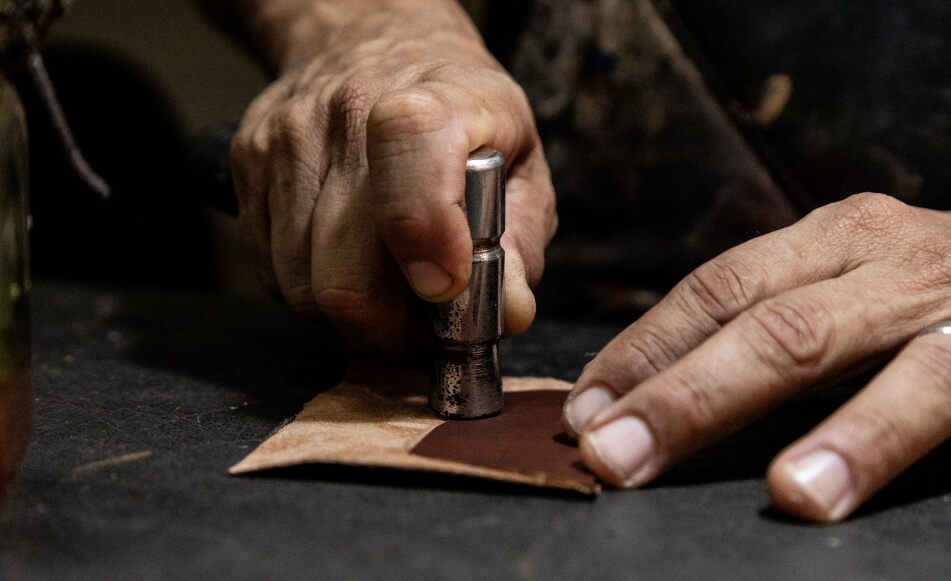
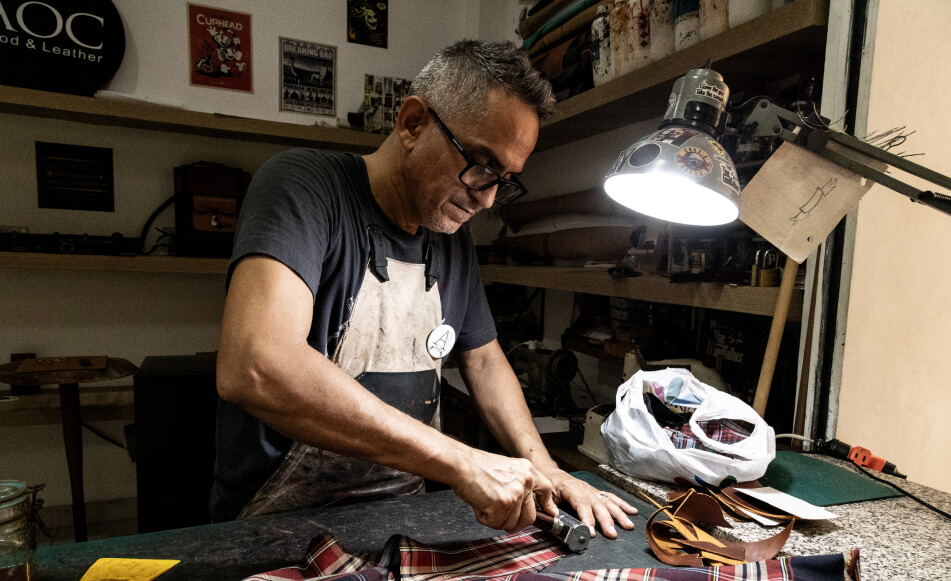
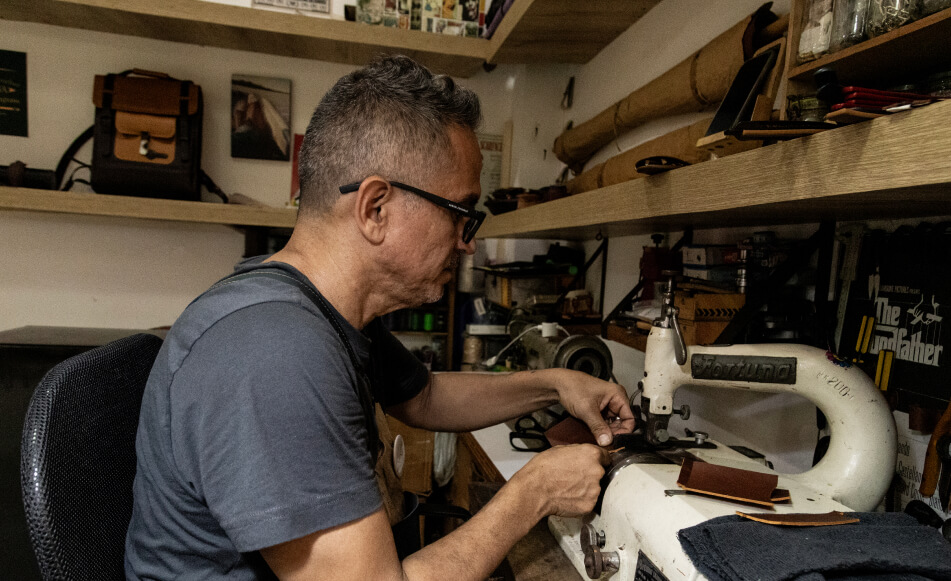
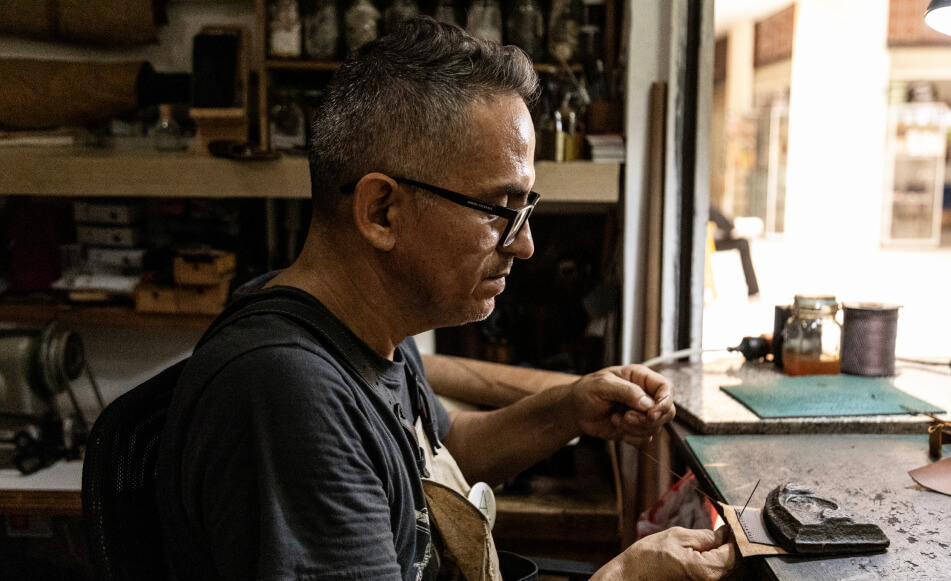
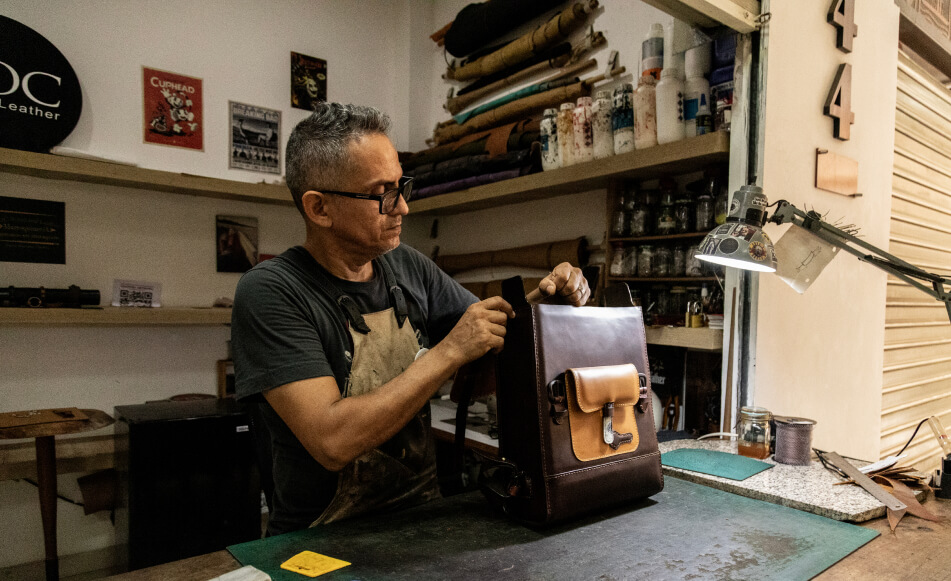
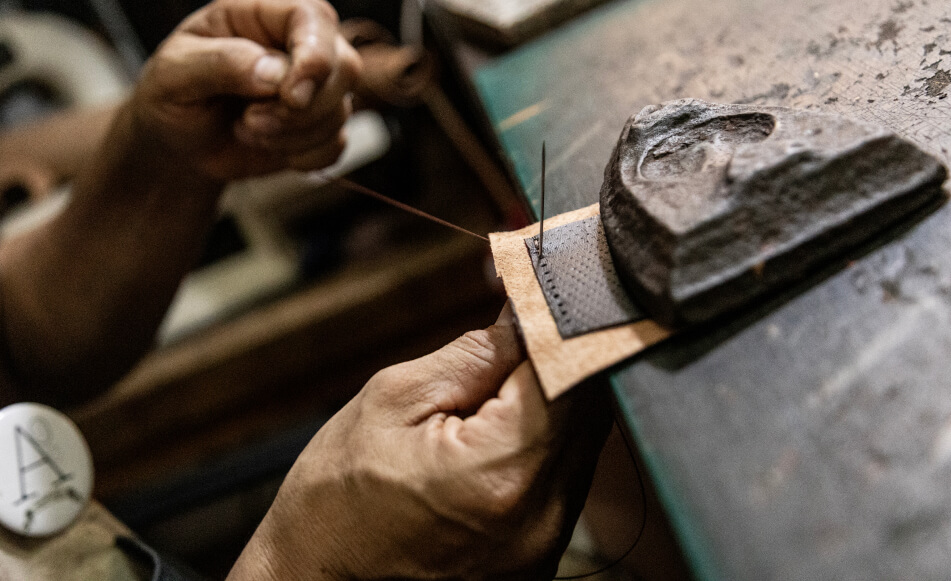
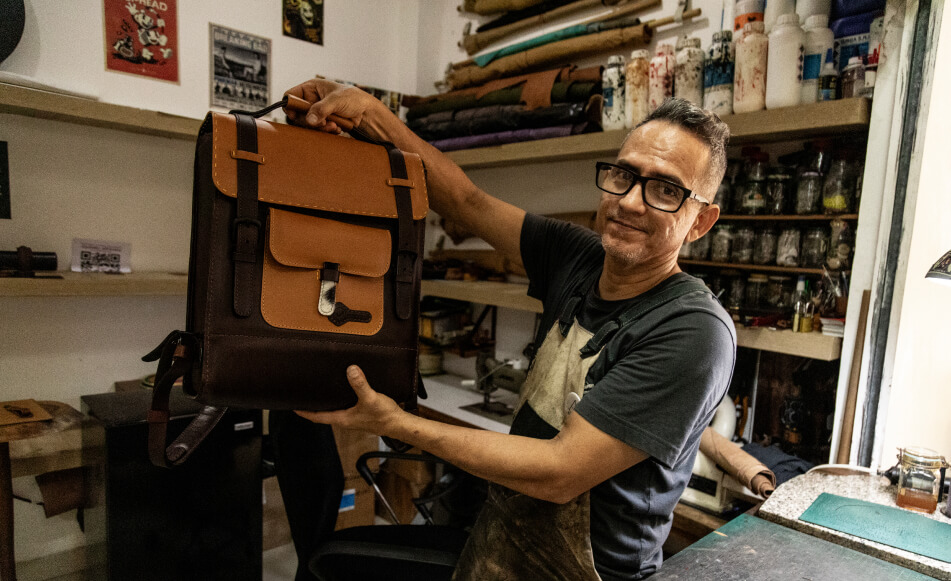
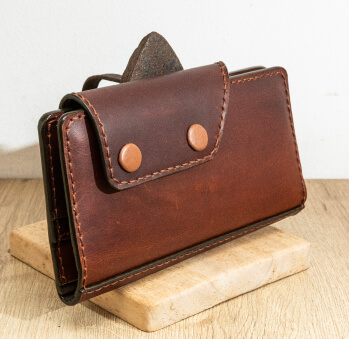
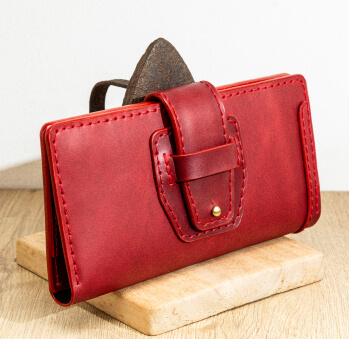
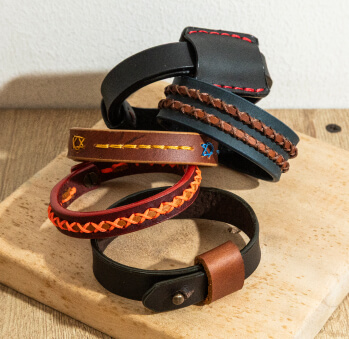
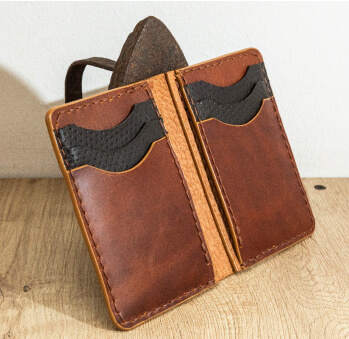
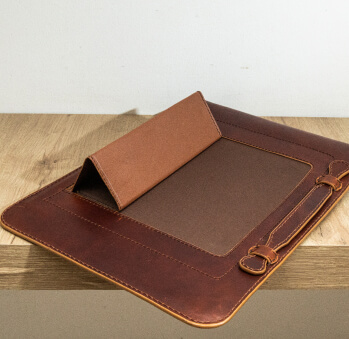
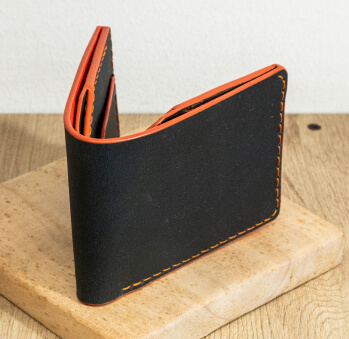
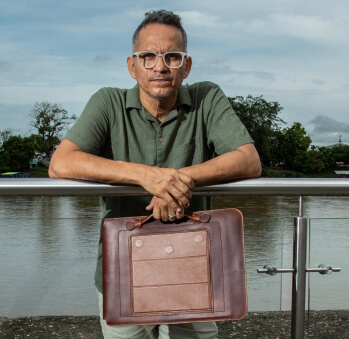
Little by little, he slowed the pace of his working life until, after settling in Montería with his family, leather found him once again. It knocked on his door when he decided to join his son at an entrepreneurship fair and said, “Let’s make something out of leather.” He dusted off the skills he had stored away for years, and together they began with small pieces that gradually evolved into the wallets, notebooks, and bags they produce today. Naturally, the workshop became a family project involving two of his four children and his wife, Oliva. He realized how much the trade had changed, with new tools, techniques, and finishes, and it was finally time to learn the one part of the process he had never mastered at the factory: sewing. Times had changed so much that what had once been considered women’s work now found him spending hours at the workbench hand-stitching every piece. Such was the journey of living an entire lifetime before returning to the craft he truly loved and discovering that he could still keep learning. That is why everyone who wishes to begin is welcome in his workshop, where they start with a simple leather bracelet. And as for leather itself, he dreams of making even better use of it now that life has brought him to Córdoba, Colombia’s great cattle-producing region, where, despite its rich livestock tradition, leather craftsmanship has yet to receive the recognition it deserves.
Workshop and process
Craft
Artisans along the way

Artisans along the way



No puede copiar contenido de esta página