
María Marulanda
Workshop: Artesanías Marulanda
Craft: Woodwork
Trail: Cordoba Route
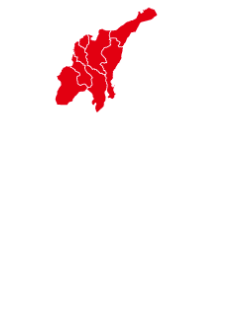
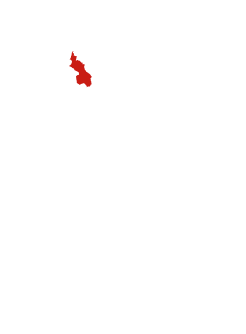
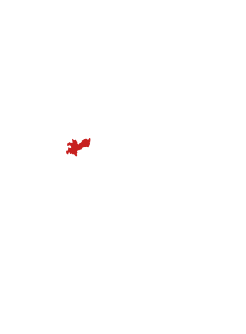
Location: Montería, Córdoba
SCHEDULE YOUR VISIT
Tienda en el Centro Cultural Guillermo Valencia Salgado - Cl. 36 #1-22 Taller en el Barrio la Candelaria Calle 1A #26-59
3156583194, 3126717705
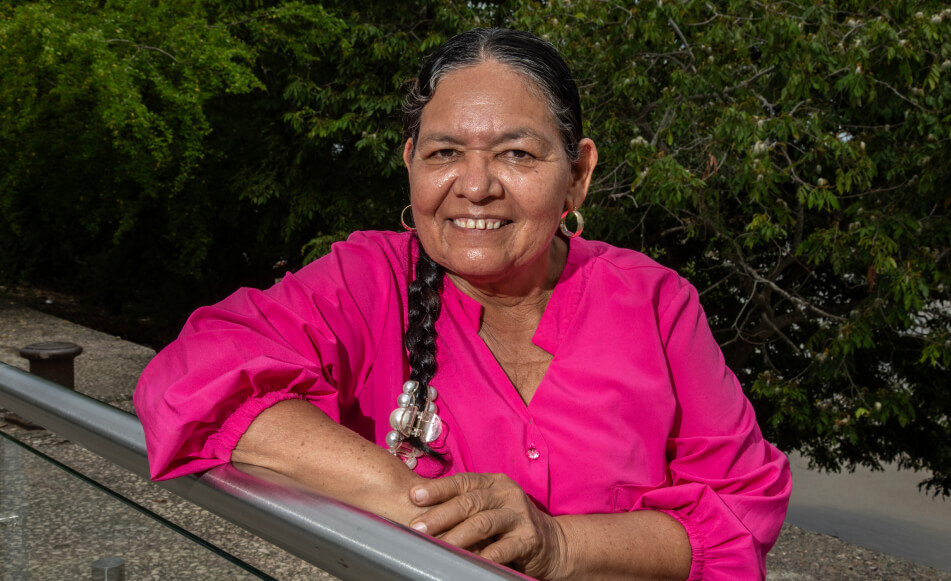
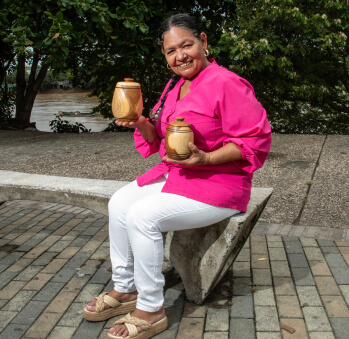
María has spent many years working with wood—and fighting her way through life. It has not been an easy journey, but she has found solace in the beautiful objects she creates and in her decision to immerse herself in her craft, one that eases her stress and allows her to dream of a larger workshop, more employees, and a store filled with finished pieces. Carving teak and rain tree wood, the specialty she has devoted herself to, has also become the trade of several members of her family. But in the Marulanda family, this legacy did not come from a grandfather or grandmother. Instead, it came from a man named Benito Payares, María’s brother-in-law. Remembering him now that he is gone is another way of thanking him for the gift he left behind.
Back in the 1990s, Benito Payares returned to Colombia. He had lived in Venezuela with his brother, like so many Colombians who crossed the border to take advantage of the country’s booming economy, and somewhere along the way he learned the art of woodcarving. Venezuela has long been home to master woodworkers, and Benito became one of them. When he returned, he married Kelly, María’s sister, and began sharing his knowledge with his new family. One by one, he taught his brother-in-law Jorge, María, another brother-in-law, José Alejandro, his nephew by marriage José Miguel, Miguel, María’s son-in-law, and of course his wife Kelly and the daughter they had together.
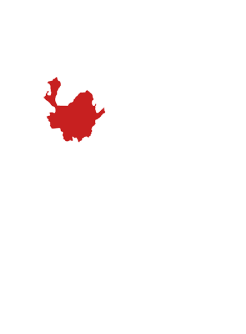
Whenever María remembers Maestro Benito, her throat tightens with emotion. He gave her so much. She recalls those first lessons, when she and her brother would chop away at blocks of wood “back when our eyes were still good,” she says now, with her own vision no longer as sharp as it once was. She had just left everything behind in San Marcos, Sucre, where she owned a small cart selling plastic household goods—basins, Rimax chairs, buckets—which she sold after being told, “Come here and learn Señor Benito’s craft.” It was not the first time life had changed her plans without asking. She had arrived in San Marcos fleeing the violence that forced her entire family out of Bélgica and scattered them across the country. Bélgica was the small village in the municipality of Cáceres, northern Antioquia, where she and her nine siblings had grown up with their parents, María Fanny and Heriberto, who had spent his life working in the gold mines until the family was forced to flee during the violence of the 1990s. During that first displacement, María lost the little house she had in Bélgica and moved to San Marcos. She had just turned thirty and decided to bring her mother with her. They spent more than ten years there, during the years of the plastic goods cart, until relatives living in Montería encouraged them to move again and invited María to learn wood carving from Señor Benito. She never forgets how her mother—whom she misses every single day since her passing—used to tell her, “My daughter, you’re completely in love with your pieces of wood,” when she saw her beginning to work with this material: the wood that ultimately reunited her scattered family.
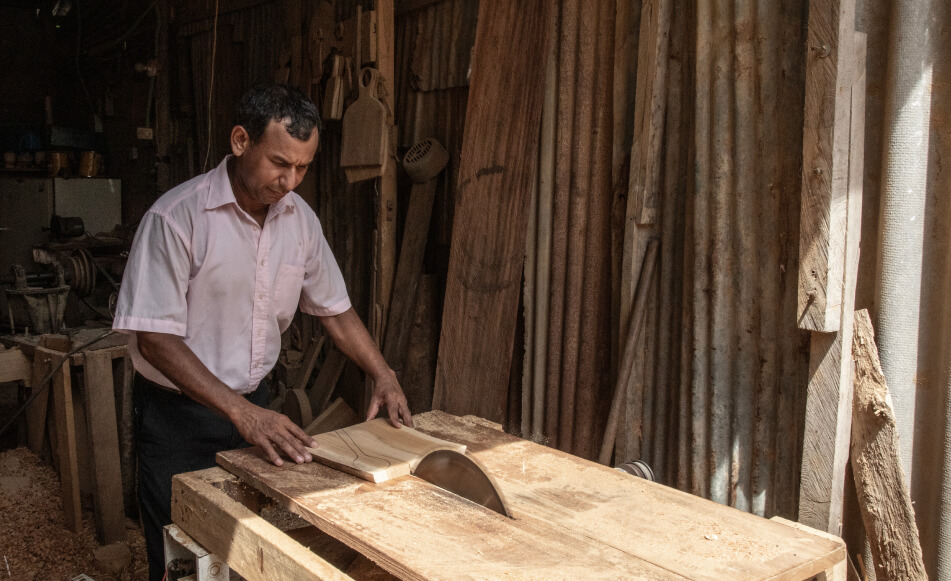
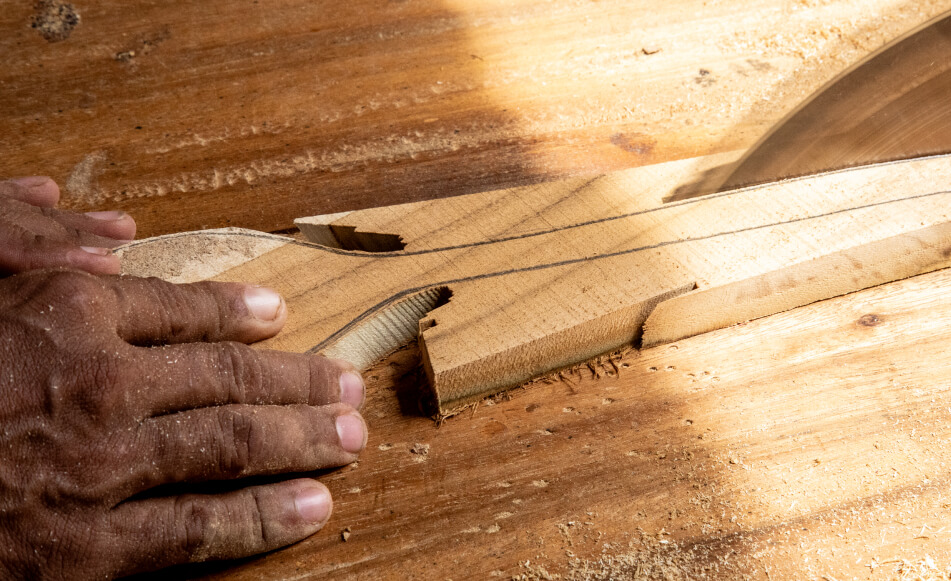
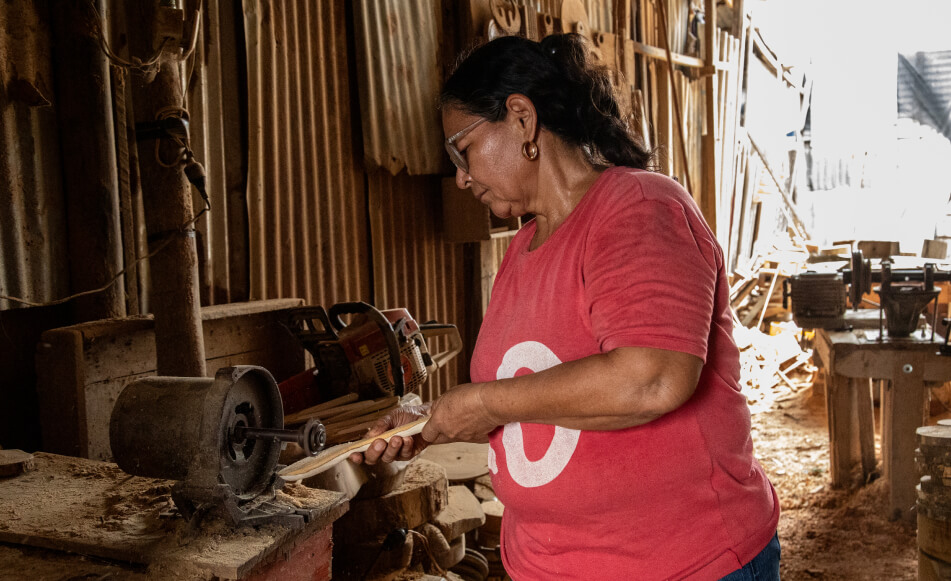
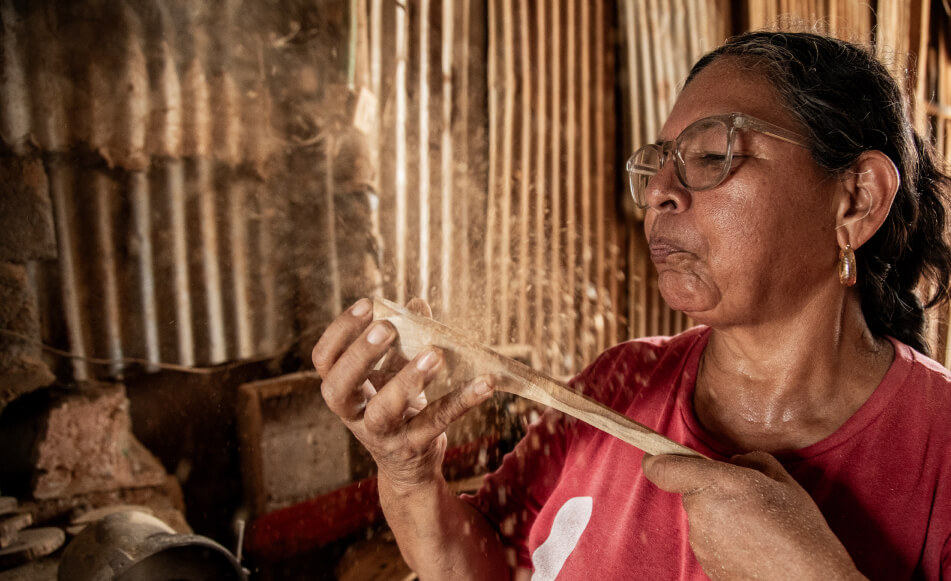
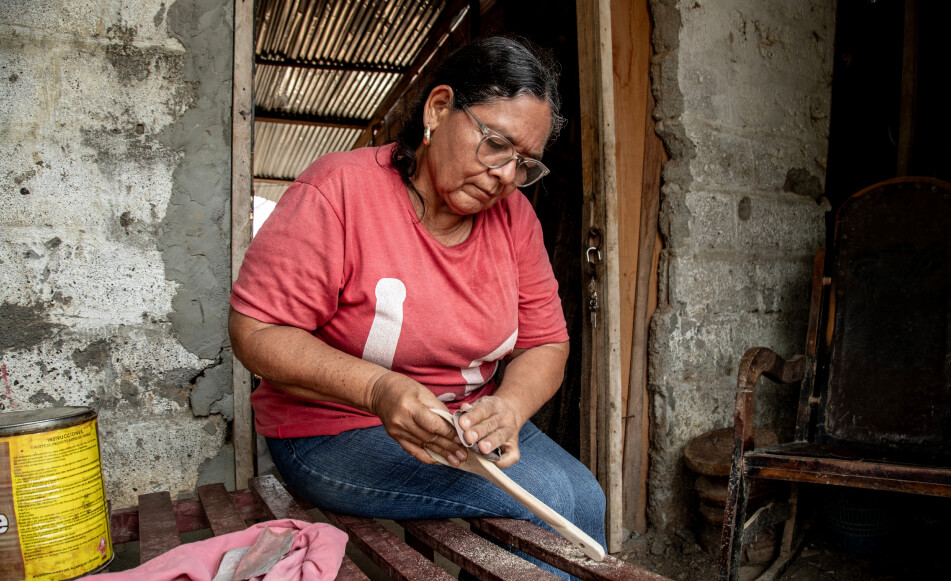
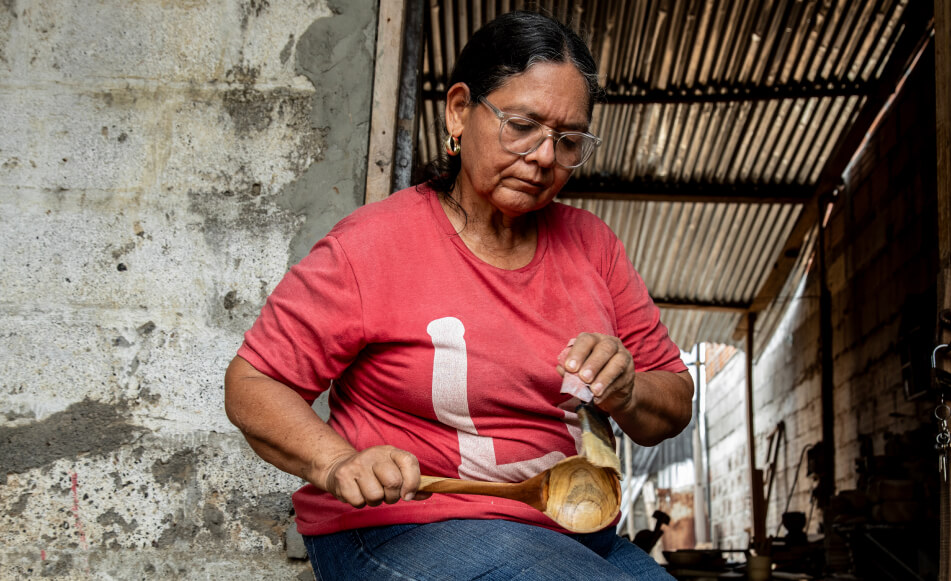
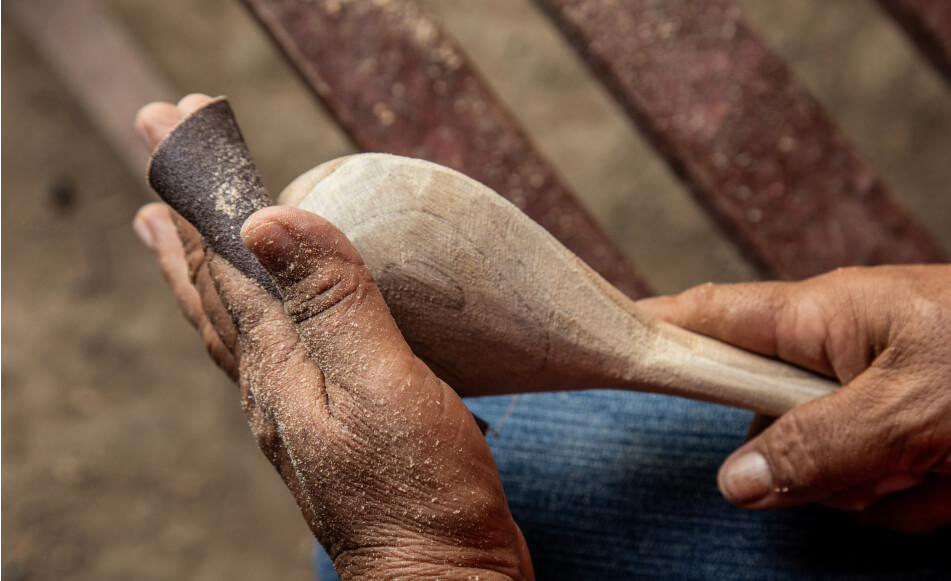
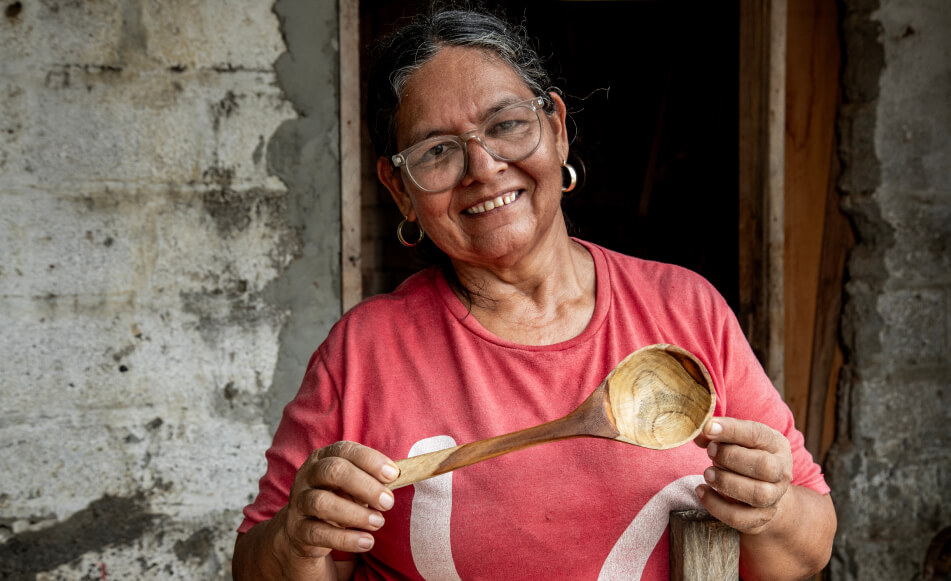
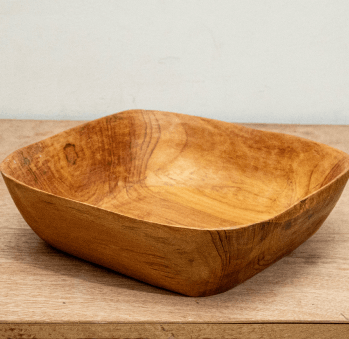
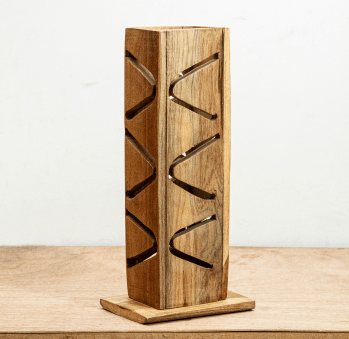
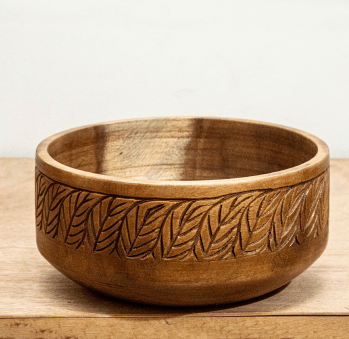
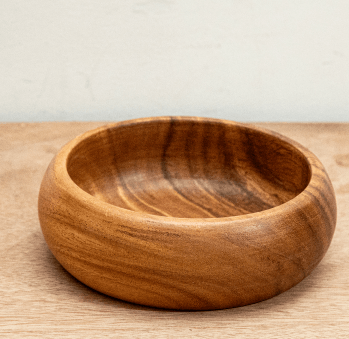
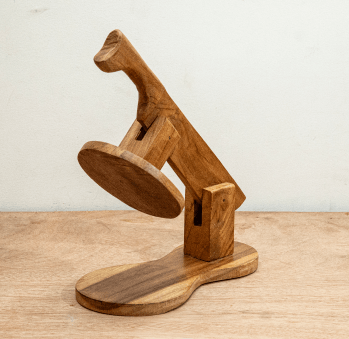
More than twenty years have passed since María began transforming wood, and she says she never stops working because the craft demands daily dedication: hollowing, cutting, sanding, and polishing. When she reflects on her work, she realizes that her love for it has never faded, despite spending decades making plates, trays, cups, and, above all, the hollowed wooden spoons that have become her specialty. She carves them using the Catalina, an ingenious tool her master invented by attaching a bicycle sprocket to a motor. It suits María perfectly because, being left-handed, she finds it difficult to use a conventional wood lathe. It is this same love that she wants to share with others, showing visitors how they carve noble woods such as teak and rain tree, and how they finish each piece with olive oil and beeswax, all while continuing, little by little, to build the large workshop she dreams of, and filling the shop she runs at the cultural center beside Montería’s riverwalk with beautiful handcrafted objects. She wants people to discover this craft that, in the end, made it possible for her family to come together again in Montería to learn from their master, his patience, and his devotion to detail. For María, woodcarving has become the symbol of calm after the storm.
Workshop and process
Craft
Artisans along the way

Artisans along the way



No puede copiar contenido de esta página