






Martha Olivia Betancur
Workshop: Taller Carmenlivia
Craft: Ceramics
Trail: Antioquia Route
Location: El Carmen de Viboral, Antioquia
SCHEDULE YOUR VISIT
Taller: Barrio El Progreso #14-06 Casa Museo Carmenlivia Almacén: al frente de la Iglesia San José Cra 31a #18-80
3116138339
carmenlivia0123@gmail.com
@carmenlivia_1974_
@people/CarmenLivia/61574581731461
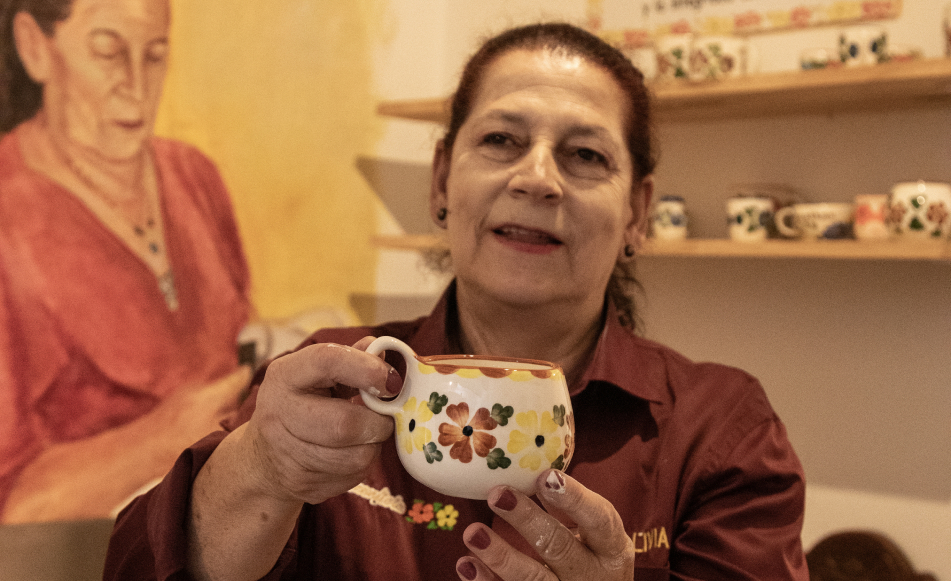
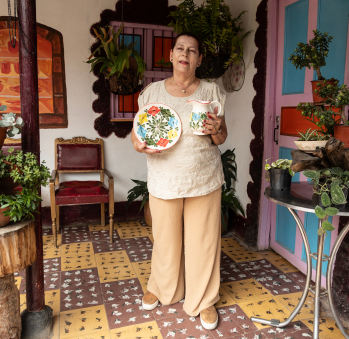
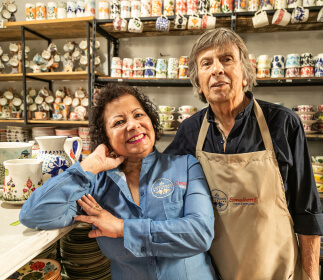
Martha Olivia Betancur goes by many names: Liviecita, Livia, or, as she is best known today, Carmenlivia, the name she chose for her own ceramics workshop after spending more than forty years working in those of others. She named it in honor of her mother, Carmelina, one of the women who created a decorative pattern—known locally as a pinta—that would become one of the iconic designs of El Carmen de Viboral ceramics. Hers is a story that spans more than half a century, one that remains very much alive and is determined to continue for generations to come.
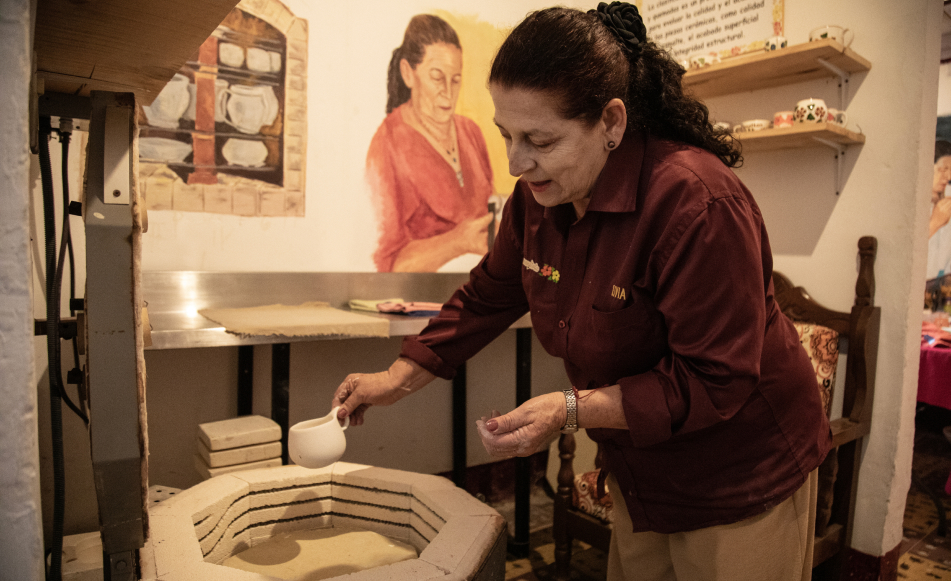
Livia, as she prefers to be called, is an extraordinarily warm woman whose life revolves around ceramics—not only making and painting them, but also teaching the craft. Every time she draws her mother’s signature floral pattern, she feels Carmelina’s presence beside her. Looking back on her many years, she realizes that she truly grew up with this trade. Everything she has built in life, she says, has come from ceramics. Both of her parents worked in El Carmen de Viboral’s ceramic industry, a tradition that began in the late nineteenth century and reached its golden age around the 1970s with renowned workshops such as Continental, El Dorado, Locería Júpiter, Palissy, Nacional, San Antonio, Moderna, and Kiramá. The craft later gained renewed recognition when it received its Denomination of Origin in 2011, placing the town’s ceramics, quite literally, back at the center of the table.
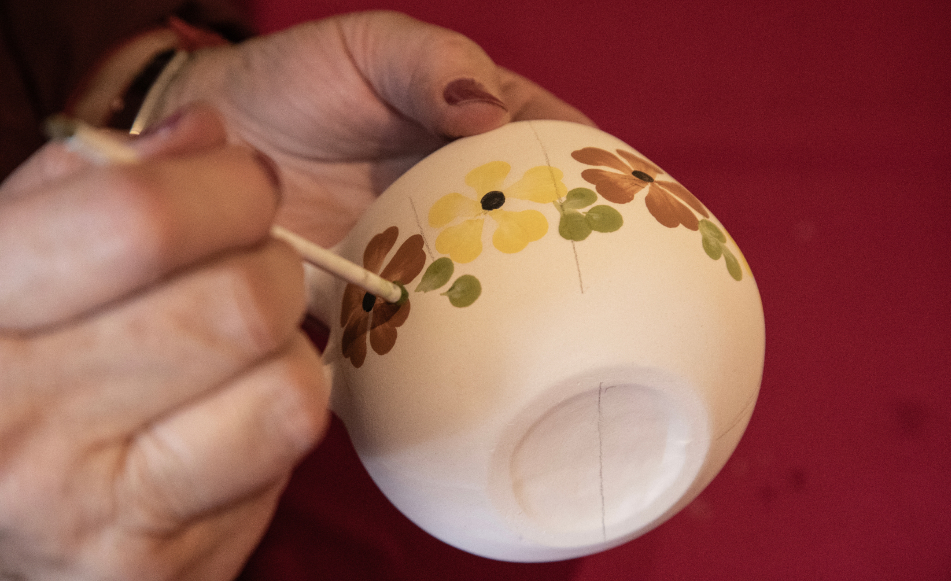
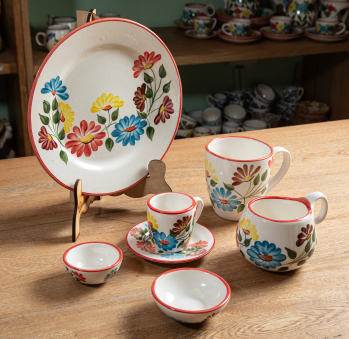
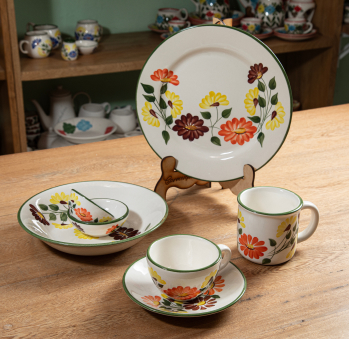
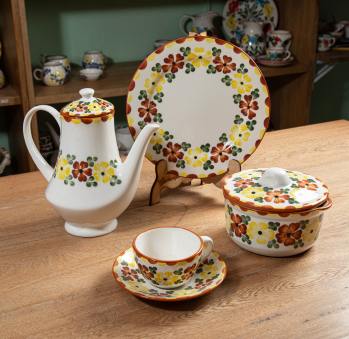
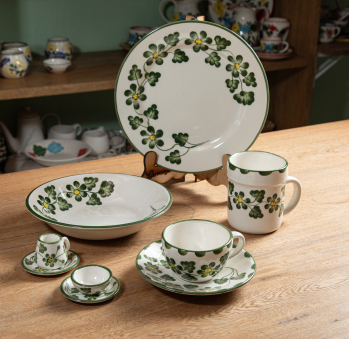
One of Livia’s earliest memories is bringing breakfast to her father, Miguel Ángel Betancur, when she was only five years old. He worked tending the kilns, loading them with pottery and constantly feeding the firewood to maintain the steady temperatures needed for firing. She also vividly remembers the day she and her mother began working together at the renowned Cerámicas Continental workshop in 1970, when she was fifteen. At that time, decorating tableware was considered men’s work. But after the male decorators left the factory during a wage dispute, women were given the opportunity to take over the decoration process. Among them was Carmelina, who, while experimenting with floral motifs one day, created a design that would become famous. Today, her “Carmelina” pattern—a lush garden of pansies, hydrangeas, clovers, and daisies—continues to bloom across dining tables.
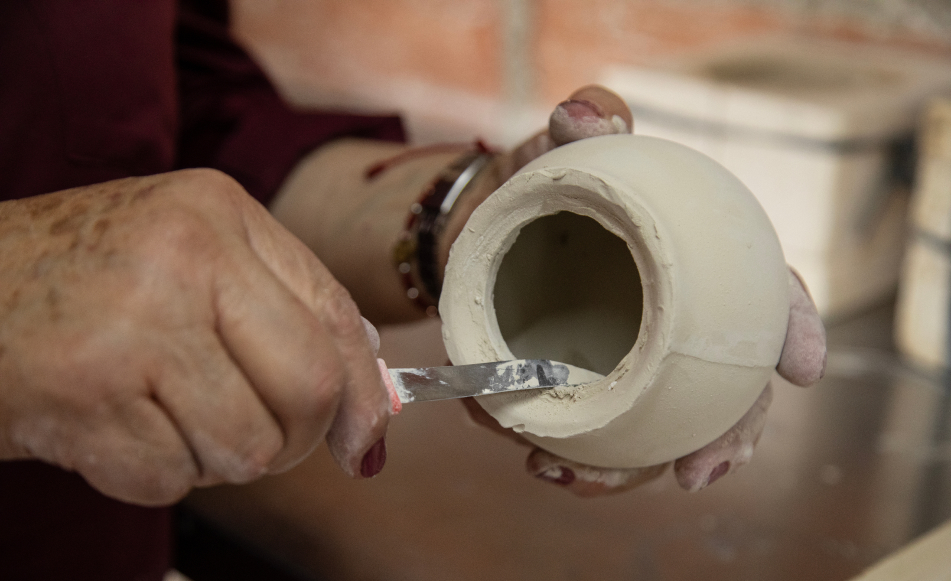
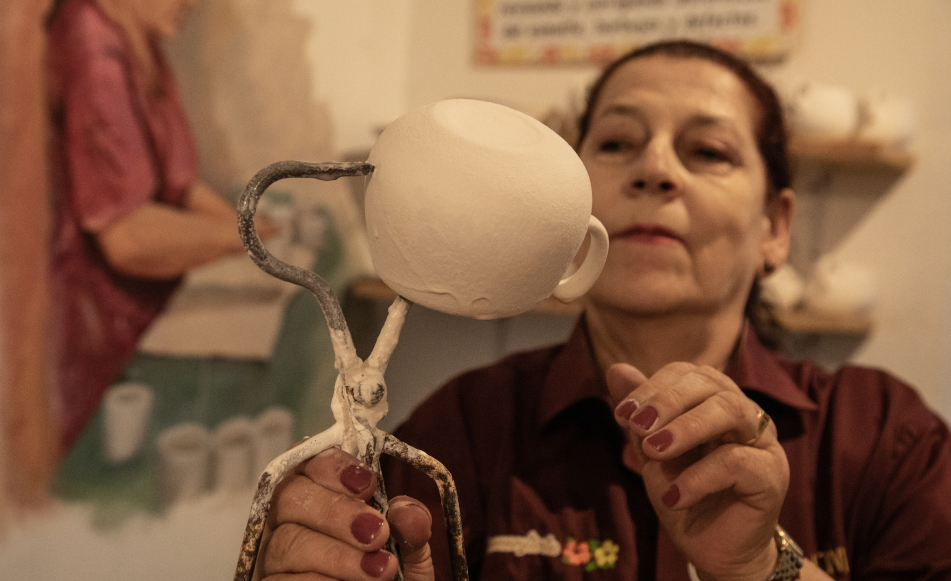
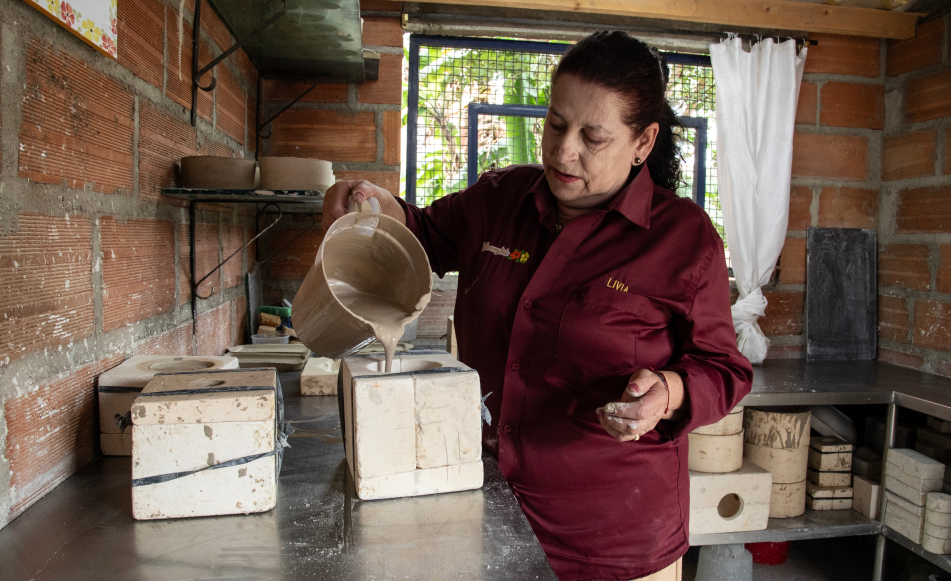
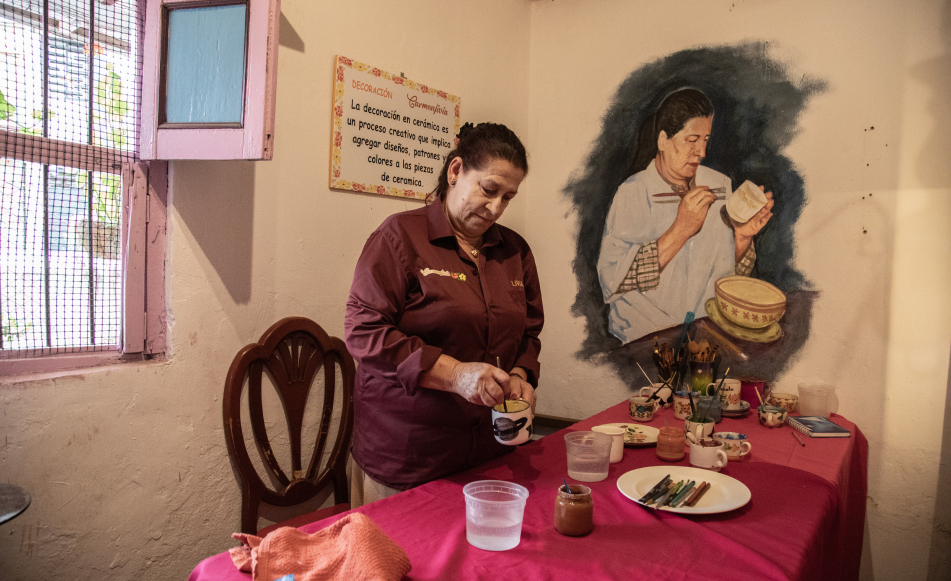
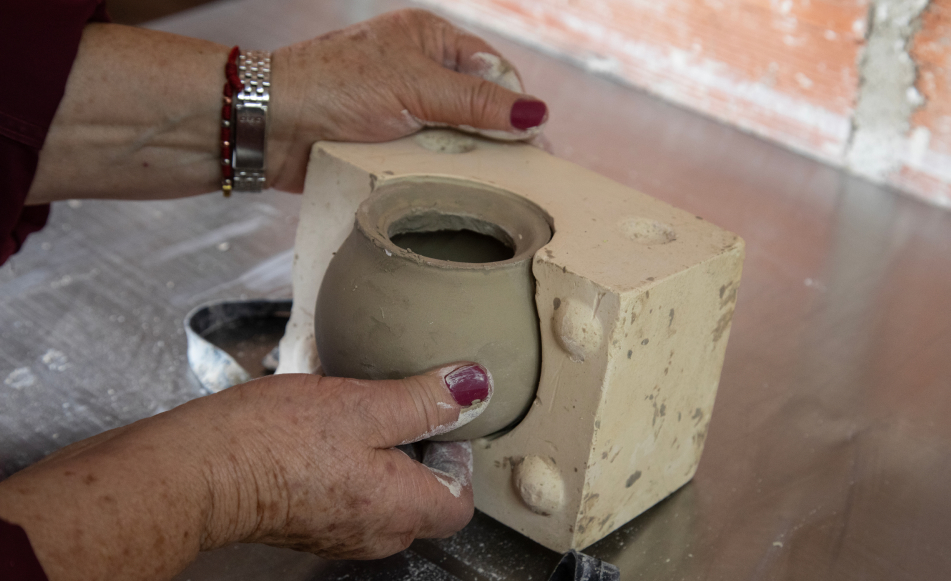
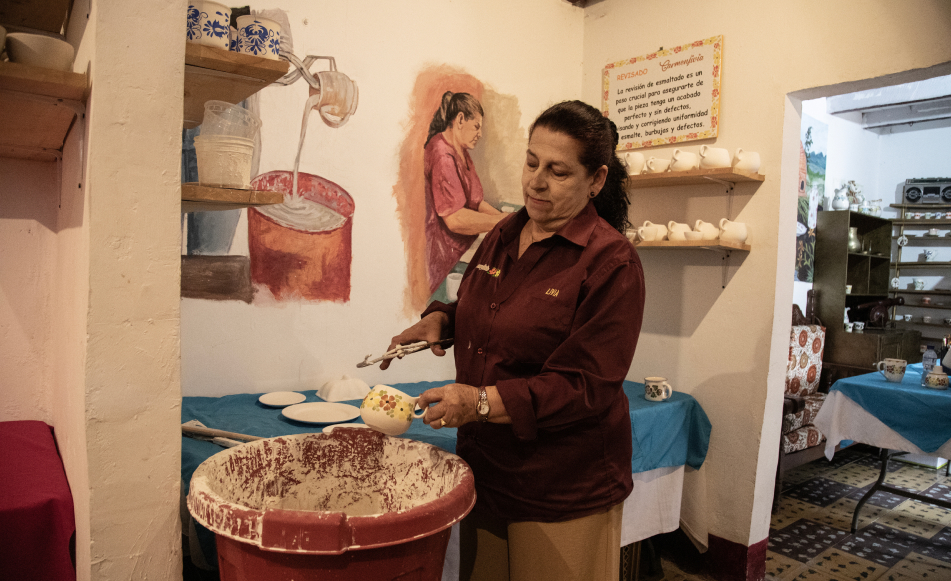
Because she entered the trade at such a young age, Livia learned every stage of ceramic production, eventually even serving as a quality-control inspector. Perhaps that is why she teaches the craft with such confidence today. Even so, she readily admits that decoration remains her favorite part of the entire process. She fondly recalls learning alongside her mother, watching Carmelina improvise tools by cutting plastic tubes, candy sticks, and ballpoint pens, then inserting small pieces of makeup sponge into them to create unique stamping instruments. It was through these homemade tools that the now-famous Carmelina pattern came to life. Watching her mother create was a constant source of wonder. Carmelina would return home, suddenly imagine a new flower or composition, and immediately begin experimenting on whatever surface happened to be nearby.
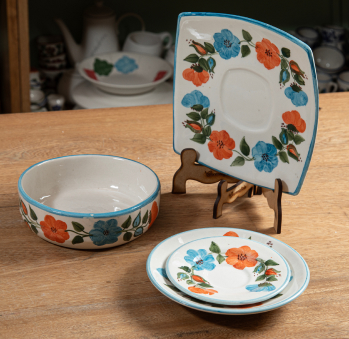
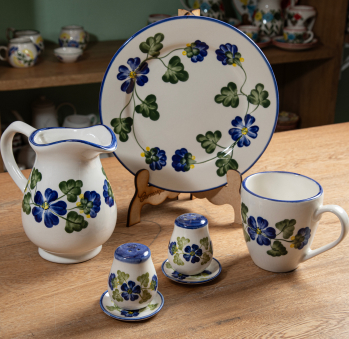
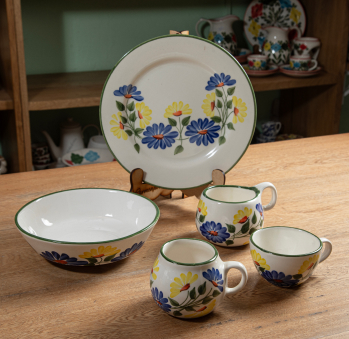
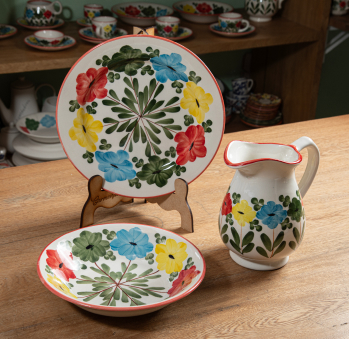
Together they also developed another celebrated pattern: the Cartago design. This new floral composition earned its name after the Betancur family, founders of Cerámicas Continental, submitted it to a competition in Cartago, in the Valle del Cauca. The design won first prize, and with it came the name that has endured ever since. Livia remembers every detail of those years. Today, working alongside her daughter Ángela, she takes great pride in preserving and passing on the knowledge of these historic decorative patterns: Carmelina, Cartago, Viboral, Florelba, and many others now produced in their workshop. Livia herself has continued to reinterpret tradition. She has always loved bright red flowers, so she introduced vibrant crimson into the classic Viboral design, whose original palette included an ochre blossom. She has also created entirely red and orange patterns, inspired by the blooming guayacán tree that grows near her workshop.
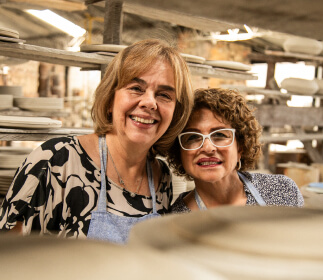
After retiring from Cerámicas Continental and later working at other workshops, including Renacer and El Dorado, to complete the years required for her pension, Livia finally decided to open a workshop of her own. The idea came from her children, who saw how much she enjoyed teaching and welcoming visitors into her home. Her daughter offered her house so it could become both a workshop and studio, and together they opened a small storefront where they could display and sell their ceramics. In doing so, Livia succeeded in drawing her daughter into the family’s story—ensuring the passing of her legacy.
Workshop and process
Craft
Artisans along the way

Artisans along the way



No puede copiar contenido de esta página