

















Mauricio Acevedo y Adriana Zuluaga
Workshop: Acevedo Zuluaga Guarnielería
Craft: Leatherwork
Trail: Antioquia Route
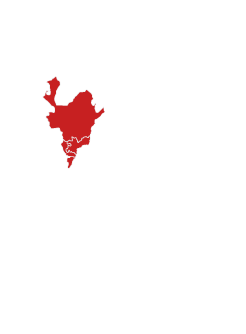
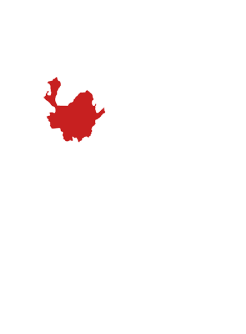
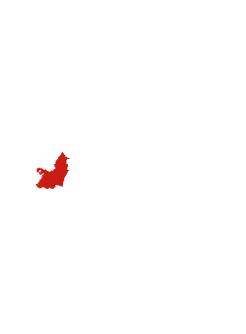
Location: San Pedro de los Milagros, Antioquia
SCHEDULE YOUR VISIT
Entrada por el Km 2 Vía El Tambo, Pantanillo. A 700m desde ese punto.
3114558838
togomarroquineria@hotmail.com
@acevedozuluagaguarnieleria
@p/Acevedo-Zuluaga-Guarnieleria-6158...
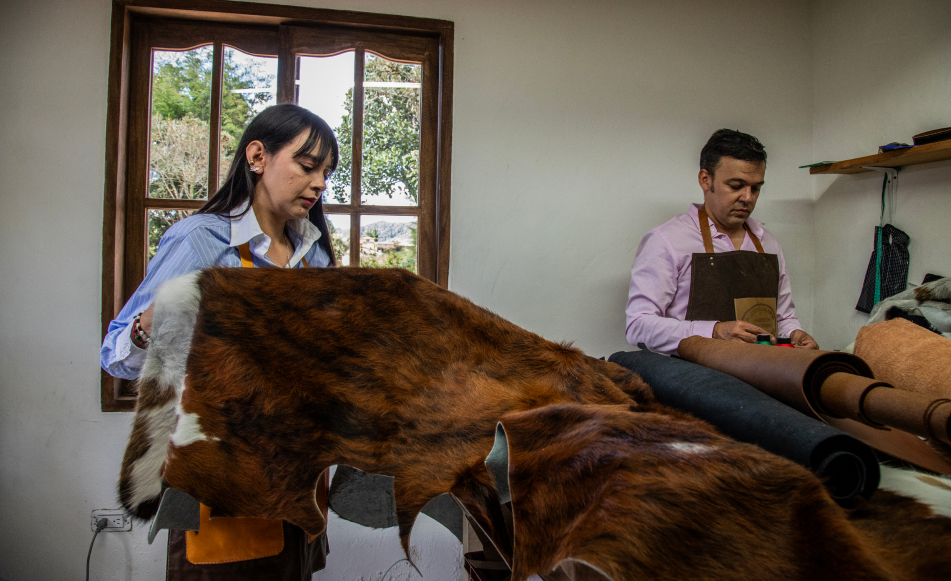
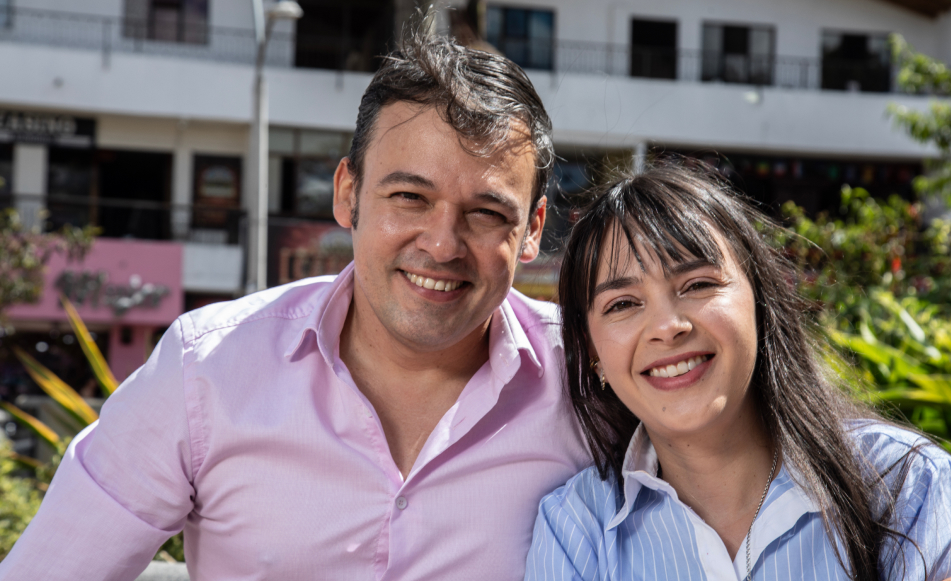
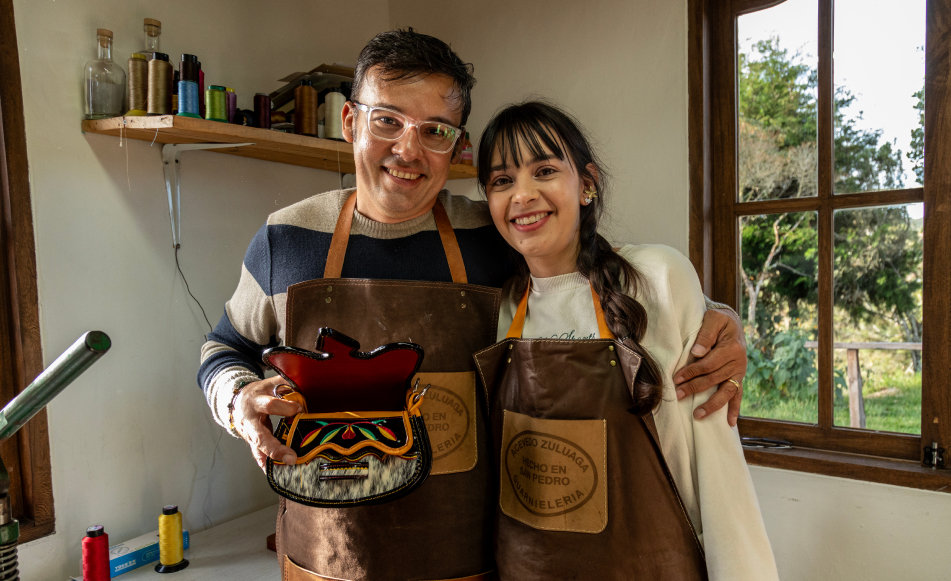
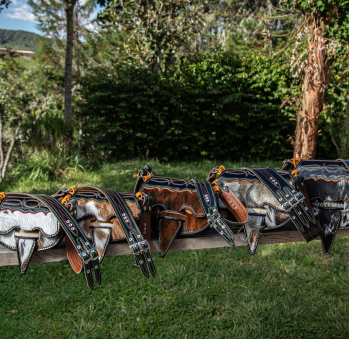
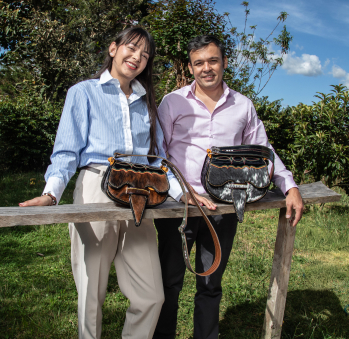
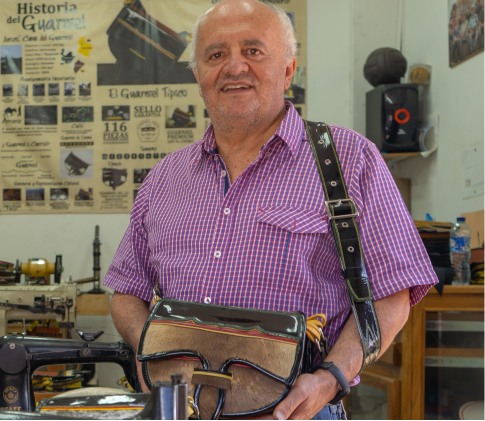
Mauricio Acevedo and Adriana Zuluaga have made it their mission to recover an essential part of their hometown’s heritage. They want to bring back the tradition of the San Pedreño carriel, the iconic leather satchel once inseparable from muleteers and from the economy of San Pedro de los Milagros, a cool-climate municipality just an hour north of Medellín. While the Jericó carriel—or guarniel—is widely recognized, with families who have passed down its craft from generation to generation, the history of the San Pedreño version has only recently begun to emerge from obscurity. Mauricio and Adriana have chosen to become two of the people leading that revival.
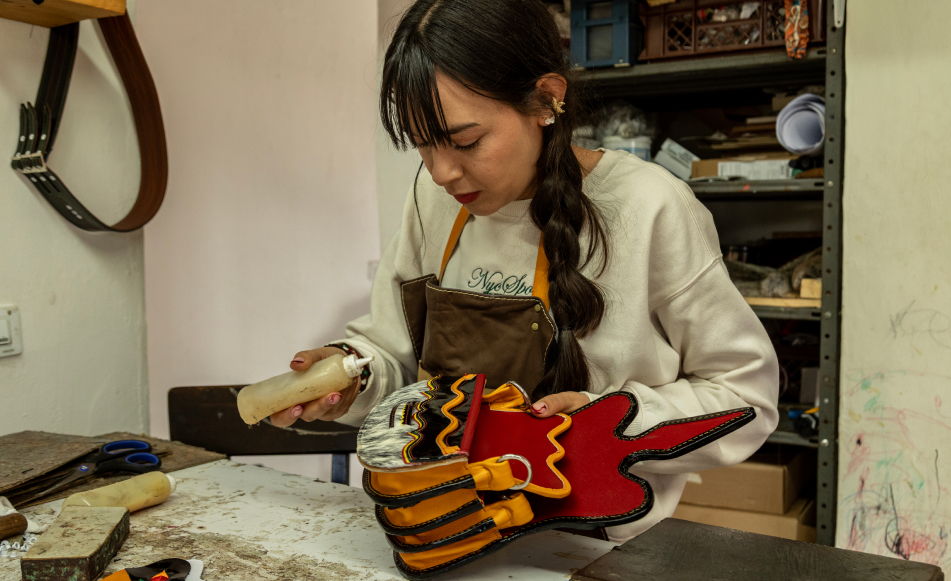
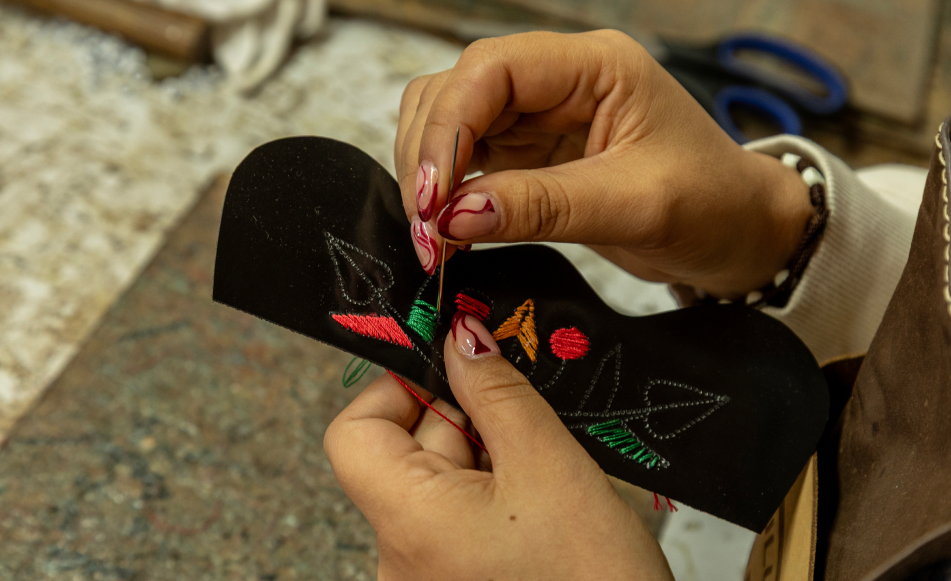
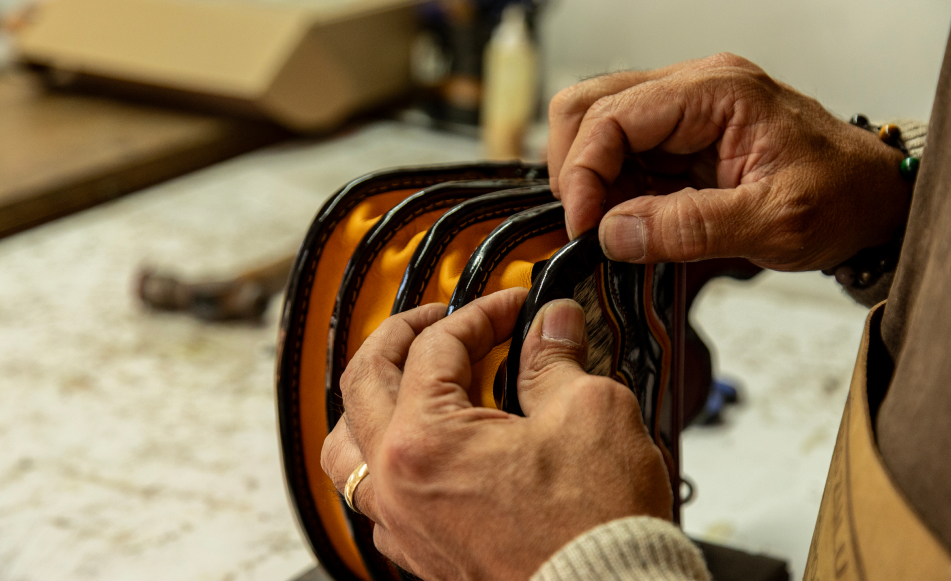
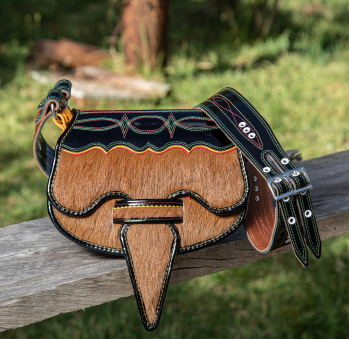
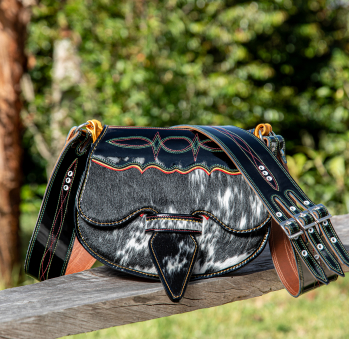
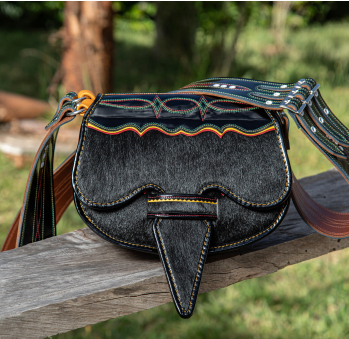
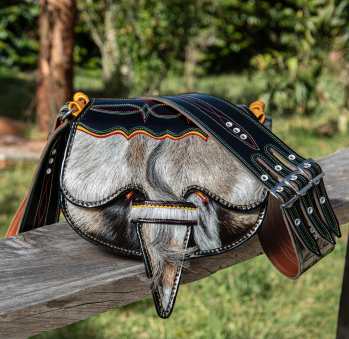
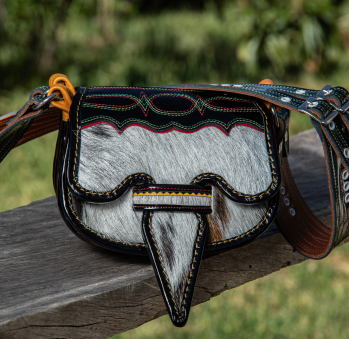
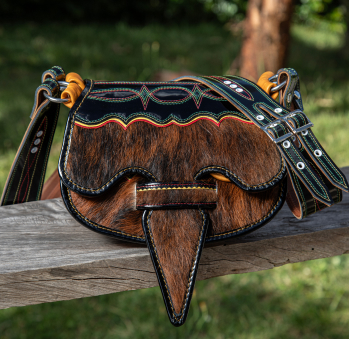
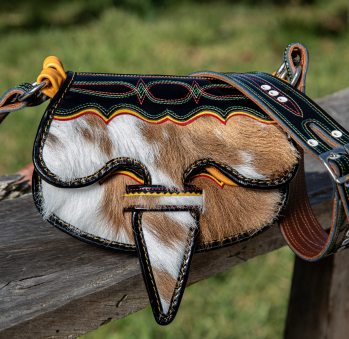
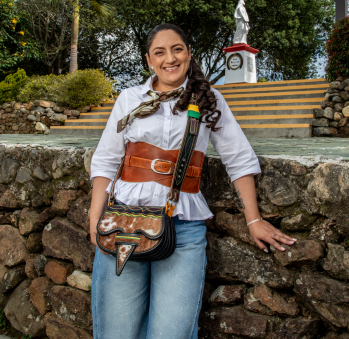
The San Pedreño carriel possesses distinctive features that set it apart from its Jericó counterpart and give it a character entirely its own. While the Jericó model typically displays the yellow and red colors associated with the town’s flag, the San Pedreño version tends to be more monochromatic. Its most striking feature is the mora—the decorative panel revealed when the carriel is opened—which bursts with embroidered floral motifs in vivid colors. The flap is more rounded, and the long fastening strap, fitted with a double keeper, differs noticeably from the Jericó design. Its shoulder straps are fully decorated, and it includes a two—or three—buckle divider absent from the Jericó model. The eyelets are white. Although both styles were originally crafted using otter hide—a practice long abandoned—San Pedro de los Milagros preserves the memory of why that material was once so common. As Mauricio explains, the region’s cold climate favored trout farming, and otters frequently preyed upon the fish, leading local farmers to hunt them and, in turn, use their hides for leatherwork.
Neither Mauricio nor Adriana has formal training as historians. Their research is entirely self-taught, driven by curiosity, intuition, and an ever-deepening passion. Whenever they discover evidence of a San Pedreño carriel, they follow the trail wherever it leads. Their search has taken them beyond Antioquia into places such as San Félix and Marulanda in Caldas, Génova in Quindío, and Murillo in Tolima. Every clue becomes an invitation to learn how these satchels traveled, who owned them, and how they were used. Convinced that this work will help preserve centuries of history, they have sought funding to support their research. Their efforts have already uncovered a municipal record from 1820 demonstrating that carriel making formed part of the town’s economy. As their enthusiasm has inspired others, new discoveries continue to surface. A historian from Santa Rosa de Osos shared with them a photograph from the 1870s showing María Anselma Restrepo—who would later fight in the Thousand Days’ War—wearing a San Pedreño carriel. They have also found an image of Monsignor Miguel Ángel Builes, the influential bishop known for his fierce opposition to liberalism and communism, carrying one as well. Piece by piece, they are reconstructing a history that, because these carrieles were once such ordinary objects of daily life, was rarely documented.
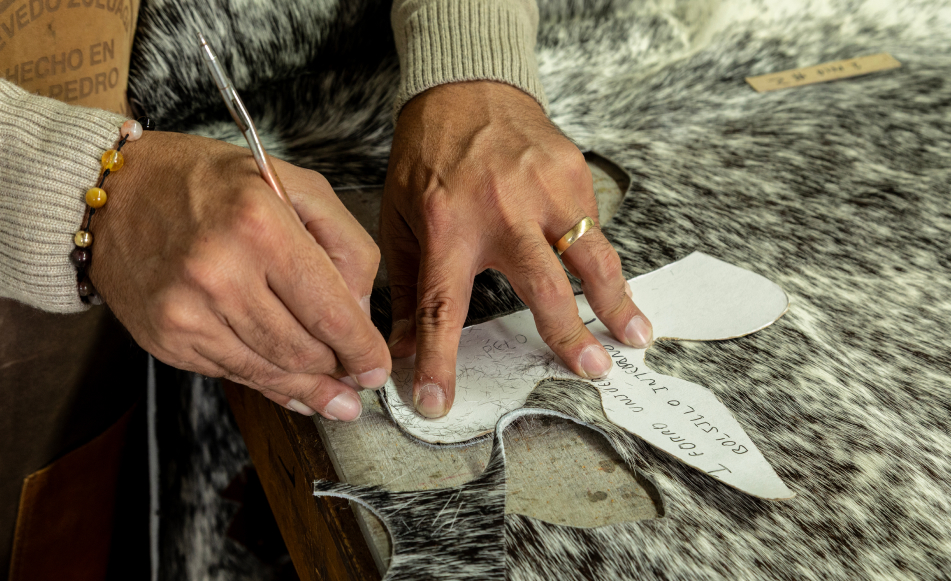
Every photograph they recover and every conversation they have with descendants of the muleteers who crossed these mountains carrying their carrieles has allowed them to faithfully reconstruct the satchel in all its details. They have reproduced the four historical sizes, carefully studied the seven different types of leather originally used—each chosen for a specific purpose—and documented the construction methods, the many floral mora designs, and the characteristics that distinguish a true San Pedreño carriel from those made elsewhere. Their research has also confirmed that one family, the Piedrahitas, became the principal custodians of the tradition, much as the Agudelos did in Jericó. Unfortunately, when the last artisan of that lineage, Luis E. Piedrahita, passed away, the craft disappeared with him. Even so, he left behind a signature detail that Mauricio and Adriana now faithfully reproduce: two embossed parallel lines on the back of the carriel, accompanied by his signature and the serial number of each piece.
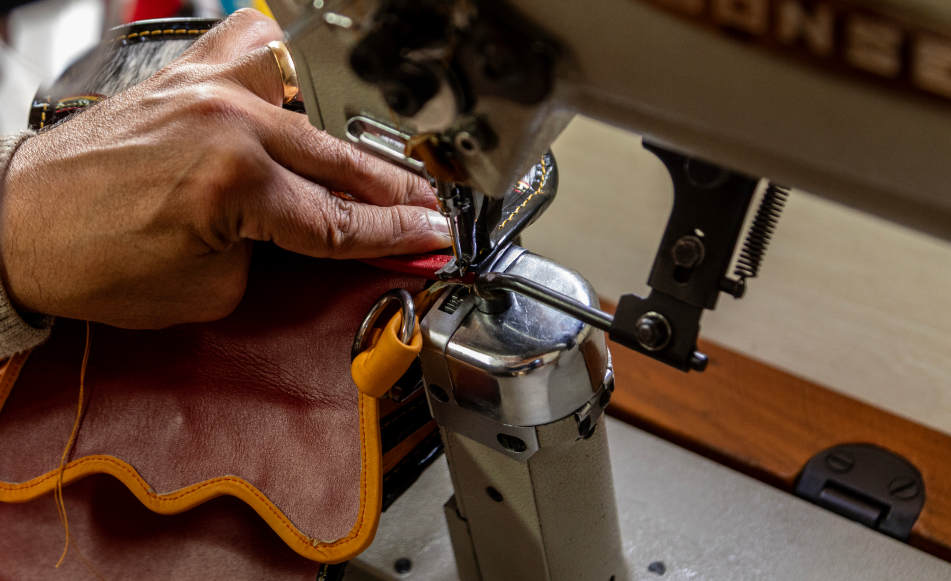
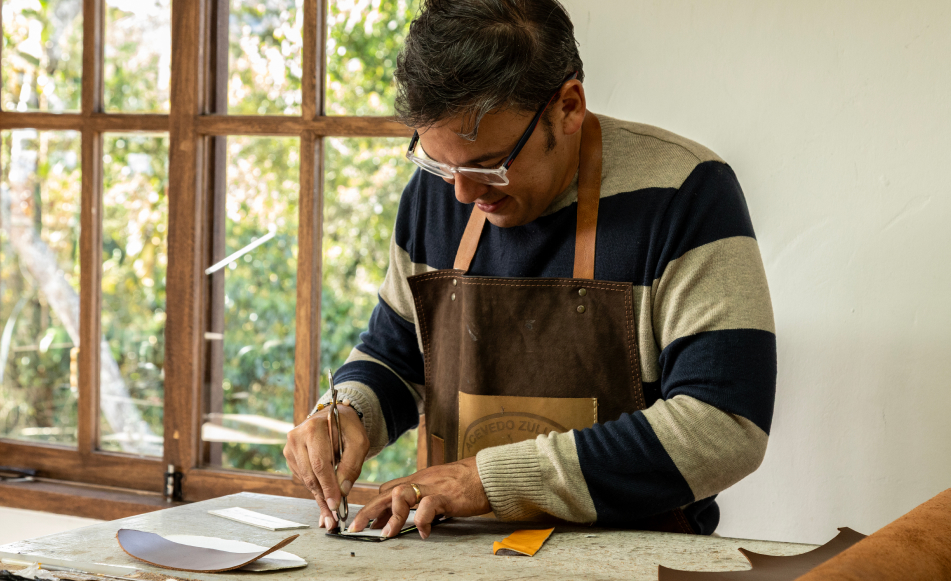
Guided by all these clues, Mauricio and Adriana continue their work with a clear purpose: to honor the past while securing a future for this remarkable tradition. He does the stitching; she assembles each carriel. Together they are restoring not only an object but also a forgotten identity. Their next ambitious project reflects that same spirit: they plan to build the world’s largest San Pedreño carriel, hoping that a Guinness World Record will draw attention to the craft and inspire a new generation of leather artisans to preserve a tradition that has only just begun to emerge from the ashes.
Workshop and process
Craft
Artisans along the way



Artisans along the way



No puede copiar contenido de esta página