
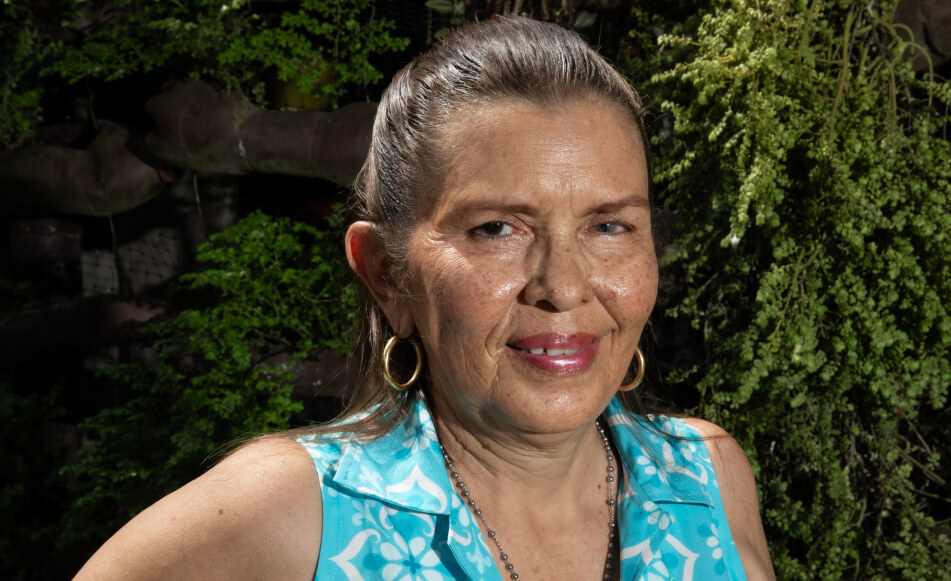
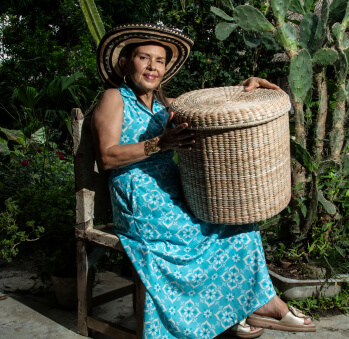
Rosa Flórez
Workshop: Grupo Artesanal Rabolargo
Craft: Basketry
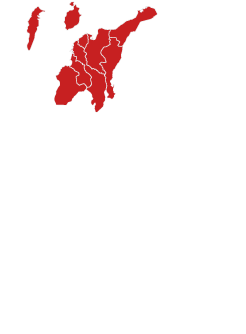
Trail: Cordoba Route
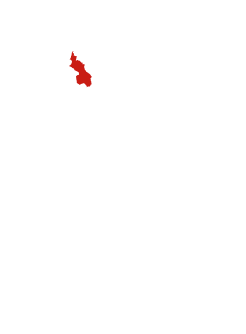
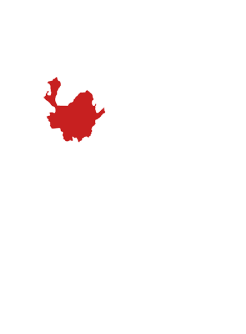
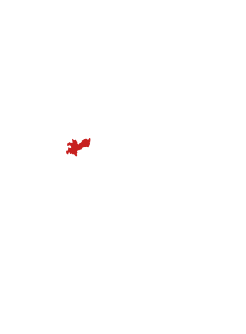
Location: Cereté, Córdoba
SCHEDULE YOUR VISIT
Calle 3 #7-70, Rabolargo, Cereté
3107944750
rosacarolinaflorez@gmail.com
@artesaniasrabolargo
@p/Grupo-Artesanal-rabolargo-1000679...
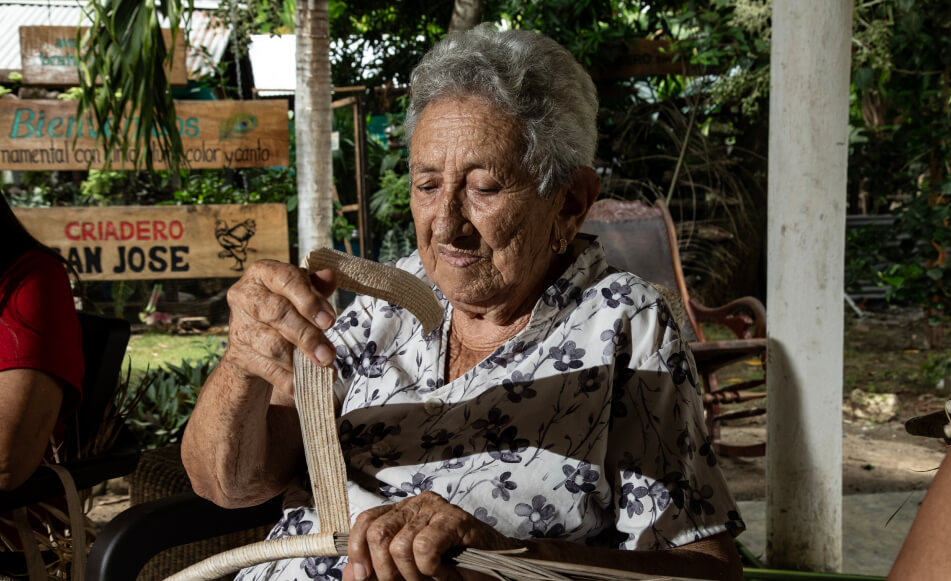
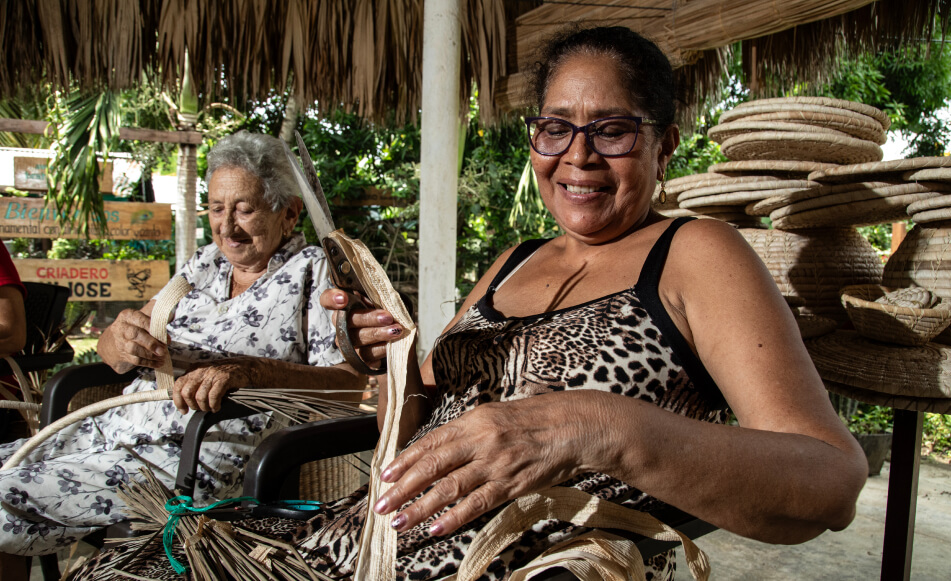
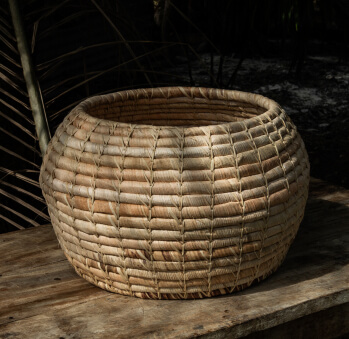
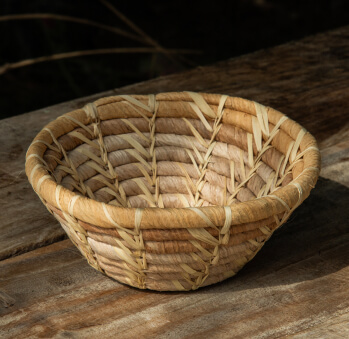
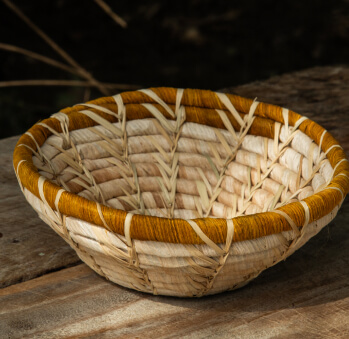
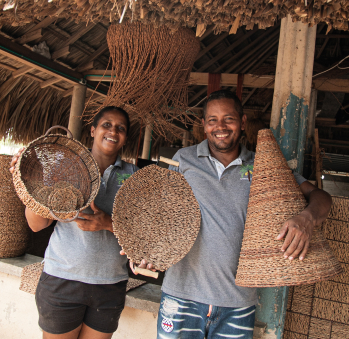
A cup of coffee brewed through a cloth filter and a plate of lemon cookies—that is how visitors and neighbors are welcomed into the home of Doña Denis Castilla de Flórez, Rosa Flórez’s mother and the leading figure of coiled basketry made from banana stalk fiber in the village of Rabolargo, Cereté. Nearly fifty years have passed since the Rabolargo Artisan Group was founded. Today, the daughters and sons of its original members have joined its ranks, while five of its founding women still continue weaving. In Rosa and Denis’s case, their lives embody the way craftsmanship is passed from one generation to the next.
Rosa was still a child when she watched her mother enter the worlds of craftsmanship and cultural leadership. Until then, Denis had earned a living washing clothes, ironing, and cooking at a neighbor’s house. Then, in 1980, basketry workshops using banana stalk fiber were offered in the village, and she enrolled without hesitation. Fifty people joined that first training. Over the years, the group became smaller, eventually settling at ten members, whose families—usually two or three people each—also participate, along with those who harvest the banana stalks and other weavers who lend a hand whenever large orders come in. Altogether, about forty people now make a living from the craft. While Doña Denis honed her skills under the demanding guidance of her teacher, Dionisia Pertuz, Rosa grew up and eventually earned a degree in Early Childhood Education.
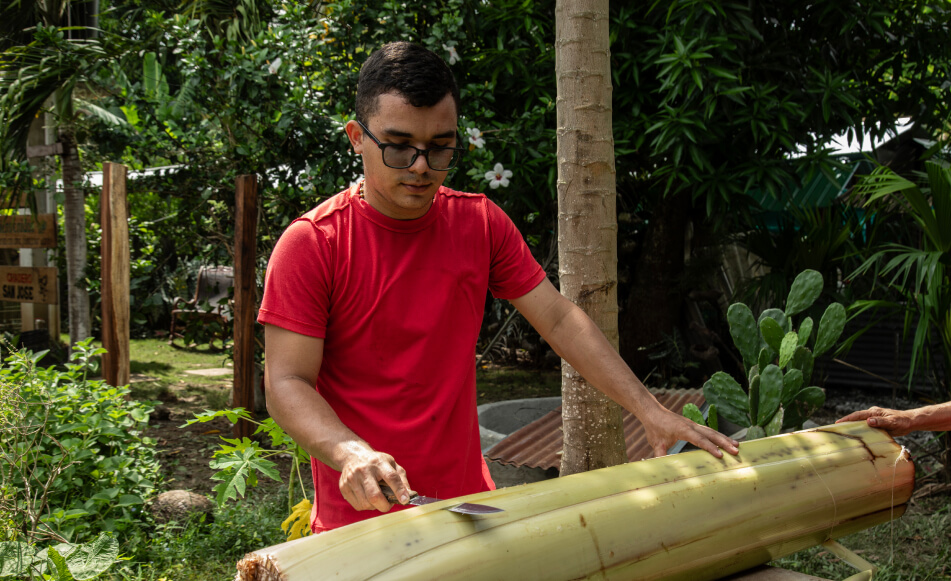
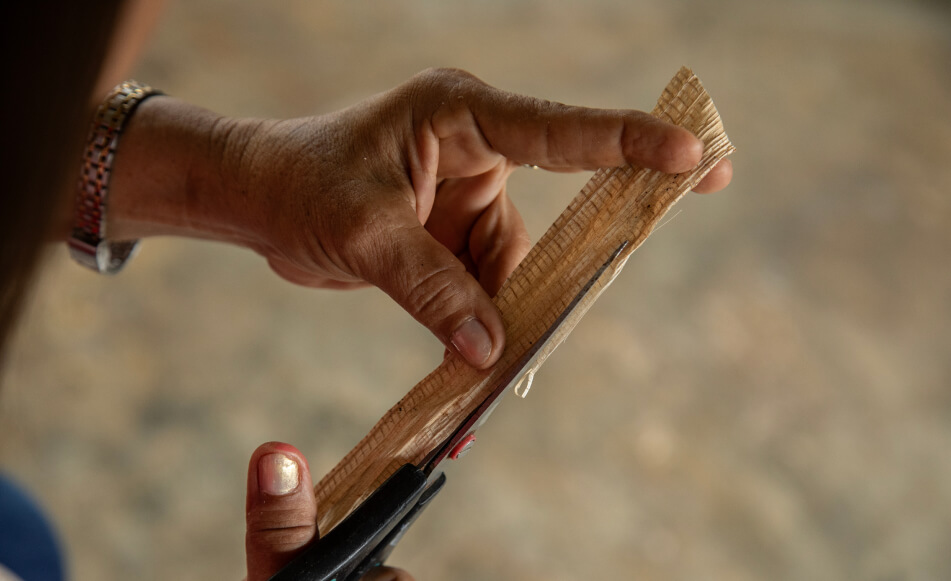
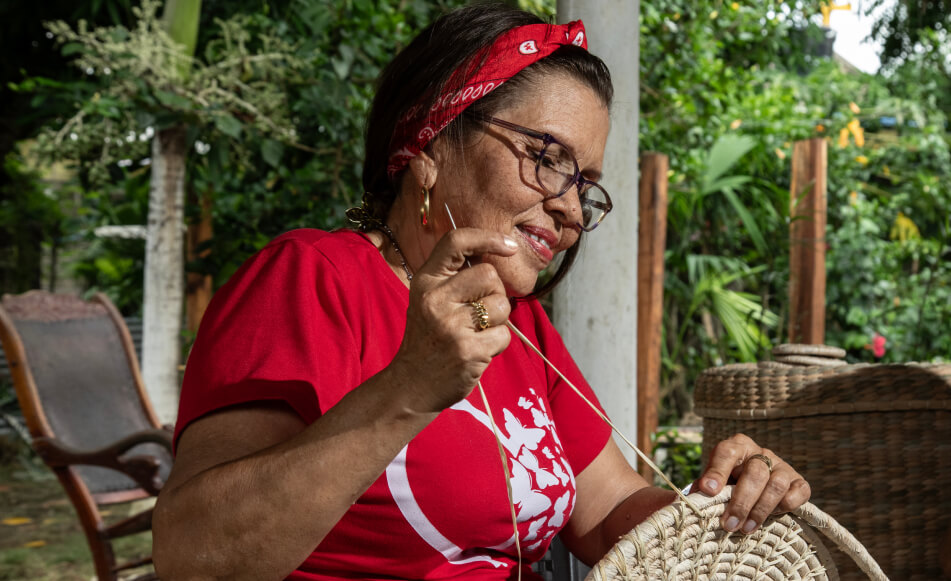
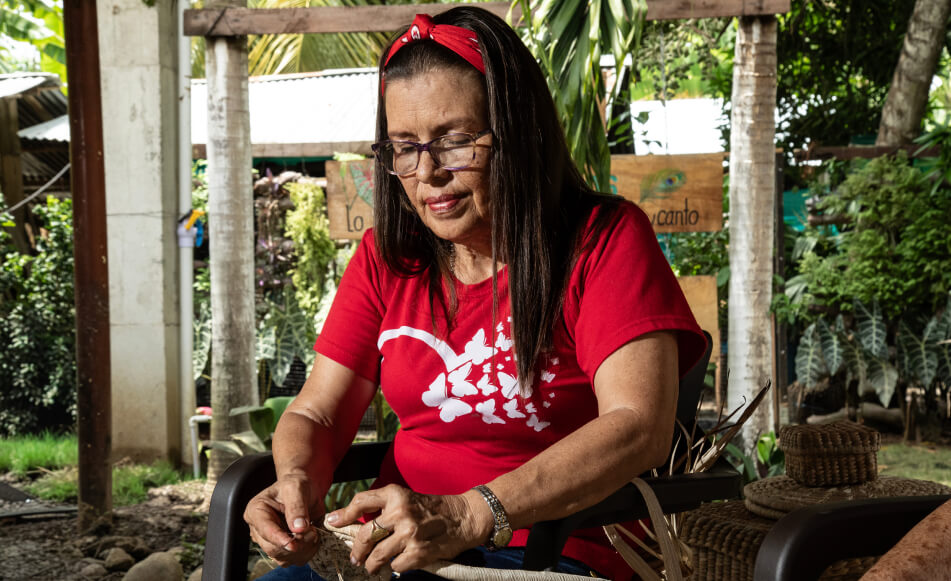
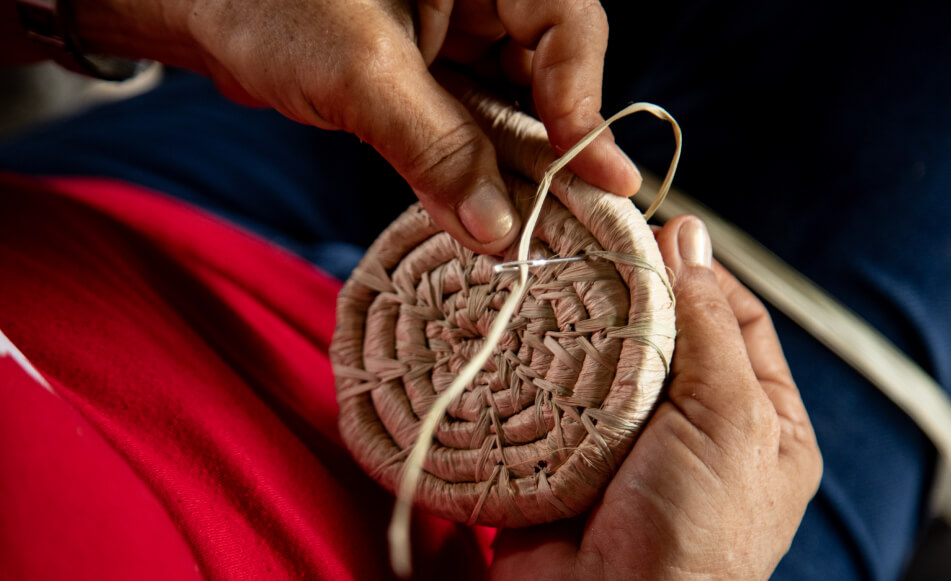
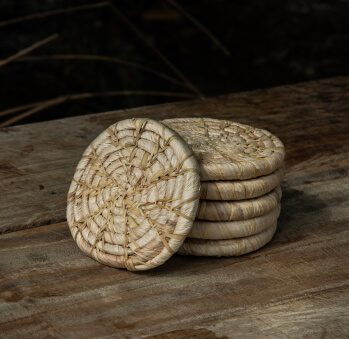
Life, however, brought her back home. After twelve years working for the government and in programs run by Colombia’s Family Welfare Institute, finding employment became nearly impossible, and she remembered that her family possessed a body of knowledge she could build a life upon. So she returned to work alongside her mother. She refined the skills she had begun learning as a child, when she helped sort fibers and stitch pieces together. At first she had to unravel countless baskets and start over, but the effort paid off. She became an expert not only in recognizing banana stalk fibers—knowing that those from the apple banana are light brown while those from common banana plants are almost white—but also in developing the strength needed in the arms and back to make the coils that form the foundation of every piece. The work involves pulling and tightening strips of banana stalk around a core made from corozo palm leaves. She also developed the steady hands required to create the fine coils used for placemats and trivets, as well as the thicker coils needed for baskets. Rosa eventually became the one who set the standard for quality, and here it is worth returning to the name of her mother’s teacher, the late Dionisia Pertuz. Doña “Dionis” was the terror of every apprentice. She made them undo and refine their work over and over until every weave was flawless. Rosa carries on that same tradition today, and she is so demanding that even her own mother jokes that she is the reincarnation of her old teacher.
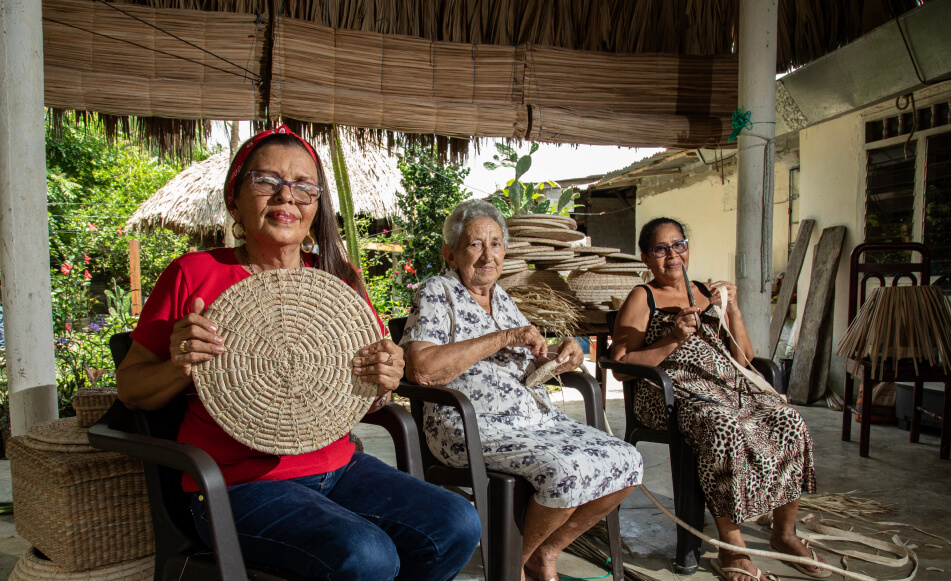
By now, Rosa has spent more than thirty years practicing the craft, alongside her mother, who, now in her eighties, still rolls banana stalk fiber every day, just like the other women in the group. Together they gather in the spacious patio of Denis’s home to prepare the coils, and over the years they have celebrated many achievements. One of the proudest came in 2015, when Doña Denis traveled to Miami to showcase both her technique and her work. Rosa also takes pride in having raised her children as a single mother through her craft, and their most recent triumph is that her son was able to pay his way through veterinary school by making and selling his own handcrafted pieces. Above all, they find daily satisfaction in working together as both a family and a community, knowing that with so many hands carrying the tradition forward, their craft will endure.
Workshop and process
Craft
Artisans along the way

Artisans along the way



No puede copiar contenido de esta página